Electronics & Computer Engineering Technology

Bachelor of Science Degree (B.S.)

When you set your mind to something, you make it happen. Working hard to find a solution, you test and tinker. Chase possibilities and arrive at sound solutions. In this ABET-accredited program, you’ll hone these talents and develop the skills to become a leader in the dynamic field of electronics and computer engineering. Learn industry standards. Apply circuit design principles. Analyze sophisticated networks. And take the lead to manage projects from kickoff to completion.

Courses

Your coursework will cover classes specific to your area of specialization along with foundational concepts and lessons that invite fresh perspectives.

Spring 2028

  1. 3
  2. 1
  3. 3
  4. 1
  5. 3
  6. 4

6 courses 15 credits

100% program-specific courses

Please Note: The outlined curriculum assumes a fall semester start for students completing a full credit load schedule without additional developmental math requirements. Students beginning in the spring and summer, taking less than a full load, and/or requiring developmental coursework follow an altered curriculum sequence. Speak to your academic advisor or school office with questions. 

Careers

  •  
  • Process engineer/technologist 
  • Test engineer/technologist 
  • Controls engineer/technologist 

17

Average Class Size

Extensive Hands-On Experience

ABET

Accredited Program

Featured Video: Guaranteed Momentum at QorTek, Inc.

Creating aerospace and electronics components for the United States’ Department of Defense is a tall order. Thanks to their innovative approach and talented team, QorTek, Inc. has become a world leader doing exactly that. In this video, you’ll get a glimpse of their facility, learn about the organization’s mission, and meet the Penn College graduates who are pushing the needle forward in their field.

Facilities: Electronics Lab

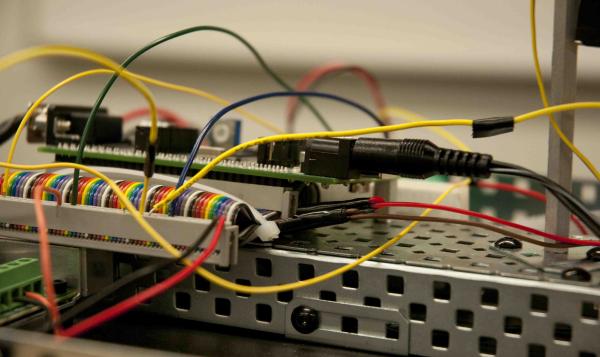
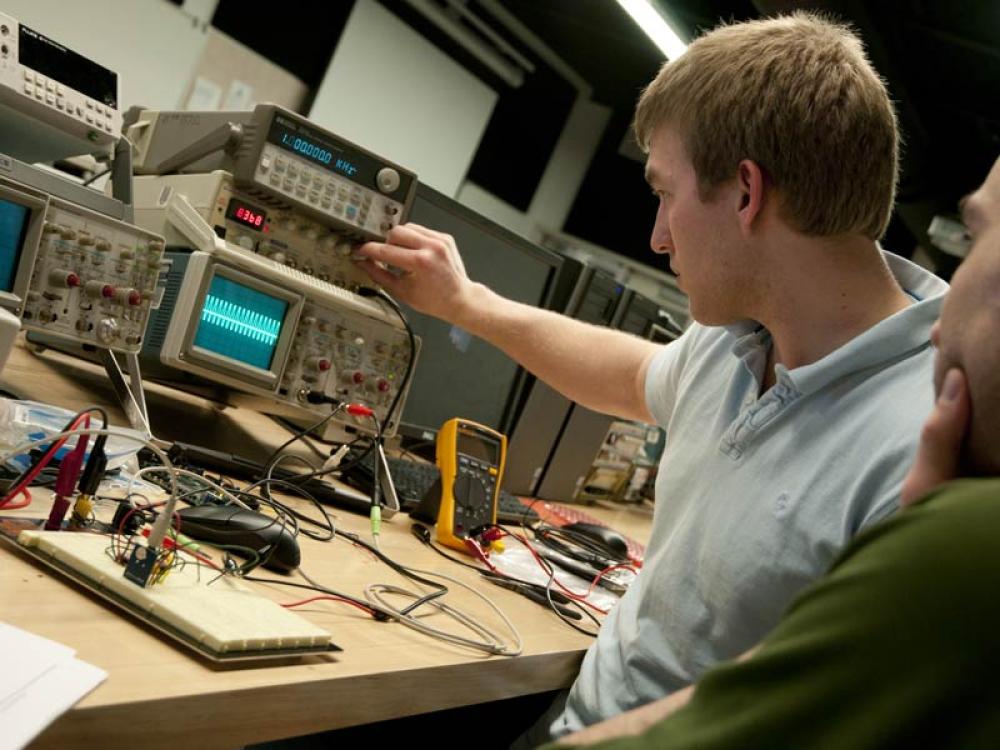
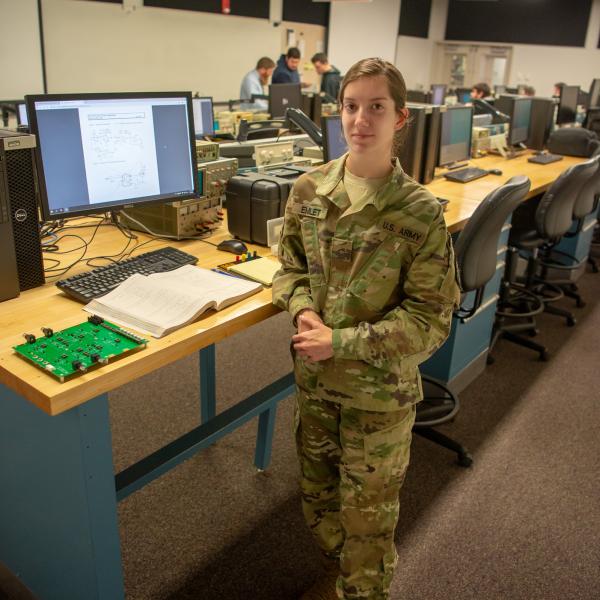
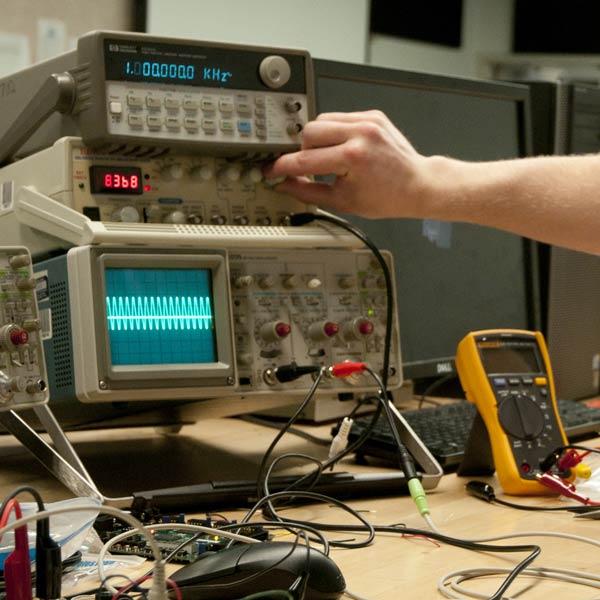
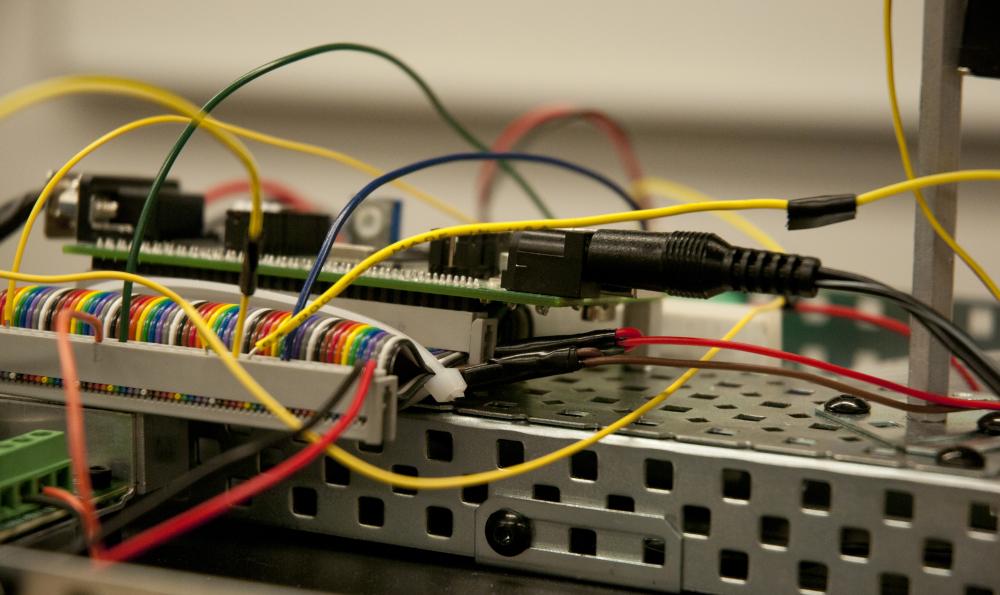
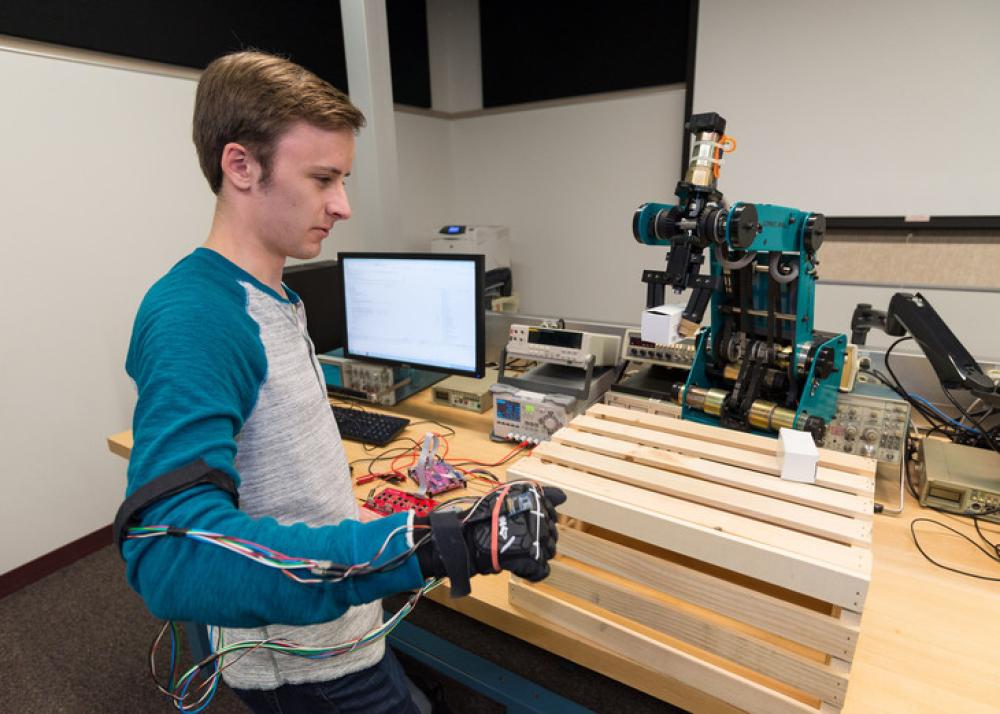
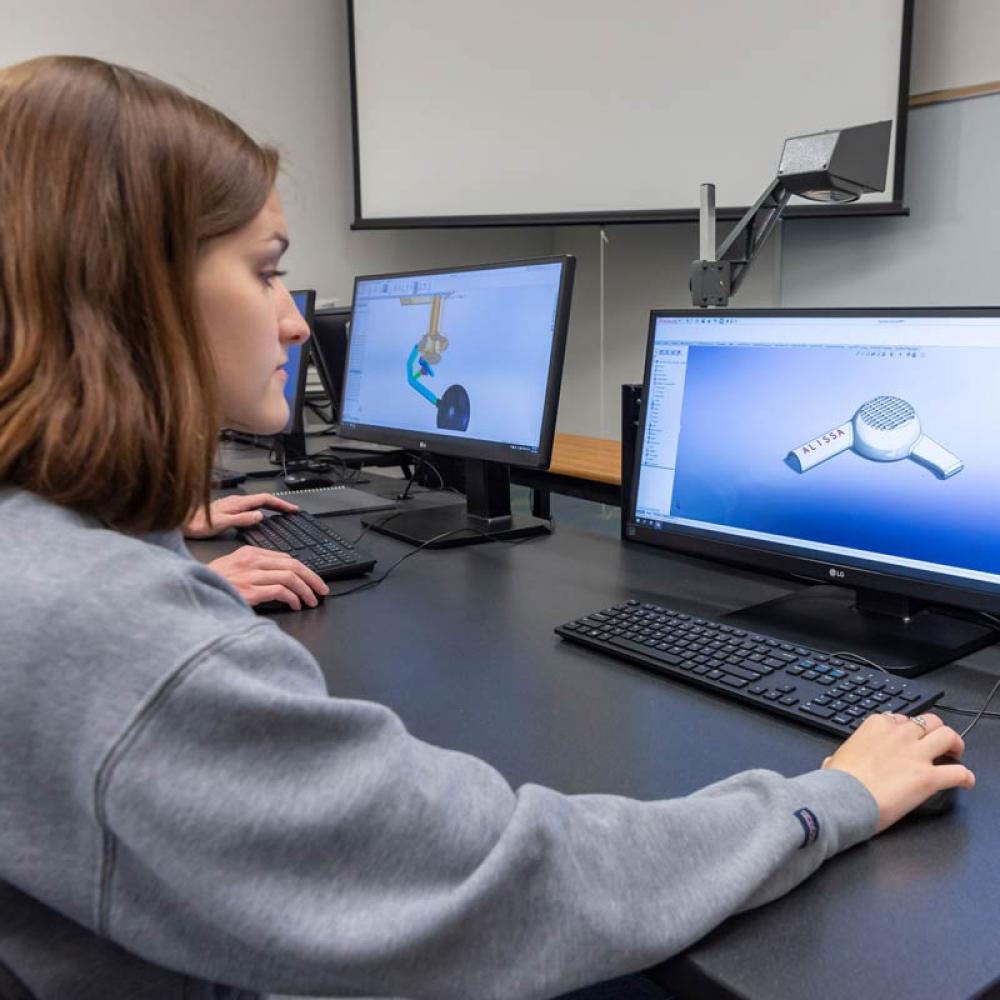
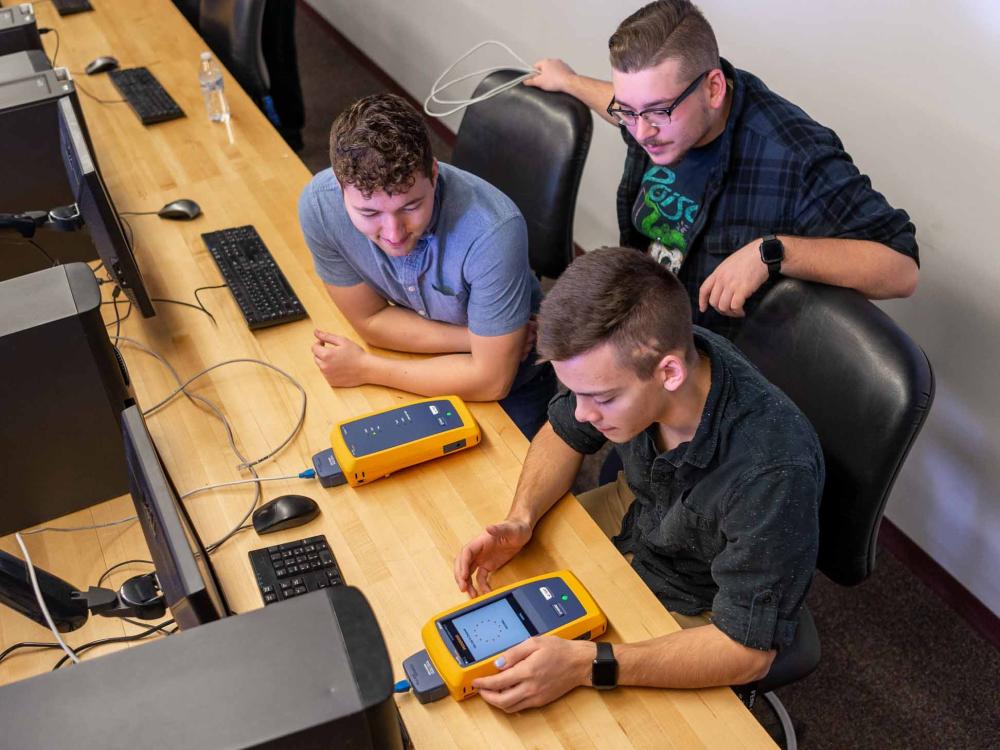
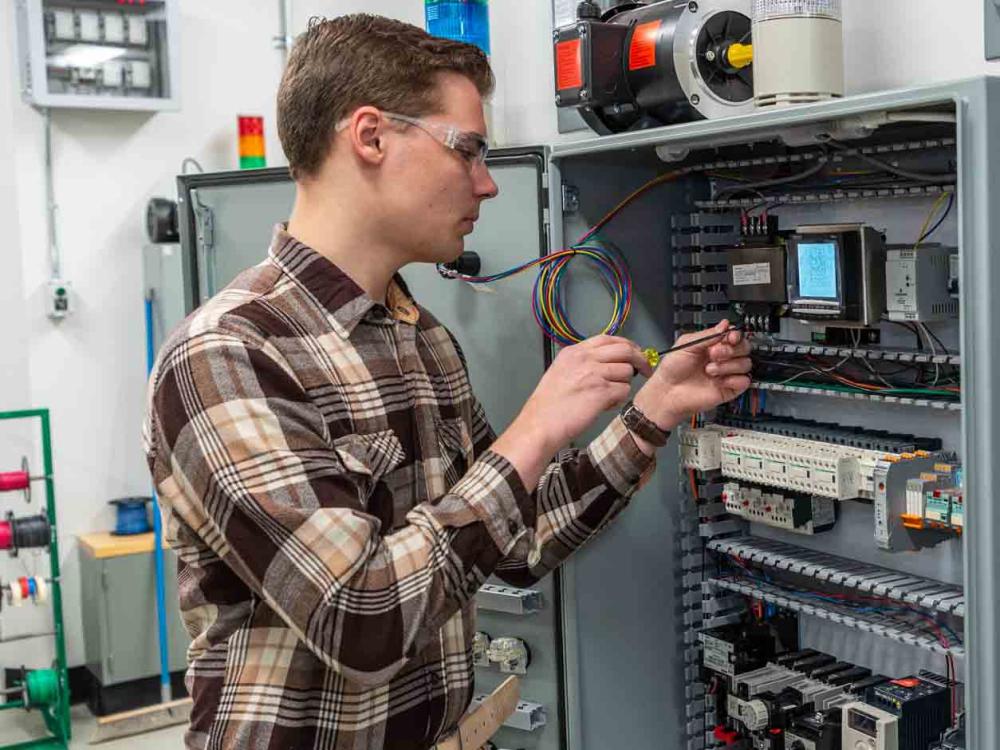
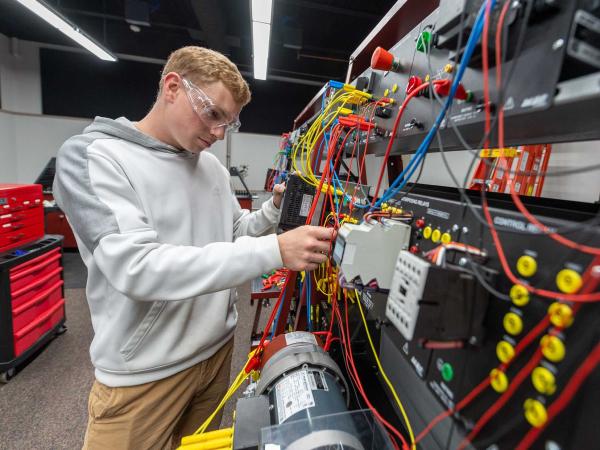
Get hands-on experience in specialized labs using industry-standard equipment, embedded controller boards, and other tools just like you'll see in the real world.

Launch Virtual Lab Tour

Always Learning

Electronics overlaps areas of IT and electrical. Not sure which one might be right for you? Take a look at the similarities and differences below.

Electronics vs. IT

Electronics and IT overlap in software and networking skills, but they’re also very different. IT is the software/people side, while electronics is the hardware/machine side of computing.

Electronics

As an electronic student you’ll learn how to design, implement, and troubleshoot software and hardware (sensors, microprocessors, and output devices.) You’ll also learn how to write software to work with hardware to control electronic equipment, and how to troubleshoot PLCs (Programmable Logic Controllers) and the equipment connected to them.

IT

As an IT student you’ll learn how to work mostly with traditional computers to develop software applications used by individuals and businesses, cybersecurity, connecting computers (networking), and technical support.

Electronics vs. Electrical

Areas of overlap in electronics and electrical include programming and troubleshooting of automation systems, such as PLC software and hardware. Electronics work more in the initial programming and engineering areas whereas electrical positions usually involve more hands-on work as a technician.

Electronics

Electronics students experience lower voltage systems, and typically encounter voltages less than 120V in their work environment. Electronics involves microprocessor-based controllers and PLC programming.

Electrical

Electrical students are involved in the installation, commissioning, maintenance, and troubleshooting of residential/commercial/industrial systems, motor control & drives, PLCs, and basic electronics.

Tour Schedule: Seeing is believing.

Think Penn College might be a good fit for you? Make plans to visit and discover what hands-on learning is all about.

Undergraduate Open House

Sunday, April 26 9 AM - 3 PM

Register

More tour dates are on the way.

But let's customize a tour for you now. Call, chat, or email for options.

Need a different date?

Let's customize a tour for you now. Call, chat, or email for options.

Contact

Admissions Office

Scholarships

As a Electronics & Computer Engineering Technology student at Penn College, you may be elgible for 130 scholarships.

24 Program-related scholarships

106 Additional scholarships

Explore scholarships

Penn College News: Real World Ready

Penn College students team up to make universal robotic gripper

April 21, 2026

Ken J. Kinley likes to pair students from different majors to tackle assignments in his Robotic Applications class at Pennsylvania College of Technology. The…

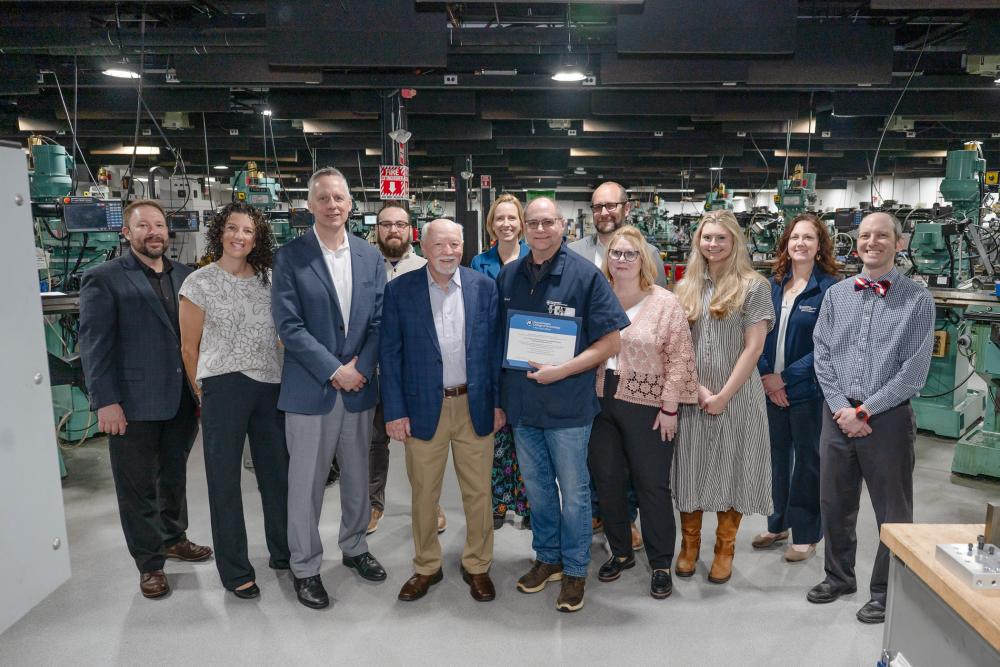
Penn College alumnus establishes three $100,000 scholarships

April 02, 2026

Larry A. Ward, a longtime benefactor and distinguished alumnus of Pennsylvania College of Technology, has added to his philanthropic legacy by establishing…

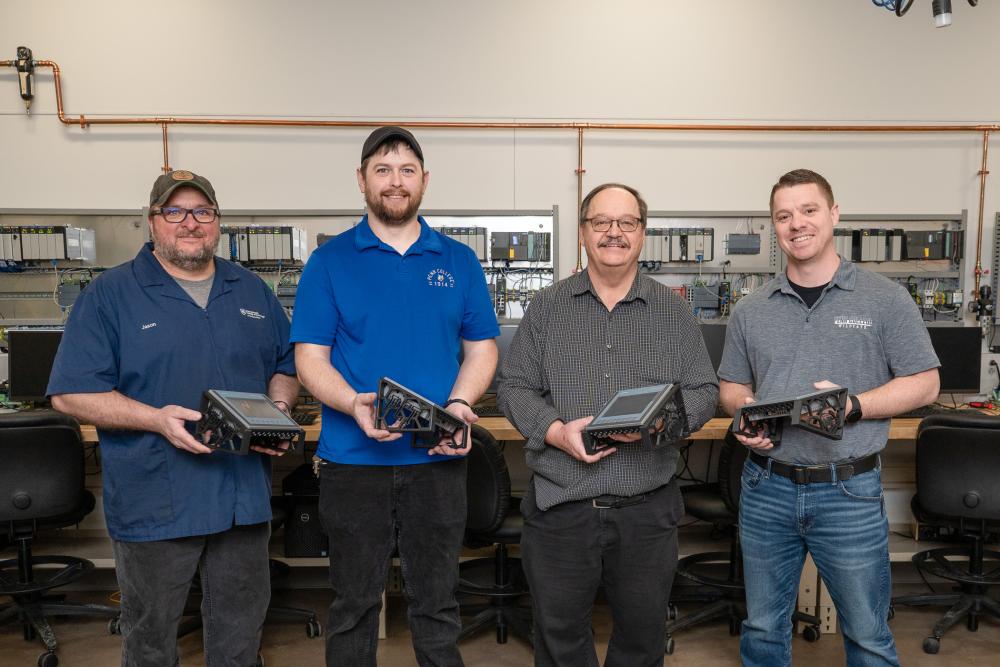
Collaboration benefits Penn College automation students

February 10, 2026

A creative collaboration between Pennsylvania College of Technology faculty and staff has resulted in an ergonomically friendly addition to the institution’s…

VIDEO: Taking the lead

December 08, 2025

Meet Marissa Rupert. On her way to earning bachelor’s degrees in automation engineering technology and software development & information management, Rupert…

VIDEO: Candy, cobots and automation

December 04, 2025

In a video recently produced by Penn College, Jack C. Dincher, instructor of electrical/mechatronics, highlights the ongoing buildout of the newest mechatronics…

Alpha Chi members collect supplies for Kenya medical clinic

September 05, 2025

Three members of Penn College’s Pennsylvania Xi Chapter of the Alpha Chi National College Honor Society organized a drive to collect first aid items for a…

TC Energy Corp. awards grant to Penn College

February 05, 2025

Pennsylvania College of Technology recently received a $75,000 grant from a major North American energy company. TC Energy Corp., through its Build Strong…

Passing the torch on 'Her Perfect Pathway'

October 22, 2024

Penn College alumnus Lauryn Stauffer strolled down memory lane and into the Tomorrow Makers podcast studio to share her full-circle moments in education in “Her…

Spring flashback: Northern Ireland visitors are a highlight

May 24, 2024

Before diving into summer, Penn College News takes a look back at a spring semester highlight: the two-week visit by our new friends from Northern Ireland's…

Automation students produce unique senior projects

April 29, 2024

Pennsylvania College of Technology electronics and automation students are known for inventive senior projects. The arduous capstone requires students to…

People: Meet the Makers

Internship: Your knowledge in practice

Internships are key for career preparation. Apply your know-how in the workplace and learn about the industry first-hand. 

Learn More

Student Life: Lead and put your skills to the test

IEEE Student Branch at Penn College

Dedicated to advancing technological innovation and excellence for the benefit of humanity, the Penn College IEEE Student Branch meets regularly to work on professional soft skills, projects, and leadership. 

Learn more

SkillsUSA Champions at Work

Participation in SkillsUSA gives students a chance to compete in more than 80 national competitions. 

Learn more

Student Organizations at Penn College

Your college experience is about more than the classroom. Join one of 65+ clubs and organizations, or create your own.

Get Involved

Study Abroad: Gain global experience

See the world via Williamsport. Take your education abroad and get hands-on experience learning about your industry on a global scale.

Learn More

Student Experience: The community as their classroom

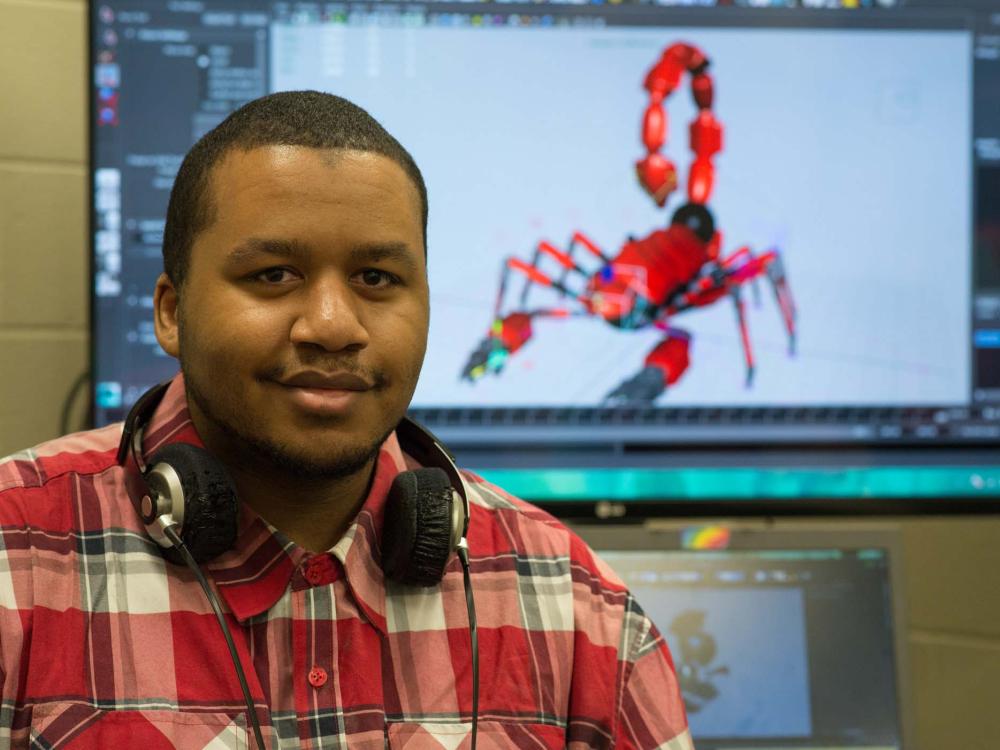
Student gives life to robot

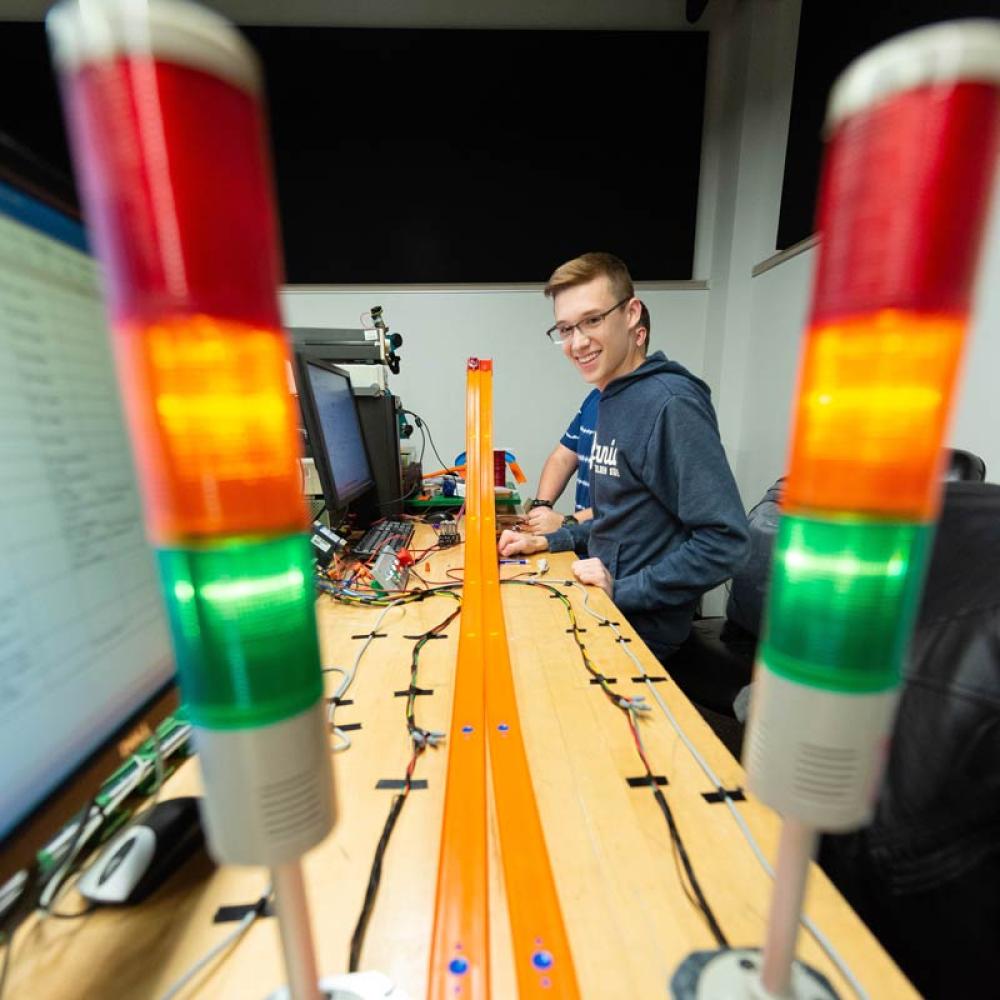
Darkness envelops the college. The campus mall is quiet and still. It’s the middle of the week and nearly 1 o’clock in the morning. Most of the Pennsylvania College of Technology community will be asleep for several more hours, recharging for another productive day. But a couple electronics majors are wide awake. Their windowless lab is bright and buzzing with activity. An unsuspecting guest would assume it’s the middle of the afternoon as the students painstakingly contemplate their latest challenge.
Meet David

ABET-Accredited Program

The B.S. in Electronics and Computer Engineering Technology program is accredited by the Engineering Technology Accreditation Commission of ABET, under the commission’s General Criteria and Program Criteria for Computer Engineering Technology and Electrical and Electronics Engineering Technology.
 

More Information

Students must acquire their own tools and laptop computer as noted below.

Required Tools, Uniforms, and Supplies

See the Tool List for this major.

Required Laptop Computer

  • Windows 11 or higher (recommended).
  • Intel Core i7 (12th generation) or AMD Ryzen 7 processor (recommended).
  • 16+ GB RAM (required).
  • 1+ TB hard drive (recommended).
  • Wi-Fi 802.11AC (recommended).
  • Wired Connection – Gigabit Ethernet (recommended).
  • Laptop must include a webcam and microphone (required).
  • Laptop must include a wireless network card (required).
  • Broadband Internet connection when working off campus (required).
  • Additional plug-ins may be required (Information Technology Services Service Desk available for assistance).
  • Chromebooks and other devices running Chrome OS are prohibited.

The B.S. in Electronics and Computer Engineering Technology program is accredited by the Engineering Technology Accreditation Commission of ABET, under the commission’s General Criteria and Program Criteria for Computer Engineering Technology and Electrical and Electronics Engineering Technology.

ABET Engineering Technology Accreditation Commission logo

This four-year degree major allows transfer from associate-degree majors in electrical/electronics/computer engineering technology from other institutions, as well as those offered by Penn College. This major is subject to the transfer standards established by the College (see http://www.pct.edu/admissions/transfer/Transferring-Credits). Exceptions must be approved the school dean.

Electronics & Computer Engineering Technology Program Review Executive Summary

Cadence University Program Member
Cadence products presently used at Penn College. Read More

Alternative Credit refers to academic credits earned through means other than traditional college course completion, including: credit by exam, articulation, proof of competency gained in high school, work/life experience, and advanced placement.
Visit the Alternative Credit Options page for requirements and procedures and for information on credit through Advanced Placement.

Electronics & Computer Engineering Technology Advisory Committee Members

RB

Ross Bird

VP of Operations

QorTek

MH

Mr. Eli Hughes

Co-founder

Tzero

MK

Mr. Carl J Krause

Vice President - Operations

KB Systems Inc.

MM

Mr. Nelson May

Director of Systems

Gerhart

MR

Mr. Chris Roush

Vice President

Multi-Dimensional Integration

MS

Mr. Jonathan S Schall

Controls Engineering Manager

First Quality Products

MS

Mr. Leonard D Schwartz

Technical Instructor

OWL Services

MS

Mr. Roman J Scicchitano

Senior Supervisor, Electrical Engineering - Power/Analog

L3Harris Technologies, Inc.

MS

Mr. Gregory C Stanek

Technical Services Supervisor

Lutron Electronics Company, Inc.

MJ

Mr. Thomas J VanSant Jr.

Measurements Engineer

Corning, Inc.

EA

Edward Almasy, Jr.

Associate Professor, Electronics & Computer Engineering Technology

KK

Ken Kinley

Assistant Professor, Electronics & Computer Engineering Technology, Department Head

Randall Moser

Randall Moser

Assistant Professor, Electronics & Computer Engineering Technology

Jeffery Rankinen, Ph.D.

Jeffery Rankinen, Ph.D.

Associate Professor, Electronics & Computer Engineering Technology

MR

Mark Rice

Instructor, Electronics & Computer Engineering Technology

Clark Sarge

Clark Sarge

Instructor, Electronics & Computer Engineering Technology

Mario Tombasco

Mario Tombasco

Instructor, Electronics/Automation and Robotics

WW

William West

Assistant Professor, Electronics & Computer Engineering Technology

CF

Christopher Fedor

Instructor, Electronics/Automation and Robotics

Contact Information

Related Programs: Follow your passion