About this program
Pursue the Bachelor of Architecture degree at Penn College and you’ll be primed for a career as a licensed architect. You’ll explore the historical and cultural significance of architecture, master modeling and design software, and learn the importance of promoting sustainable design. If you imagine creating inspired designs rooted in modern principles, this immersive five-year program will propel you in the direction of your dreams.
The architecture labs have been newly and completely renovated. Check out the details. →
View the entire NAAB accreditation candidacy status statement in the accreditation section of this page.
Next steps...
You're on your way to becoming a tomorrow maker.
$82,840
Average Salary
24/7
Access to Design Studios
Shorten Your Pathway to Becoming a Licensed Architect
Careers
Potential employers:
- Architecture firms
- Engineering firms
- Environmental organizations
- Government agencies
Potential job titles:
- Architect
- Designer
- LEED specialist
- Project manager
Courses
At Penn College, we believe your educational experience should go beyond specialized skills. Real-world ready means taking a broader approach that builds communication skills, inspires collaboration, and encourages exploration of arts, history, and science.
Specialization requires in-depth knowledge and high-level proficiency. Students learn and apply major-specific concepts, skills, and methods.
- ACH101Introduction to Architecture
- ACH111Architectural Graphics
- ACH112Architectural History
- ACH119Building Materials I
- ACH135Architectural Computer-Aided Drafting
- ACH129Building Materials II
- ACH139Construction Documents - Residential
- ACH141Building Codes & Accessibility
- ACH181Architectural Design Studio I
- ACH211Architectural Graphics II
- ACH239Construction Documents - Commercial
- ACH243Structural Principles
- ACH261Architectural Design Studio II
- ACH262Sustainability: Building & Living Green
- ACH264Computers & Estimating
- ACH240Environmental Systems
- ACH253Structural Applications
- ACH281Architectural Design Studio III
- ARCELCSpecified Architecture Elective
- BSD332Architectural Design Studio IV
- BSD340Detailing & Applications
- BSD410Historic Preservation
- ACH272History of Modern Architecture
- BSD322Sustainable Community Planning & Design
- BSD352Architectural Design Studio V
- BSD420Renewable Energy Technologies
- BSD432Architectural Design Studio VI
- BSD442Architectural Theory
- BSD450Sustainable Rating Systems
- BSD452Architectural Design Studio VII
- BSD472Architectural Thesis Studio I
- BSD482Professional Practice
- BSD492Architectural Thesis Studio II
Perspectives are points of view, offering a variety of ways of understanding, interacting, and influencing the world. Students identify, explain, and utilize the approaches used by academics and professionals to study, analyze, or understand problems, and offer solutions.
Facilities
Collaborative Studio Space
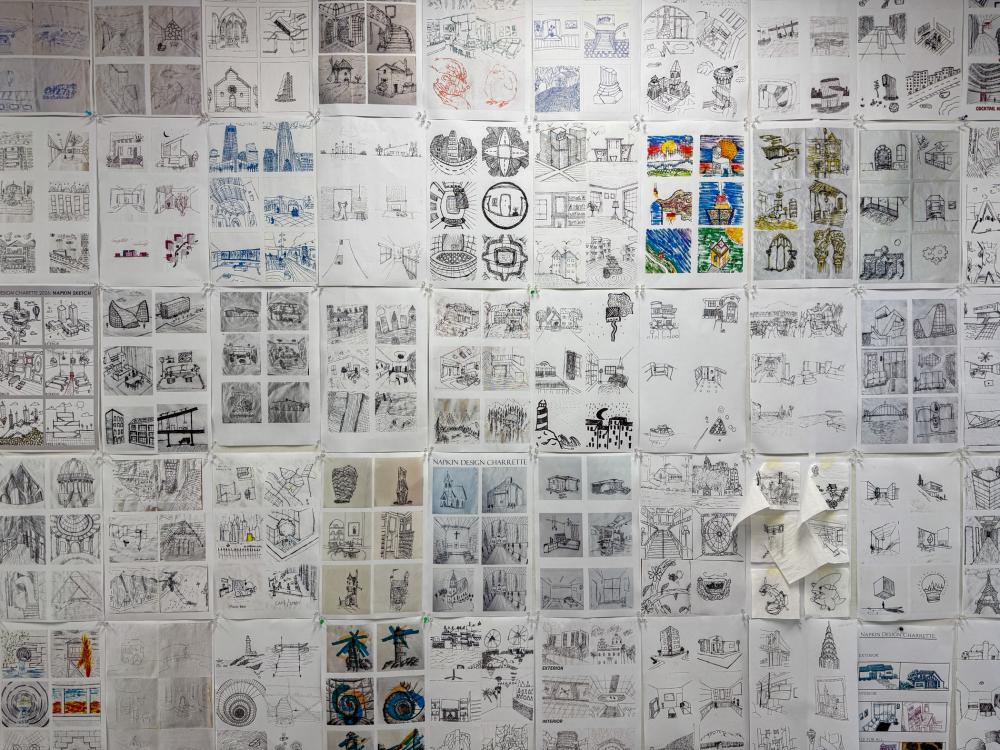
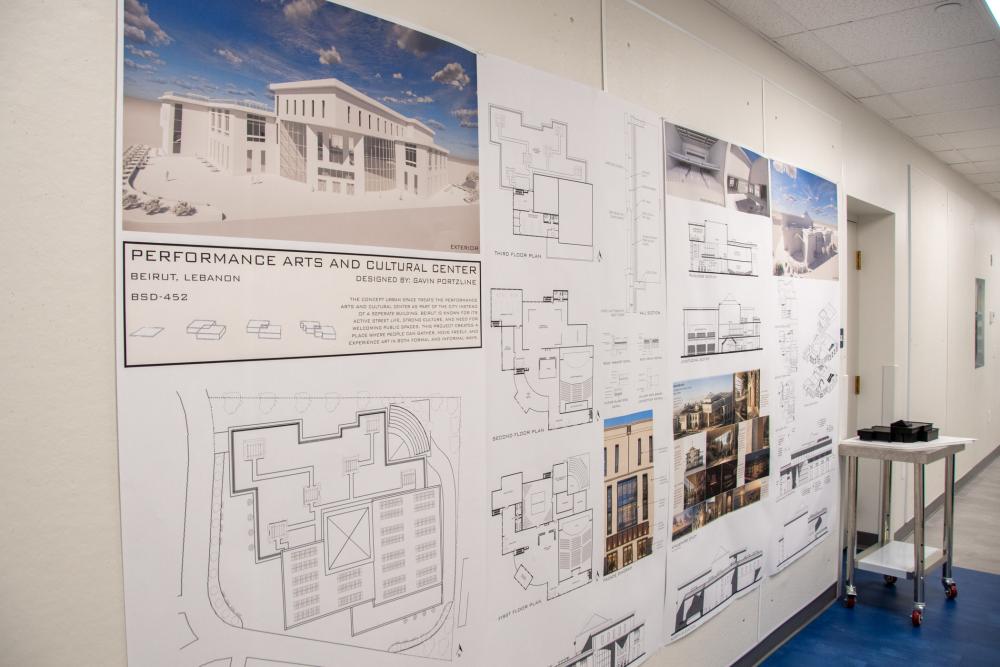
Mixed use studios carve out space for design presentation, computer work, and layout table with designated model-building areas.
Featured Videos
Virtual Tour
Think you have what it takes to design the future? Meet Professor Dorothy Gerring who will discuss the program and give you a tour of the hands-on studio spaces.
The Dr. Welch Workshop
The makerspace is an open workshop for all students. Take hands-on learning to the next level. Explore your creativity. Bring your ideas to light. Collaborate with others or work independently to test theories, explore ideas, and gain real-world skills to power your career.
Maker Profiles
Tour Schedule
Seeing is believing.
Think Penn College might be a good fit for you? Make plans to visit and discover what hands-on learning is all about.
Feb 21
Undergraduate Open House
Saturday, February 219 AM - 3 PM
Apr 26
Undergraduate Open House
Sunday, April 269 AM - 3 PM
Internship
Your knowledge in practice
Internships are key for career preparation. Apply your know-how in the workplace and learn about the industry first-hand.
Industry Partners
Work with experts to become an expert
Penn College's strong corporate partnerships impact every step of your journey – from your first day in the classroom and labs, to career placement (oftentimes before graduation) and beyond.
Related Programs
Follow your passion
Student Life
Lead and put your skills to the test
American Institute of Architecture Students (AIAS) at Penn College
Appreciate architecture with friends and make connections that last a lifetime. This organization focuses on building leadership skills and community outreach.
Student Organizations at Penn College
Your college experience is about more than the classroom. Join one of 65+ clubs and organizations, or create your own.
Penn College News
Tuesday, November 25, 2025
Lester receives Pennsylvania Impact Award
Thursday, July 31, 2025
Architecture students design ideas for net-zero youth center
Tuesday, May 20, 2025
Architecture grads 'cap' studies with exhibition
Study Abroad
Gain global experience
See the world via Williamsport. Take your education abroad and get hands-on experience learning about your industry on a global scale.
Student Experience
The community as their classroom
Enrichment through site visits
Architecture students benefited from eye-opening visits to the Lycoming County Resource Management Services landfill in Allenwood and the John R. T. Ryan Restaurant & Brewery in a section of downtown Williamsport that recently underwent extensive redevelopment.
More Information
The Bachelor of Architecture program is pursuing initial candidacy status for accreditation with the National Architectural Accrediting Board.
- 2023 - Architecture Program Report - Candidacy
- NAAB Decision Letter Awarding Candidacy
- NCARB ARE Pass Rates
- Conditions for Accreditation, 2020 Edition
- Procedures for Accreditation, 2020 Edition
In the United States, most registration boards require a degree from an accredited professional degree program as a prerequisite for licensure. The National Architectural Accrediting Board (NAAB), which is the sole agency authorized to accredit professional degree programs in architecture offered by institutions with U.S. regional accreditation, recognizes three types of degrees: the Bachelor of Architecture, the Master of Architecture, and the Doctor of Architecture. A program may be granted an eight-year term, an eight-year term with conditions, or a three-year term of initial accreditation, depending on the extent of its conformance with established education standards.
Doctor of Architecture and Master of Architecture degree programs may require a non-accredited undergraduate degree in architecture for admission. However, the non-accredited degree is not, by itself, recognized as an accredited degree.
Pennsylvania College of Technology Architecture & Sustainable Design Department offers the following NAAB accredited degree program: Bachelor of Architecture (ARC) requiring 152 credits.
The NAAB grants candidacy status to new programs that have developed viable plans for achieving initial accreditation. Candidacy status indicates that a program expects to achieve initial accreditation within six years of achieving candidacy, if its plan is properly implemented.
In order to meet the education requirement, set forth by the National Council of Architectural Registration Boards, an applicant for an NCARB Certificate must hold a professional degree in architecture from a program accredited by the NAAB; the degree must have been awarded not more than two years prior to initial accreditation. However, meeting the education requirement for the NCARB Certificate may not be equivalent to meeting the education requirement for registration in a specific jurisdiction. Please contact NCARB for more information.
Pennsylvania College of Technology Architecture & Sustainable Design Department was granted candidacy status for the following professional degree program in architecture: Bachelor of Architecture (ARC) requiring 152 credits; Year candidacy awarded: January 1, 2023; Next visit: Continuation of Candidacy November 2025; Projected year to achieve initial accreditation: 2027; Earliest graduation date projected to meet NCARB education requirement: May 2027.
In addition to the transfer standards established by the College, students seeking transfer credit from another institution for architecture program courses may be asked to submit examples of coursework to the architecture department head. Determination by the department head as to whether transfer credit is given will be based on alignment of the transfer course with Penn College course content and established NAAB Program and Student Criteria.
View the Architectural Technology Tool List
Architecture Related Software and Computer Specifications
Students in the Architecture Department programs are required to purchase their own laptop computers for use during our courses and labs. The minimum computer specifications below are based on the hardware requirements needed to run the software that we utilize including:
- Autodesk AutoCAD®
- Autodesk Revit®
- Adobe Photoshop®
- Act-3D Lumion®
- Microsoft Office®
Minimum Laptop Computer Requirements
- 64-bit Windows 10 or higher (recommended).
- Multi-core Intel Core i7 or i9 CPU running at 2.5 GHZ or higher (recommended).
- 32+ GB RAM (required).
- 1+ TB M.2 NVMe Drive (recommended).
- Dedicated 8+ GB graphics card (required).
- Video Display Resolution 1920 x 1080 (could be higher, but will impact Lumion® performance).
- Laptop must include a webcam and microphone (required).
- Laptop must include a wireless network card (required).
- Broadband Internet connection when working off campus.
- Additional plug-ins for software may be required (Information Technology Services Service Desk available for assistance).
- Multi-year support plan including accidental damage protection (recommended).
- The specifications above are based on requirements for Revit ® 2023 “Performance” system recommendations and Lumion® 12.5 “Recommended requirements”. Please review those sites to ensure your laptop meets the requirements.
- *Apple computers and Chromebooks are prohibited.
Tools are available for purchase through The College Store.
Alternative Credit refers to academic credits earned through means other than traditional college course completion, including: credit by exam, articulation, proof of competency gained in high school, work/life experience, and advanced placement.
Visit the Alternative Credit Options page for requirements and procedures and for information on credit through Advanced Placement.
- Mr. Larry Basile, '91, Executive Vice President, Supply Source, Inc.
- Mr. David W Daneker, '81, Construction Project Manager, UPMC Susquehanna
- Mr. Robert J Gehr, AIA, NCARB, '86, Vice President, Retail Design & Buildings, Larson Design Group, Inc.
- Mr. Jeff A LeFevre, '75, President, LeFevre Wilk Architects, LLC
- Ms. Erica Schreffler, '12, Architecture Project Coordinator, Crabtree, Rohrbaugh & Associates
- Mr. Brent A Stebbins, '88, Partner/Architect/Designer, RLPS Architects
- Mr. Anthony H Visco, Jr., '69, Owner, Anthony H. Visco, Jr., Architects
- Mr. Daniel Willis, Emeritus Professor of Architecture, Penn State University