Global Experience: Ceramics in Japan

GLB 299 is a hands-on creation of ceramics using time-honored techniques that connect practice with cultural traditions.

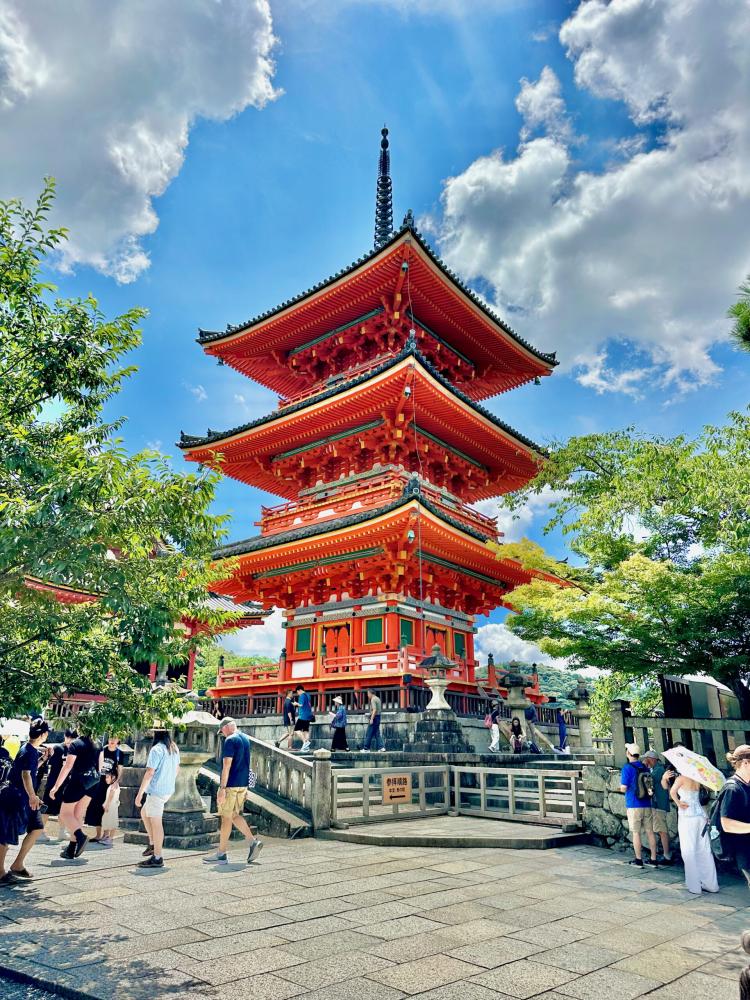
Red multi-tiered pagoda surrounded by trees with visitors walking nearby

How does this work?

This Japan study abroad program is designed as a fully supported, immersive academic and cultural experience, with students traveling together as a group under faculty guidance. The itinerary centers on Kyoto and the Kansai region and blends intensive hands‑on ceramic study—such as loading, firing, and unloading an anagama kiln in Shigaraki, raku workshops with master artists, and technique‑based studio sessions—with curated cultural experiences including temple visits, museums, tea ceremony, cooking classes, and day trips to Nara and Osaka. Housing, airport transfers, local transportation, and in‑country travel are arranged in advance, and students participate in a structured daily schedule that balances guided instruction with cultural exploration. Faculty and local experts provide continuous support while students engage directly with Japanese artistic traditions, history, and daily life, allowing participants to focus on learning, collaboration, and meaningful cross‑cultural exchange without managing logistics on their own.

Costs include tuition, flight, hotel accommodations, and tours.

May 17 - May 28, 2027

Details:

  • Immersive Ceramics Experience in Shigaraki: Hands‑on participation in loading, firing, and unloading a traditional anagama kiln, plus raku firing workshops led by Japanese master ceramic artists
  • Studio‑Based Learning: Technique workshops including nerikomi, raku, and anagama processes aligned with students’ prior coursework
  • Cultural Arts & Heritage Exploration: Visits to the Shigaraki Ceramic Cultural Park, Raku Museum with tea ceremony, Kyoto International Manga Museum, and historic studios and factories
  • Historic & Cultural Sites: Guided visits to iconic locations such as the Golden Pavilion (Kinkaku‑ji), Ryoan‑ji, Fushimi Inari Shrine, Gion District, and Todaiji Temple in Nara
  • Experiential Cultural Activities: Japanese cooking class, tea ceremony, and guided museum tours that deepen cultural understanding
  • Structured & Supported Travel: Group travel with faculty leadership, organized transportation, and a thoughtfully paced itinerary based in Kyoto and the Kansai region
  • Cross‑Cultural Engagement: Direct interaction with local artists, instructors, and cultural practitioners, fostering meaningful artistic and cultural exchange

  • Group lodging arranged in comfortable, centrally located hotels primarily based in Kyoto and the Kansai region 
  • Accommodations selected for proximity to academic sites, cultural landmarks, and public transportation 
  • Lodging supports both group cohesion and easy access to daily program activities
  • Daily breakfast included at group accommodations
  • Select group meals incorporated into the itinerary, including cultural dining experiences such as a Japanese cooking class
  • Additional meals taken at local restaurants or independently to encourage cultural exploration and flexibility
  • Airport transfers arranged for group arrival and departure in Japan
  • All program‑related travel coordinated in advance, including travel between Kyoto and Shigaraki
  • Use of a combination of private transportation and public transit to support efficiency and an authentic cultural experience
  • Group travel organized and supervised throughout the program by faculty and local partners

  • Must meet PCT policies and procedures
  • 3-credit course

This course can replace the required ART 125 course for BGD, AR, and BIX students.

Successful completion of the course will satisfy the following electives: open elective, cultural diversity perspective elective, or core arts perspective.

Billable Expenses
  • Program Cost: $4500
  • Airfare: $1,000 (approximate)
  • International insurance: $30 (approximate)
  • Tuition/Fees (in-state): $623/credit x 3 = $1,869

Total: $7,399 (approximate)

*estimated costs, final costs coming soon* 

Non-Billable Expenses
  • Some meals & incidentals: $400 (approximate)
  • International phone plan: $100 (approximate)

Total: $500 (approximate)

Grand Total: $7,899 (approximate)

Billing

All billable expenses appear on a student’s semester bill as: Tuition/Fees (credit hours) and International Travel Fee (program and travel costs). Some costs and expenses are estimates. Payment overages will be refunded to students after all trip costs are reconciled on June 30.

Financial Aid

Most financial aid you would receive on campus can be applied toward the cost of this program. All financial aid eligibility is determined by Financial Aid. 

Scholarships

The Spring-Summer 2027 application deadline is October 2027. Apply by submitting your interest to Global Experiences at global@pct.edu.

Eligibility

Good standing - A status indicating that a student is not under any disciplinary sanctions, has no unsatisfied financial obligation to the College, and is not on academic probation or suspension. 

Committing to your Program

All students register for their program during the normal advising period in the semester prior to the program start. Registration in the course constitutes commitment to the payment terms. Semester bills will include the associated billable expenses of tuition/fees and the International Travel Fee. 

Withdrawal Policy

Students will be subject to the Termination, Drops, and Withdrawals Policy (P4.31) and the Refunds Policy (P5.23) for the tuition/fees and International Travel Fees associated with the course. Travel-related costs may be refunded to the student to the extent those costs have not already been contractually committed by the College to outside parties. Note that contractually committed costs increase closer to the travel date. In cases where program costs are divided evenly among all participants, the student’s portion of costs will be considered contractually committed and non-recoverable. If at any point prior to travel, a student is no longer in good standing, they may be removed from the course and prohibited from traveling. Those students may receive refunds minus all non-recoverable costs.

Experienced Faculty: Meet Your Faculty Guides

Gerald Kaplan

Instructor, Ceramics

Gerald Kaplan is a London native and holds dual citizenship in the UK and the US. Although he was primarily raised in the United States, he has returned to the UK numerous times, often leading student groups.

Dr. Craig Miller

Professor, History/Political Science, Department Head

Dr. Craig Miller is a native of New York and has travelled extensively domestically and abroad.

Global Experiences: Insights from Global Journeys

Contact:

Questions?

For general questions about Global Experiences, such as study-away programs and student exchanges at Penn College, contact Daniel Clasby, Assistant Dean of Academic Operations.