A Passive House is typically oriented to the sun, with the majority of the windows facing south for solar access. The walls are typically much thicker than an average home, a foot or more depending on the climate, and are super-insulated with R-values (a measure of insulation's ability to resist heat traveling through it) far beyond the minimum required by the local building code.
“The idea is to gain a significant amount of heat from the sun in the winter, and to retain it throughout the day and into the night,” Campbell explained. “These types of homes have airtight construction, so that once you let the heat in, you hold on to it.”
Older homes regularly lose their conditioned air through cracks in the walls and voids in the insulation, he said, requiring constant work by mechanical systems to replace it.
“The efficiency of this approach can result in significant savings on energy expenses,” Campbell said. “The sun and the house itself do much of the work that, in the past, would have been done by the mechanical system. Buildings designed to the Passive House standard can save up to 80% or 90% on energy costs compared to a typical home.”
Equipped with that foundational knowledge base, the group met with Hershberger, who helped define such aspects of the home as overall size and the number of bedrooms, then spent several weeks developing their solutions.
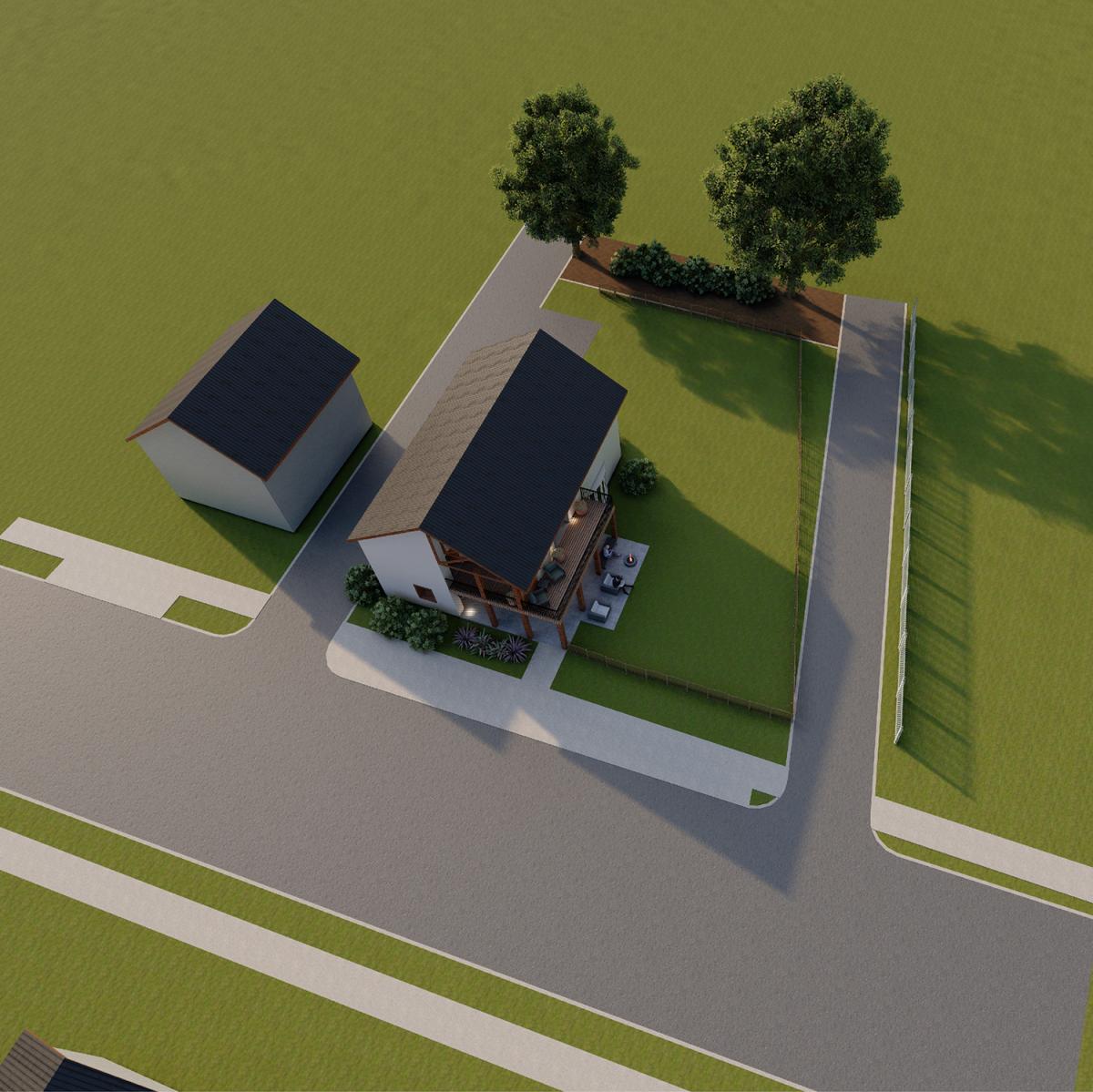
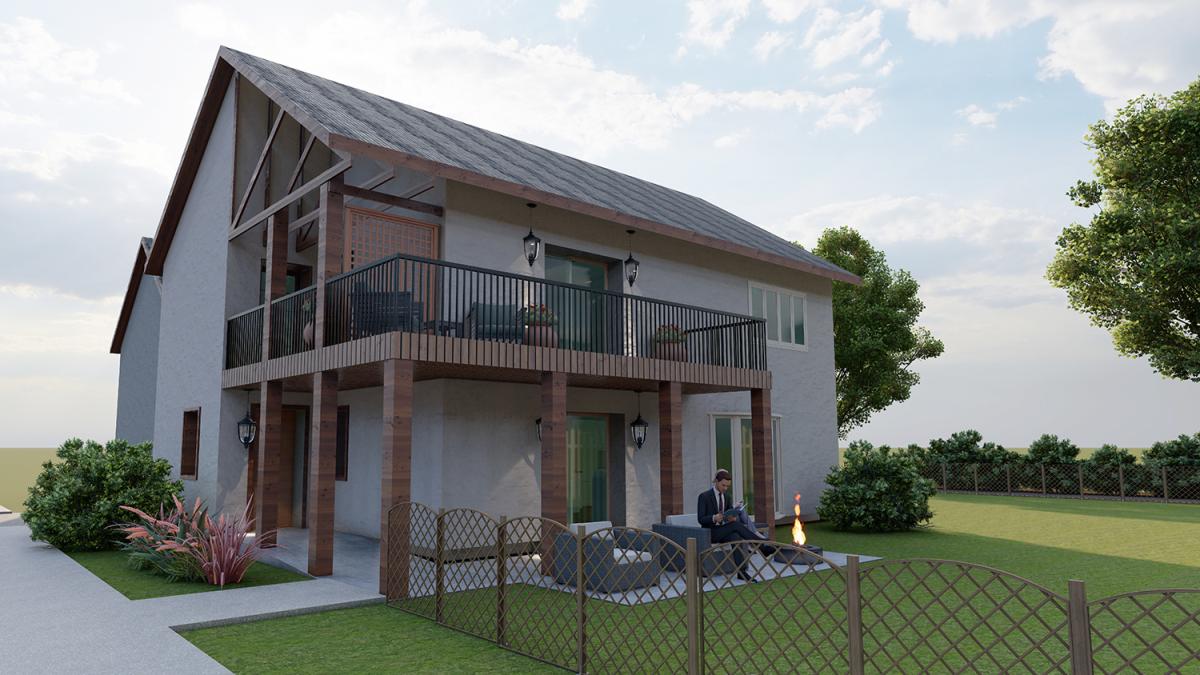
Students created highly energy-efficient designs compatible with aesthetics of the neighborhood – designs that were reviewed by Hershberger, Lester and Hamelly. The jurors’ chosen project was the work of Sadie S.E. Niedermyer, who earned an associate degree in architecture last year and is working toward her bachelor’s in architecture & sustainable design.
“One of the most difficult aspects of the project was making the design ‘net zero’ while maintaining the layout requirements and standards set by Habitat for Humanity,” said Niedermyer, of Spring Mills. “Essentially, not only does this house need to be extremely energy-efficient – producing as much energy as it uses – but it has to meet strict economic and size standards.”
Niedermyer addressed this by creating a compact two-story residence. Little of the floorplan is dedicated strictly to circulation; instead, she chose an open floor plan to optimize the living space. Photovoltaic panels were used on the south-facing portion of the roof; the dwelling was strategically placed to take advantage of the solar gains, orientation and site.
“Opportunities for additions and a future driveway were also considered in the design,” she noted. “It is not standard for Habitat for Humanity homes to have a garage or driveway, but I left additional open space on the site so that they could potentially be easily added.”
Niedermyer has worked for three years with Albert A. Drobka, a State College-based architect, and is no stranger to seeing her designs become real. Even if the novelty has worn off, though, the rewards never pale.
“I am still proud of the accomplishment and am excited to see it completed!” she said.
Niedermyer’s vision for the home will likely be altered during the construction process, but Campbell said she did “an exceptional job” in aligning her project with PHIUS standards.
“Her design is very compact in form, which is something you typically see with a Passive House,” he said. “A compact form results in a smaller surface area-to-volume ratio, which requires less air conditioning and which helps to minimize heat loss through the walls.”
Niedermyer’s plans drew praise for efficiency in layout; no space is wasted, and her design is appropriate within the budgetary and material confines of a Habitat project.
“Sadie’s solution is beautiful in its simplicity, but also highly advanced in its application of the Passive House principles,” Campbell said. “It will make a wonderful home for the future Habitat family.”
For more about Greater Lycoming Habitat for Humanity, call 570-322-2515.
For more about Penn College, a national leader in applied technology education, email the Admissions Office or call toll-free 800-367-9222.