Penn College News

Penn College creates mock press conference for state reps

Wednesday, April 15, 2026

photos by Alexandra Butler, photographer/photo editor

A group of state representatives recently visited Pennsylvania College of Technology to learn more about the emergency management & homeland security program and further explore the Multiple Interactive Learning Objectives system.

Although some members of the group were introduced to the 360-degree virtual tool during a visit to the school in early February, this was a unique opportunity for the legislators to become fully immersed in MILO through a simulated press conference. Students also benefitted by putting their knowledge into action.

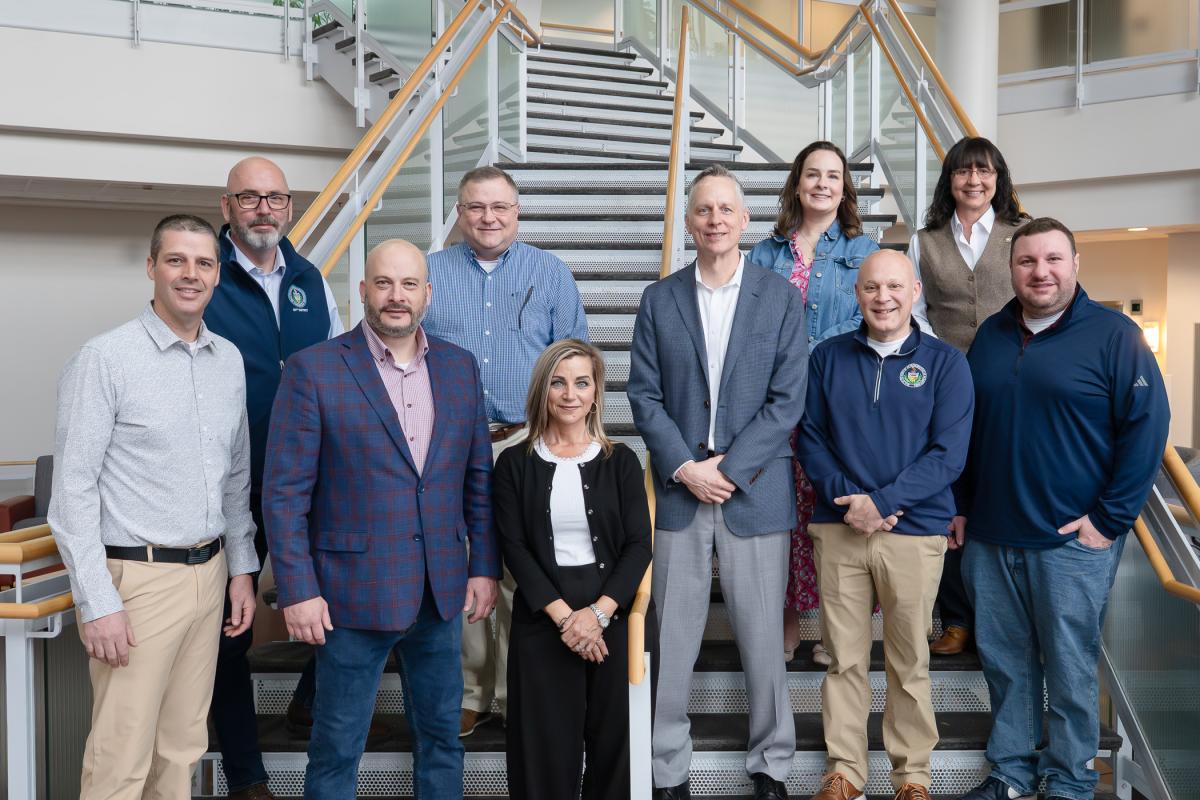
A group of state representatives recently visited Pennsylvania College of Technology's emergency management & homeland security program. The legislators tested their crisis communication skills with a virtual press conference in the Multiple Interactive Learning Objectives system. Attendees include, from left, Clinton Owlett (68th PA House District and a Penn College Board member); Scott Barger (80th PA House District); Jonathan Fritz (111th PA House District); Marc Anderson (92nd PA House District); Catherine Wallen (193rd PA House District); Penn College President Michael J. Reed; Andrea Verobish (79th PA House District); Eric Weaknecht (5th PA House District); Brenda Pugh (120th PA House District); and Chad Reichard (90th PA House District).

“The benefit for the legislators was to better understand emergency management and to be able to have an experience giving a press conference,” said William A. Schlosser, instructor of emergency management & homeland security. “For our students, it was having the experience of actually briefing an elected official and understanding the level of detail that is needed to give the elected official the ability to give the briefing.”

Representatives whose crisis communication skills were put to the test were Marc Anderson (92nd PA House District), Chad Reichard (90th PA House District), Scott Barger (80th PA House District), Andrea Verobish (79th PA House District), Jonathan Fritz (111th PA House District), Catherine Wallen (193rd PA House District), Brenda Pugh (120th PA House District) and Eric Weaknecht (5th PA House District). Also in attendance and acting as live members of the media were Clinton Owlett (68th PA House District and a Penn College Board member); Jamie Flick (83rd PA House District and a Penn College graduate); Lindsay Ewing, executive director to the republican secretary; and Jill Beatty, executive assistant to leadership.

Penn College President Michael J. Reed welcomed the group to campus before Schlosser set the scene for the day. Half of the group began with a main campus tour, while the remaining four were briefed about an “emergency” unfolding on campus.

“There has been a building collapse in your district. The building is on a college campus and there are many feared killed in the collapse. No one really knows why the building collapsed, but there may need to be state assistance, as well as help talking with the public about the event.”

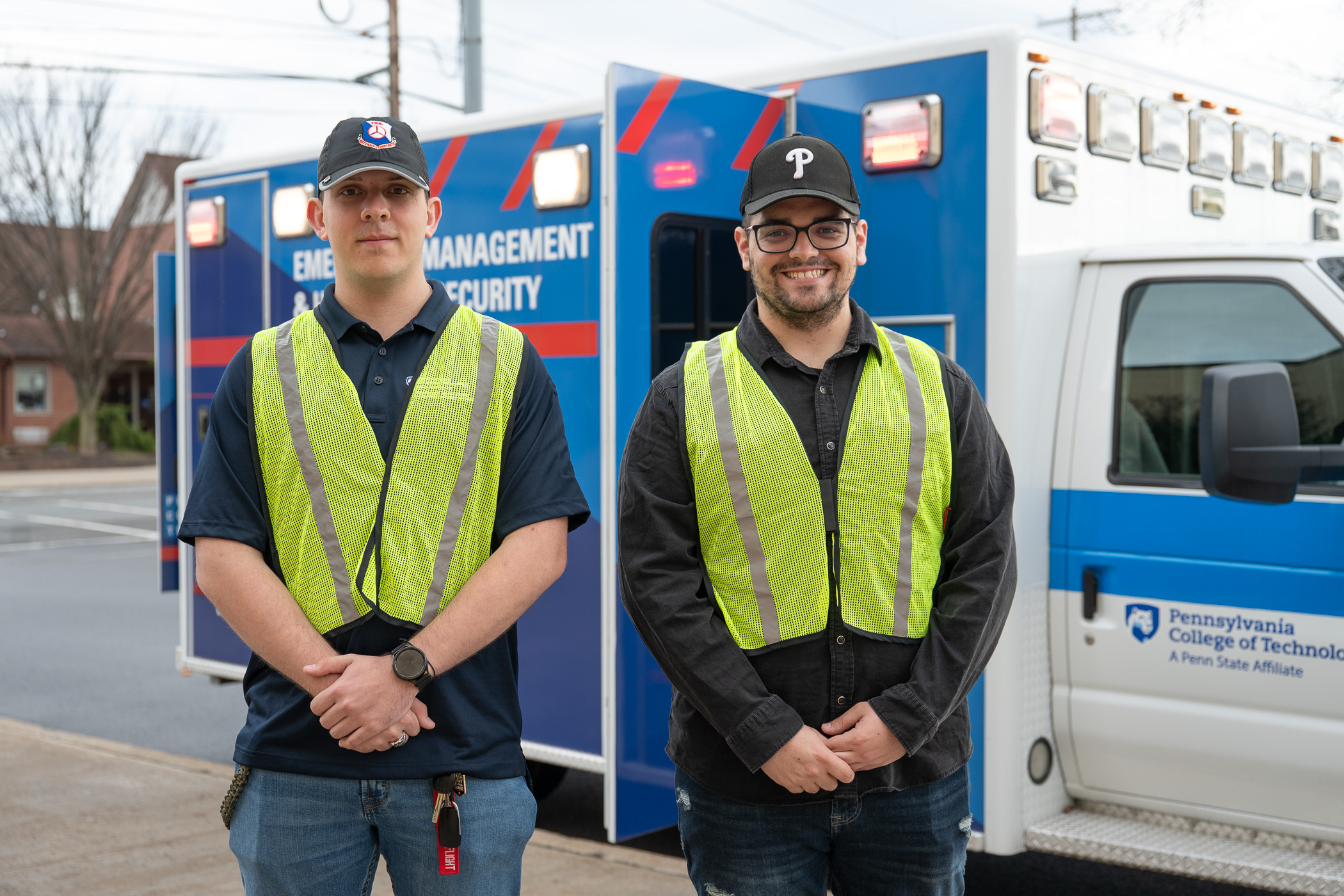
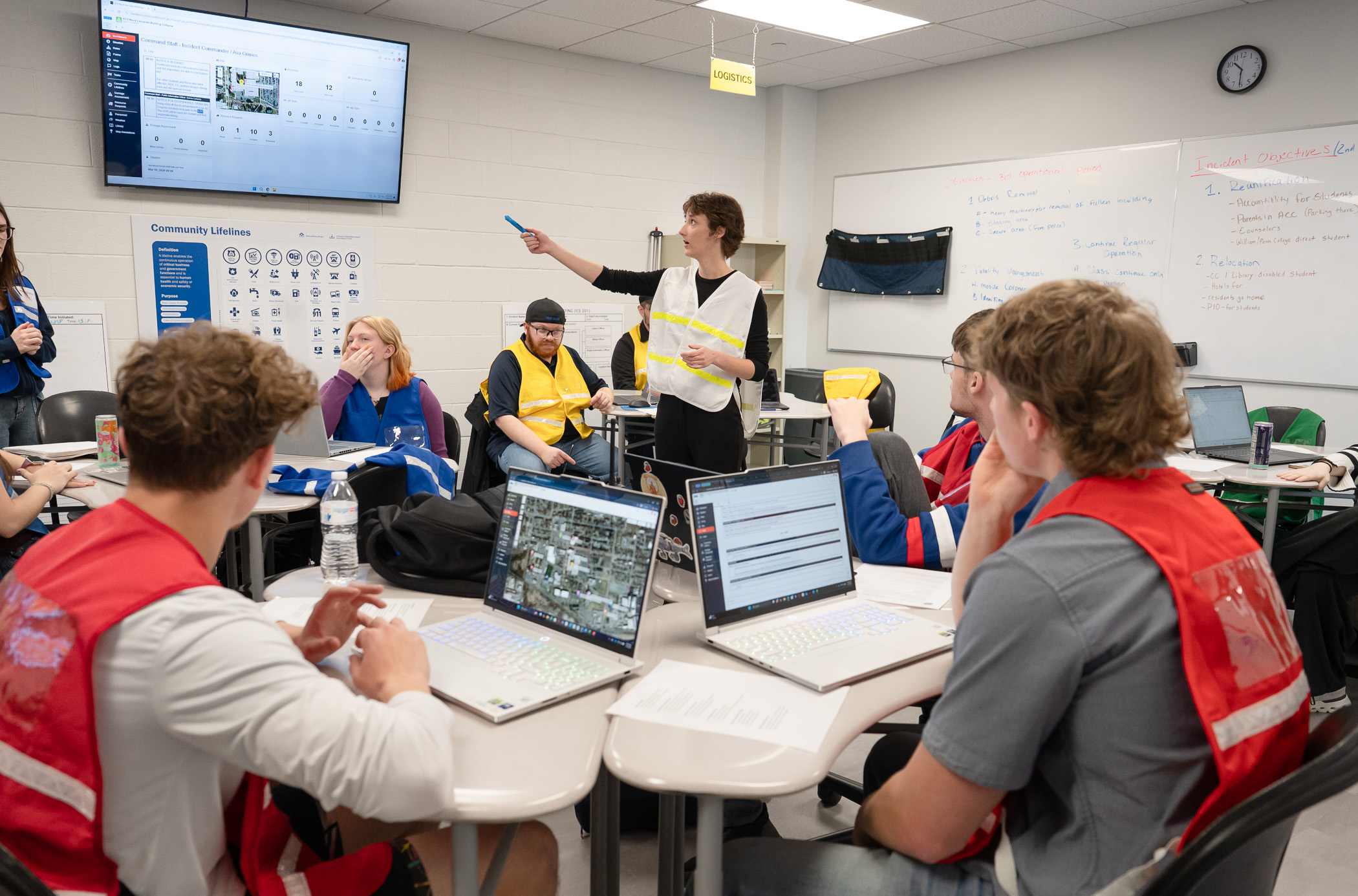
Guests were then instructed to find their way to the mobile command post, where incident responders – portrayed by students Steven M. Laity, of Nanticoke, and Garrett S. Andrews, of Mill Hall – shared details about the crisis. From there, attendees made their way to the Penn College Emergency Operations Center, where student Ava R. Grimes, of Lock Haven, incident commander, managed all aspects of the event, including the oversight of students serving in planning, operations, logistics and finance. There, the elected officials asked questions in preparation for their time in the crisis simulation lab.

“Legislators were briefed by emergency management students on the details of the incident to help them prepare for the press conference,” Schlosser said.

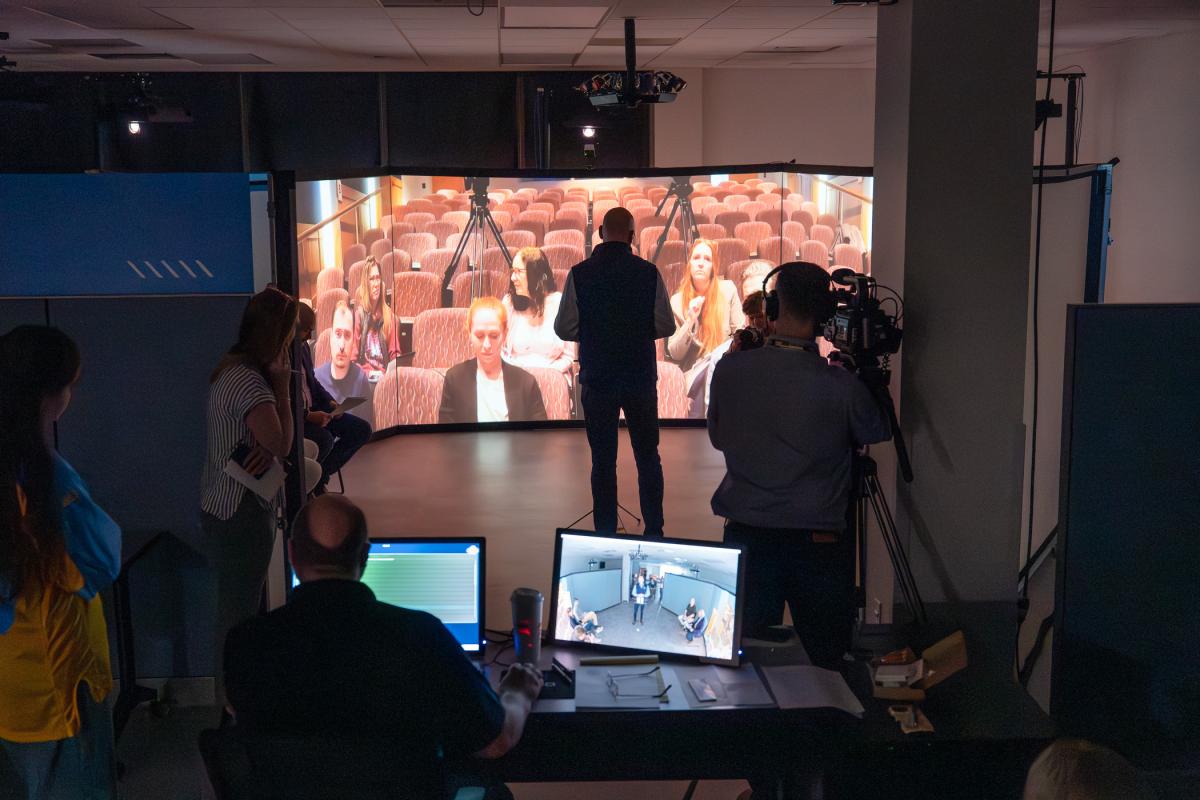
One-by-one, each participant took to the podium in the center of MILO, where a room of reporters appeared on the screen to ask questions and challenge legislators to use their crisis response skills to remain calm, steady, reassuring and on point. Owlett, Flick, Ewing and Beatty added to the tension by interjecting their own questions and opinions, and a frantic student in search of her twin brother aimed to further increase anxiety levels.

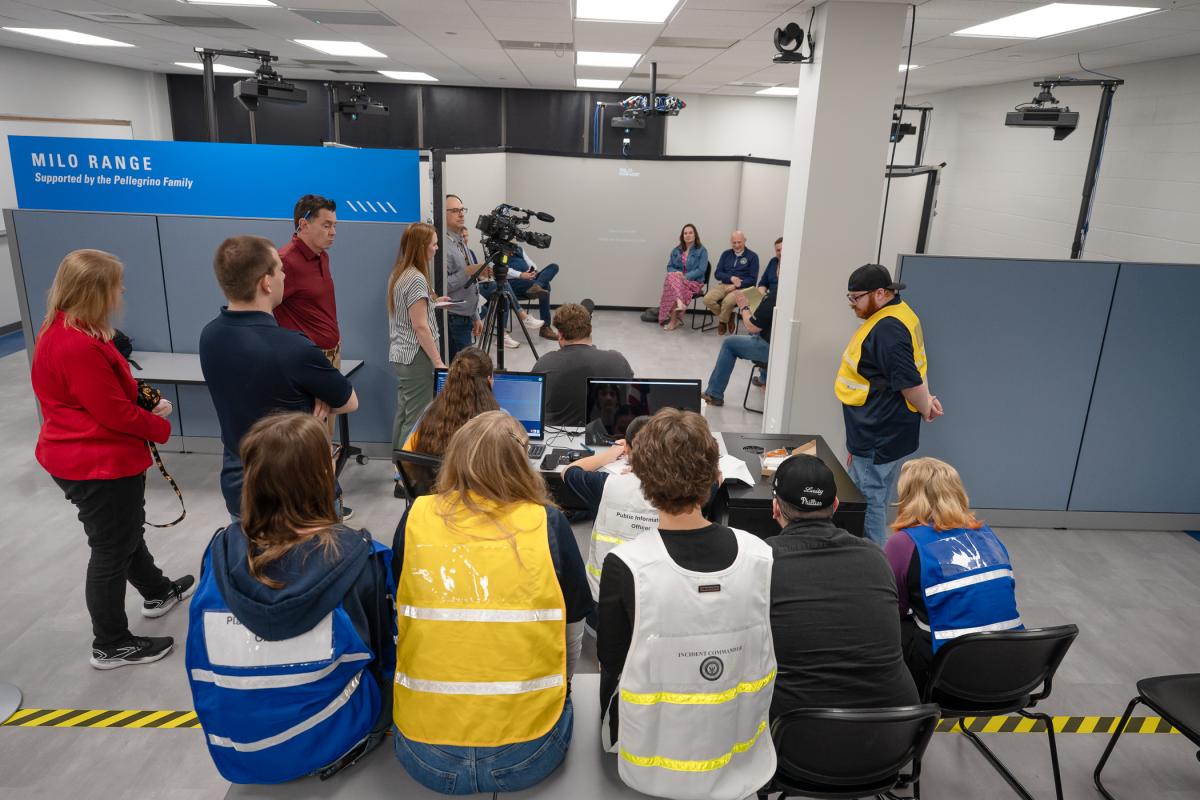
Overall, each of the legislators tactfully completed the activity. They watched a playback of themselves during a debriefing session with Schlosser, who offered a few pointers: Keep internal emotions under control, avoid using acronyms or specialty language, consider speaking with a fifth-grade reading level in mind (the level at which press releases should be written), lead with a strong opening and acknowledge the human gravity first, maintain an even temperament, refrain from taking the bait when questions are asked with intensity or are politically fueled, and always ask for an Emergency Operations Center briefing before speaking during a press conference.

In preparation for the experience, Barger said he asked questions in the operations center that he thought people, specifically parents, would want to know the answers to.

“The most important thing right now is to tell people to stay put,” he said. “We need to make sure that people know that we’re dealing with the most important thing first, which is secure the site so search and rescue can do their job. The actual press conference part, I think I was ready for it. I was expecting some aggression, but that’s no worse than the floor of the House of Representatives. That was awesome. That was a unique experience, and I hope that I’m never called upon to do that kind of press briefing. It was valuable. I’m very impressed with what you folks are doing, not just the simulation from my part, but also what the students are going through. It looks like they’re getting as close to a real-world-experience simulator right here.” 

State Rep. Scott Barger (80th PA House District) takes his turn during a simulated press conference offered through the MILO system. Barger called the experience awesome, unique and valuable.

Verobish also spoke about the value in the hands-on nature of the program and was struck by the ways in which students communicated with one another throughout the activity. For her part, she wanted to portray accurate information, stop rumors and make sure everyone worked together to resolve the situation as quickly as possible.

“I pretty much just stuck to the facts because there was a lot of speculation questions – ‘things we’re seeing on social media’ – and avoided feeding into any rumors,” she said. “It was really cool to experience, and I think that helps students really simulate and see what it would be like, and that is a great resource. Us getting to see that has been a benefit because I didn’t even know that this existed here.”

Like many of her student peers, Katie Lackey, of Troy, has seen many press conferences, but she found it interesting to see how elected officials gather their information on the back end of things.

“I always thought it just came from them – they did the research, they figured it out,” she said. “That is not the case, so to see that helps me better understand what an emergency management role is.”

State representatives debrief with William A. Schlosser, instructor of emergency management & homeland security, after participating in a simulated press conference.

Fellow student Arianna M. Folmar, of State College, agreed.

“It also helped me understand more about what information should or should not be disclosed to the public during an active incident,” she said. “I thought it was very valuable to also be the person briefing the representatives, as it helped me look at the incident in a different way and ensure I’m giving the most information, while also being clear about what we are trying to emphasize to the press.”

Schlosser commended participants for an outstanding job.

“It was truly a learning experience for all parties and a win-win partnership with the Legislature,” he said.

To learn more about the college's emergency management & homeland security degree, call 570-327-4521.

For information about Penn College, a national leader in applied technology education, email admissions@pct.edu or call toll-free 800-367-9222.