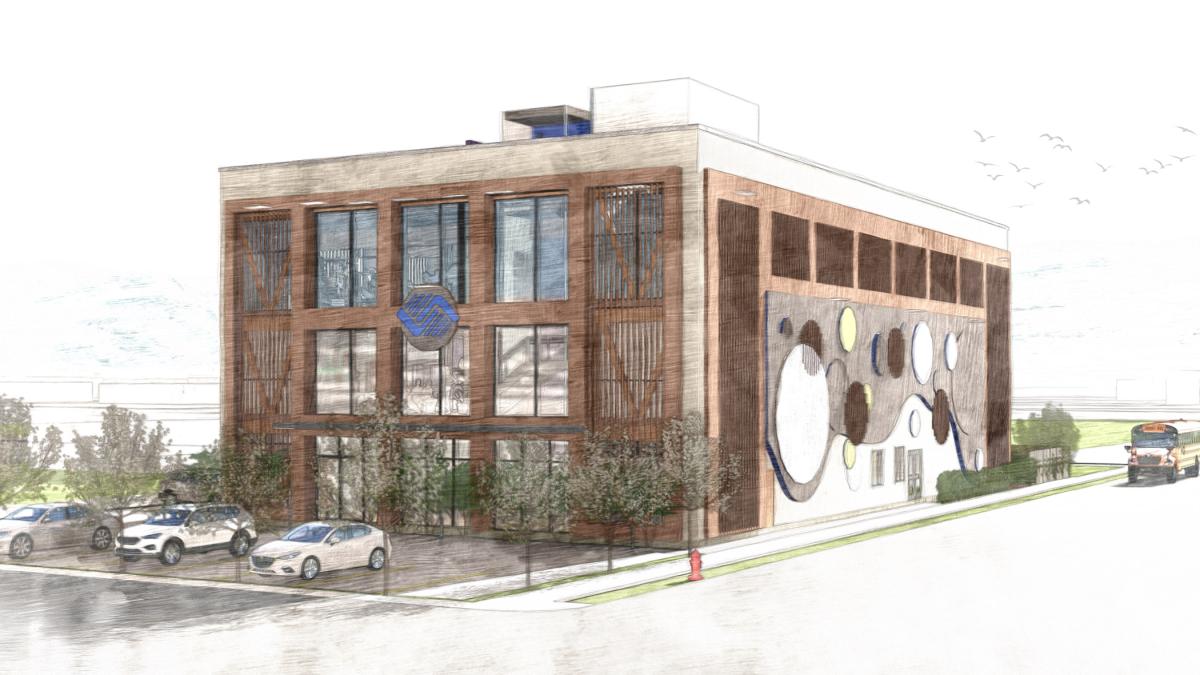
The students’ design was based on Boys & Girls Clubs of America standards and information in the city’s Park Avenue Plan.
The students began working on the facility design in October – when the competition was still formatted as the “Solar Decathlon” – and met with Slaughter throughout the process.
“This project is a testament to the students’ dedication, creativity and vision,” the mayor said. “Their design aligns with our city’s commitment to creating sustainable, safe and inspiring spaces where young people can grow, thrive and lead.”
In May, the students joined 18 other collegiate teams in the Open Commercial Division to present their plans to a panel of industry experts. While originally a 10-part competition with semifinals and finals, the event transitioned in early 2025 to a “showcase” for any team that chose to present.
“This project would be Williamsport’s first net-zero building,” said Kayla A. Weinzierl, a Bachelor of Architecture student from Summerhill. “It is designed with the health, safety and the community at its core.”
In a net-zero energy building, 100% of energy demand is met by on-site renewable energy.
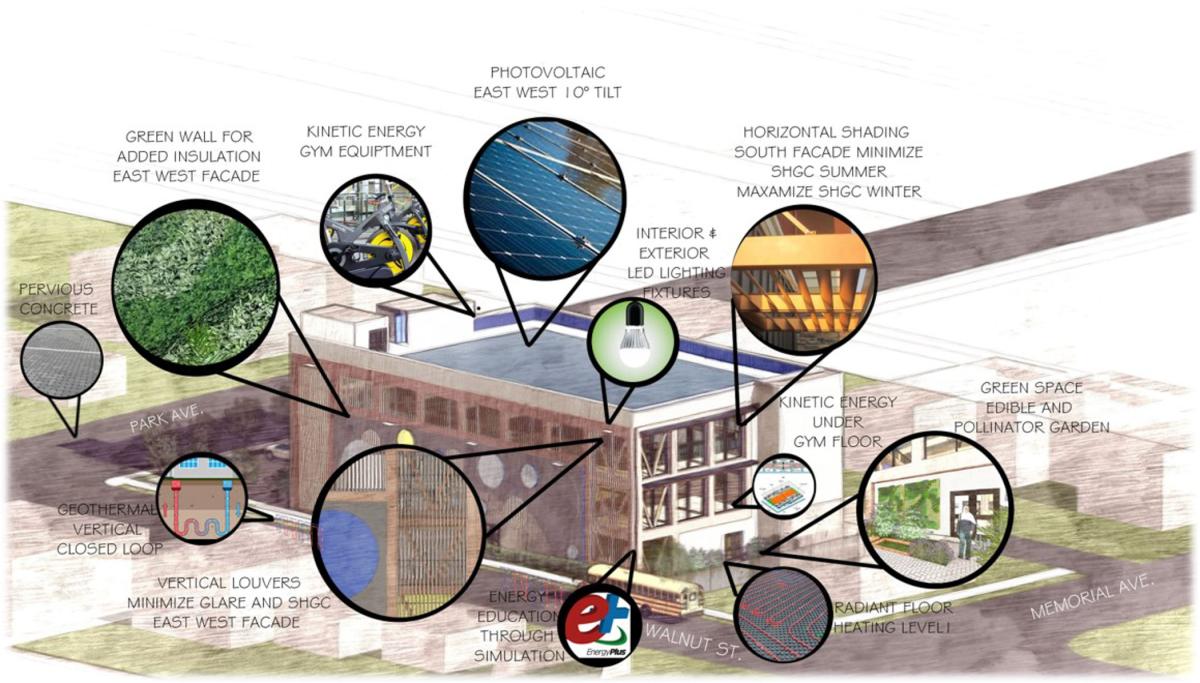
To achieve net zero, the students’ plans call for solar panels on the roof. A tight building envelope helps minimize energy demand from its heating, ventilation and air conditioning system.
The students chose a vertical geothermal heating system. Their design takes advantage of daylighting from the sun. On the building’s east and west sides, vertical louvres on the windows help to minimize glare and solar heat gain, while a green wall system – an exterior wall covered in plants – provides extra insulation and is a natural air filter. Horizontal window shading on the south side minimizes solar heat gain in summer and maximizes it in winter.
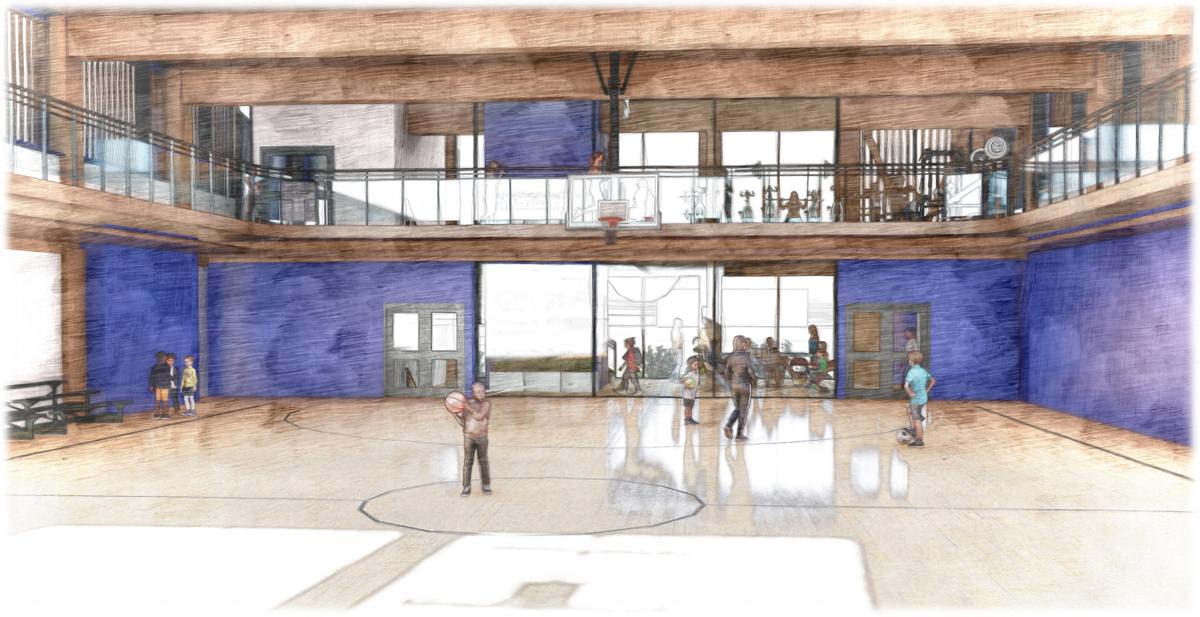
Their design also incorporates kinetic energy technology in fitness equipment and under the gymnasium floor. The technology uses movement to generate electricity.
The students selected building materials and furnishings that are Pennsylvania sourced and low in volatile organic compounds. The building’s structural system uses mass timber – a renewable resource that can be sourced locally and is a low-carbon alternative to concrete or steel. Pervious concrete also helps to reduce the facility’s impact.