But as some numbers get larger, he explained, so does opposition to participation by people comprising those groups. Notions that hark back to the post-Civil War Reconstruction period, "ideas of who belongs and who doesn't belong," have sparked a resurgence of resentment that leads aggrieved parties to counter every step toward inclusion.
That has led to a tug of war, he said, between the forces of electoral suppression – those working to limit the number of polling places or purge voters from the registration rolls, for instance – and those mobilizing to register more voters and make sure they go to the polls.
"It's fun for a scholar to try to figure out, perhaps, but not for a country to go through," Fraga said.
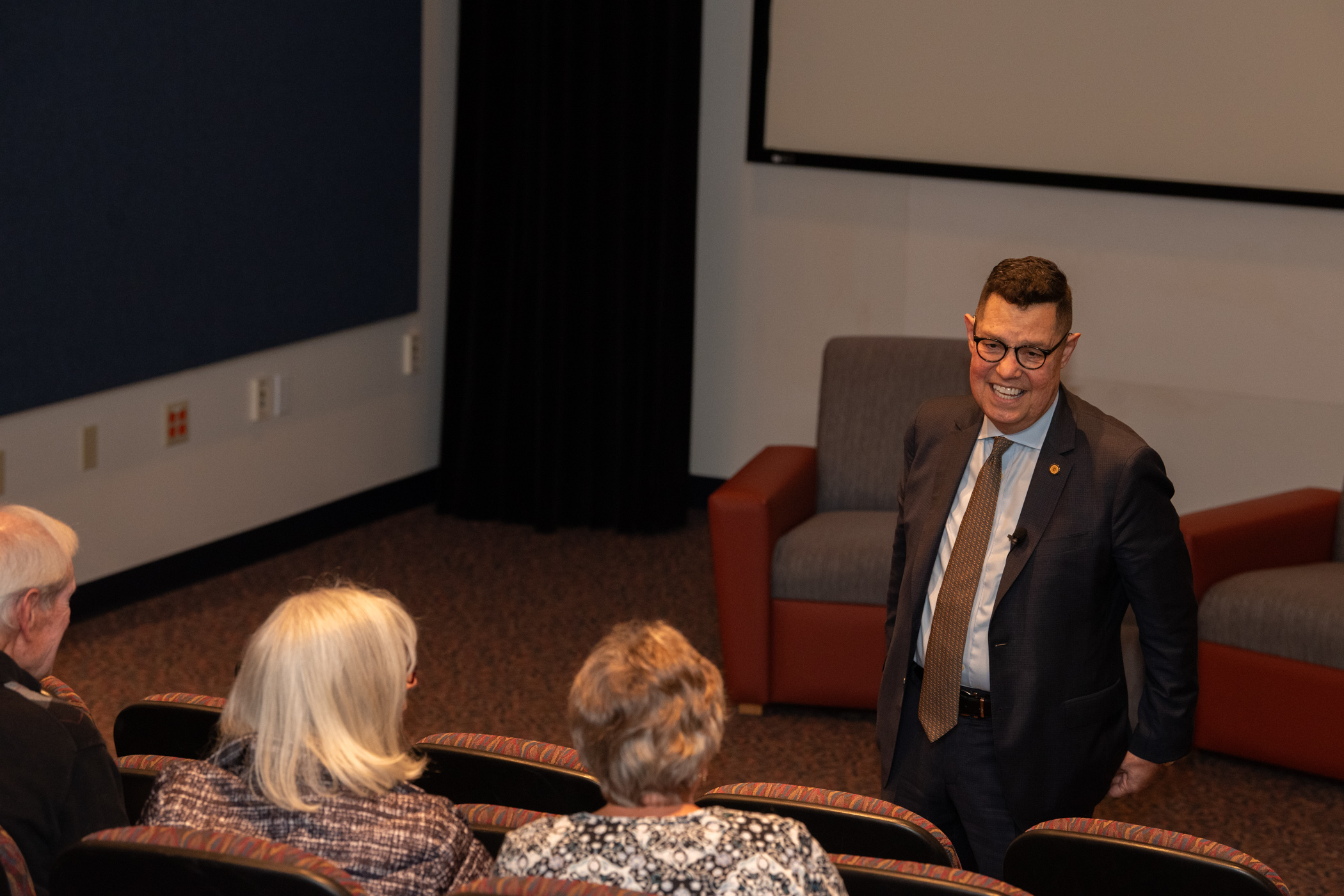
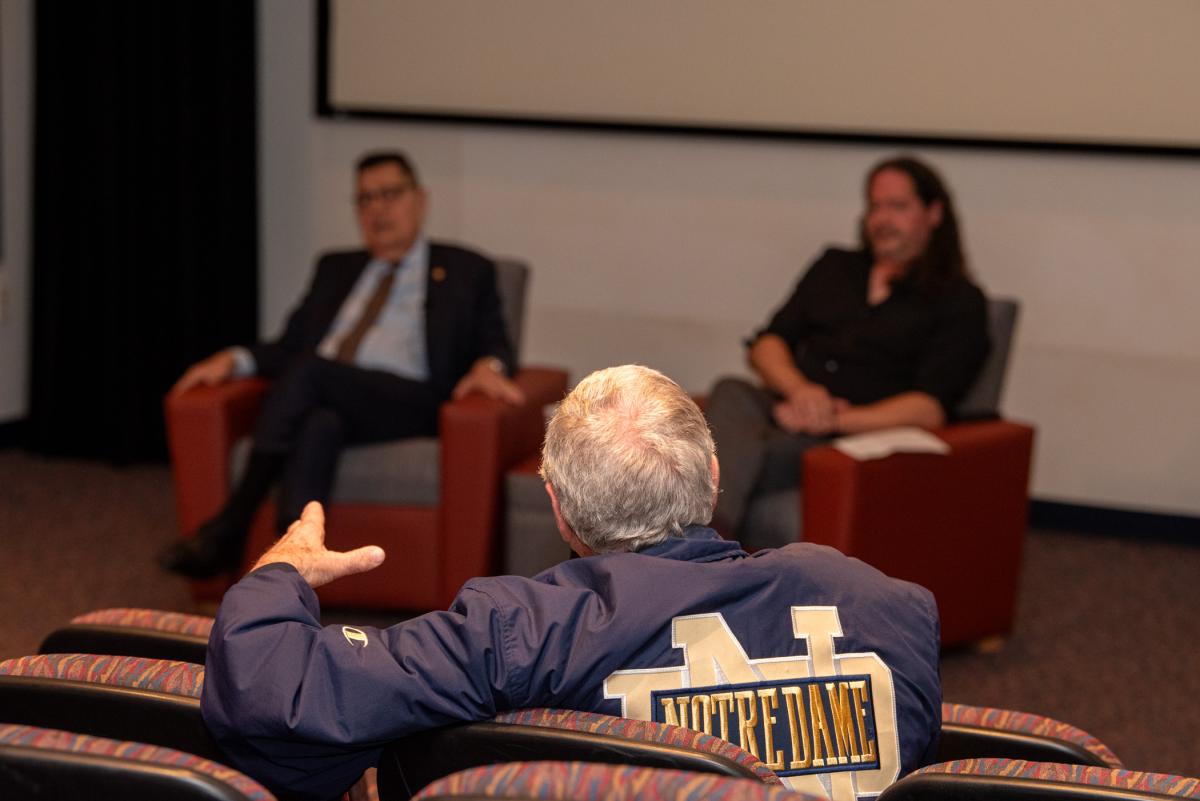
The Corpus Christi, Texas, native engagingly addressed a number of other topics: many of them practical, some provocative and some prompted by audience questions. Among the range of issues aired during the fast-moving forum were immigration reform, media misinformation, voter turnout next November, the unpredictable effect of third-party candidates and the as-yet undelivered promise of rank-choice voting.
On the subject of K-12 public education, he delivered a deeply sincere reminder not to underestimate the current generation – a statement that also applies to the tomorrow makers in Penn College's classrooms and labs.
"We need to empower students to see themselves as being in control of their futures."