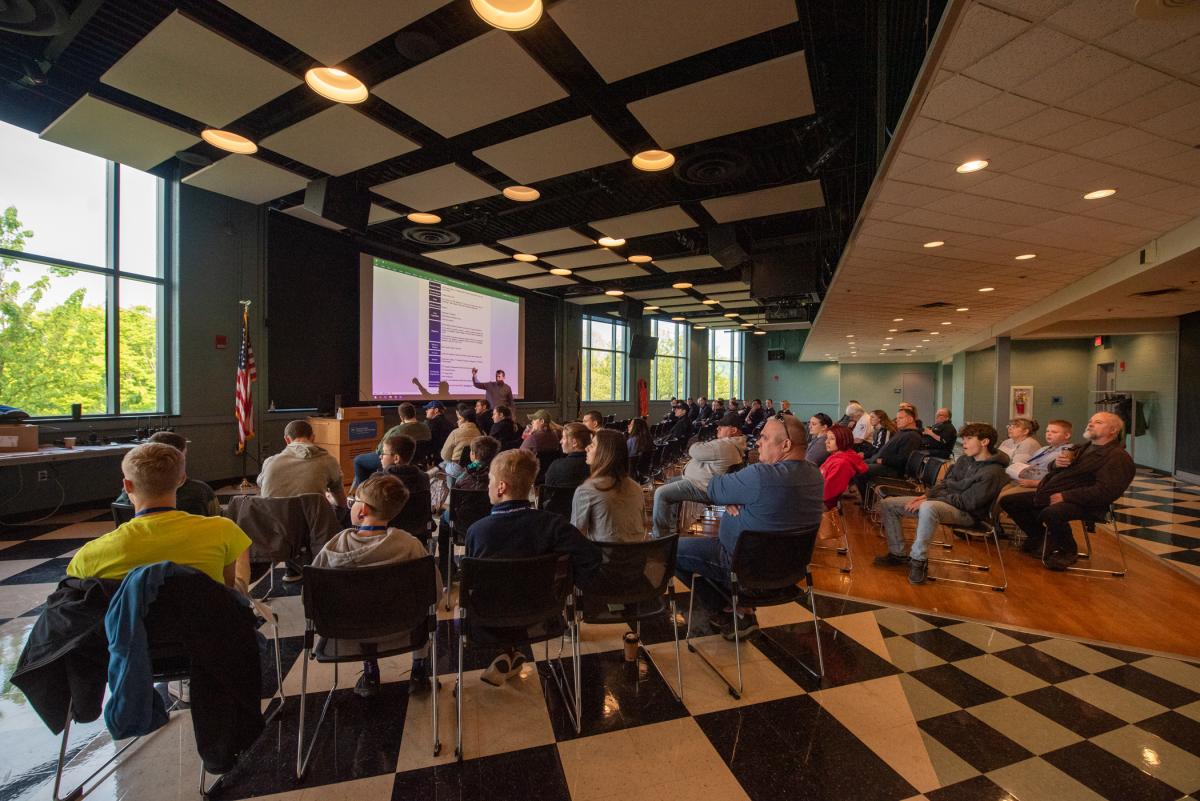
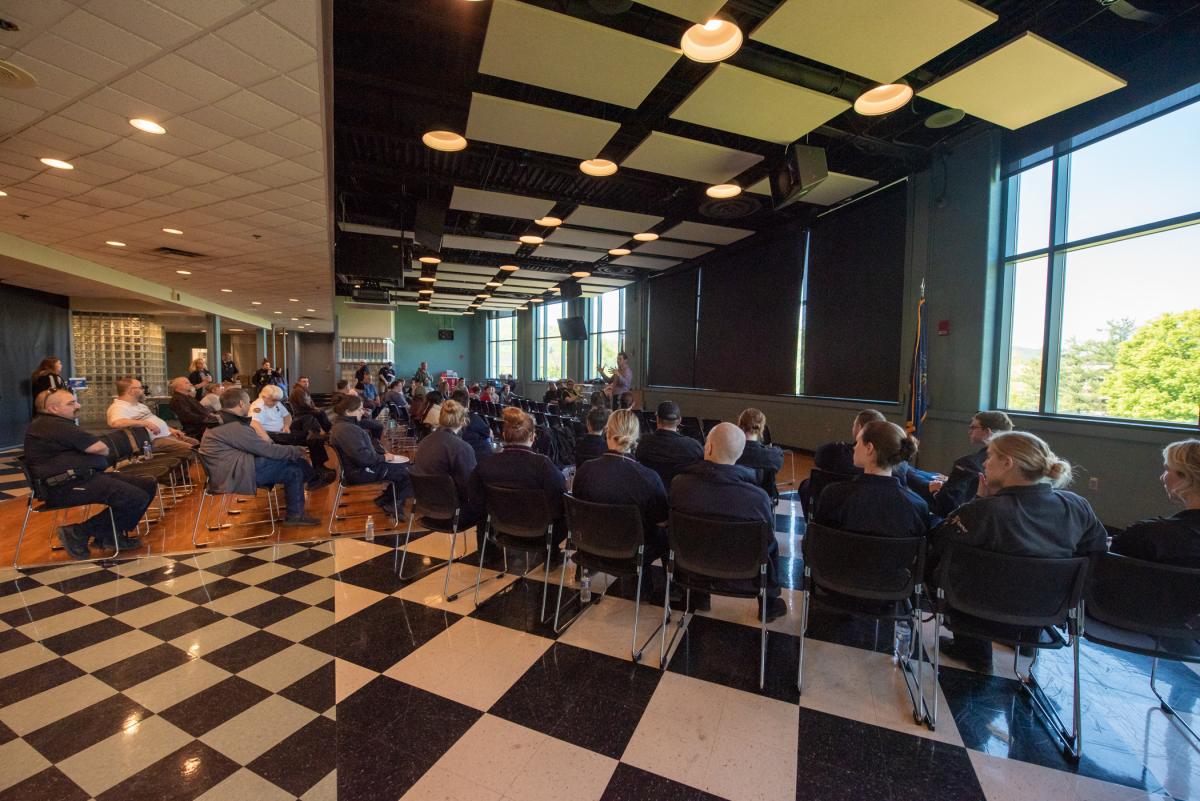
In Penn’s Inn, Bjorkman provides pre-exercise information to the participants.
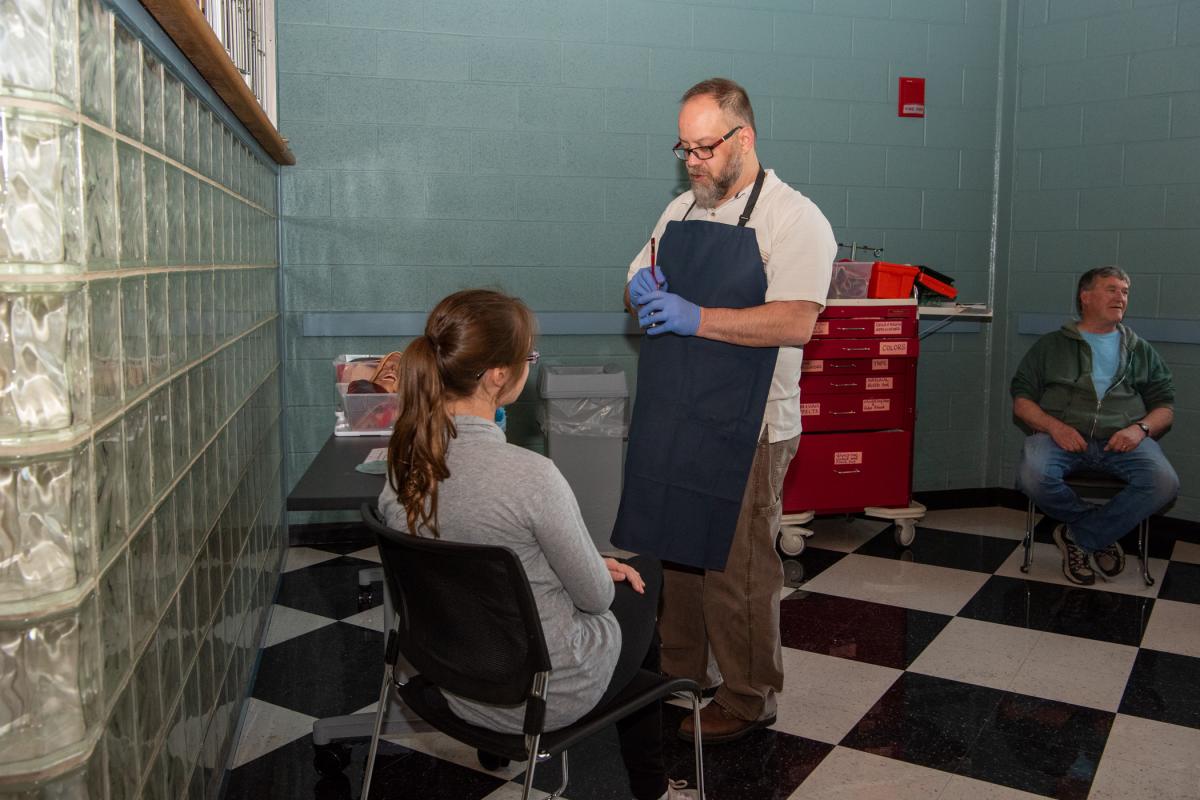
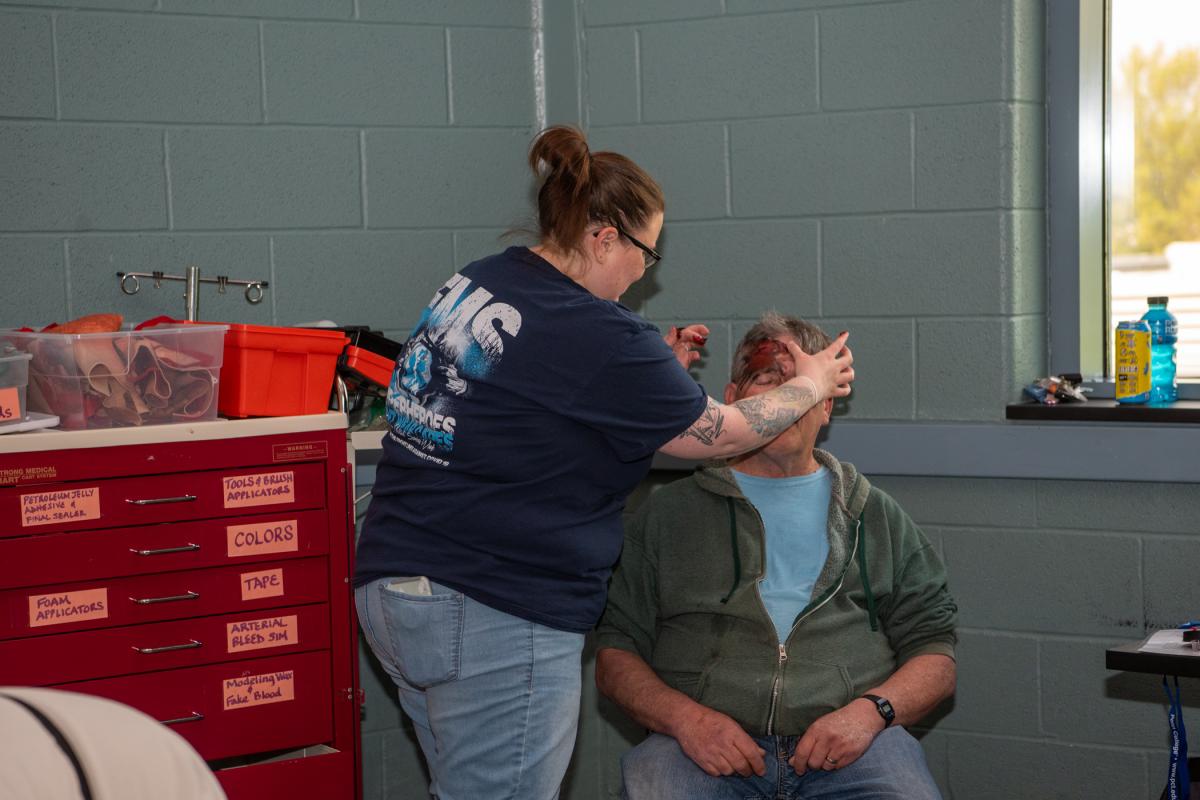
A corner of the room is reserved for moulage (mock injuries for training emergency response teams). John A. Nappi, paramedic programs coordinator, begins work on a volunteer.
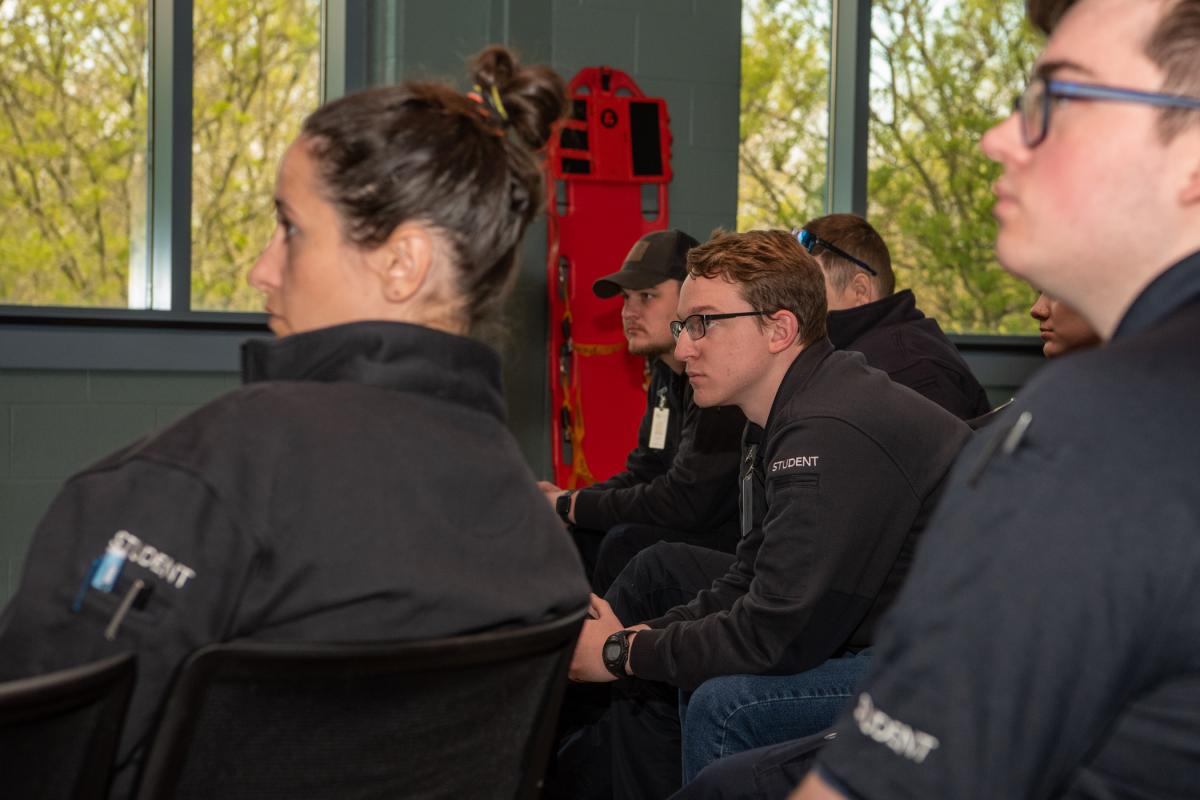
Students, including Cole N. Hillyer (center), of Renovo, listen intently to Bjorkman’s briefing. Hillyer was assigned the role of incident commander for the exercise. He is enrolled in the emergency management and paramedic majors.
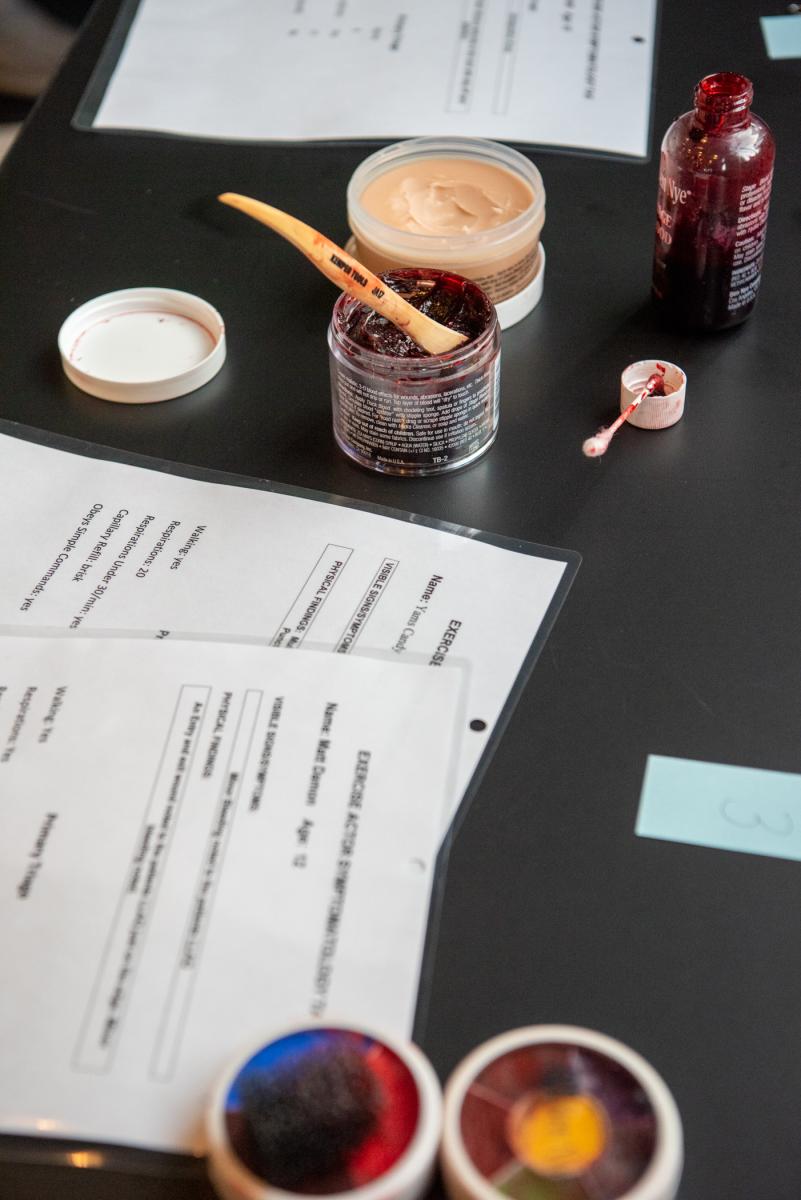
Moulage tools
A Civil Air Patrol volunteer sits for his moulage session.
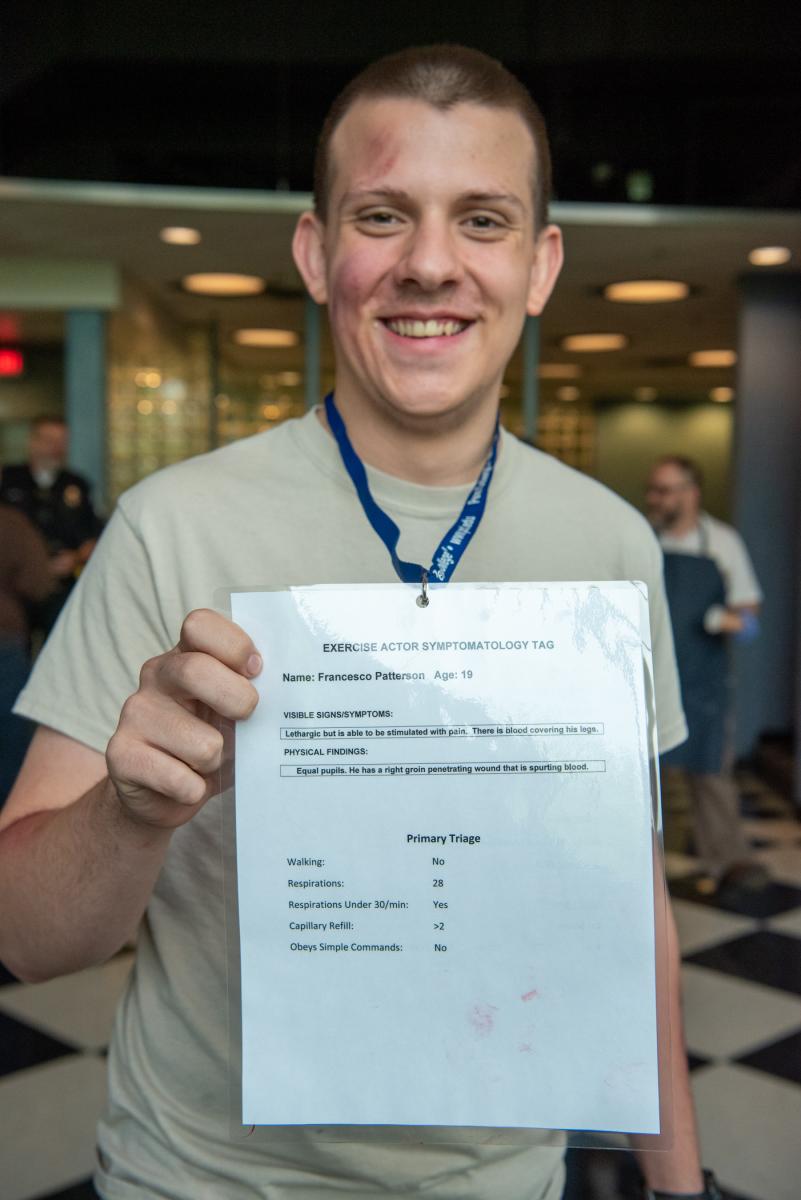
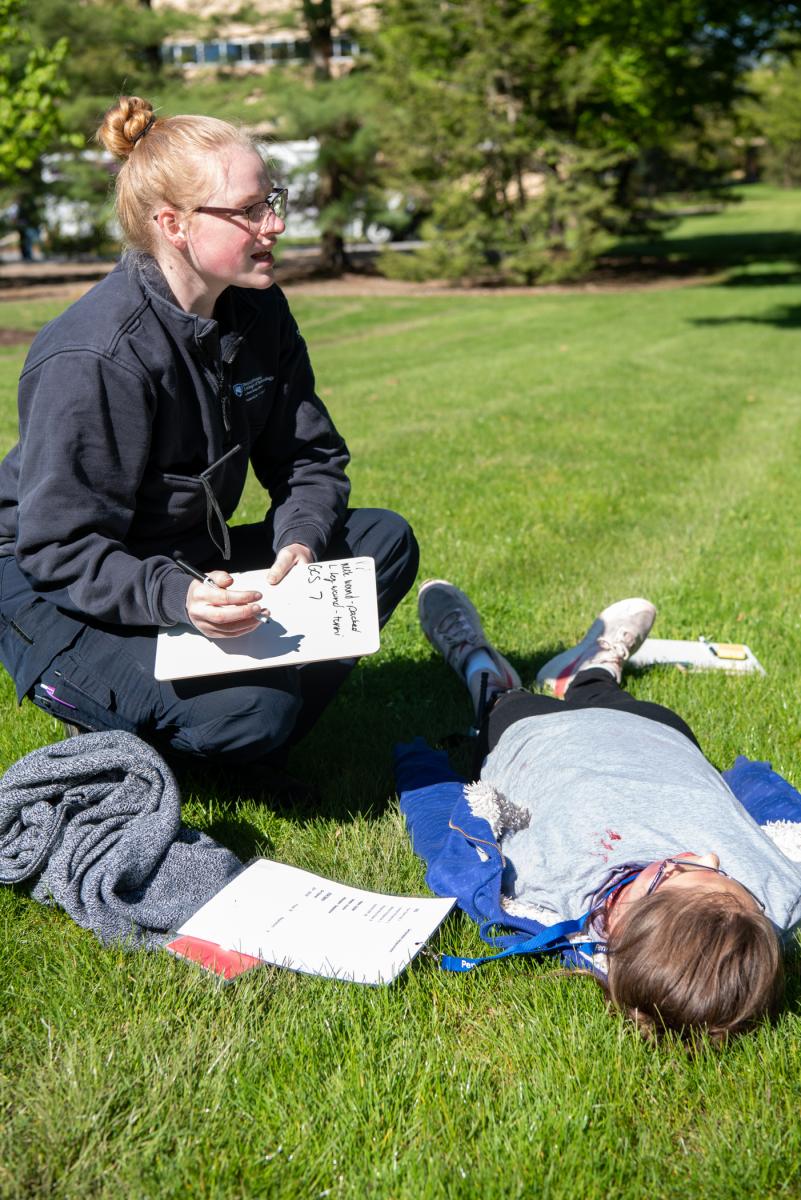
As with this Civil Air Patrol cadet, each volunteer who role-played a “victim” was given an “actor symptomatology tag.”
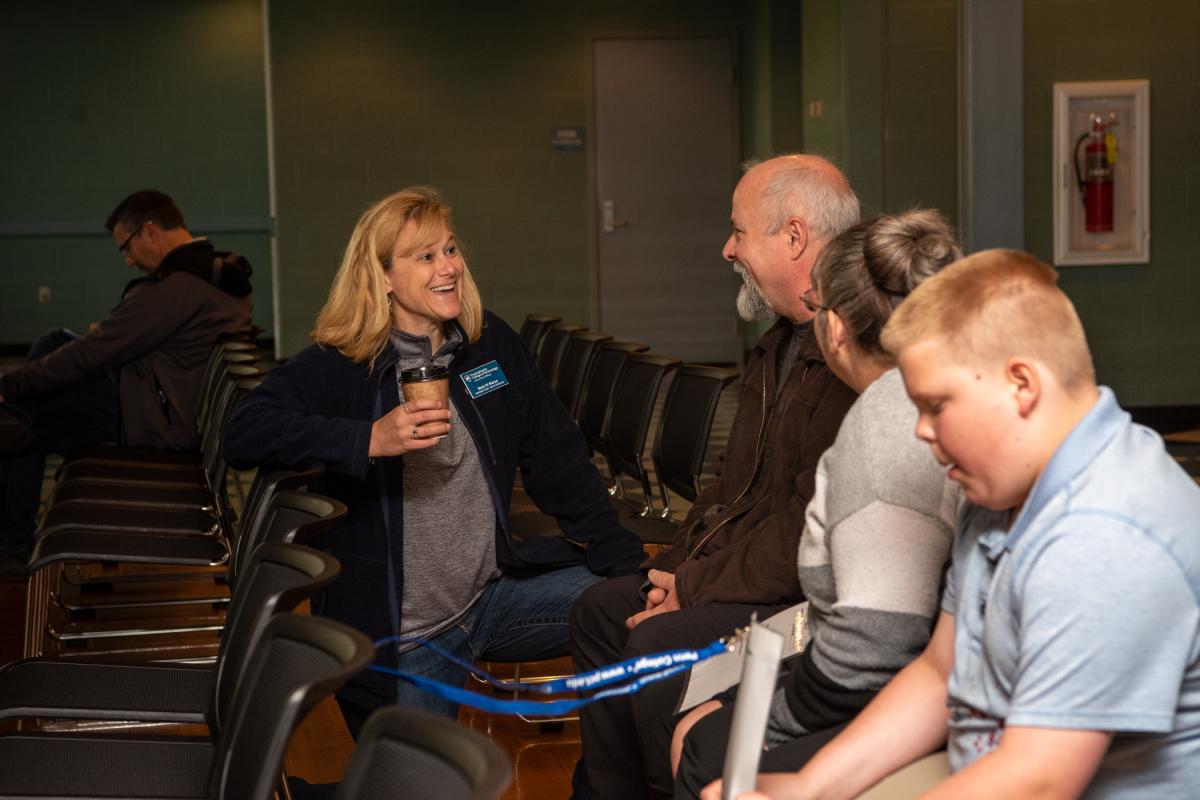
Barb F. Di Marco, assistant dean of arts and sciences, chats with a family, including two young volunteers who are interested in pursuing first responder and health care careers in the future.
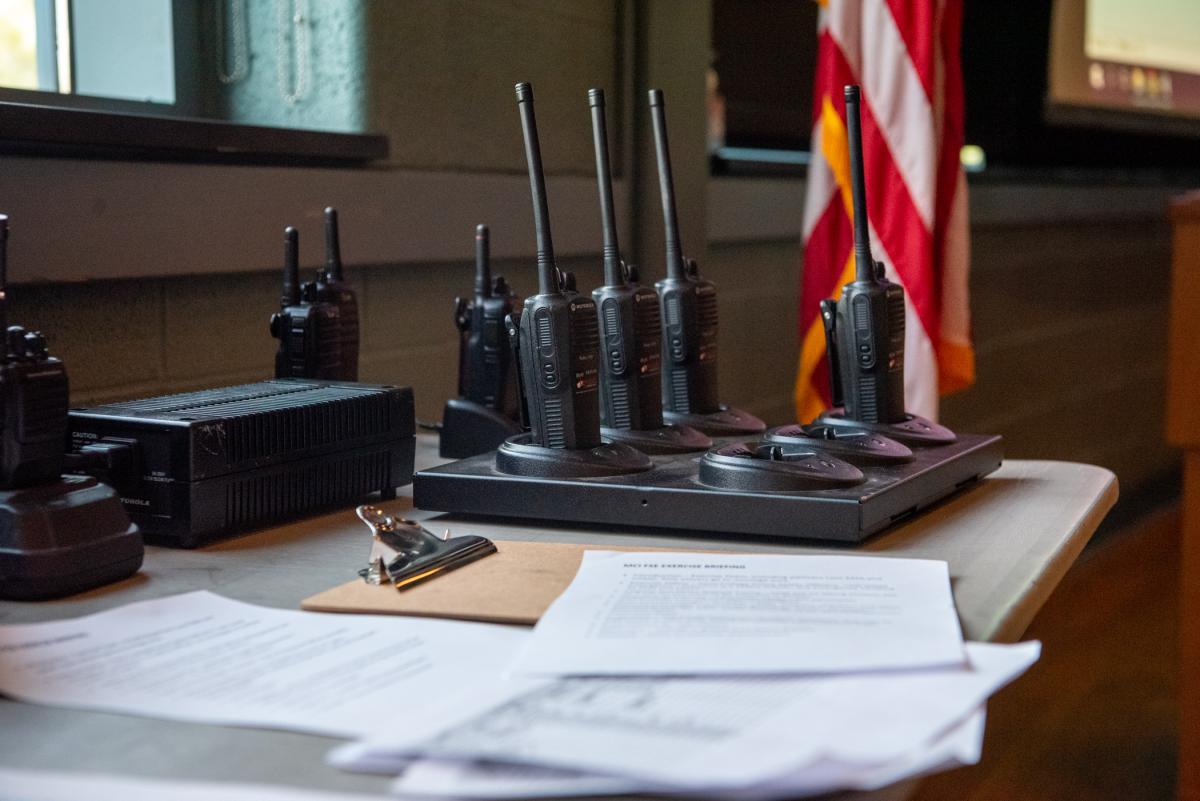
Tools of the trade
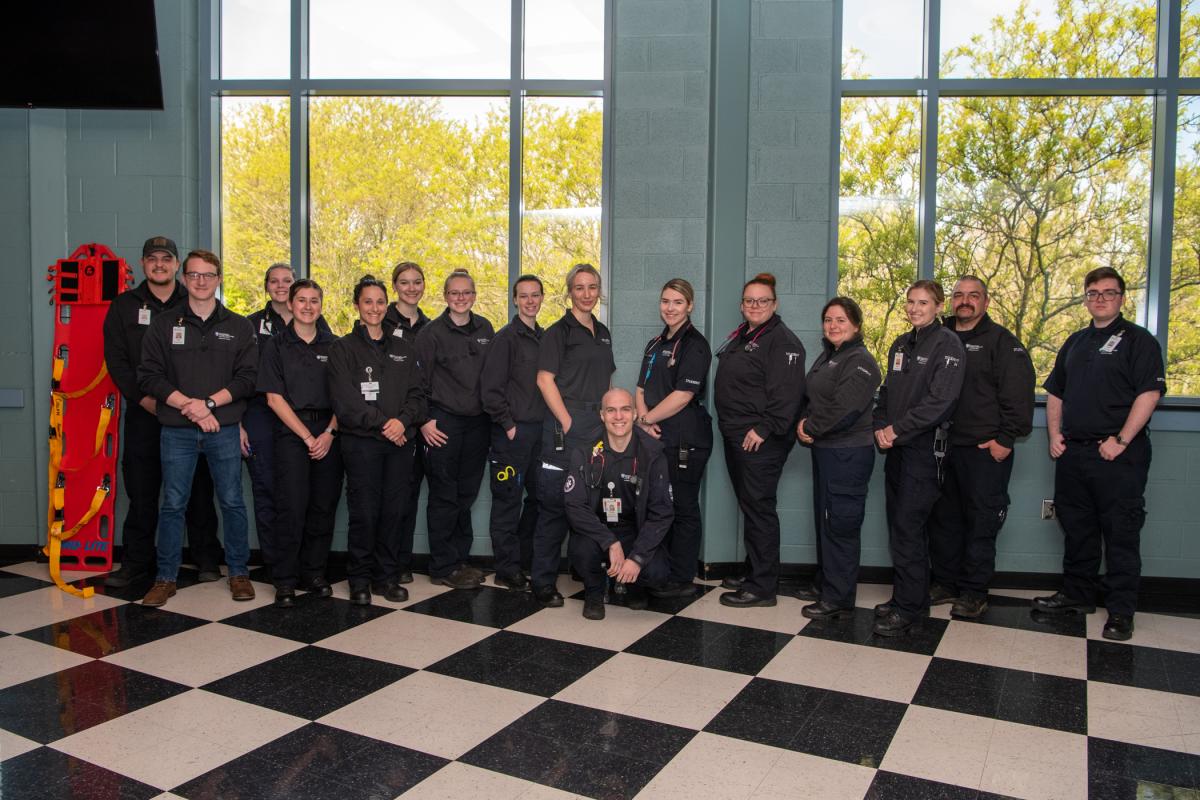
The paramedic students stand ready.
On hand as spectators were alumnus Evan J. Kelbaugh, ’21, emergency management technology, and President Michael J. Reed. Kelbaugh, who was working in emergency management in Wisconsin, has returned to his native Bucks County for a new job in the field.
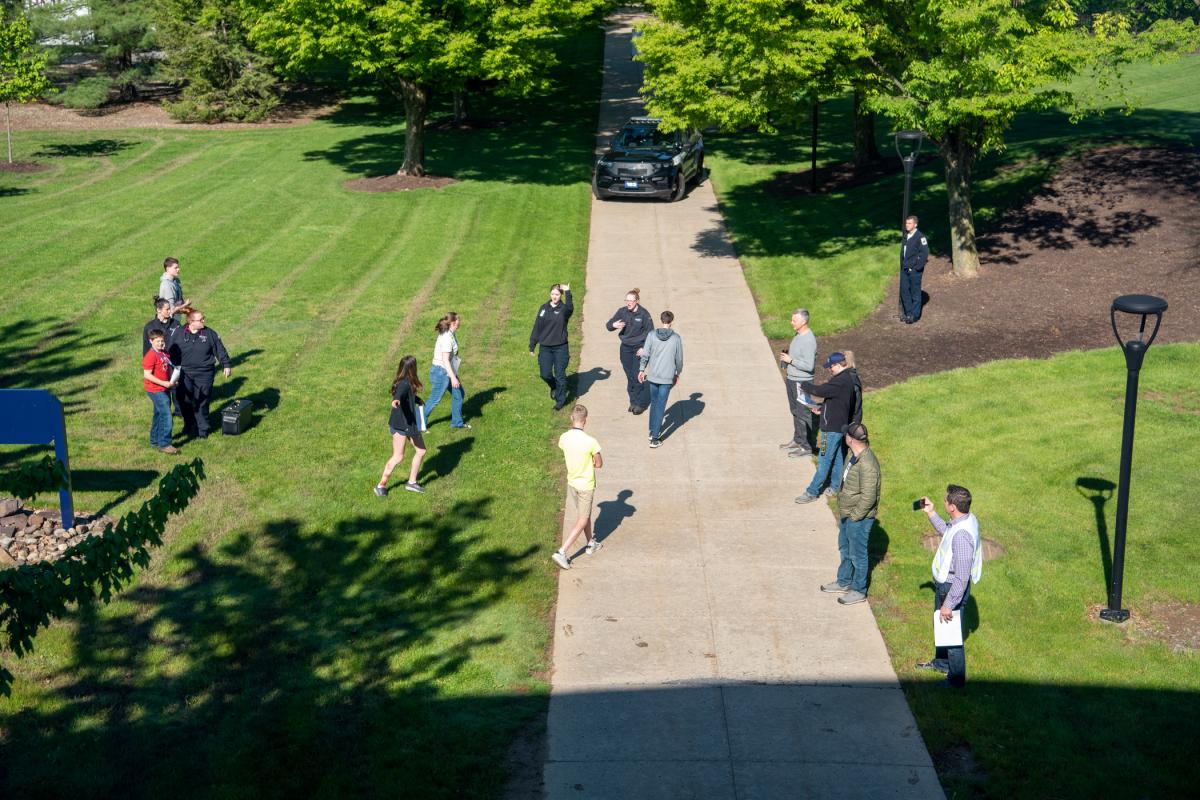
Setting the scene, Penn College Police Officer Jeffrey E. Kriner (center foreground) and Bjorkman (in vest) attend to their duties.
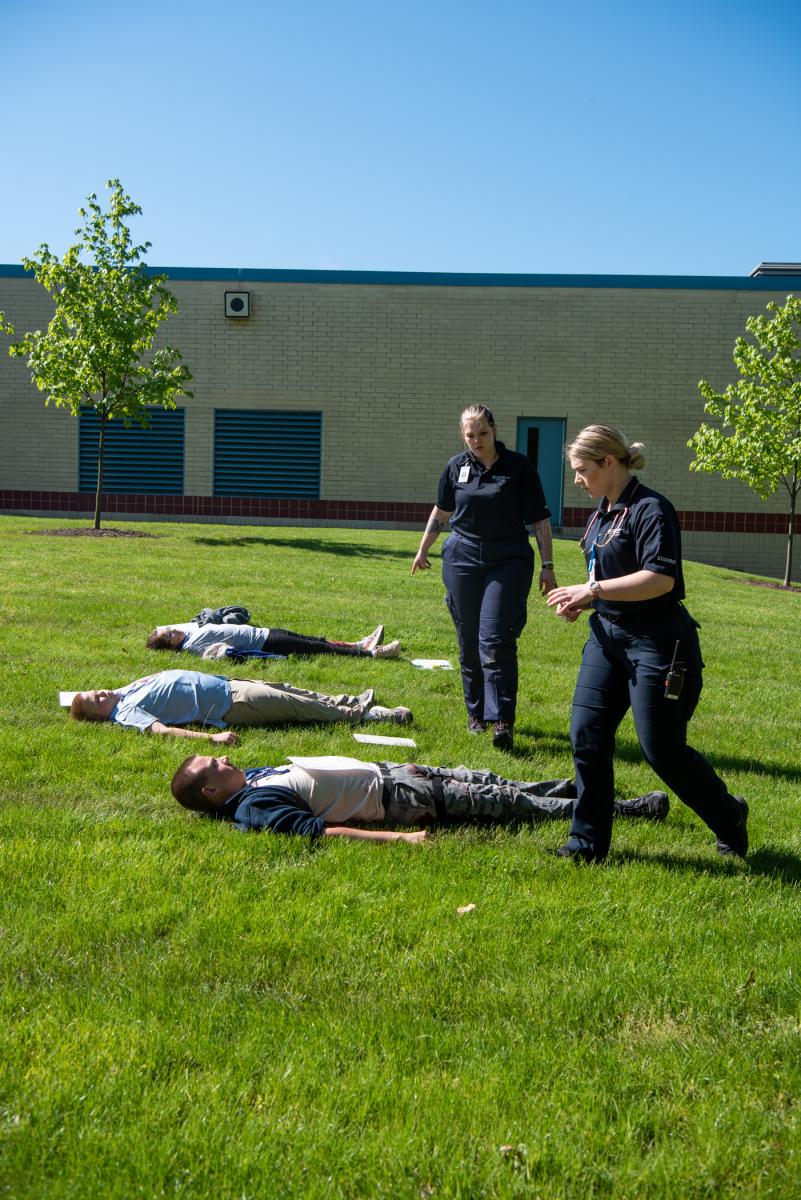
Paramedic students arrive on the scene and motion “victims” who are able to walk away from the main scene.
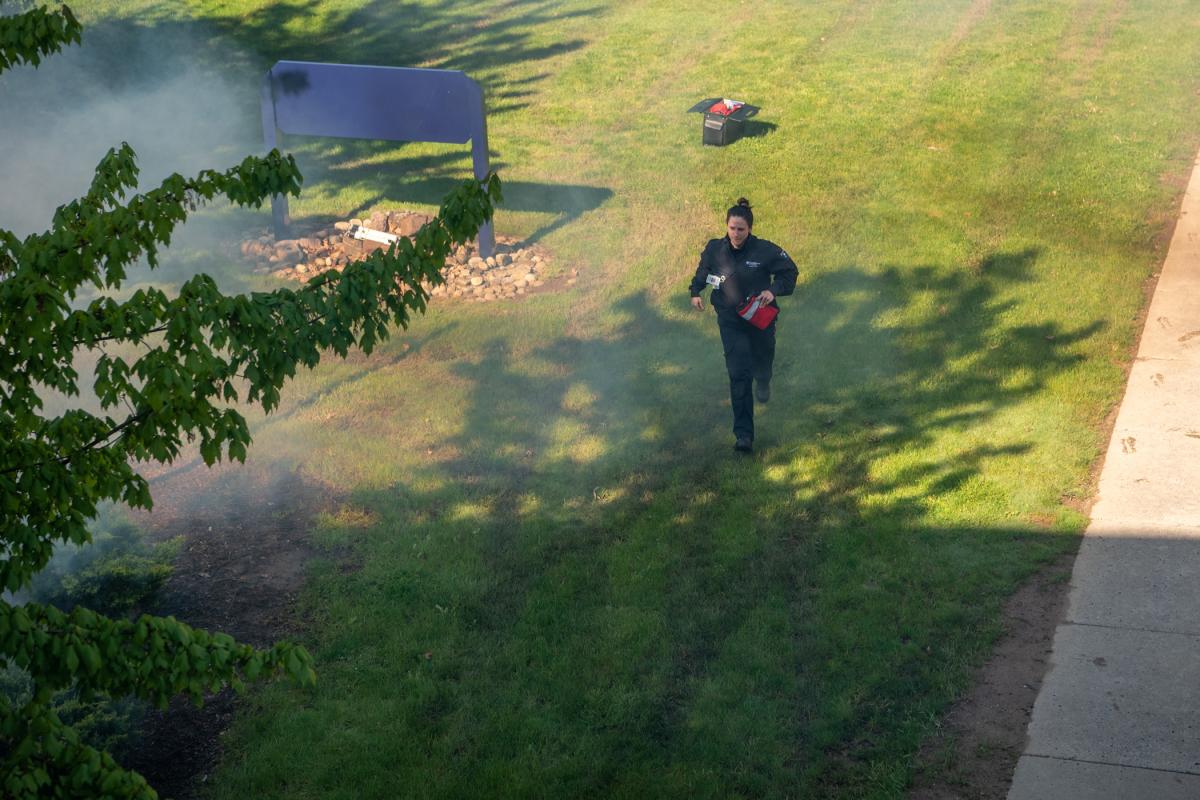
Maggie T. Belokur, a paramedic science student from Towanda, runs to the CC patio.
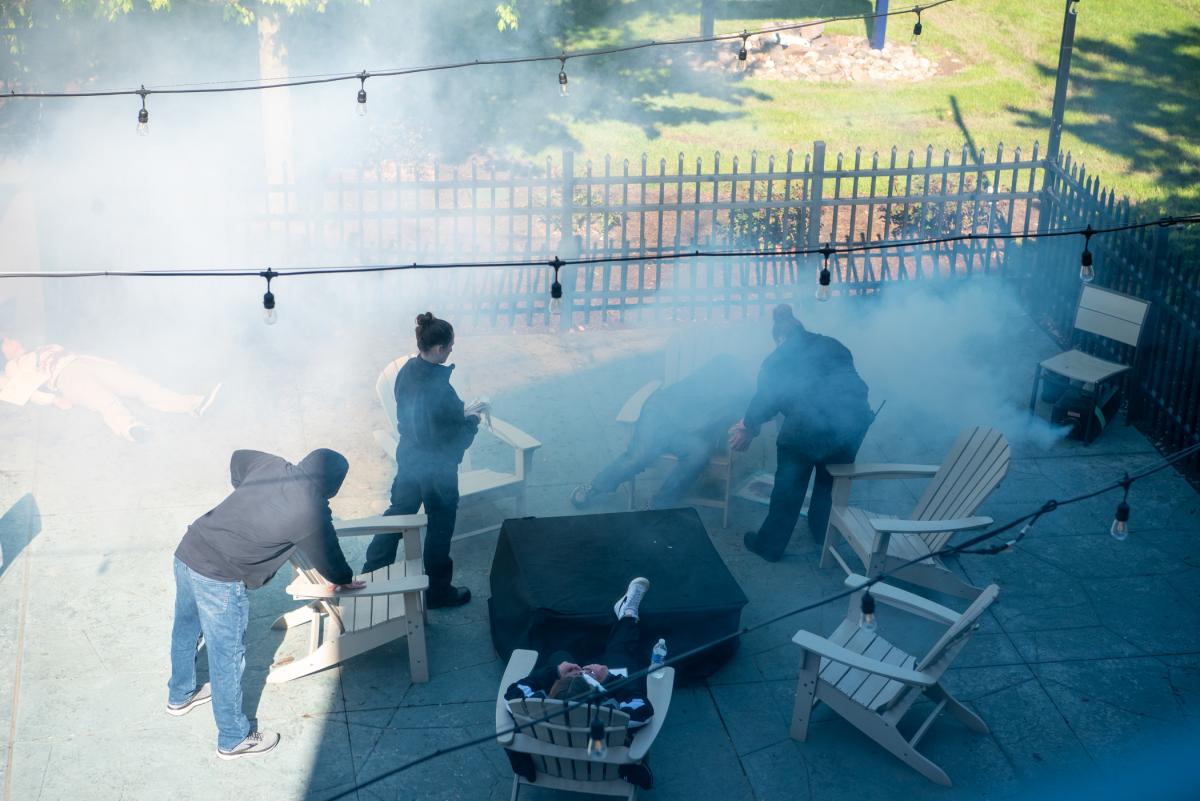
Smoke and sounds were added to the exercise to heighten the intensity for the “first responders.”
Joining Belokur first on the scene is Emilee K. Snook (center front), paramedic science from Montoursville.
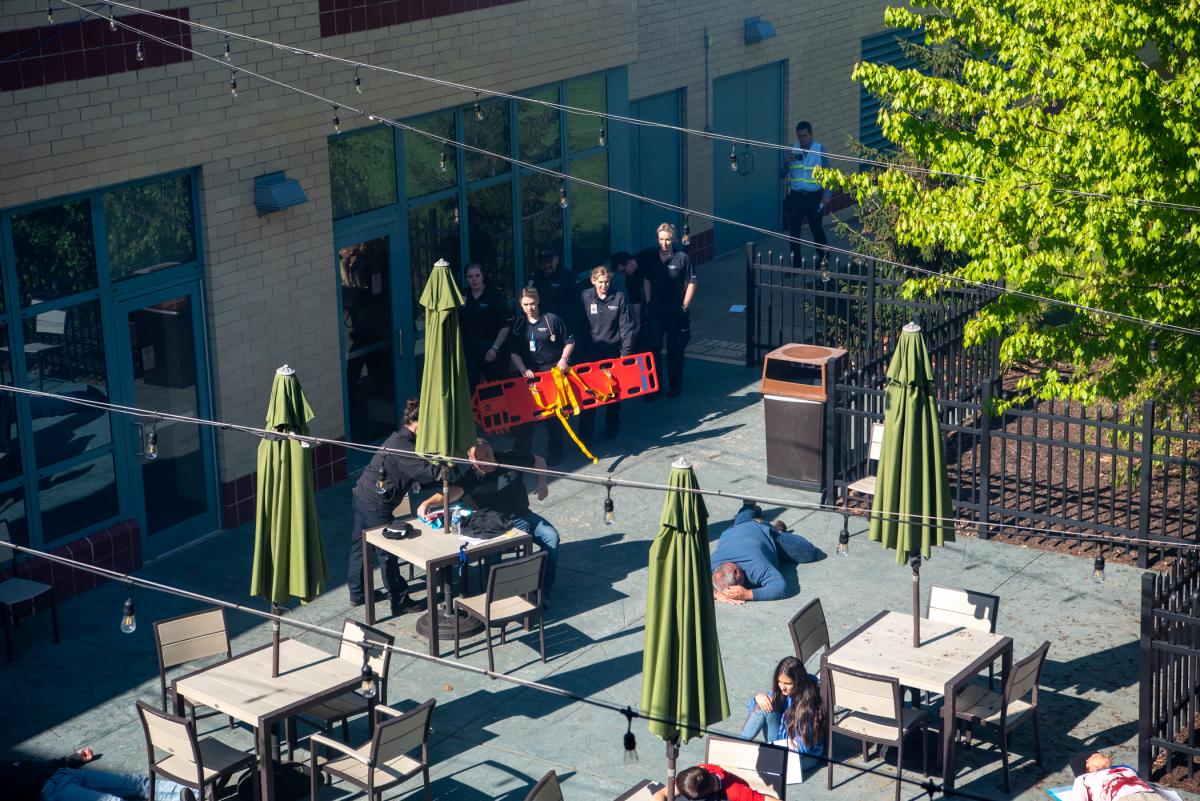
The second wave of paramedics arrive to the scene.
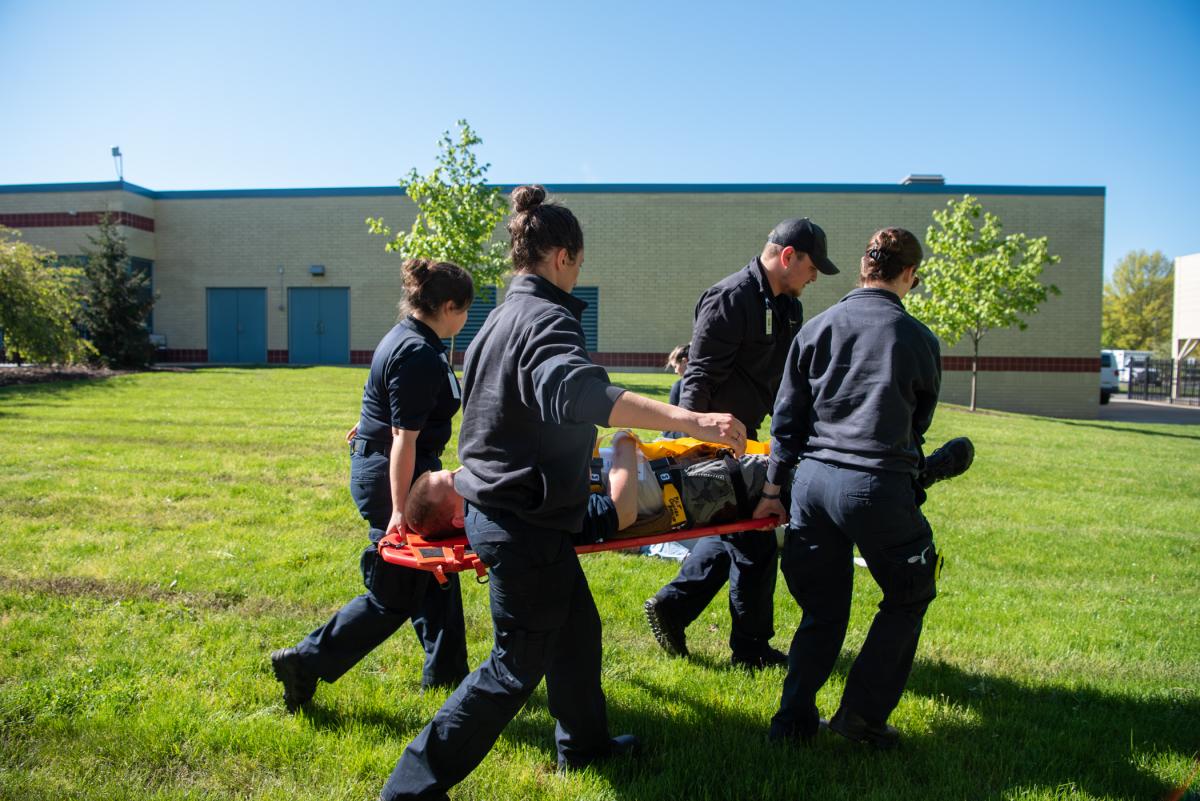
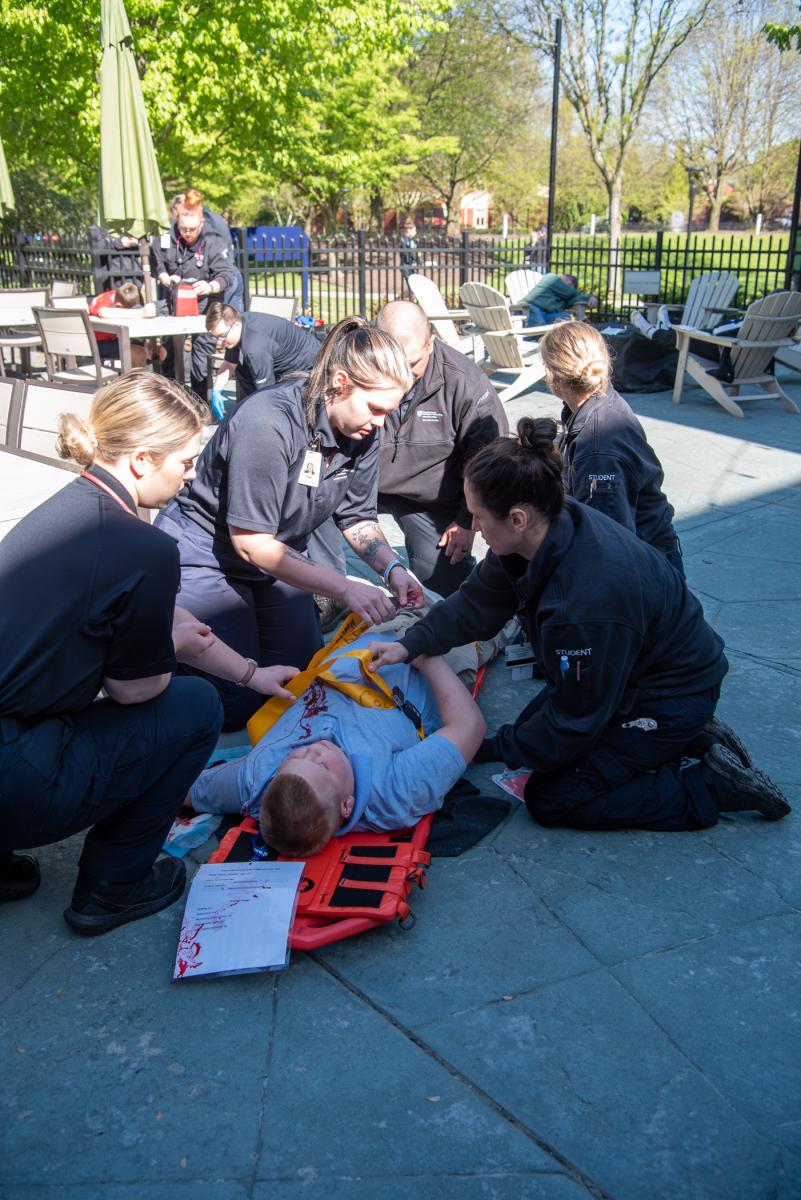
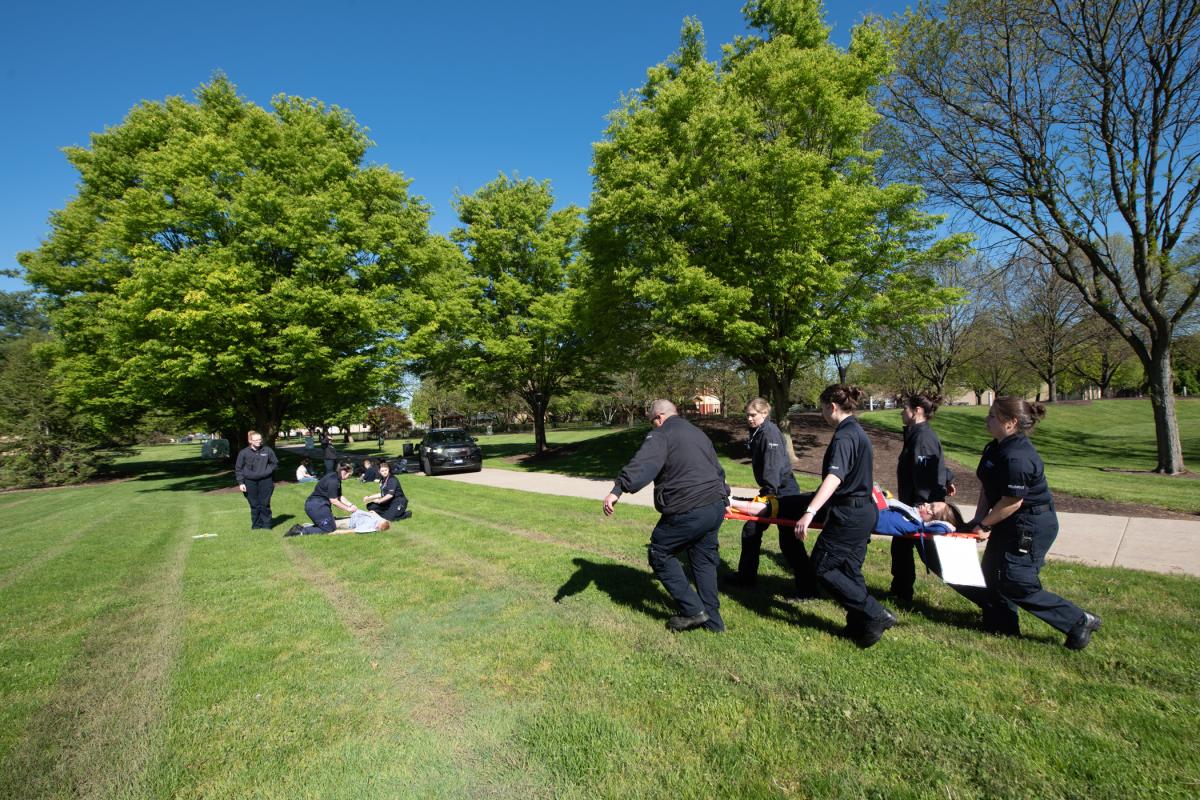
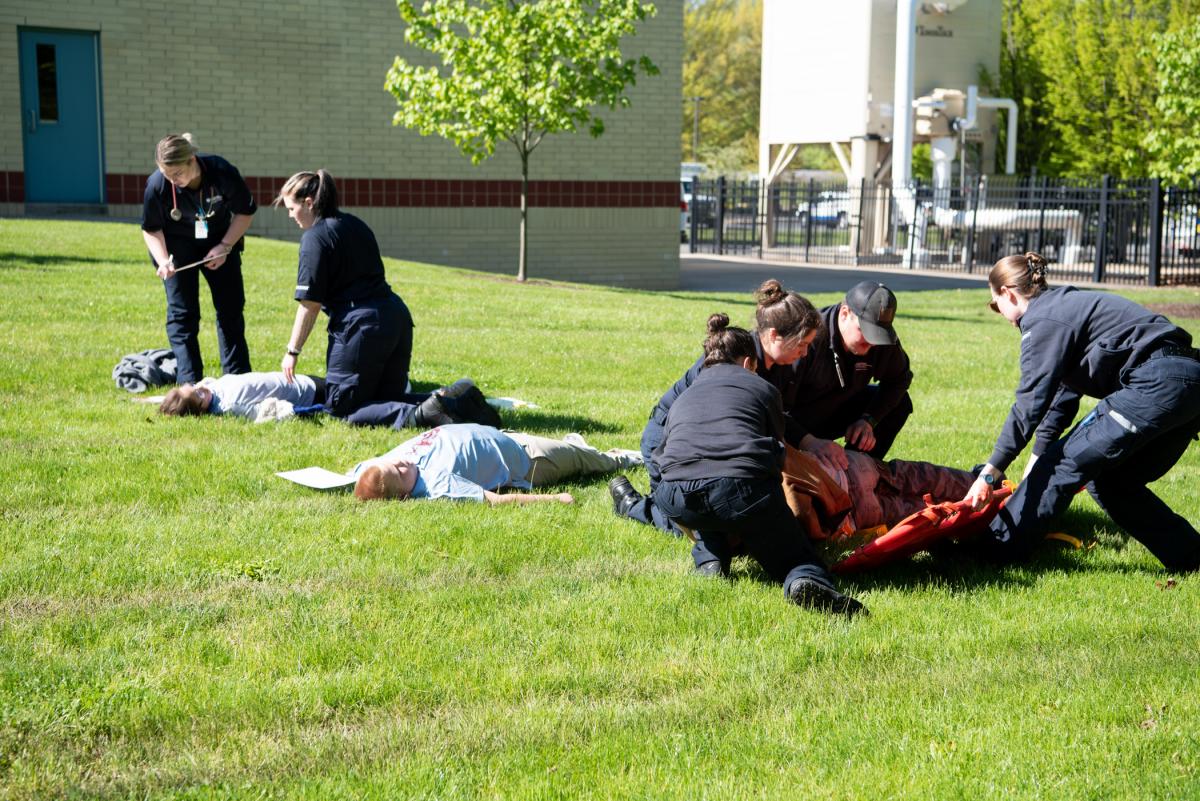
Paramedics load the most critical “patient” onto a stretcher.
Students continue to assess the scene and injuries.
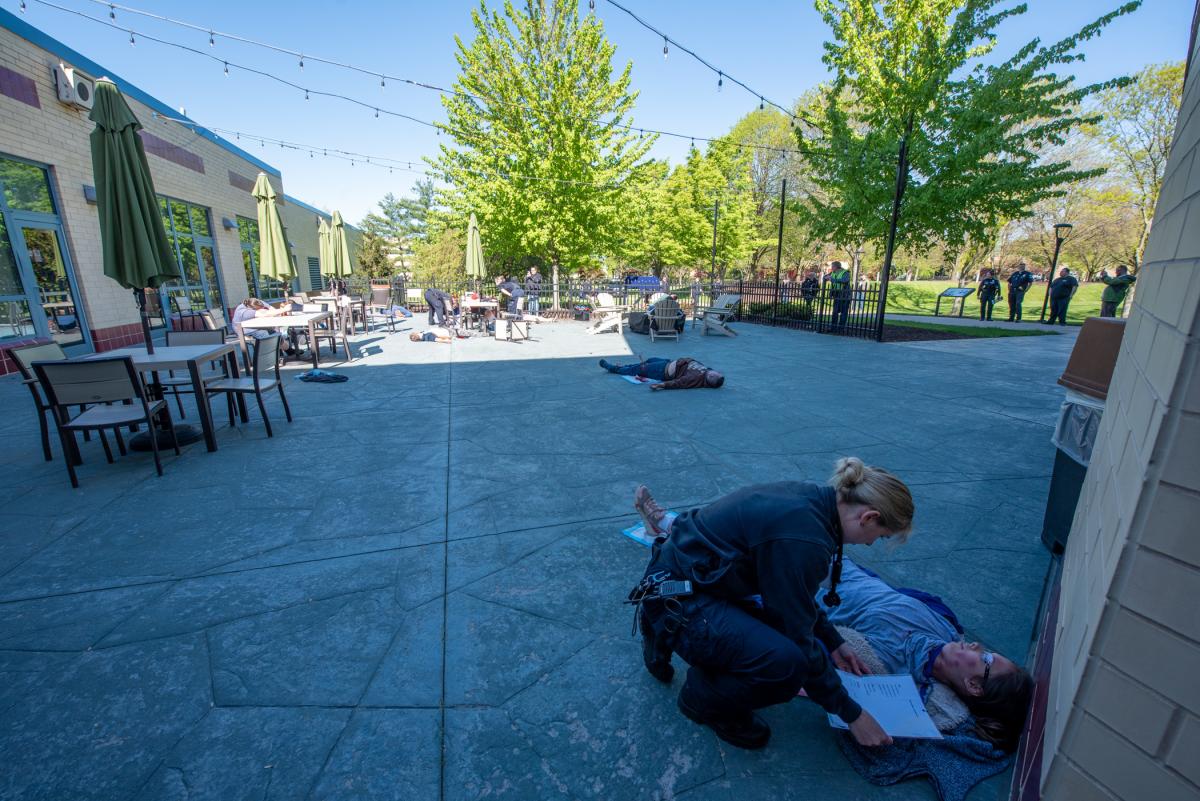
The beauty of the day belies the worst-case scenario.
Patients are moved to the CC lawn for “transport” to an emergency care facility.
Breyann E. Johnson, a paramedic science student from Danville, tends to her patient.
Caring for the injured
“Wounded” actors also play important roles in the exercise.
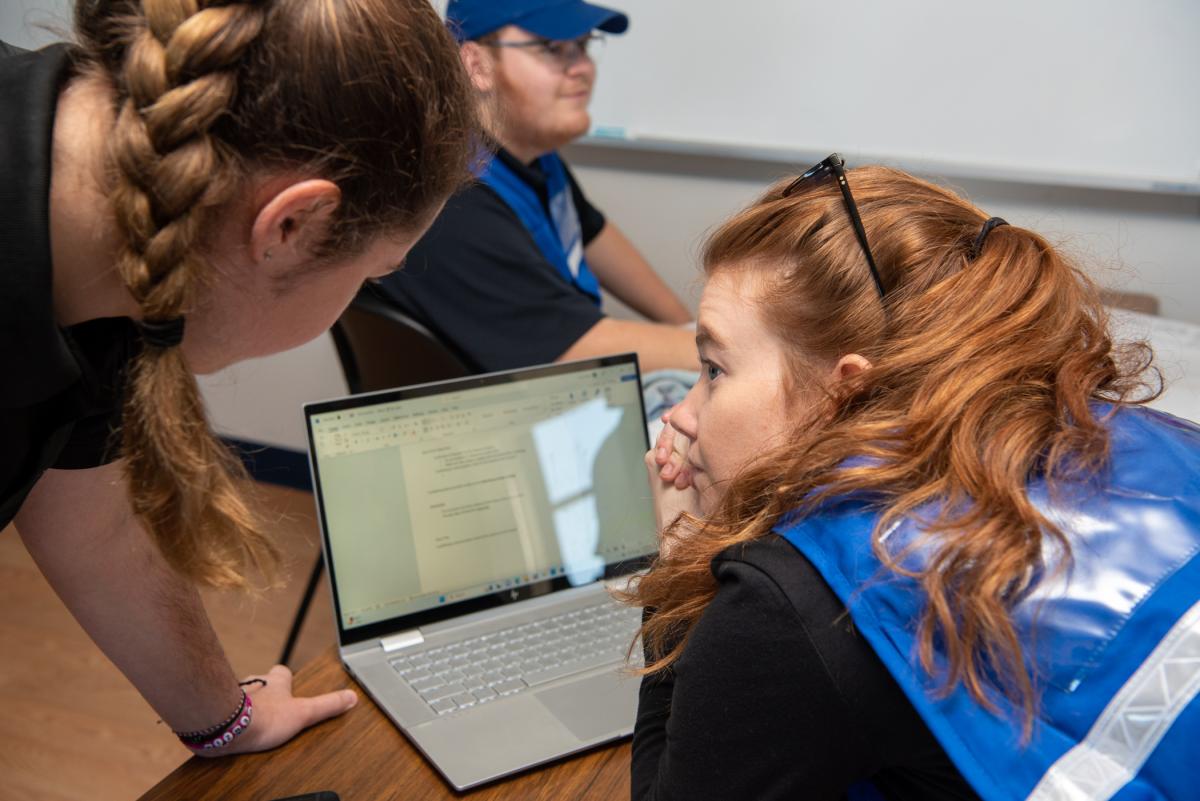
Kelle Robinson (left), coordinator of Lycoming County Emergency Management, serves in the Simulation Cell with Amelia M. Pogue, an emergency management & homeland security senior, and Barb F. Di Marco, assistant dean of arts and sciences. As part of their SimCell duties, the three injected unexpected requests and scenarios into the full-scale exercise.
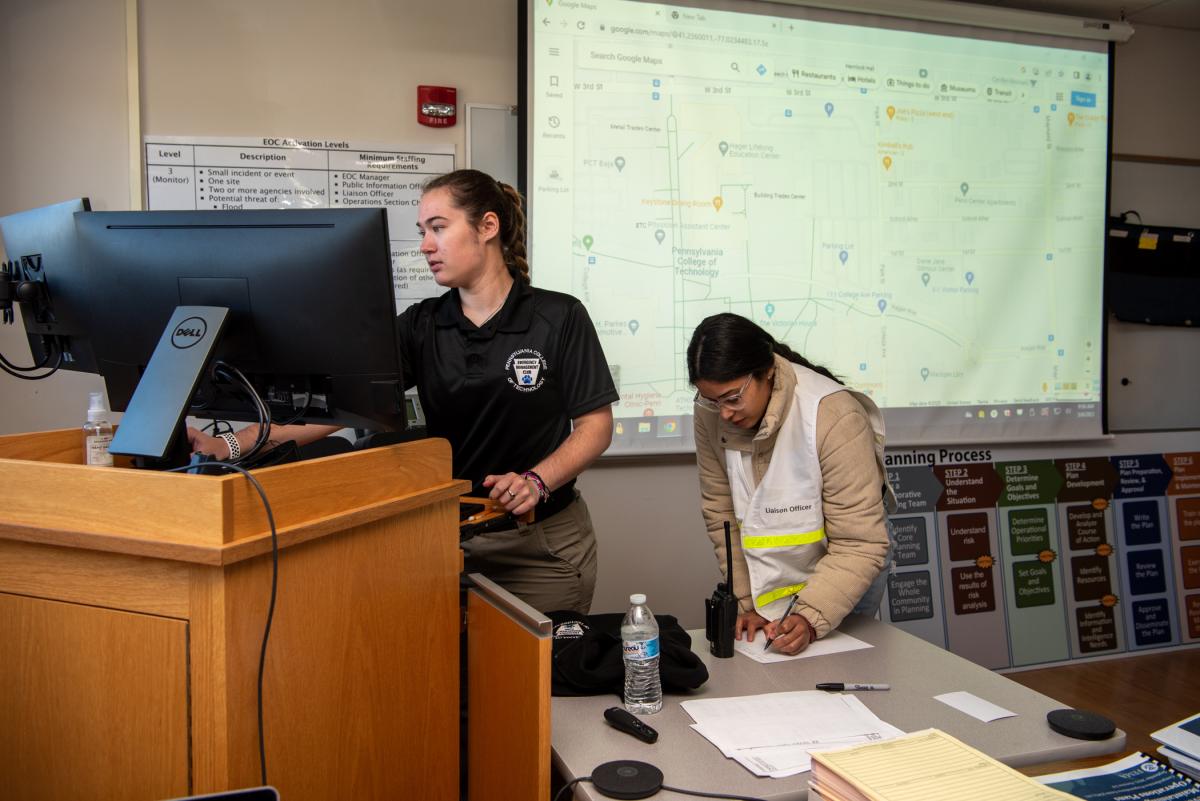
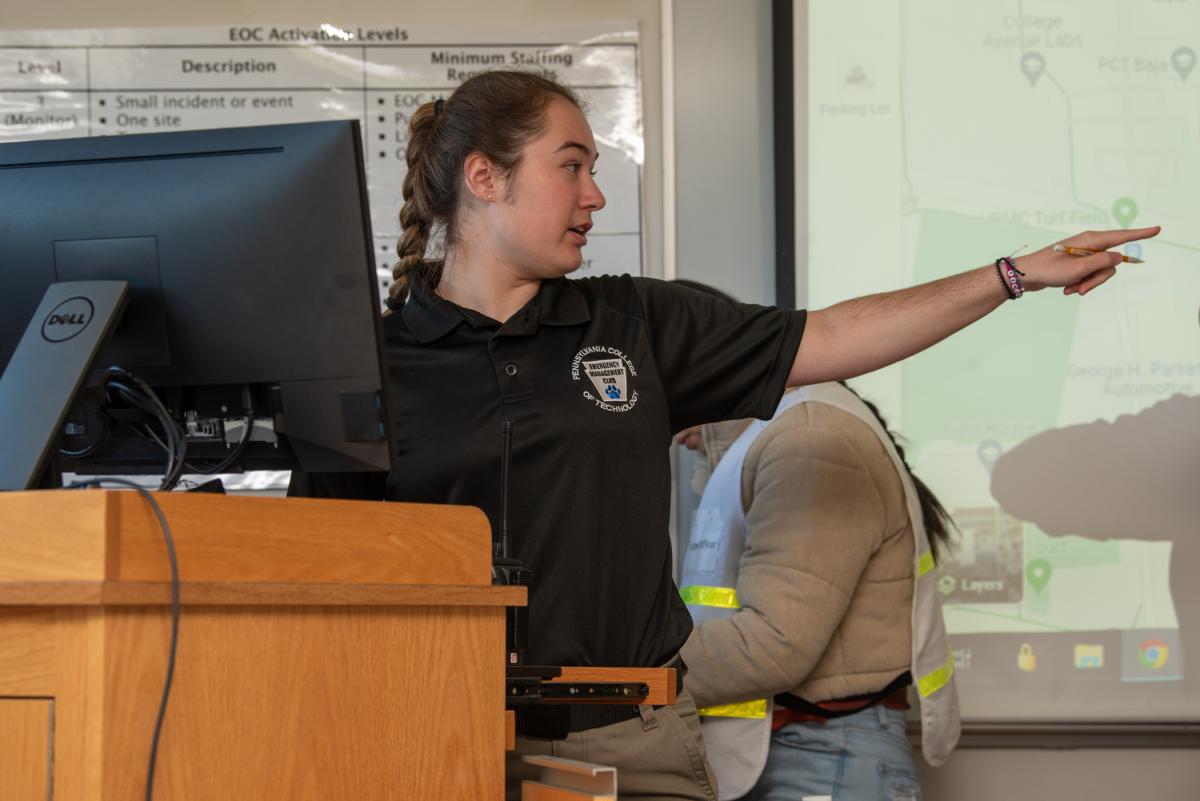
On the fourth floor of the ACC, Nicole R. Lichtinger (left) serves as EOC manager, and Joyce M. Fernandez Rivera is the liaison officer. Lichtinger is from Erie; Rivera is from York.
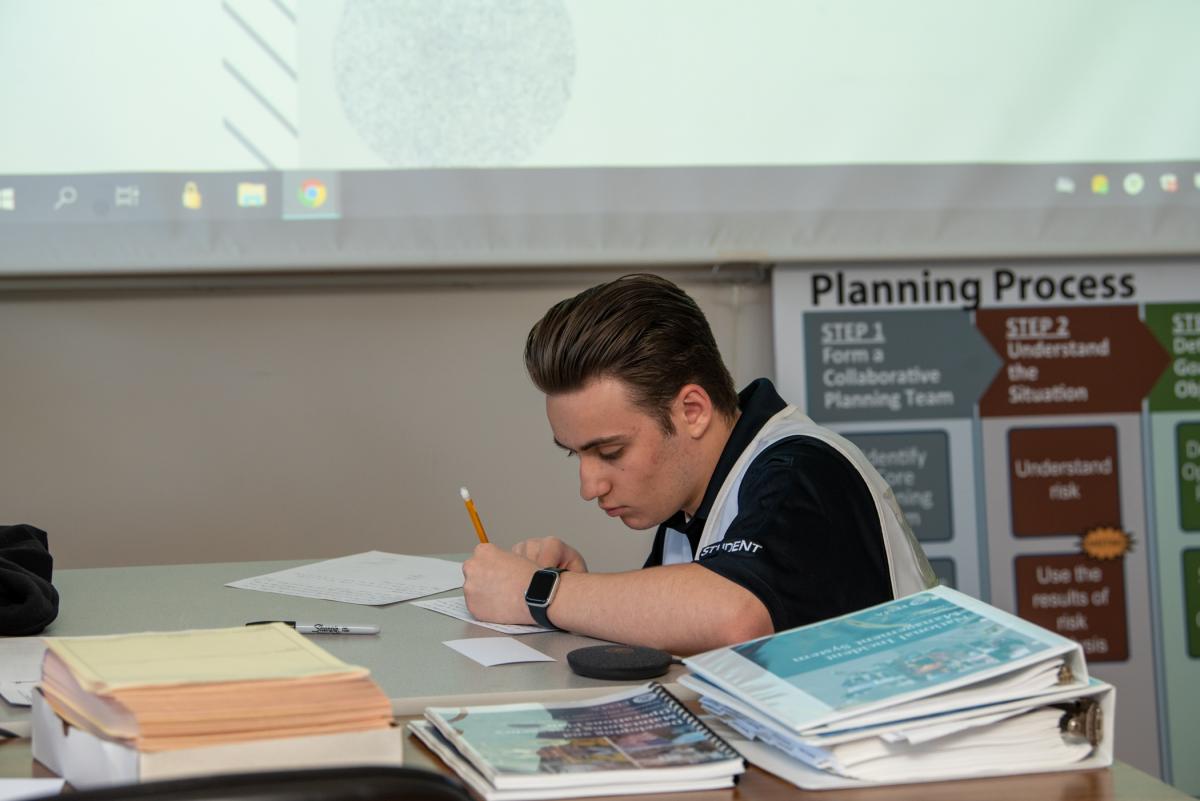
Emergency management & homeland security students Ashley Thoirs-Lawrence, logistics, and Michael J. Gruber, operations section chief, converse. Thoirs-Lawrence resides in Williamsport; Gruber is from Rockville, Md.
William A. Schlosser, emergency management and homeland security instructor, lends expertise.
The EOC manager makes decisions.
Serving as the public information officer, Ryan Fizer, of Colonia, N.J., prepares a press statement.
Sierra M. Kunig (right), an emergency management & homeland security student from Pennsylvania Furnace, offers her planning input.
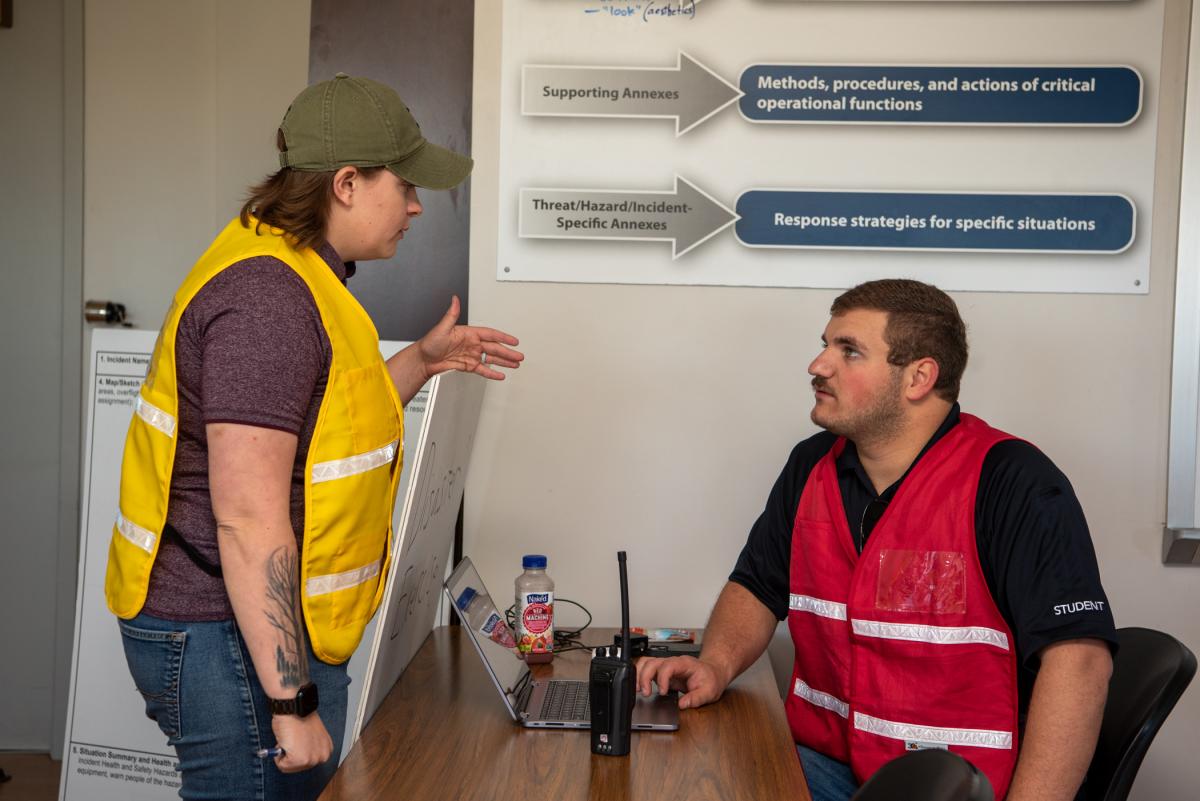
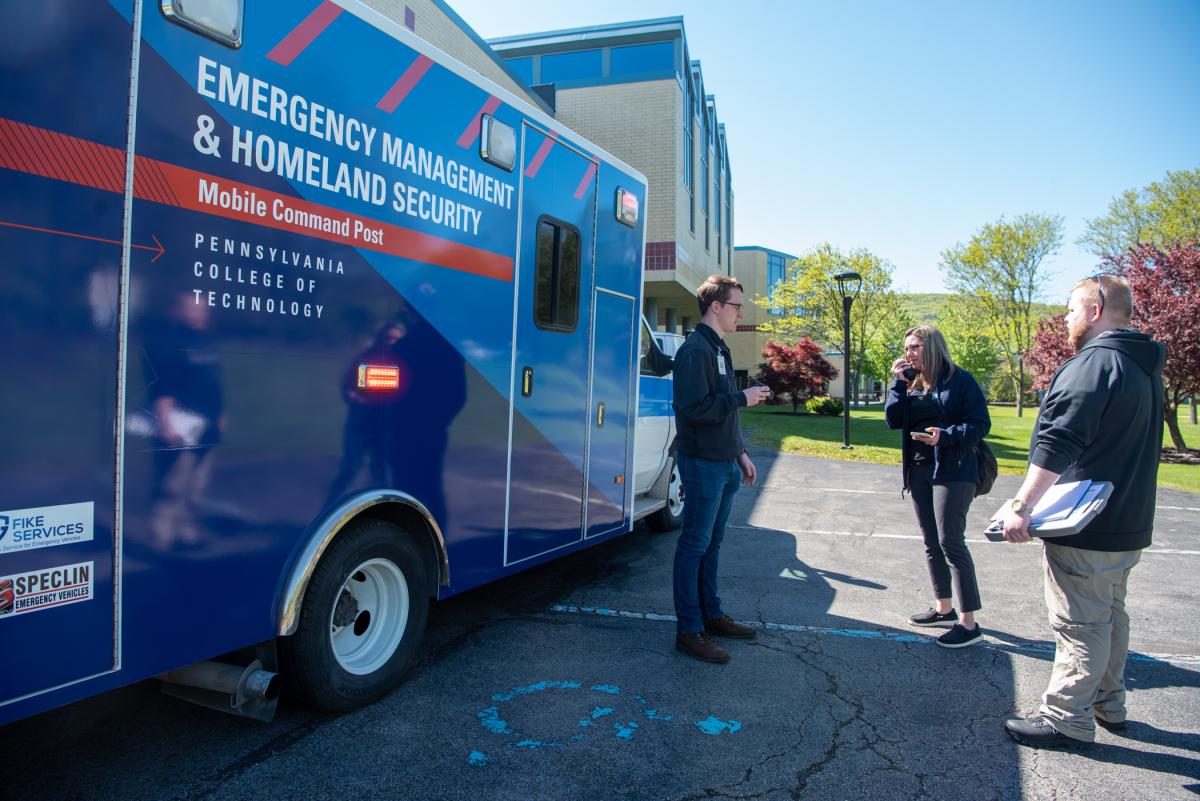
Stationed at the incident command post, Hillyer consults with Rebecca Baker, also serving as a main liaison between personnel. Baker is an emergency management student from Watsontown. Standing by is alumnus Cody R. Couch, ’19, emergency management technology, who works in the field in Washington, D.C.
Back at Penn’s Inn for a post-exercise briefing, all participants agree it was a successful morning.