– Photos by Tom Speicher, writer/video producer; Cindy Davis Meixel, writer/photo editor;
Stacey C. Hampton, assistant dean of industrial, computing and engineering technologies;
and (in Italy) landscape architect Consuelo Fabriani
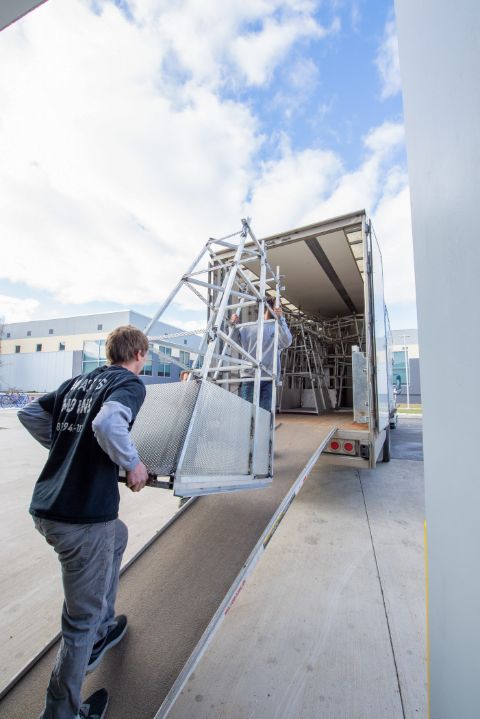
The disassembled walls are loaded into a truck, destined for Penn State. Several days later, the walls are sent to Italy.
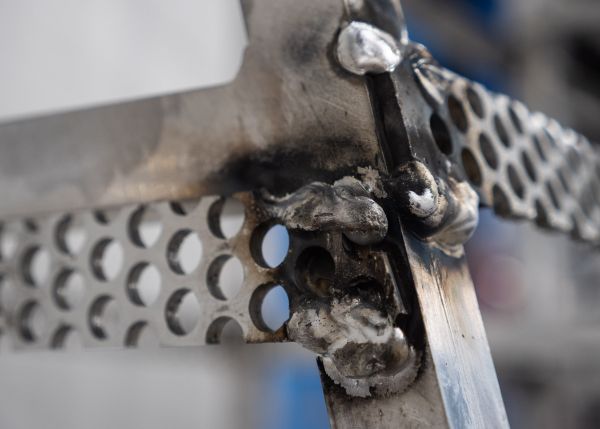
About 5,000 1-inch welds are applied to the Living Chapel by the Penn College crew.
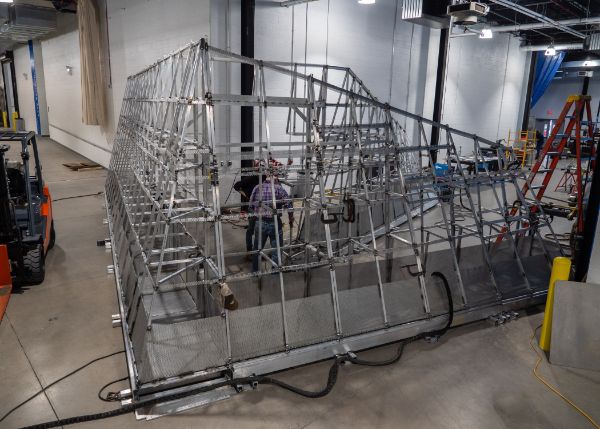
A day before it’s shipped to Penn State, the totality of the Living Chapel becomes clear.
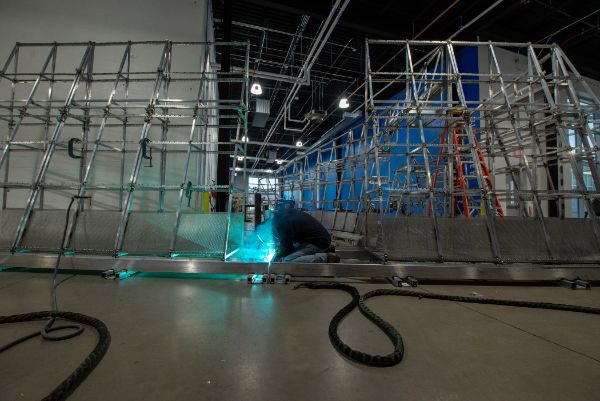
On “moving day,” Wolfe applies one of the final welds to the Living Chapel.
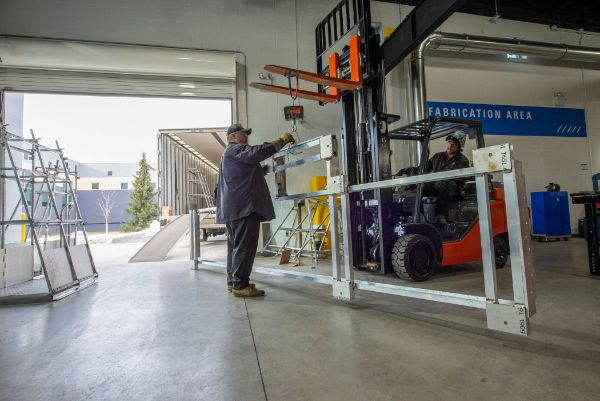
Holland and Colton weigh all the pieces before the sections are loaded into the moving truck.
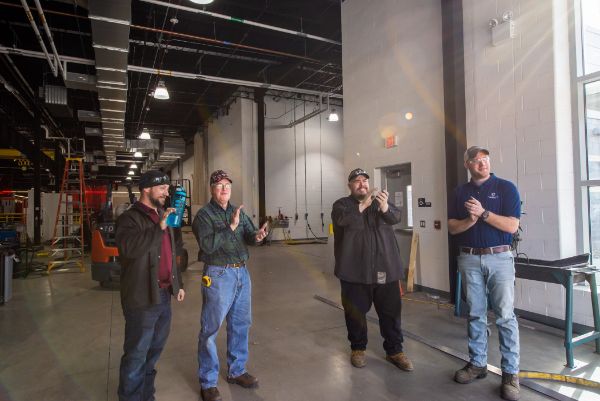
Colton; Michael J. Nau, instructor of welding; Holland and Wolfe bid “Arrivederci" to the project.

Colton ensures the various sections easily slide into the foundation.
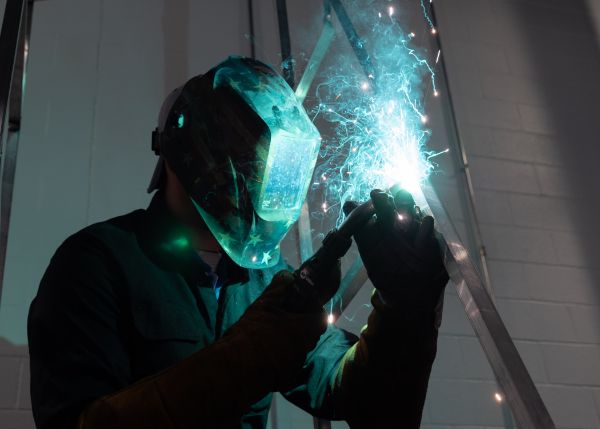
(By this time, he has long lost count of the number.)
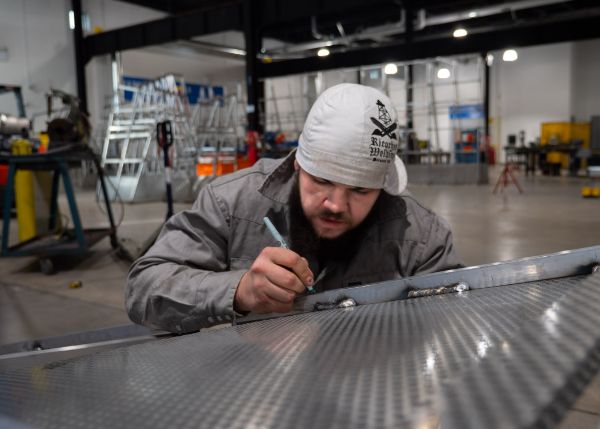
Novick works on meshing to be attached to the walls’ bases. The meshing helps support and shield a rubber liner that houses the water for the Living Chapel.
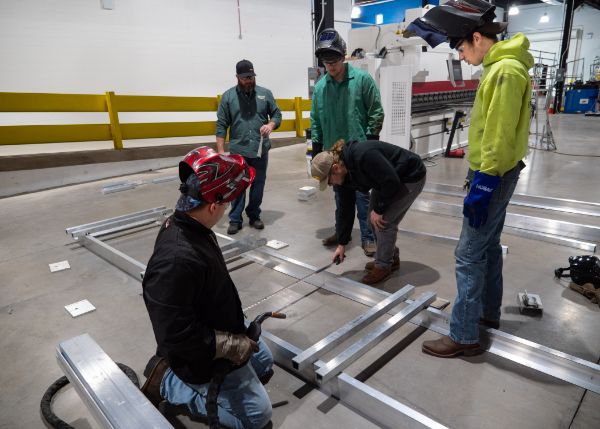
Students assist Ryan P. Good (far left), assistant professor of welding, in constructing the foundation for the Living Chapel. The walls’ bases slide into the foundation.
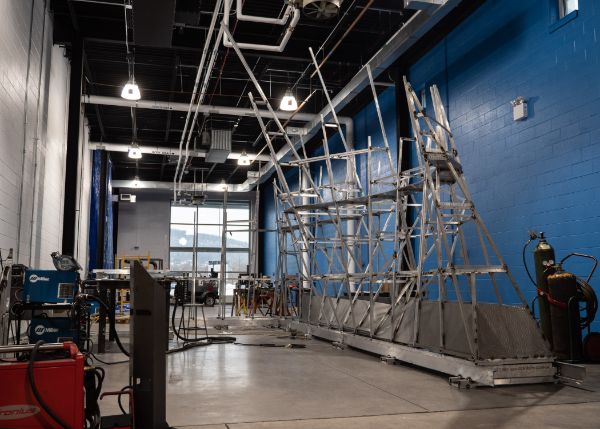
The unique angles of the Chime Wall take shape. Portions of the wall nearly touch the welding lab’s ceiling.
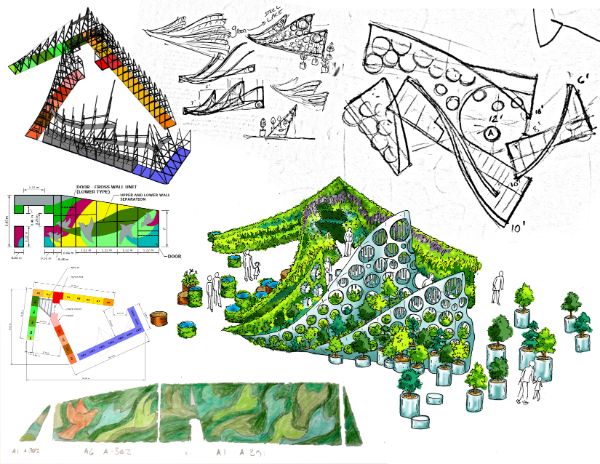
A collage of sketches illustrates the evolution of the Living Chapel’s design.

Welding students Nolan Durecki (left) and Christian A. Novick assist with grinding edges of the A Wall.
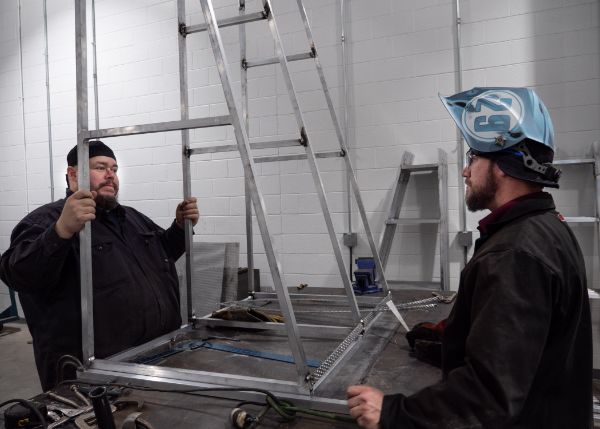
Welding faculty Jacob B. Holland (left) and James N. Colton II contemplate the weeks of work in front of them.
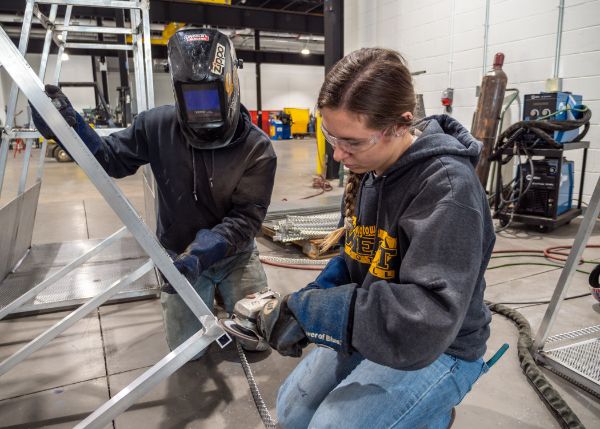
Welding students Axel A. Murillo and Sara D. Stafford take respite from Finals Week to work on the Living Chapel.
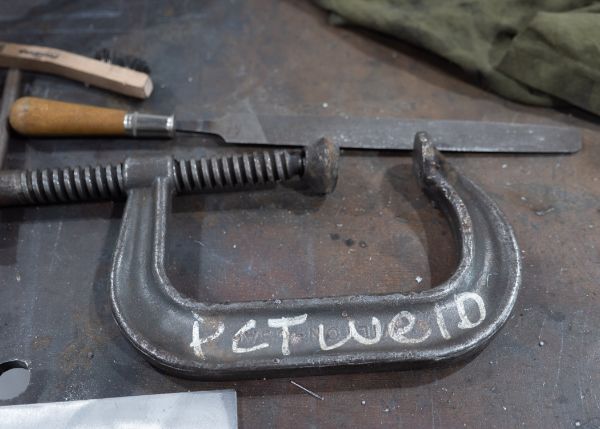
Penn College left its indelible mark throughout the fabrication process.
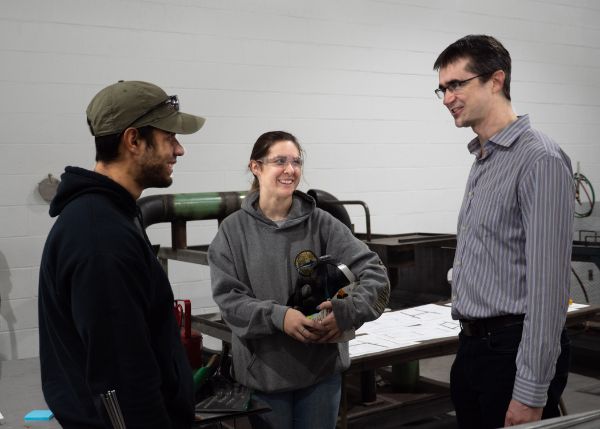
Murillo and Stafford proudly discuss the Penn College welding program with Australian-Canadian music composer Julian Revie, the creative director of the Living Chapel.

Gillean Denny, chief architectural designer for the Living Chapel, reviews some design changes with Holland and Colton. As a Penn State student in 2002, Denny visited the Penn College masonry lab with her classmates for a day of hands-on experience.
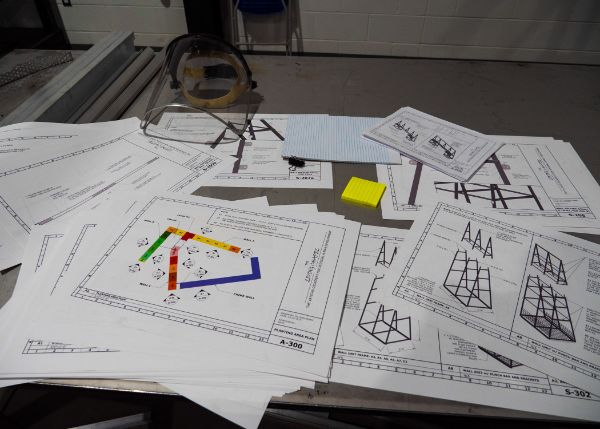
A week before Christmas, the construction paperwork begins to multiply. The final documents total about 250 pages.
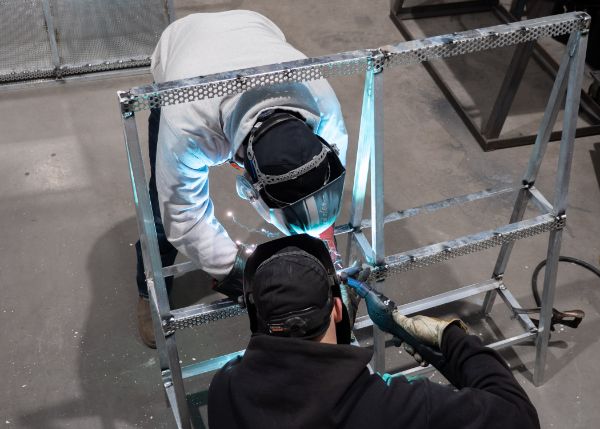
Colton and welding instructor Cody W. Wolfe apply one of thousands of welds on the structure.
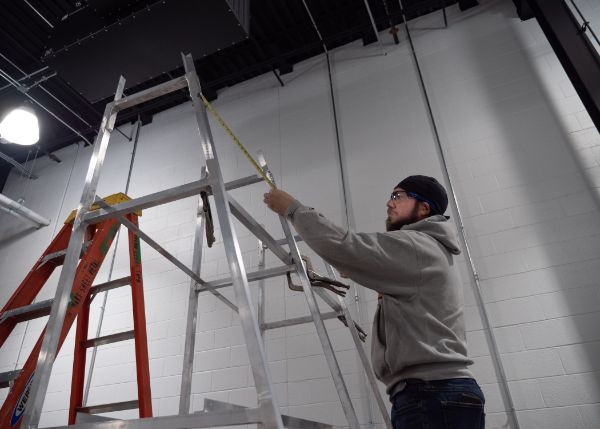
Precise measurements are a critical factor throughout the 10-week fabrication process.

With the help of an electric cold saw, countless sticks of aluminum – measuring about 20 feet in length – are cut to build the Living Chapel.
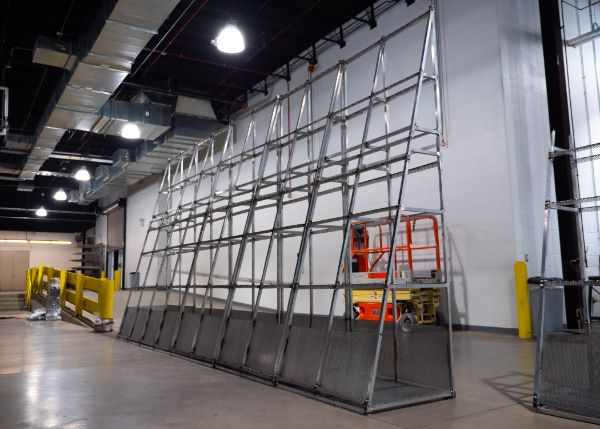
With the rest of the campus idle for Winter Break, the walls for the Living Chapel begin to take shape.
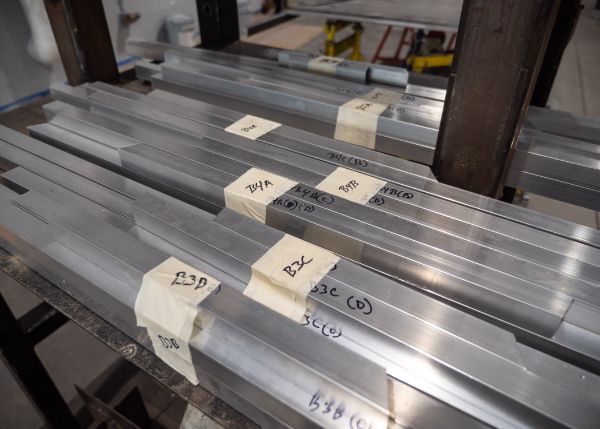
The amount of aluminum used for the four walls is equivalent to the length of about 16 football fields.
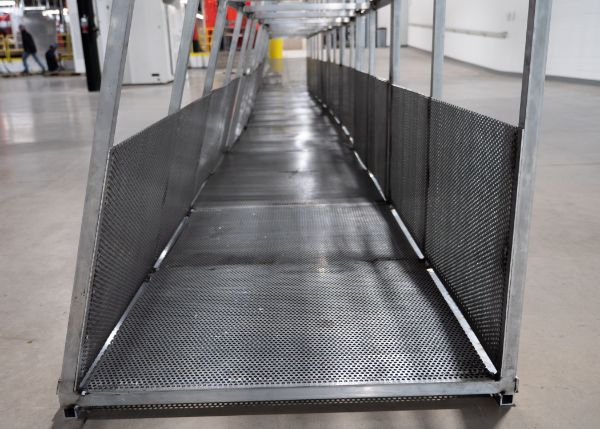
The base of the four walls holds 2.6 tons of water that nourish the Living Chapel’s plants and help “play” its steel pan drums.
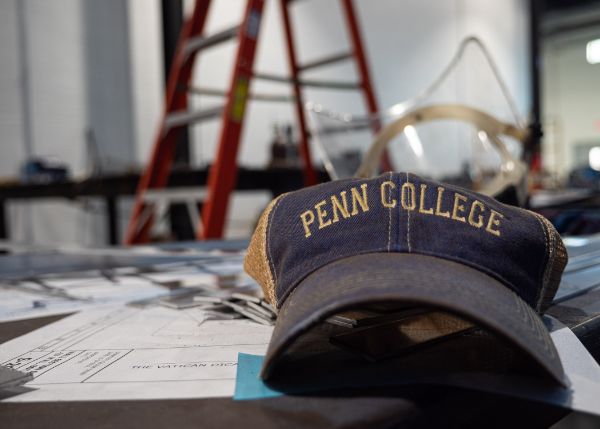
The Living Chapel project embodies Penn College pride.
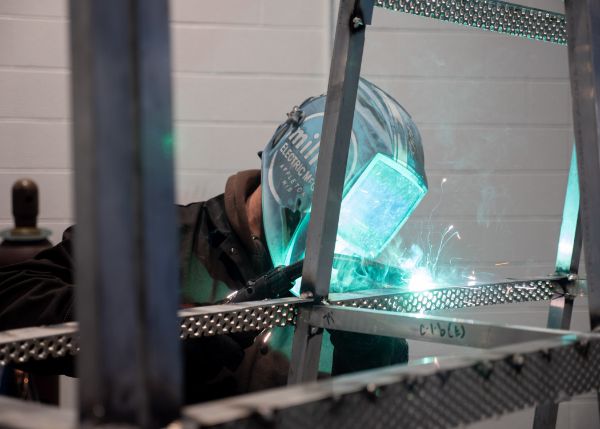
Colton and the other faculty and students employ MIG welding to get the job done.
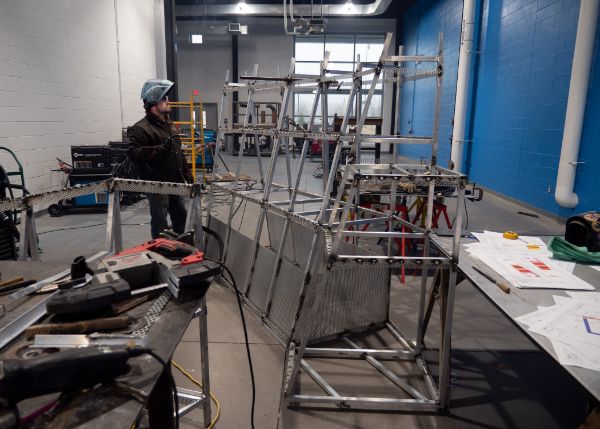
The unique angles of the walls begin to appear.
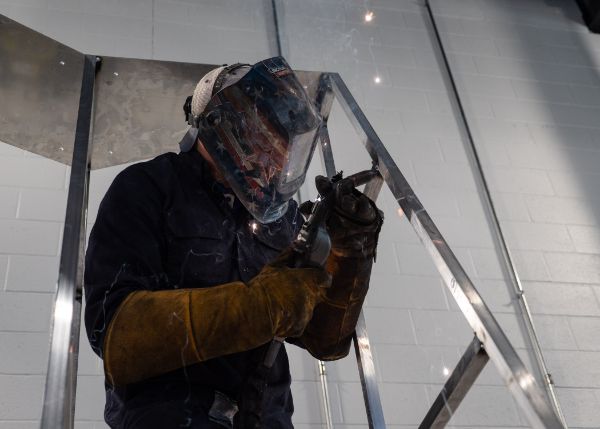
Wolfe is ready to apply yet another weld.
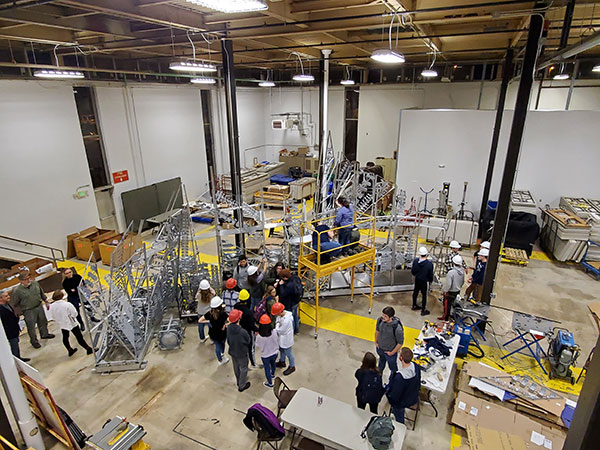
In the Laundry Building at Penn State, the chime wall comes to life.
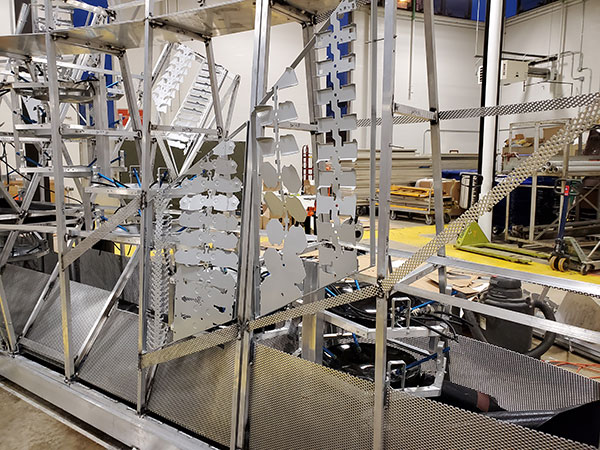
The Penn State team combed through 1,500 pounds of scrap donated by two automotive metal stamping plants to devise elements for the chime wall.
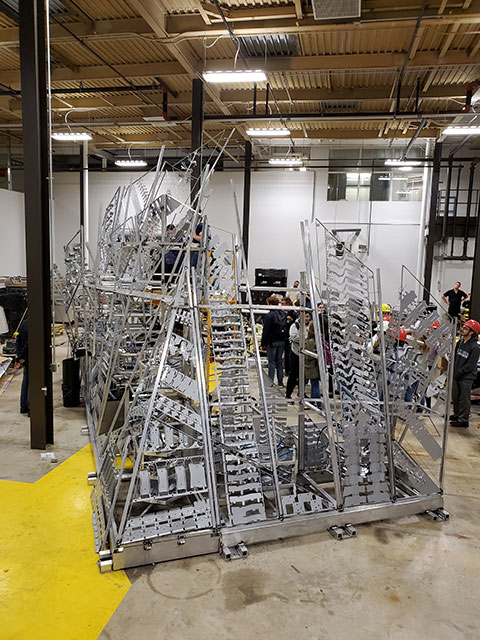
A few days after arriving at Penn State, the chime wall and the other sections are sent to Italy.
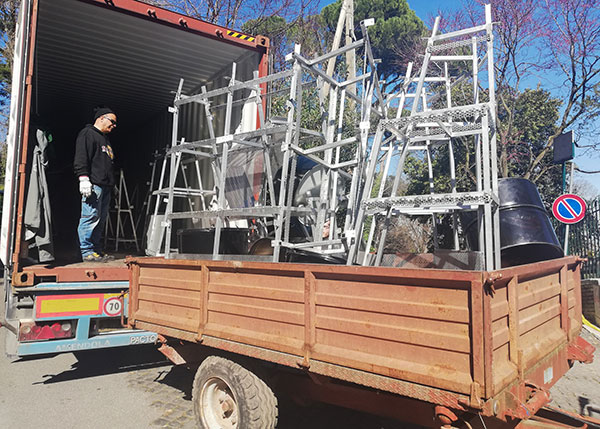
After a voyage across the Atlantic Ocean, all the sections for the Living Chapel arrive in Rome.
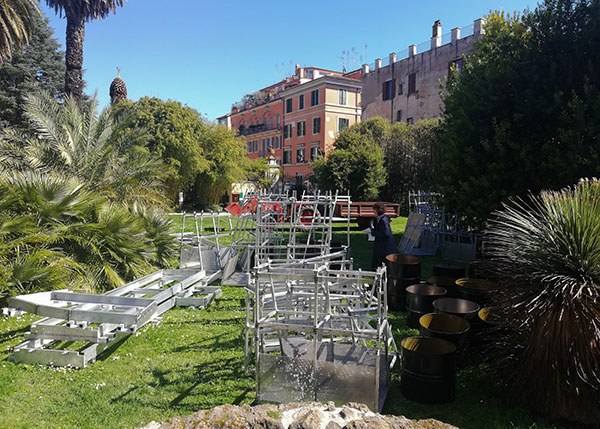
Assembly begins in March on the grounds of the Botanical Garden of Rome.
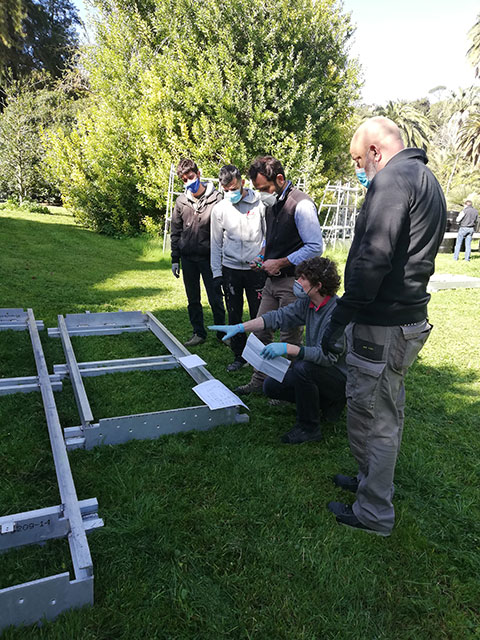
Originally, members of the Penn State team were scheduled to assemble the Living Chapel in Rome. The COVID-19 pandemic scrapped those plans, leaving installation to Sequas, a Rome-based architectural firm.
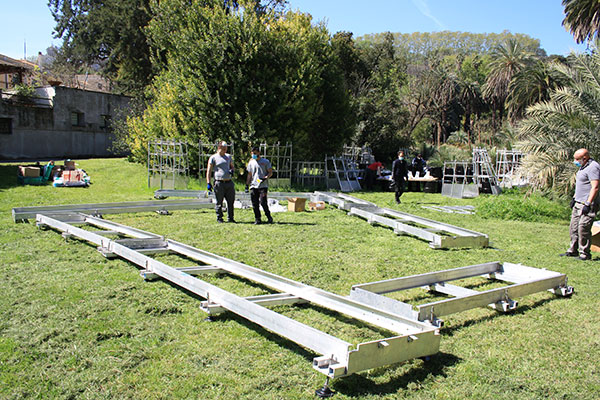
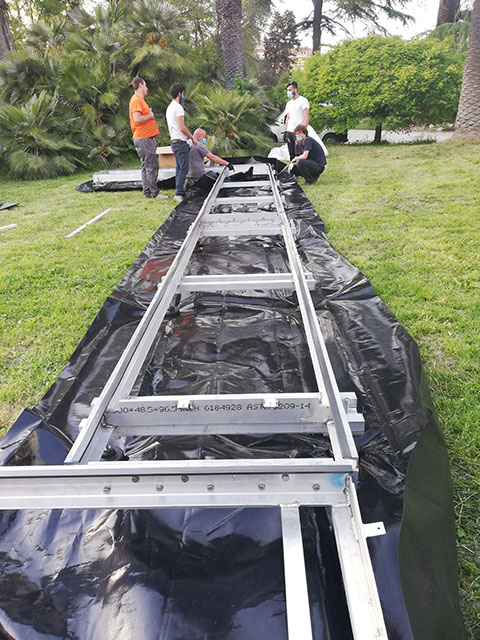
The “footprint” for the Living Chapel begins to take shape. The structure is approximately 45 feet long by 30 feet wide.
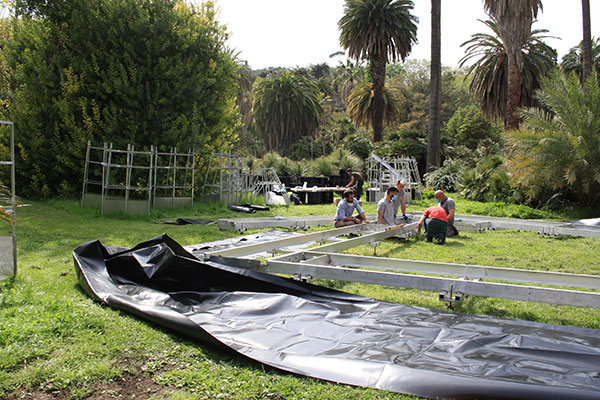
A rubber liner is required for the 2.6 tons of water to be stored in the walls’ bases.
The solar-powered water system, designed by the Penn State crew, will nourish the Living Chapel’s plants and help “play” steel pan drums located throughout the walls.
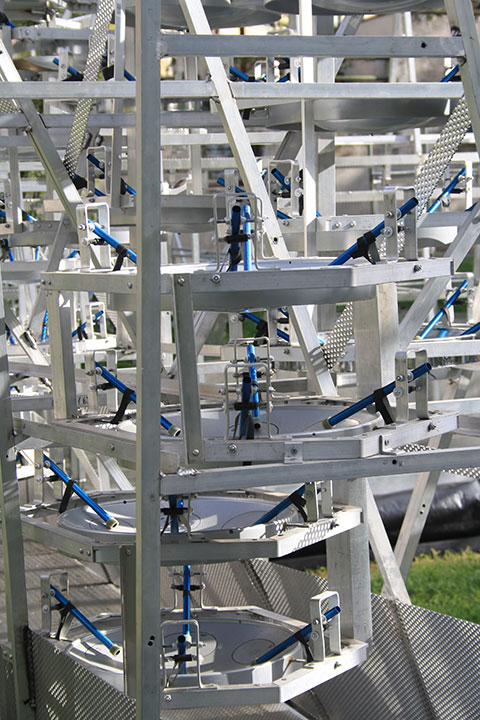
Water will cause mallets to strike the vertically stacked steel pan drums, creating a natural melody.
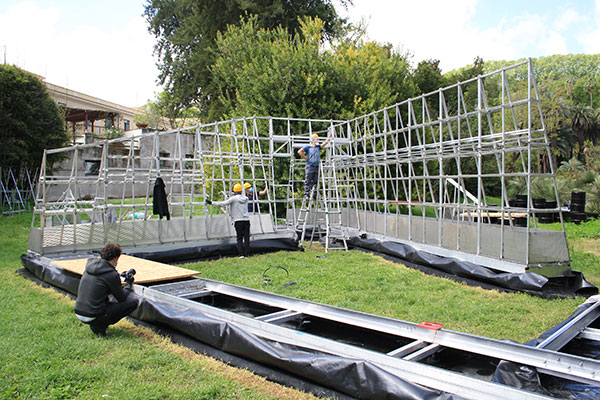
The walls constructed by the Penn College welding faculty and students range in height from 10 to 15 feet.
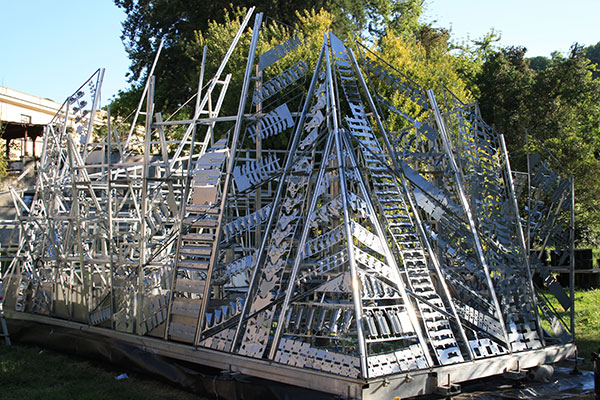
Elements of the chime wall glisten in the Italian sun.
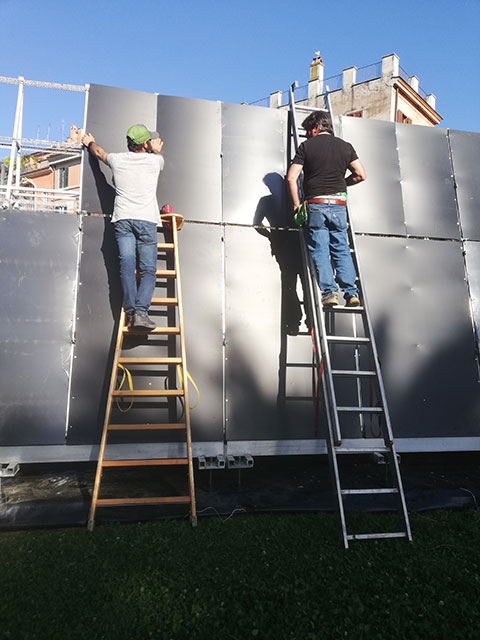
To prep for the flowers, PVC boards are bolted to the aluminum walls.
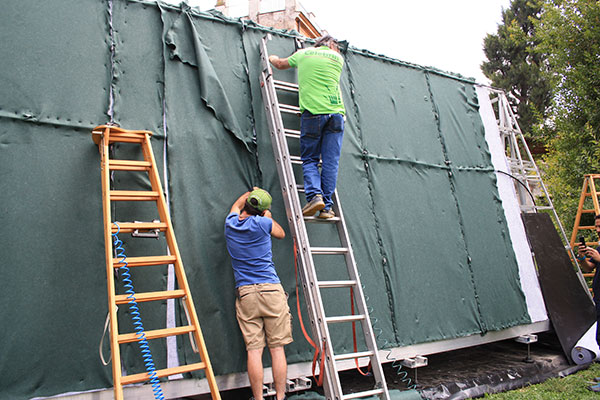
Recycled fleece fabric is then stapled to the PVC boards.
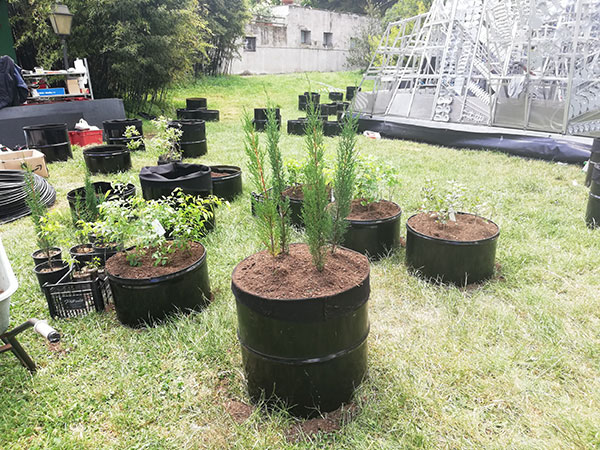
Repurposed oil barrels containing 2,500 saplings of 46 European tree species will surround the Living Chapel.
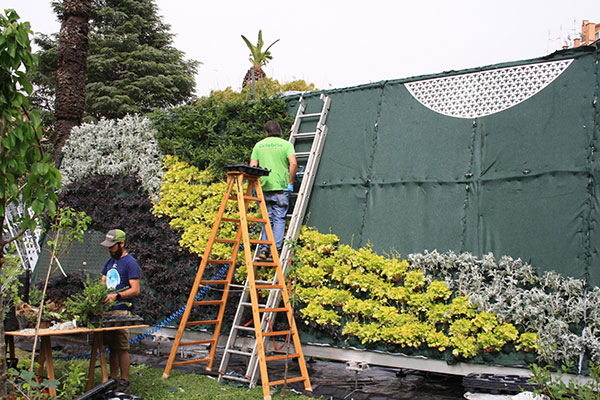
A swirling pattern of flowers begins to engulf one of the walls.
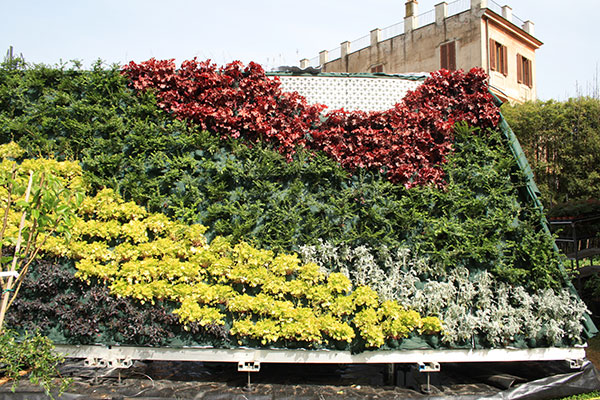
Nature’s beauty takes hold ...
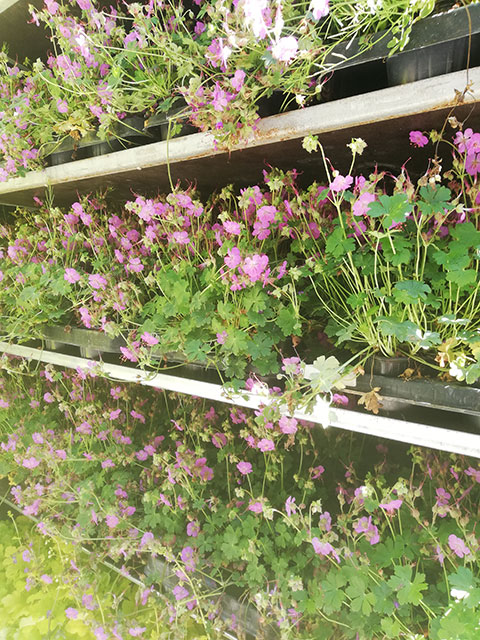
A mix of 3,000 evergreen leaves and flowers, grown north of Venice, will be inserted into the walls of the Living Chapel.
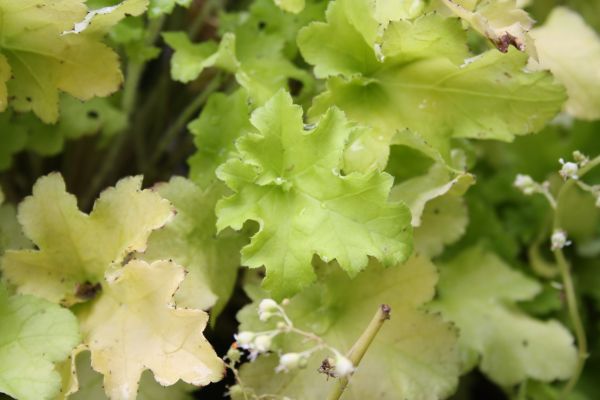
... thanks to the vibrant colors ...
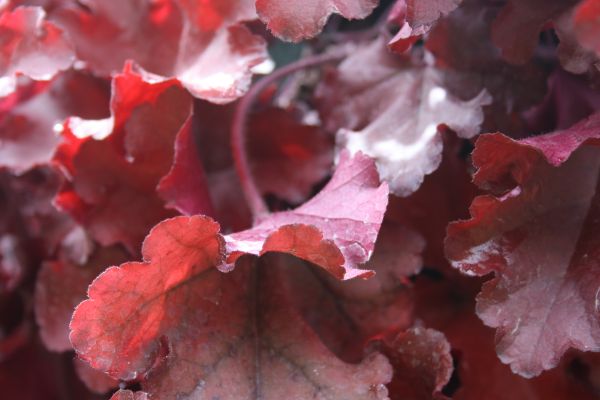
... of leaves and flowers adoring the walls.
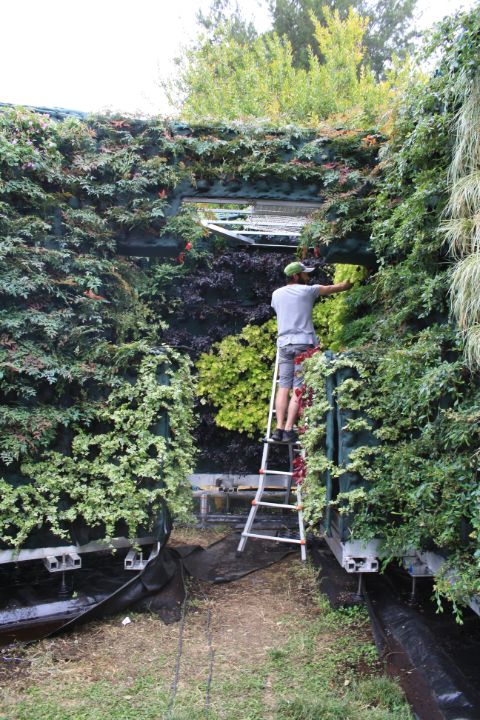
(Although nature appears to be “swallowing” this installer!)
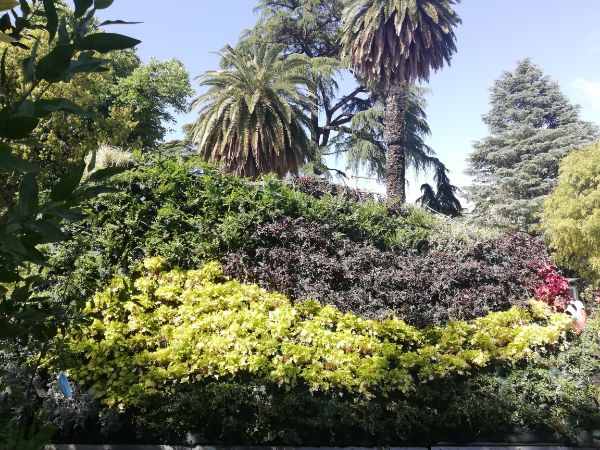
Nature's oasis
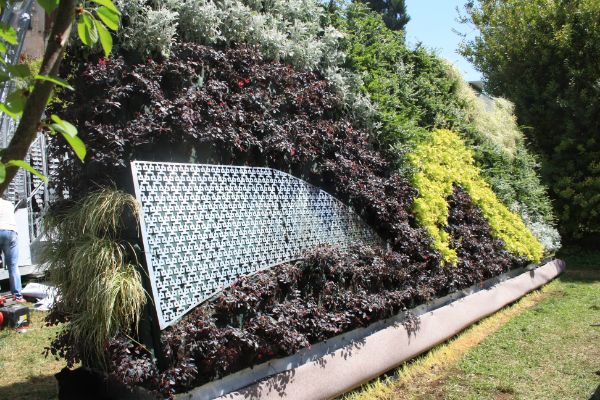
A decorative metallic piece crafted at Penn State complements one of the “plant walls.”
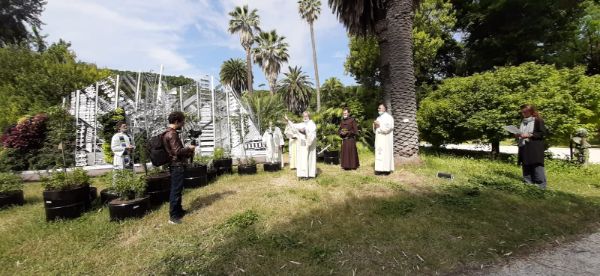
Monsignor Bruno Marie Duffé, Secretary of the Vatican Dicastery of Human Development, blesses the Living Chapel.
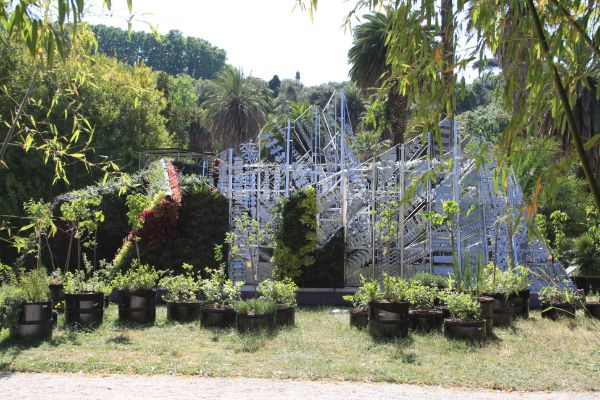
The chime wall “speaks” for itself.


