Penn College News

Penn College students installing donated lab equipment

Thursday, April 2, 2026

photos by Tom Speicher, writer/video producer

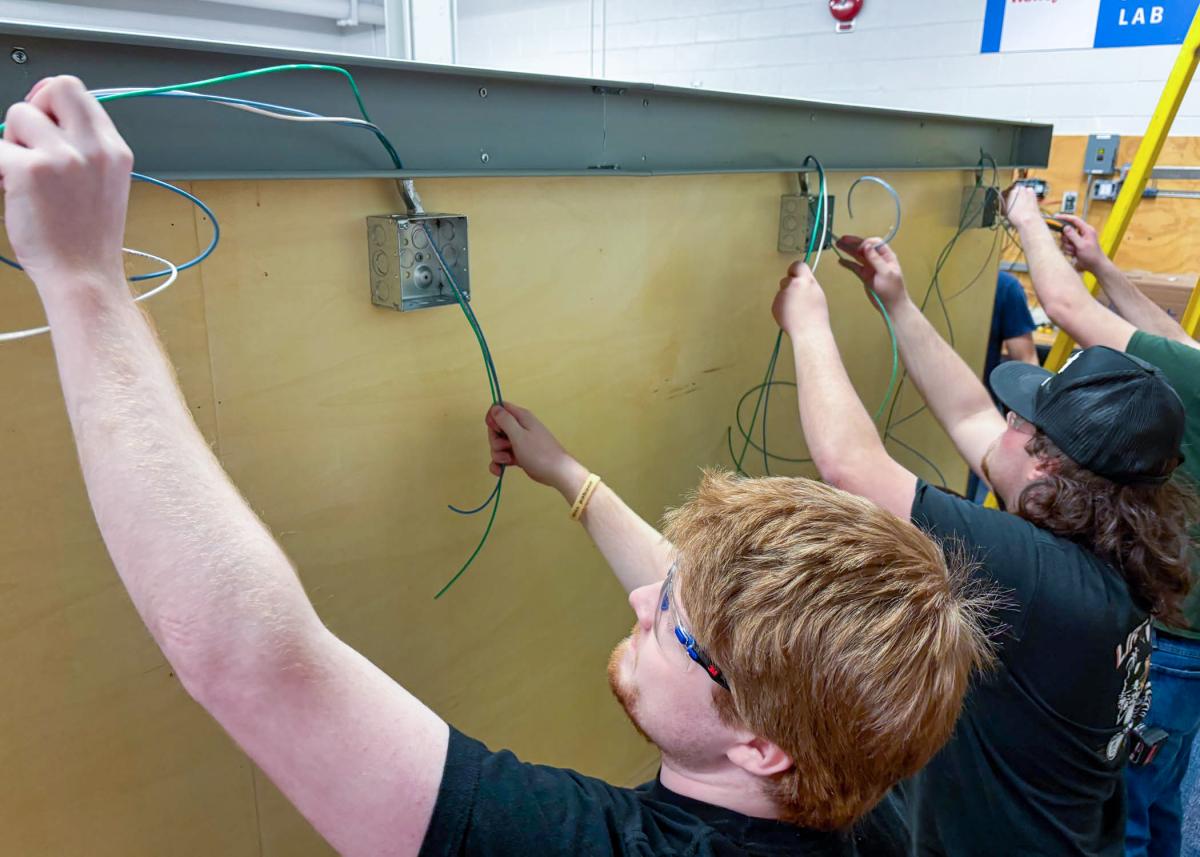
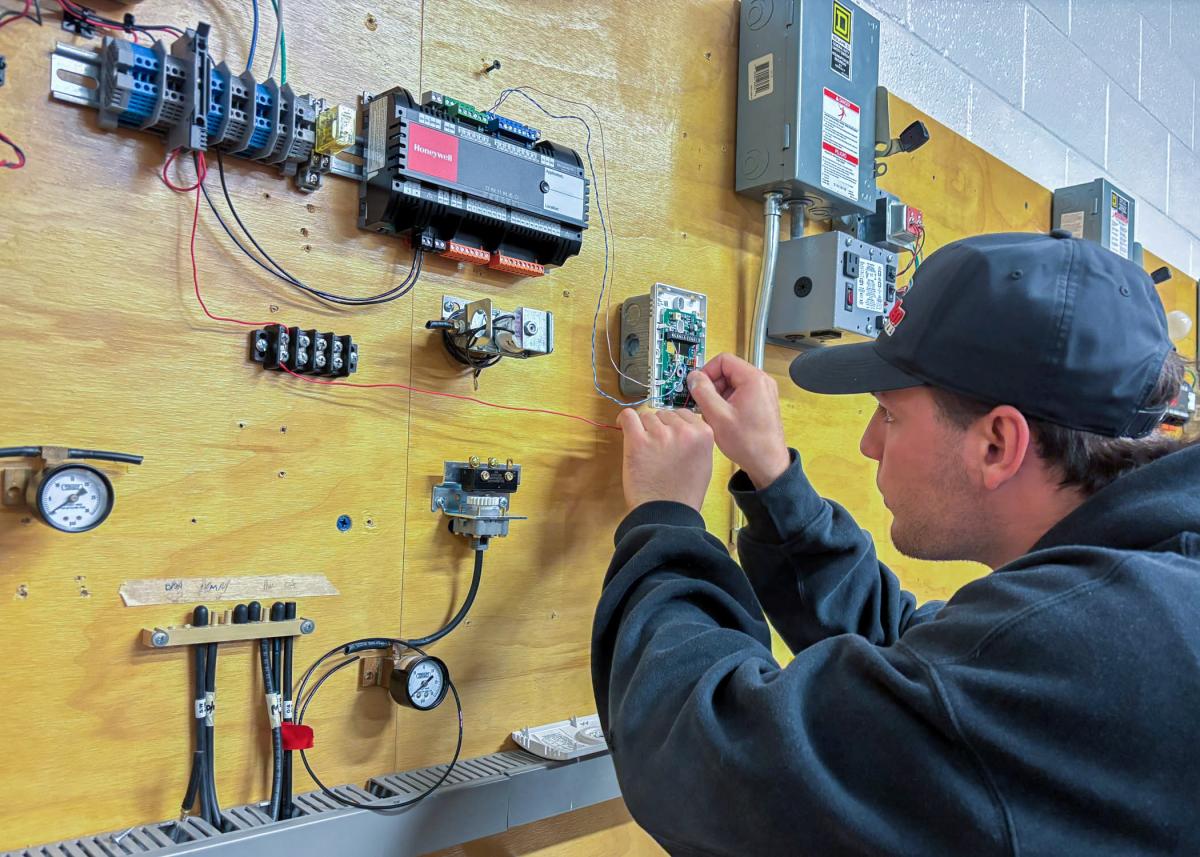
A student runs a control power wire to a thermostat in a Pennsylvania College of Technology building automation lab.

Marcello A. Santora, of Haskell, New Jersey, majoring in building automation engineering technology at Pennsylvania College of Technology, runs the control power wire for a thermostat. Santora is one of about 30 Penn College juniors installing Honeywell equipment for an updated building automation lab at the school. Once completed, the space will have 45 individual stations for students.

An overflow lab for Pennsylvania College of Technology’s building automation program is receiving an intensive upgrade through the support of a longtime corporate partner and the hands-on work of students.

The refurbished space will feature up-to-date, standardized building automation equipment provided by Honeywell. The company donated over $250,000 worth of supplies, including controllers, software, a variety of pneumatic/electric/electronic switching devices, transducers, actuators, sensors and resistors.

About 30 Penn College juniors majoring in building automation engineering technology are organizing and installing the components into 45 individual lab stations for use by them and future students. Their efforts are supported by fourth-semester electrical construction students who are mounting and connecting each station’s power supply (also donated by Honeywell) and wiring the lab.

“It’s an awesome upgrade to keep the program relevant for industry. The update will allow us to improve our students’ educational experience, plus enable us to continue to give our students the tools they need to be relevant and successful,” said Craig A. Zimmerman, associate professor and co-department head of building automation/HVAC electrical.

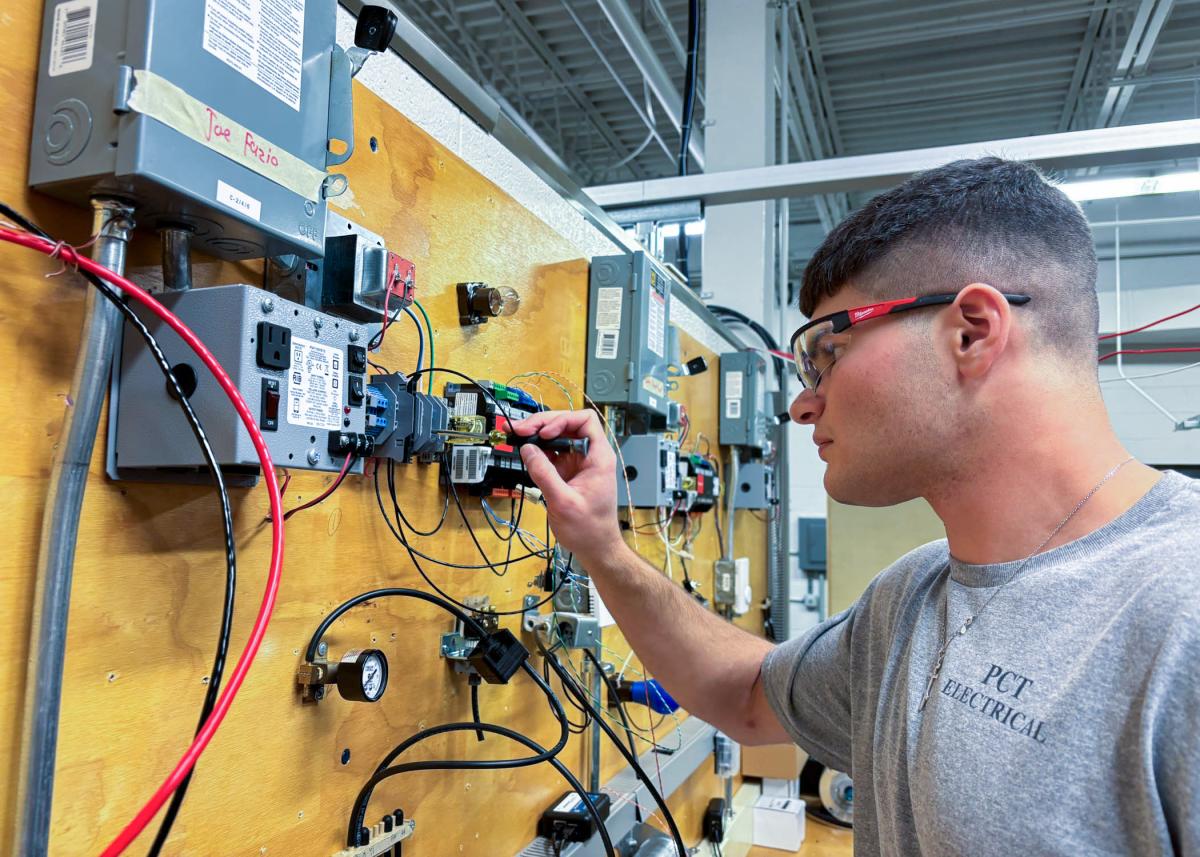
Joe M. Fazio, of Easton, checks the terminal power connections on his station.

Graduates of Penn College’s building automation program have a near 100% placement rate.

One of those alums – Michael Rodarmel, class of 2017, who is a technical operations manager at Honeywell – sparked the development of the lab. A member of the college’s building automation industry advisory committee, Rodarmel saw the older equipment in the space and worked with Zimmerman and Scott A. Seroskie, assistant professor of electrical technologies, to identify Honeywell controls and devices needed to fully supply the area.

“This lab upgrade will give the students real-world experience installing and working with cutting-edge building automation technology,” Rodarmel said. “This will help prepare the juniors for summer internships, provide them with knowledge on Honeywell systems, and give them hands-on experience working with controllers, devices and software.”

A Fortune 500 company, Honeywell develops technology and manufacturing solutions across building automation, industrial automation, aerospace, and energy and sustainability markets. Honeywell is a member of the Visionary Society ($100,000-$499,999) on the college’s Donor Wall.

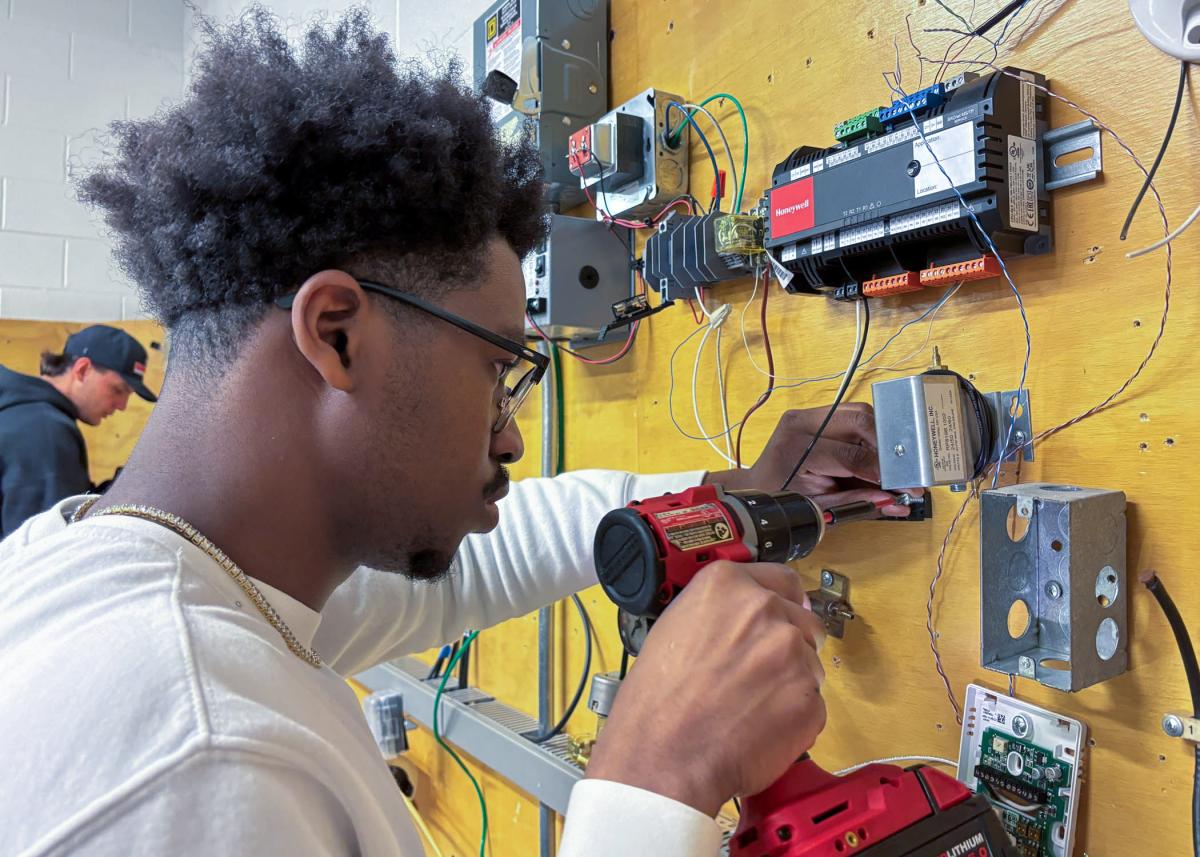
Fabien D. Saintelus, of Stroudsburg, prepares to add components.

The upgraded space – to be christened The Honeywell Building Automation Lab this fall – complements two other labs featuring industry-standard equipment for the approximately 70 students enrolled in the building automation program.

“This particular area was kind of piecemealed together as an extra lab,” Seroskie said. “It was put together with a lot of hand-me-down equipment. We’re upgrading from 21 stations to 45. Even bigger is updating from seven shared controllers to 45 controllers, one for every station and every student. It’s been a monumental update.”

Students are benefiting from their integral role in completing the update. They are arranging and mounting the donated hardware on plywood.

“They are the first ones to configure the stations, the first ones to set them all up,” Seroskie said. “It’s a great experience to see that out-of-the-box install. It’s different than what they’re used to, for sure. I would say they’re all learning a lot from the experience.”

“When you get handed a box of brand new parts, it’s pretty exciting to get to install that,” agreed Marcello A. Santora, of Haskell, New Jersey. He is one of 10 building automation students who has secured an internship with Honeywell for this summer. “You get to lay out the equipment the way you want to lay it out. It’s an experience that a lot of students won’t get. A lot of students will just work with this. We get to put up each part individually, which is pretty cool.”

According to Seroskie, the new stations will be viable for several years because they allow for components to be added as technology warrants. “It’s keeping the program relevant,” he said.

“It’s great knowing that I’m going to be able to help future generations because I’m setting these up,” added Fabien D. Saintelus, a building automation student from Stroudsburg. “These stations will be up for a very long time.”

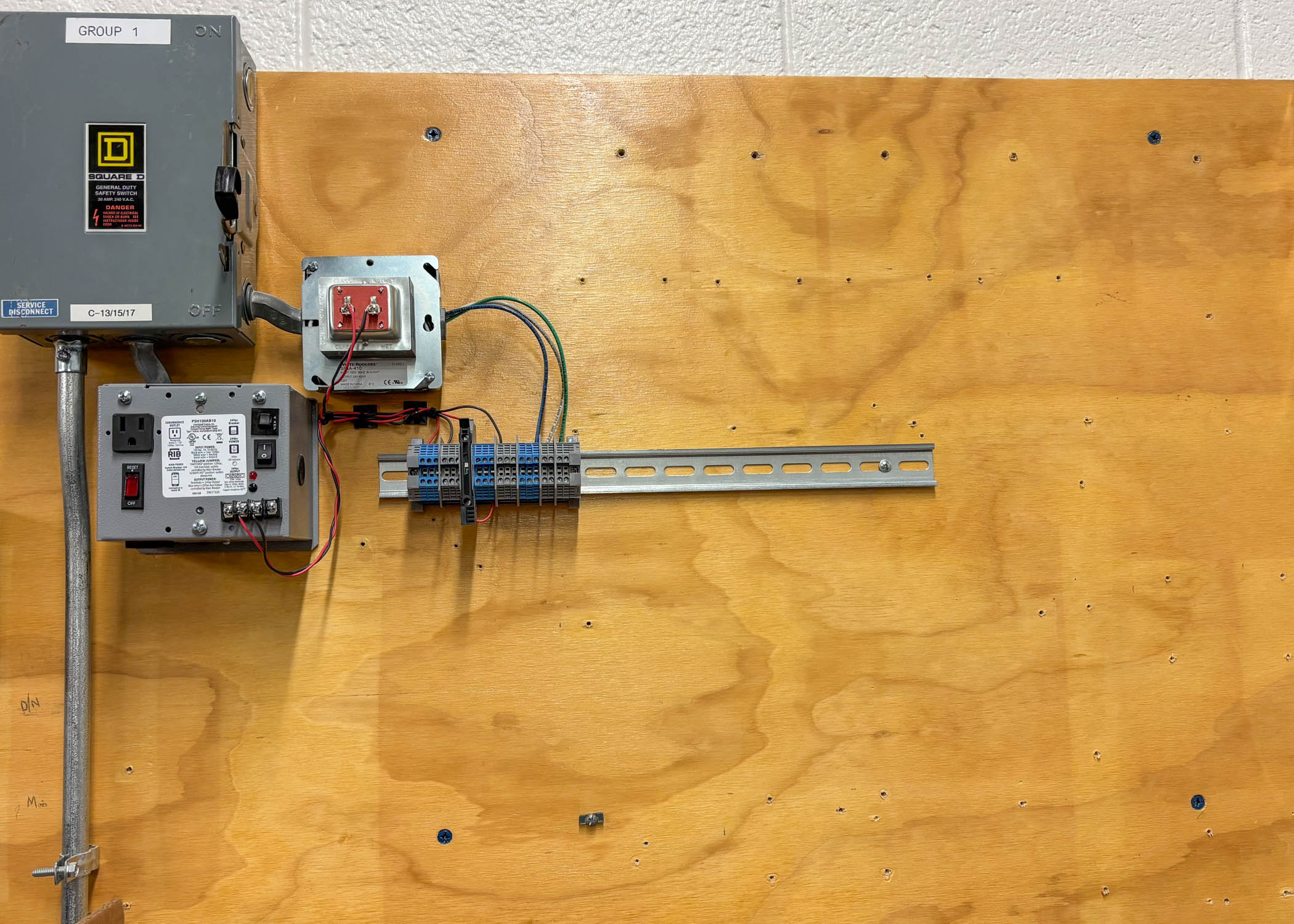
Electrical construction students Brett M. Russell, of Frackville, and Connor D. Lindsey, of Coraopolis, run wire for lab stations’ receptacle circuits.

Electrical construction students enrolled in the Construction Lab IV-Practical Experience class have also contributed to the lab’s long-term viability. Last fall, six students removed the space’s previous wiring. This spring, 13 students have been adding power supplies and transformers to convert the lab to a 24-volt control power system, which is typically used in building automation.

“It’s a great hands-on experience for the students,” said course instructor Darrin S. Morse, who recently had two sections of his class replace lighting at the Williamsport YMCA. “The work in the lab has been more technical than what we did at the Y. We’ve been doing more receptacles, a lot more terminations. This work has been more intricate.”

“You can see what we’ve learned in the past three semesters come to life in a real-world experience,” said Kyle G. Koennecke, of Palmyra.

Koennecke and Connor D. Lindsey, of Coraopolis, are two of Morse’s students who will spend considerable time in the lab after earning their associate degrees in electrical construction in May. This fall, they will be majoring in building automation. The electrical construction program is one of seven associate degree pathways to the baccalaureate in building automation engineering technology.
 

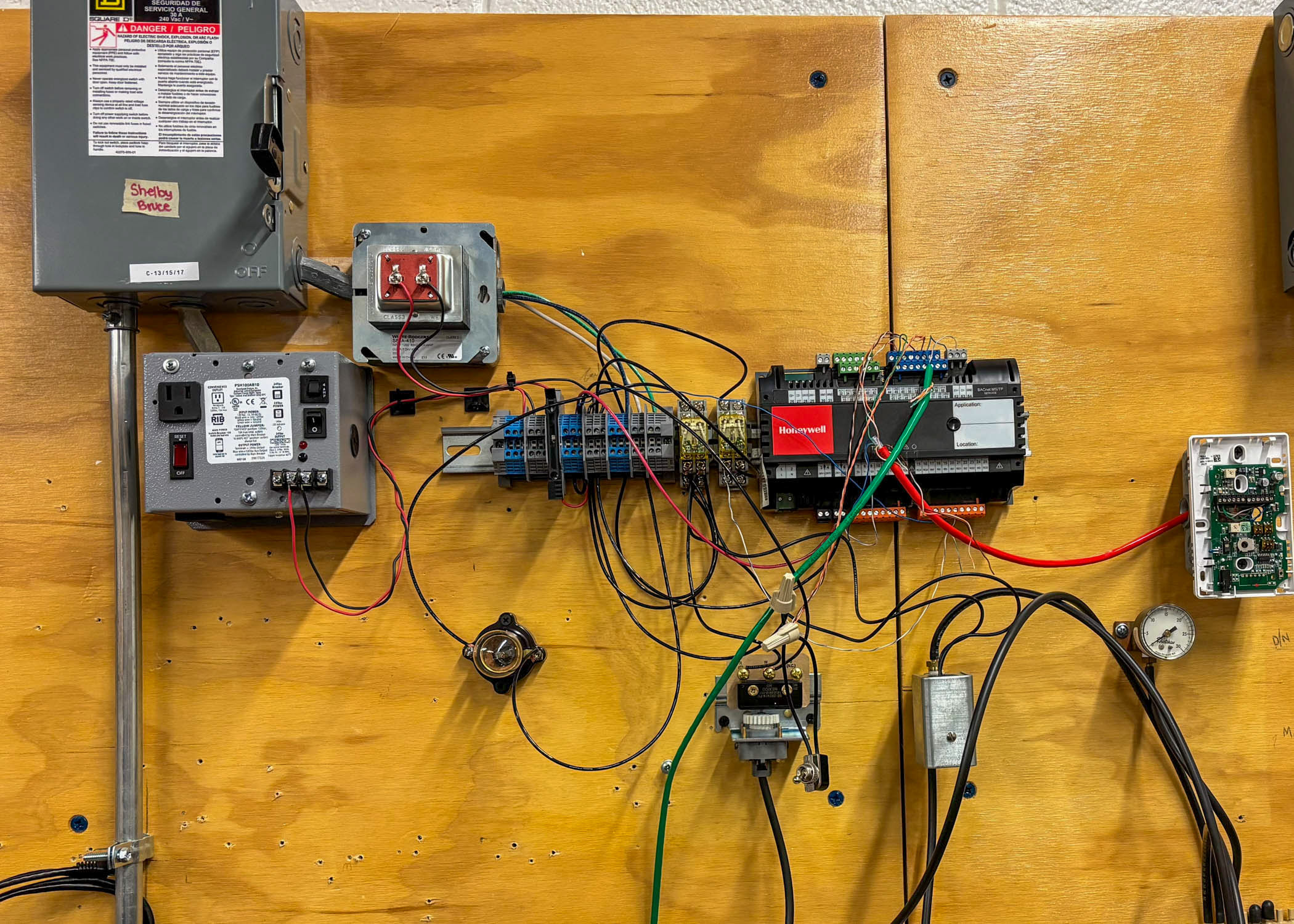
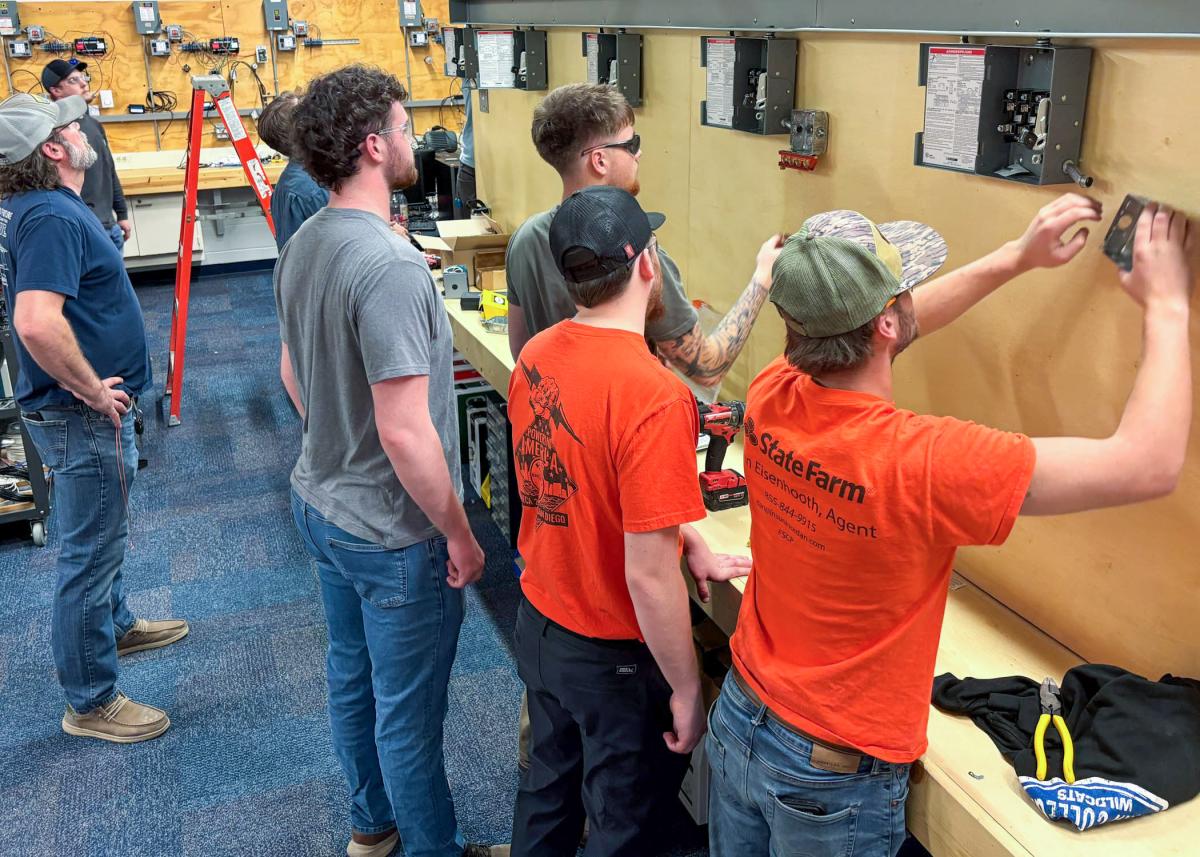
Electrical construction students install receptacles with disconnects.

“Before we use the lab for building automation, it’s nice to see behind the scenes how stuff works, knowing that we ran the wires and put the troughs up,” Lindsey said.

Once each station is fully functional for the buildihttps://www.pct.edung automation program, Seroskie explained that the students will be “introduced to the basics of Honeywell automation software electronic controllers and how the controllers can be hybridized into older classic pneumatic building controls to expand capabilities, improve efficiency and lower operating costs.”

Of course, by that time, the students will be very familiar with the equipment, thanks to their installation work.

“I’m really grateful. A lot of people don’t know how lucky they are to be at a school like this and have this opportunity,” Santora said. “Penn College is a great school.”

To learn more about building automation engineering technology, electrical construction and other programs offered by Penn College’s School of Engineering Technologies, call 570-327-4520.  

For information about Penn College, a national leader in applied technology education, email the Admissions Office or call toll-free 800-367-9222.