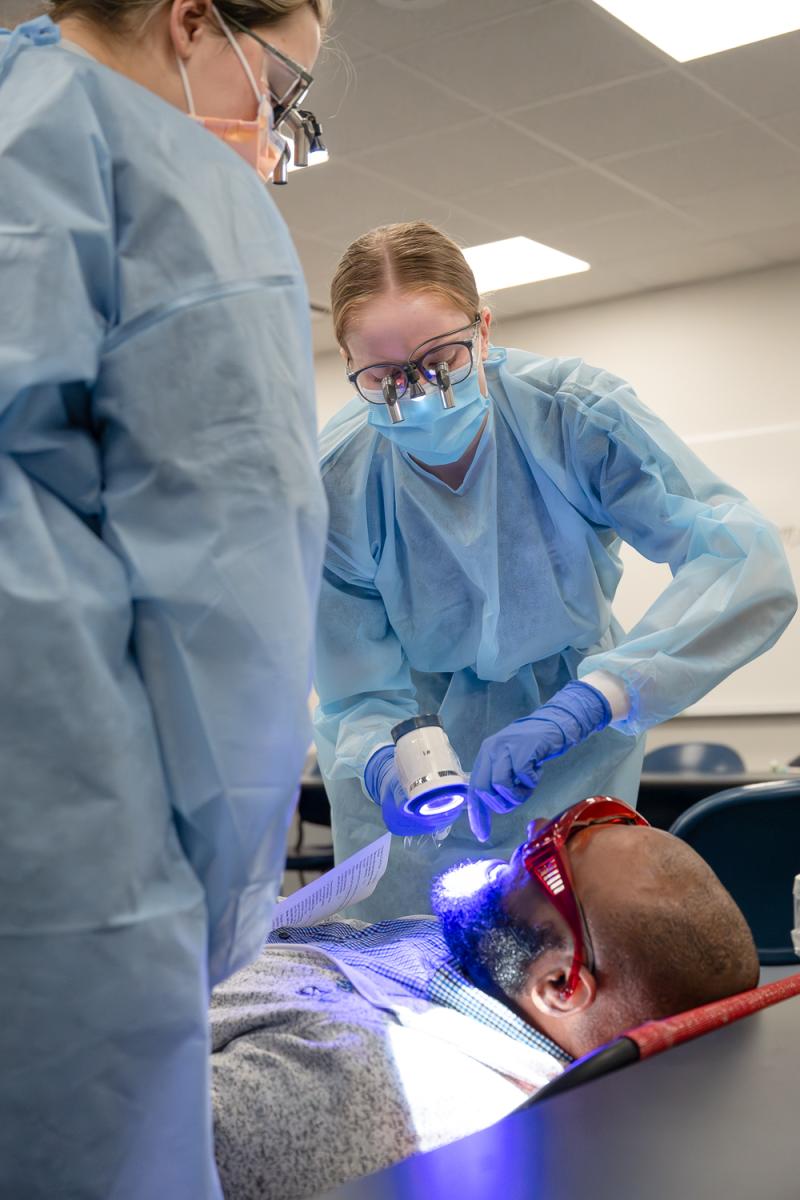
Pennsylvania College of Technology dental hygiene students recently took part in two unique outreach events that focused on target populations: infants and veterans.
In collaboration with Central Susquehanna Intermediate Unit 16’s ELECT/EFI Teen Parenting Program, students completed five infant oral health screenings. These “year-one” – or “knee-to-knee” – examinations are performed as the parent partially lays the child onto the lap of the dental hygienist, who examines the oral cavity of the infant or young toddler.
The American Academy of Pediatric Dentistry recommends infants be examined within six months after eruption of the first primary tooth and no later than the child’s first birthday, said Bridget E. Motel, assistant professor of dental hygiene.
“This establishes a dental home for the child, provides an opportunity for identification of any oral health concerns and enables early intervention, if necessary,” she said. “It also provides an opportunity to provide infant-specific oral health education to parents and caregivers.”
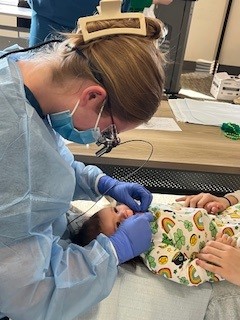
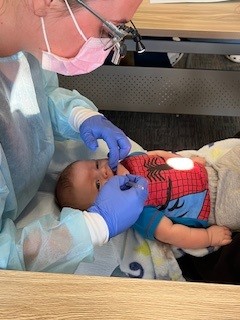
In collaboration with BLaST Intermediate Unit 17’s ELECT/EFI Teen Parenting Program, Pennsylvania College of Technology dental hygiene students Chelsea E. Dorwart (left), of Mechanicsburg, and Kendall R. McMath, of East Waterford, complete infant oral health screenings. (Photos provided by Bridget E. Motel, assistant professor of dental hygiene.)
The clinician examines the infant’s teeth, gums, frena – or the muscle attachments that can impact successful breastfeeding – and oral tissues. While examining the child, the hygienist explains what conditions to look for, like areas of weakened enamel or “white spot lesions.” Fluoride varnish is applied to erupted teeth and dietary guidance is offered, as well as information about the prevention of dental cavities, pacifier use, breastfeeding and the importance of fluoride.
Students completed 21 exams on veterans during an oral cancer screening, coordinated by the Major General Fred F. Marty Veterans & Military Resource Center. A VELscope, which uses blue light technology, helps identify oral abnormalities.
During the examination, students look for any change in the oral tissues – often white or red lesions.
Motel said early identification of oral cancers improves treatment outcomes. Nearly 58,500 Americans will be diagnosed with oral cancer this year, with cases in younger adults on the rise, she added.
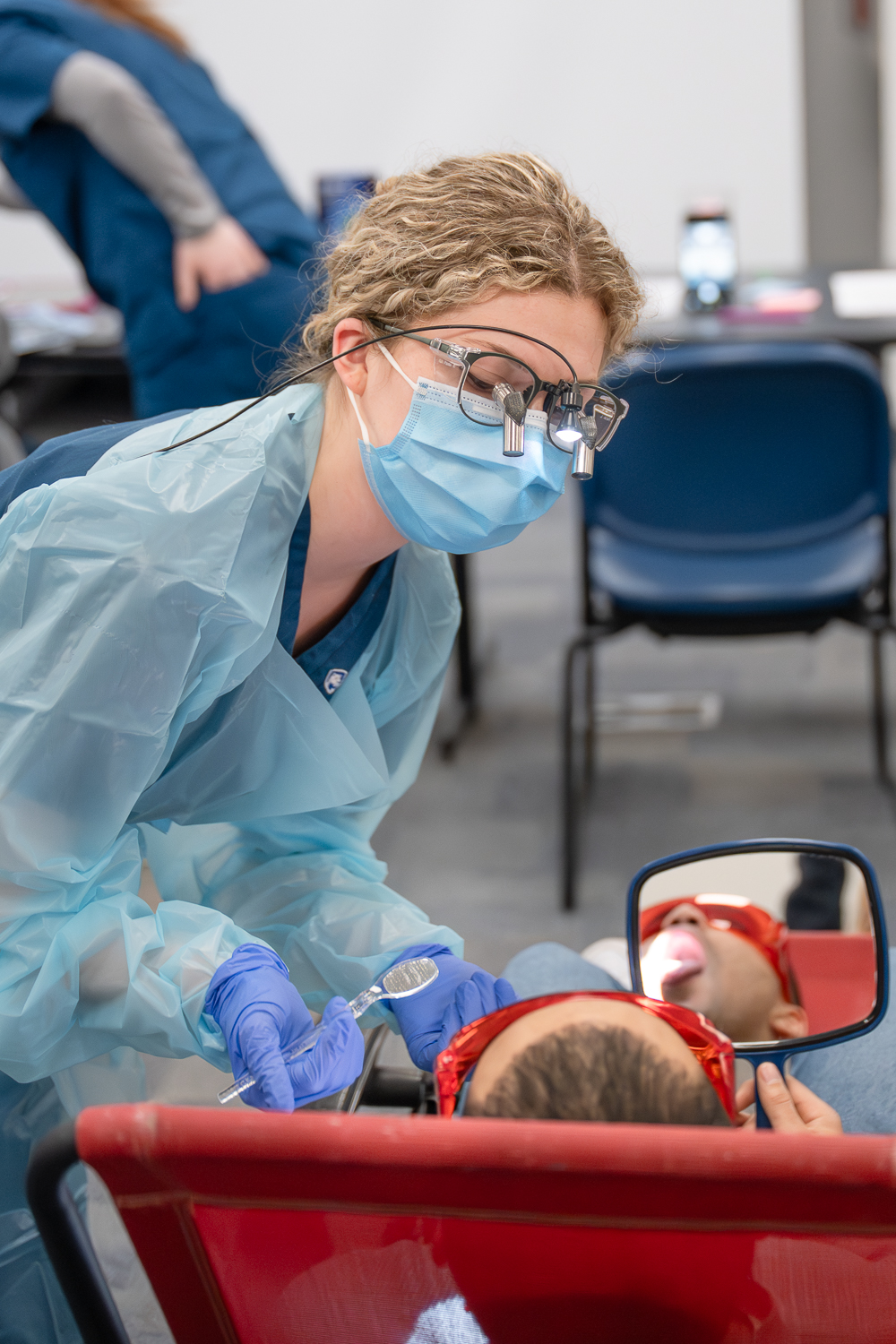
Rilee D. Donahey, of Cranberry, performs an oral cancer screening.
“Hygienists are trained to identify any signs of change from the normal appearance of these tissues,” Motel said. “The students also teach the patients how to do a self-screening at home, provide education about risk factors for oral cancer and explain common sites for oral cancer to develop.”
Throughout the spring semester, students learn how to plan an effective community program from start to finish.
“Community events help dental hygiene students see how they can use their knowledge and skills to improve the overall health and wellness of the people in their community,” Motel said. “The Penn College Dental Hygiene Program is an important part of the dental safety net in our region. Many areas in central Pennsylvania are classified as underserved, where dental services are not readily available to all community members.”
The dental hygiene clinic helps address the deficit by providing more than 4,500 patient visits each year, organizing larger service-focused events like Kid’s Oral Health Day and implementing small outreach events with a focus on target populations. Upcoming events include a visit to Hope Enterprises Inc., a local nursing home and several preschools.
The college’s Dental Hygiene Clinic is open to the public during the school year. Clinic sessions are scheduled Monday through Friday for adults and children, regardless of insurance status or previous dental history. Families from any community are welcome. Appointments can be made by calling 570-327-4500. For more information, email dental@pct.edu.
To learn about the college’s dental hygiene majors, call 570-327-4519.
For information about Penn College, a national leader in applied technology education, email the Admissions Office or call toll-free 800-367-9222.