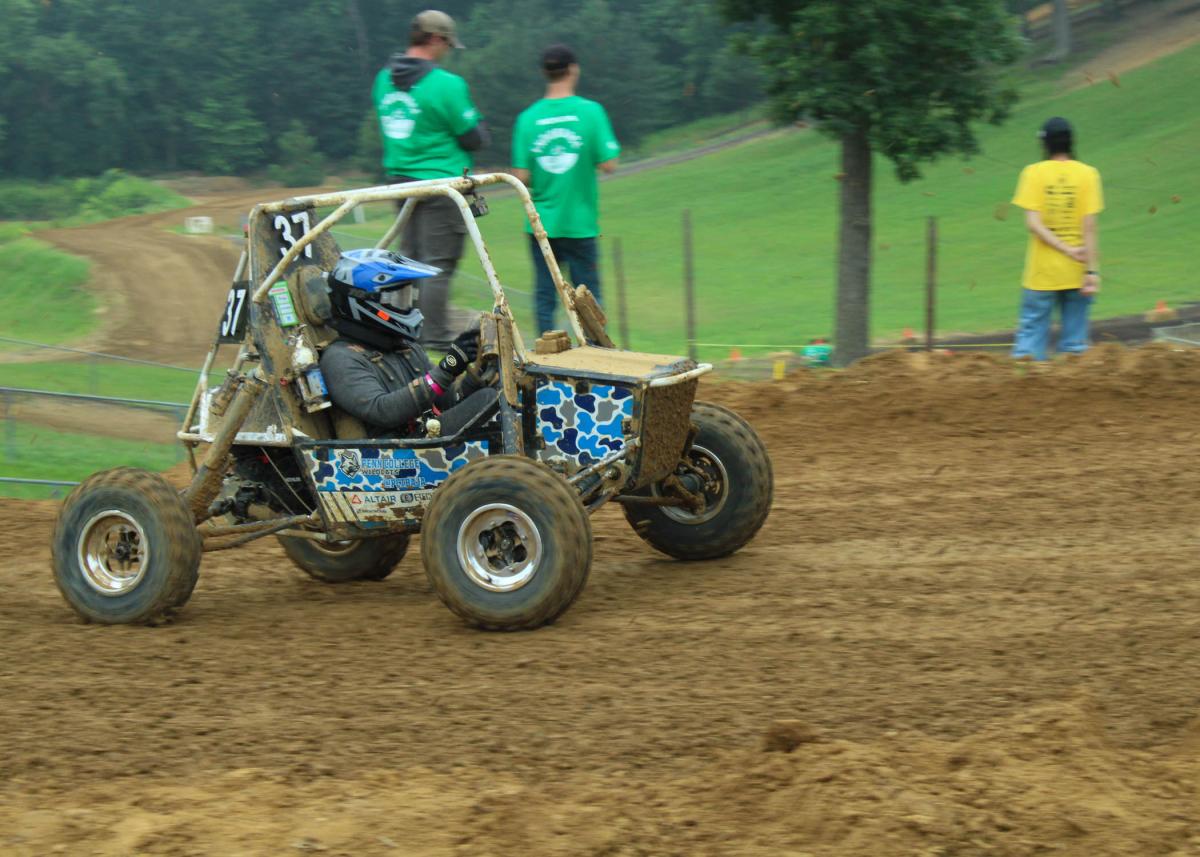
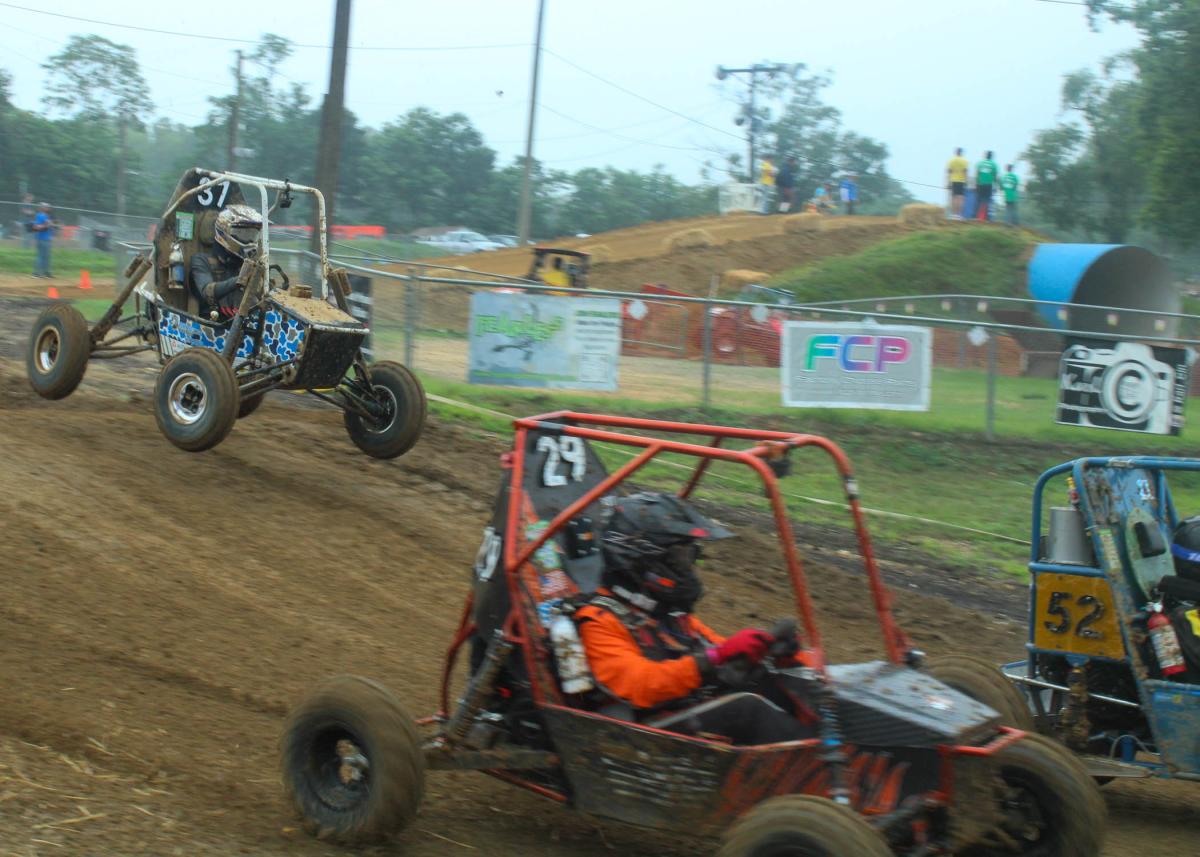
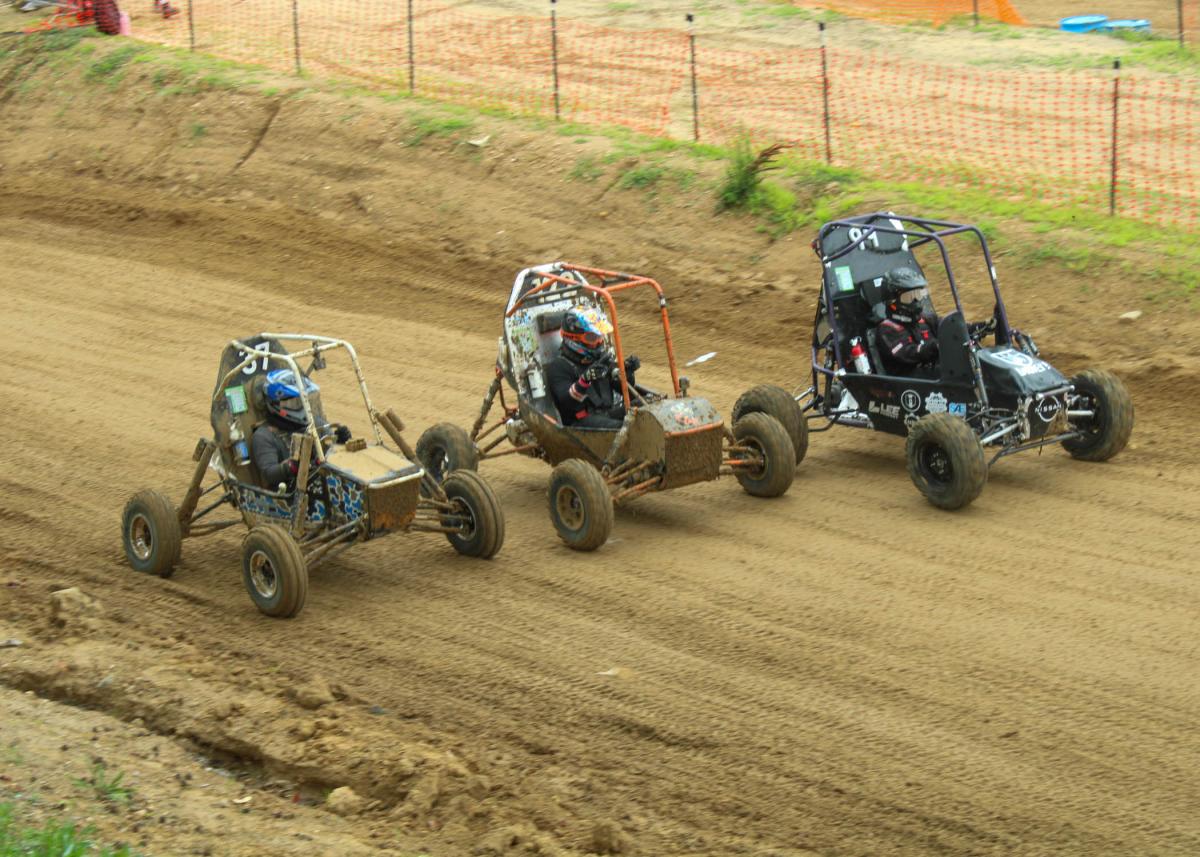
Penn College began the endurance race in the 19th slot and climbed to 11th after two hours, despite two rollovers. The team reached as high as fifth but had to pit for an extra fuel stop late in the event, which resulted in the ninth-place finish. Twenty-eight cars failed to complete 20 laps. The Penn College No. 37 car was one of nine to record at least 54 laps.
Justin A. Moser, of Nesconset, New York, and Brian P. Rogers, of Kunkletown, both majoring in manufacturing engineering technology, split the driving duties for Penn College. “I’m really pleased with how both Justin and Brian drove, considering it was their first time in the endurance race,” Upcraft said.
The University of Michigan won the event, but Penn College’s ninth-place result bested the likes of Georgia Tech, Virginia Tech, Oklahoma State, UCLA, Notre Dame, Michigan State and Illinois.
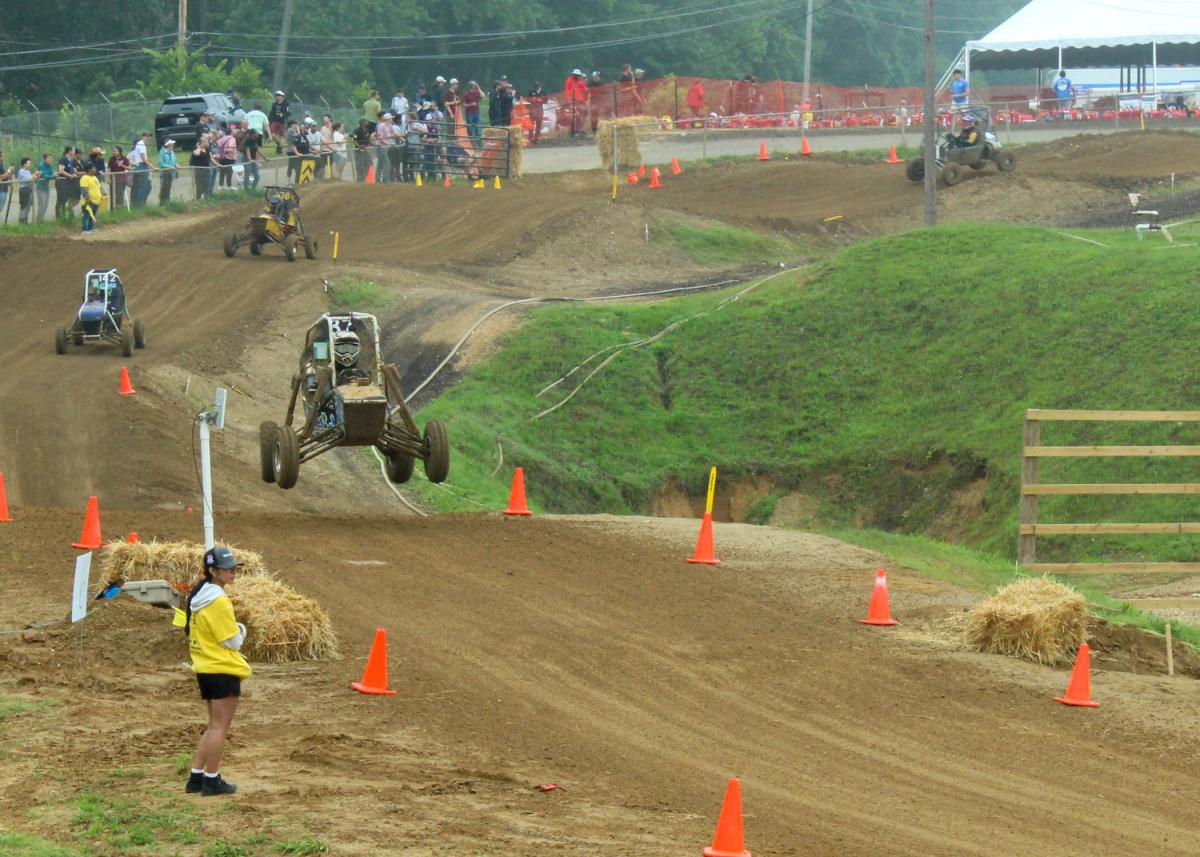
Without contingency planning, the team wouldn’t have competed in the endurance race. Two days prior, a jump on the practice track claimed the car’s gearbox output shaft, which carries power from the transmission to the wheels. Fortunately, Penn College had a spare output shaft and swapped it with the broken one.
The next day offered a fresh challenge, courtesy of the Kohler single-cylinder, four-stroke, air-cooled gasoline engine required of all Baja SAE teams. Penn College’s engine kept cutting out during the first three of four dynamic events: acceleration, hill climb and maneuverability.
“At first, we replaced the carburetor, and that didn’t fix it,” Upcraft said. “Then we decided to change the engine. We came to the race with three backup engines. It took the students three hours to change the engine, and we went out and completed the suspension and traction event.”
Penn College finished 23rd in suspension and traction, 19th in acceleration, 26th in maneuverability and 32nd in hill climb.
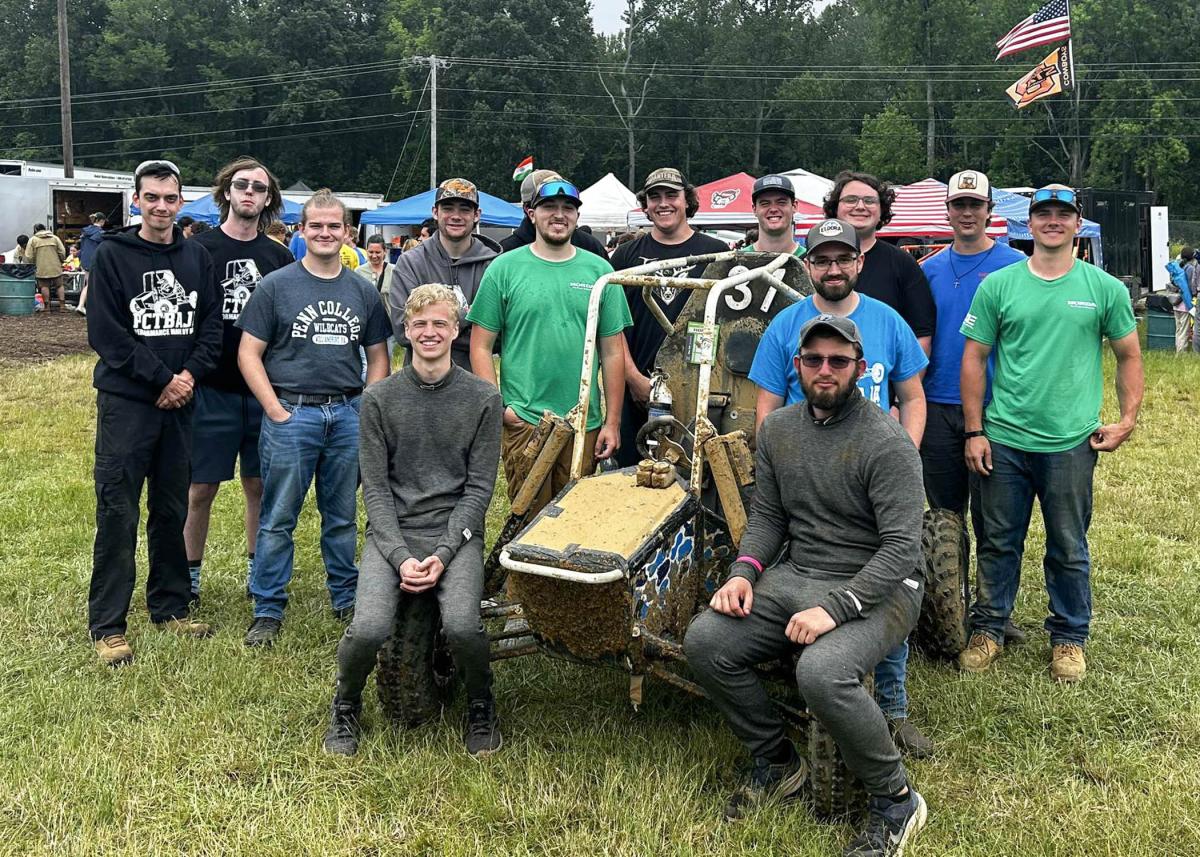
“Our main focus is always the endurance race, and I don’t think our placements in the dynamic events reflect the effort and the quality of the team that I have,” Upcraft said. “This team worked really well together. There was nobody sitting in a chair watching other people work. When we had a problem, everybody knew what they should be doing. Nobody lost their cool.”