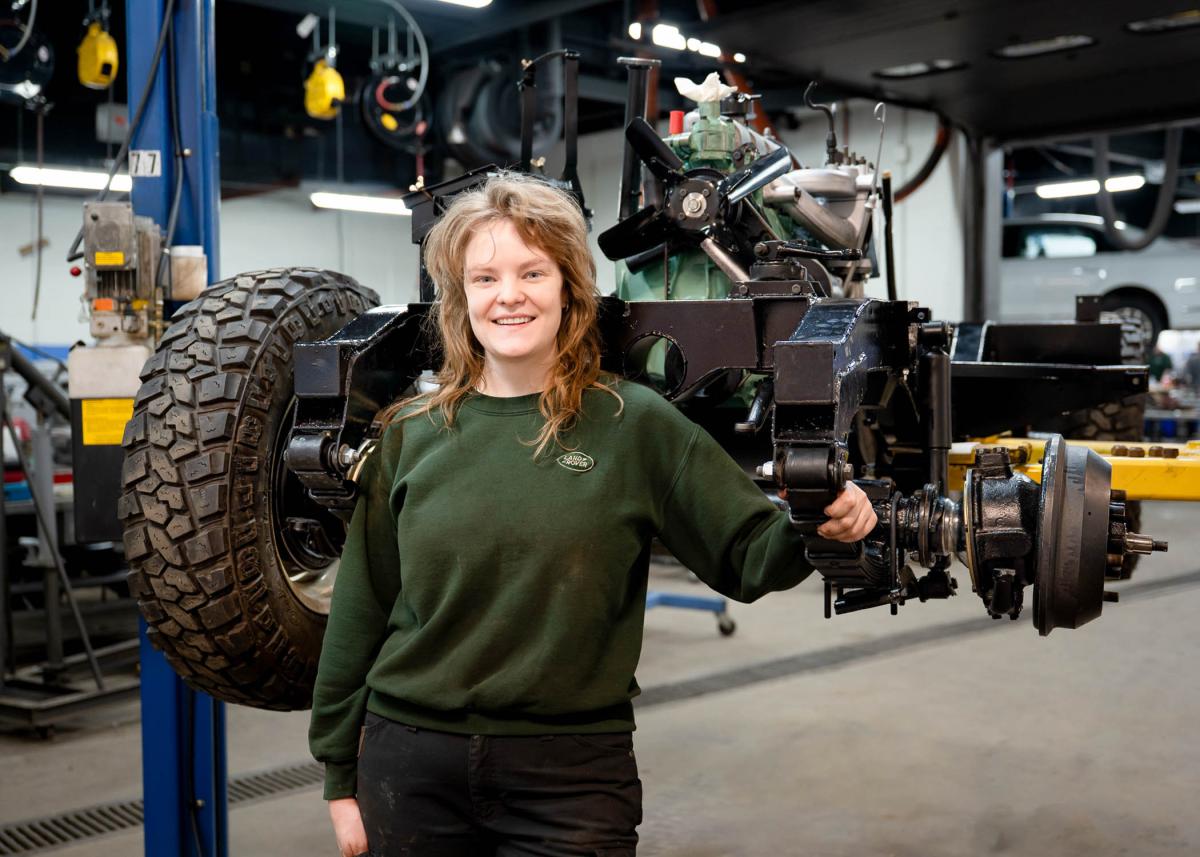
“The owner was very excited to see someone young want to get into working with Land Rovers. So, he was more than willing to help me out, even though I had no prior background in cars whatsoever,” Crabtree said.
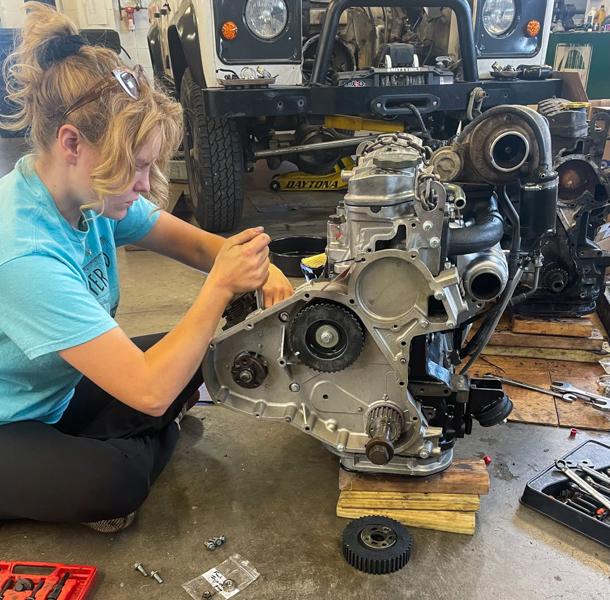
During the next four years, she excelled with the on-the-job training, focusing on mechanical work with some restoration and body jobs sprinkled in. By the time she left, Crabtree was ordering parts, writing estimates and helping to run the three-person shop.
However, the frenetic hands-on pace didn’t lend itself to shrinking the theoretical gaps in her automotive knowledge. That’s why Crabtree decided to “take the time to learn theory.” She chose to do so by enrolling at Penn College for both automotive technology courses and the restoration program.
“It’s been awesome to learn in a formalized education setting where, if mistakes are made, there aren’t so many repercussions. I’ve learned so much,” said Crabtree, one of 18 females enrolled in an automotive-related program at the college.
The nontraditional student’s can-do attitude and work ethic have resonated with Ali Lorson, assistant dean of transportation technologies.
“Sarah is a student who consistently impresses with her intelligence, resilience and willingness to take risks. She isn’t afraid to fail, and she uses setbacks as chances to grow,” Lorson said. “Sarah always goes above and beyond, showing integrity and hard work in everything she does. She embraces challenges that help expand her skills.”
Case in point – the Land Rover restoration that consumes about 30 hours of Crabtree’s week.
“The vehicle being of British origin brings a unique aspect to our program. Every process has an element that she can learn from,” Klinger said. “For example, the British standard bolts and fasteners and the Lucas electrical system used in Great Britain allow for an element of education.”

Here’s what the 1971 Land Rover looked like back in the day …

... and this is how it appeared before Crabtree began the restoration project.