Their projects:
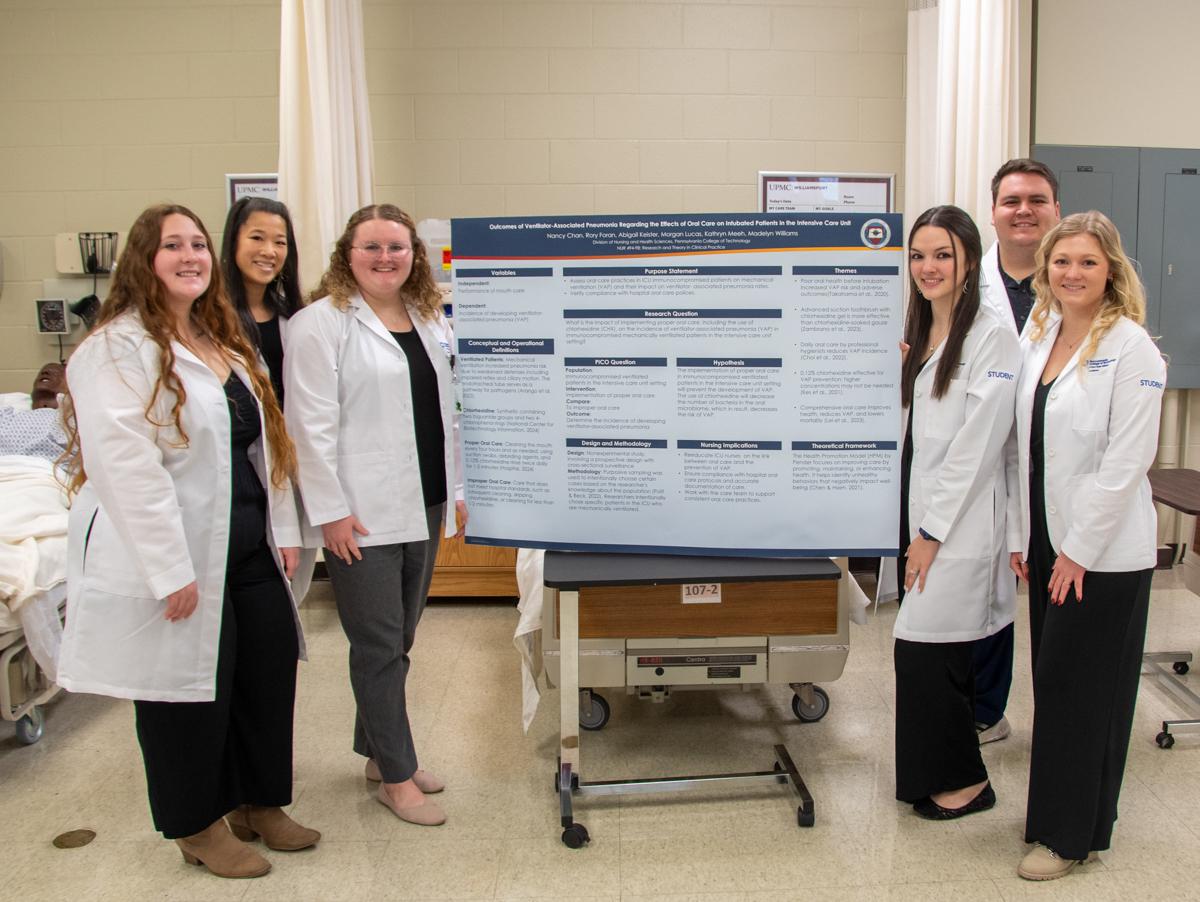
Outcomes of ventilator-associated pneumonia regarding the effects of oral care on intubated patients in the intensive care unit
Students: Nancy Chan, of Milton; Rory L. Foran, of Williamsport; Abigail Keister, of Middleburg; Morgan L. Lucas, of Milesburg; Kathryn N. Meeh, of Wyalusing; and Madelyn J. Williams, of Roaring Branch.
The students researched the effectiveness of implementing proper oral care – including the use of the antiseptic chlorhexidine – on the incidence of ventilator-associated pneumonia among immunocompromised patients in an intensive care unit.
The hospital’s policy for proper oral care calls for cleaning the mouth every four hours and as needed using suction swabs, debriding agents and a 0.12-percent chlorhexidine rinse twice daily for one to two minutes.
The students found that:
- Poor oral health care before intubation increased ventilator-associated pneumonia risk and adverse outcomes.
- An advanced suction toothbrush with chlorhexidine gel is more effective than chlorhexidine-soaked gauze.
- A 0.12% solution of chlorhexidine is effective for ventilator-associated pneumonia prevention; higher concentrations may not be needed.
- Comprehensive oral care improves health, reduces ventilator-associated pneumonia and lowers mortality.
They proposed reeducating ICU nurses on the link between oral care and the prevention of ventilator-associated pneumonia, ensuring compliance with hospital oral care protocols and accurate documentation of oral care, and working with the care team to support consistent oral care practices.