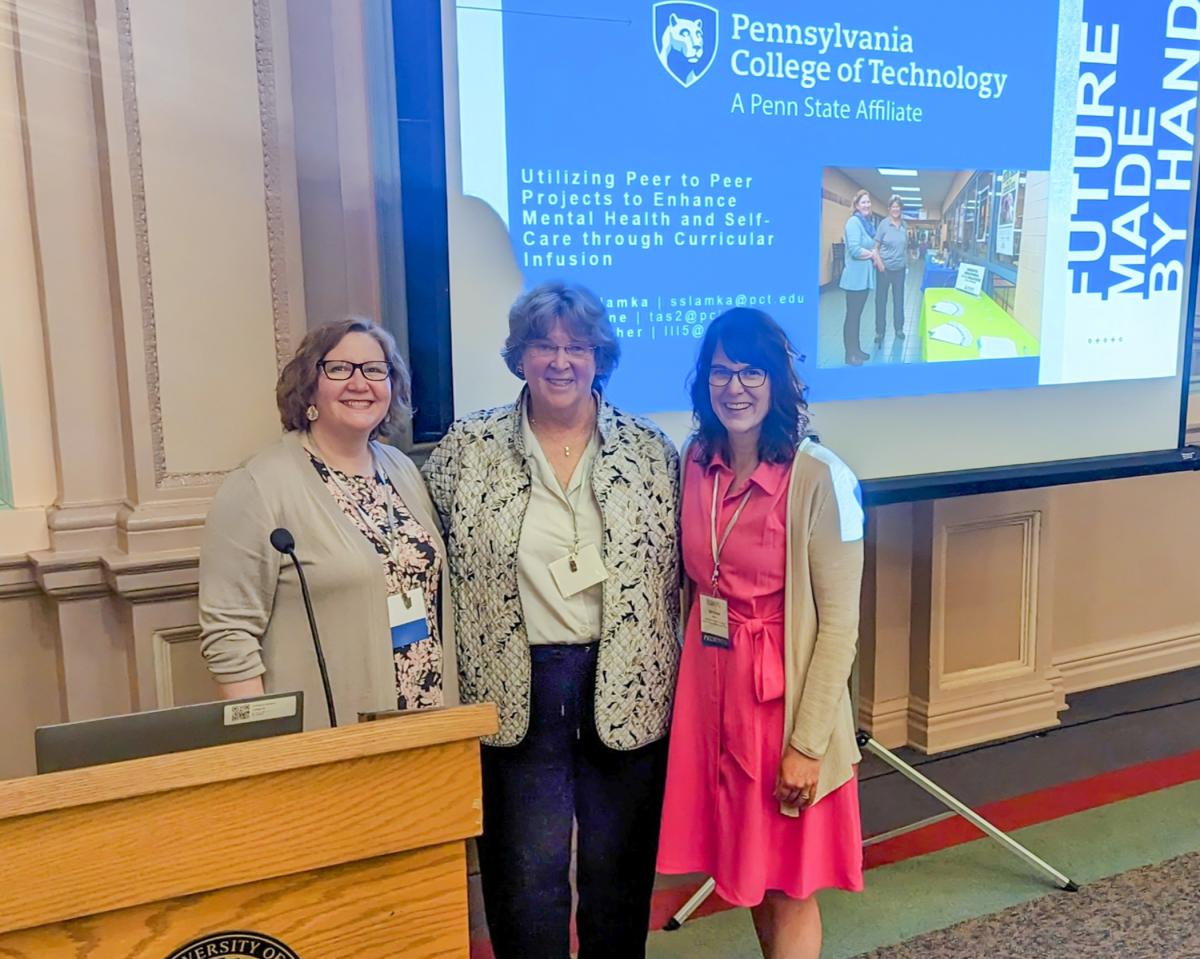
Their session detailed three curricular infusion projects at Penn College: Students in a Community Health Nursing class created a “Nursing Student Survival Guide” for first-year nursing students; a Positive Psychology class sponsored a Wellness Fair addressing various self-care and mindfulness information and activities; and a Clinical Psychology class hosted a Wellness Fair promoting openness to change based on the readiness-to-change model for addressing mental health issues. Therapy Assistance Online (also known as TAO) provided a platform and model for these projects.
“The presentation highlighted the high-impact projects that upper-level psychology and nursing students took on to promote peer-to-peer wellness on campus and educate their classmates about the Therapy Assistance Online supports that are available to students to supplement their well-being strategies,” Slamka explained. “Students used their interviewing, supportive helping and professionalism skills learned in classes to assist their peers, showcasing our hands-on, real-world learning approach at Penn College.”
Slamka added, “The conference was a wonderful opportunity to be in an environment designated primarily for the mental health of students and to be part of the nationwide conversation regarding how to best support the total health experience of college students.”
HESPC is a collaborative organization with the united goal of developing and implementing strategies to reduce suicides on college campuses and improve the overall wellness of students. The coalition began in 2015 through the support of the Substance Abuse and Mental Health Services Administration (a branch of the U.S. Department of Health and Human Services) and the Pennsylvania Office of Mental Health and Substance Abuse Services. Originally designed for Pennsylvania campuses, the outreach has extended to additional states. Campus representatives involved in HESPC activities include counseling center staff, student health, student affairs, residence life, public safety, athletics, campus ministry and other campus leaders interested in mental wellness and suicide prevention.
“The conference was a perfect blend of educators across the state discussing their recent research efforts on suicide prevention,” said Mary Shuma Rudberg, director of counseling at Penn College and a member of the planning committee for the conference. “Terri, Linda and Susan’s presentation was selected out of 32 proposals submitted, which speaks to the importance of their topic. Counseling Services’ collaboration with the School of Nursing & Health Sciences and the School of Business, Arts & Sciences has provided a bridge between these three areas, and we will continue to foster our connections at Penn College.”
The Penn College trio’s conference participation was funded through the Garrett Lee Smith Campus Suicide Prevention Grant through SAMHSA.