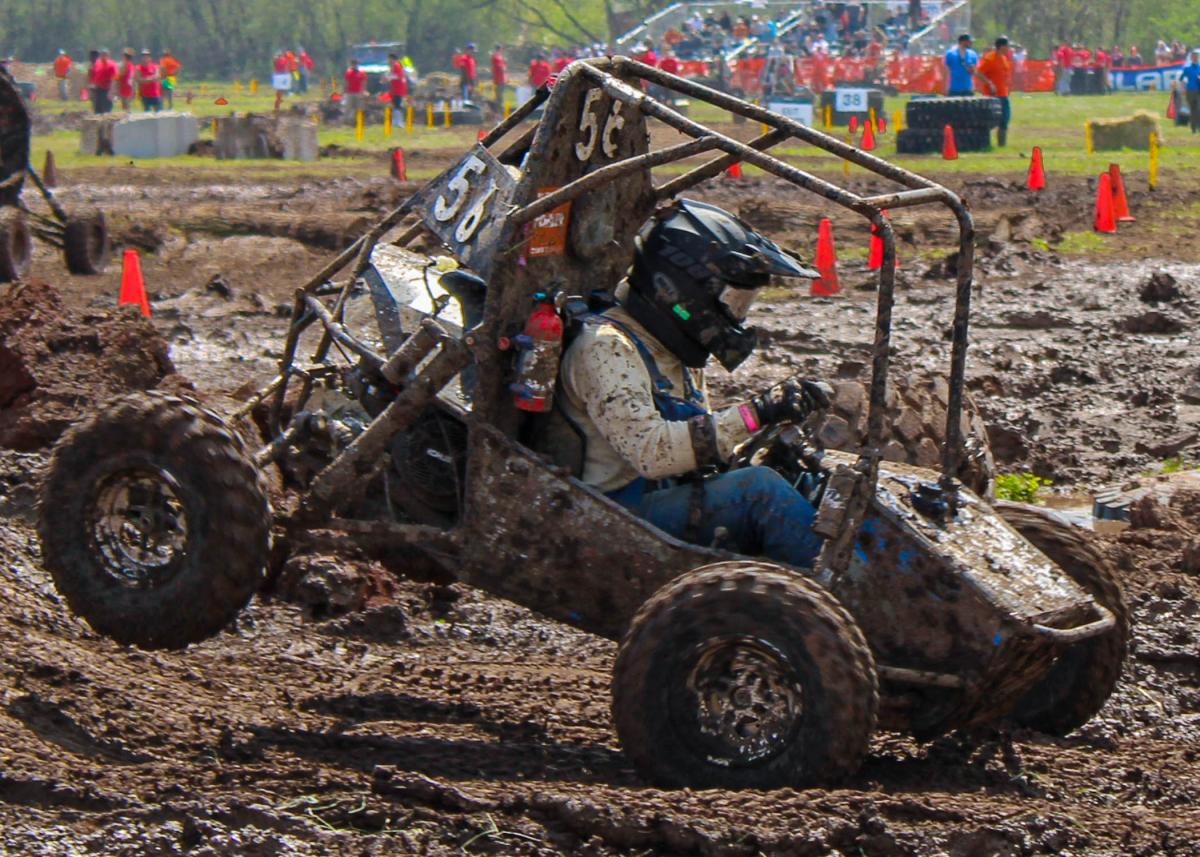
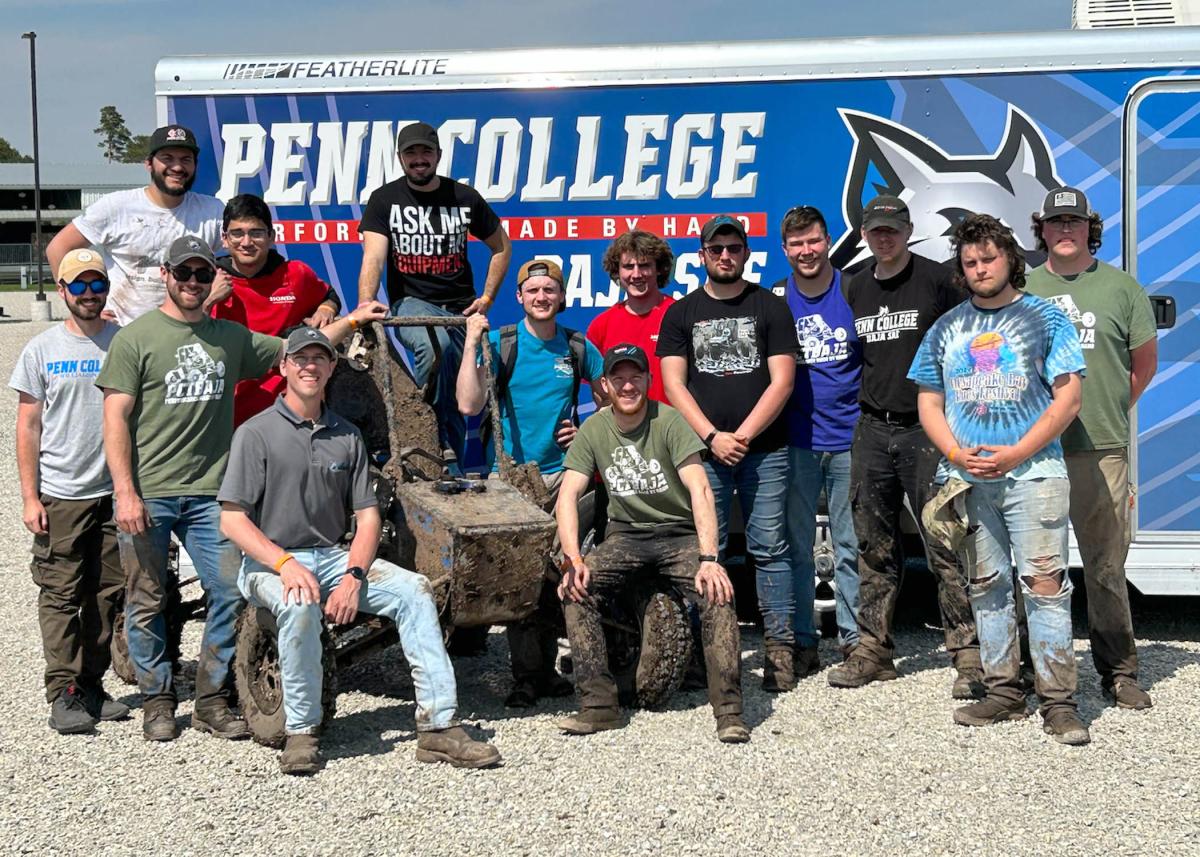
“I am more than pleased with our showing,” said John G. Upcraft, instructor of manufacturing and machining and adviser to Penn College’s Baja SAE club. “We had to design, manufacture and assemble about 60 components for the new four-wheel-drive system. And none of those components broke. Building the system from scratch was an enormous project for a team of our size.”
Of the 57 cars in the four-hour endurance race, 17 failed to complete more than 10 laps around the rugged, muddy terrain. Penn College recorded 36 laps in earning its 13th top-10 finish in the event since 2o11, including wins last year with its two-wheel-drive system at Baja SAE Tennessee Tech and Baja SAE Rochester.
At Wisconsin, Penn College began the endurance race in the 15th slot and quickly moved to second before a rollover caused a setback. Later in the race, the team had to replace a broken CVT belt and the car’s rear axle, dropping the club to 30th with just 90 minutes remaining. Penn College posted a remarkable finish, passing 20 cars to earn 10th place.
“It was a tough course. There were a lot of cars breaking,” Upcraft said. “You don’t have to have the fastest car to do well. You just have to have a fast car that doesn’t break.”
Penn College’s performance in the endurance event bested the likes of Rochester Institute of Technology, Georgia Tech, LSU, UCLA, Iowa State, Michigan State, Purdue, Wisconsin and Notre Dame. The University of Michigan won the race.
“Now that we know that the four-wheel-drive system functions, there are a few things we want to do to get it working better,” Upcraft said. “We also need to put the car on a diet, reduce its weight.”
Upcraft expects team members to return to campus prior to the beginning of the fall semester to prepare the car for Baja SAE Ohio, scheduled for Sept. 6-10.
“After Ohio, we’ll really be able to gauge where we are at in terms of the competition,” he said.