Addressing drug diversion in health care, McGill provided background on what activities are considered “drug diversion”: refusing to keep or furnish records or furnishing fraudulent records of the distribution of medications; obtaining controlled substances by misrepresentation, fraud, forgery, deception or subterfuge; transferring a substance to another person without proper authorization; and possession of a controlled substance outside the scope of one’s duties. He then presented the background – names changed to protect the innocent – of a past case.
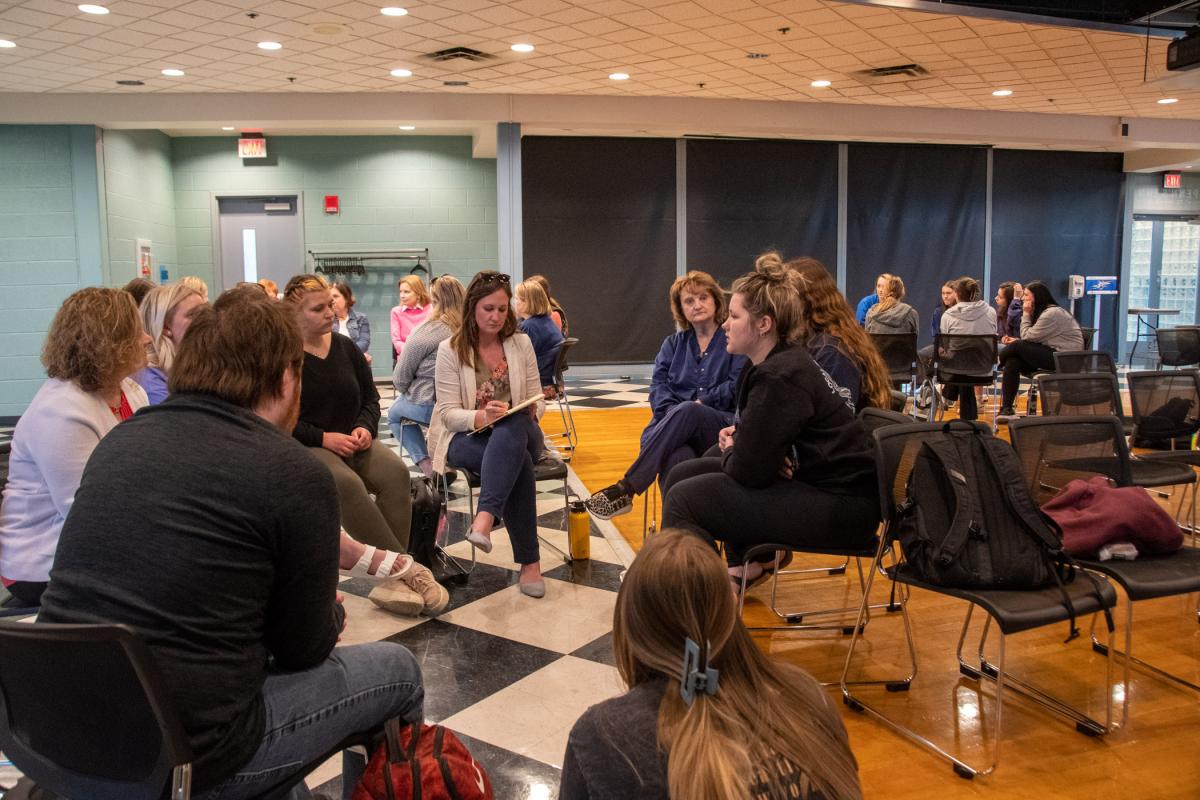
Assuming the role of a nurse supervisor in an assisted living facility where drug diversion was suspected, attendees broke into groups and formulated the first 10 questions they would ask.
During the sleuthing session, participants (who included students, staff and faculty in the School of Nursing & Health Sciences) learned common red flags of a potential drug diversion and practiced developing a protocol to begin an investigation.