Zimmer knew from the time she enrolled in an associate-degree dental hygiene program that she wanted to earn a bachelor’s degree. It would open doors to becoming an educator, which she had learned she had a knack for. She enrolled in Penn College’s online bachelor’s degree in Fall 2007 while working as a dental hygienist.
As her opioid use continued, her life became unmanageable. In 2009, she was fired.
“It was the best thing that ever happened to me,” she said.
She ran out of money. She felt “dope sick” – a symptom of withdrawal – more and more often. She was suicidal.
It drove her to enter detox and a two-month recovery program. Zimmer has been free from opioid abuse since January 2010.
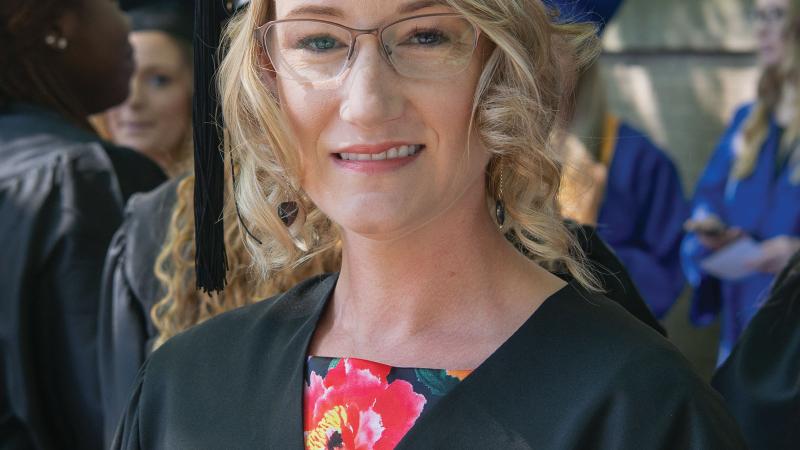
It took nearly 12 years to earn her walk across the stage at the college’s May 2019 commencement ceremonies, but at no point did she give up.
“If you look at my transcript, you can see times when I didn’t take classes,” she said. “One of the things I like to say is that there are so many times that I stopped, but equally as many times that I started.”
Shawn A. Kiser, director of dental hygiene and Zimmer’s academic advisor, is impressed by her “grit and perseverance.”
In the midst of her senior project, another hurdle emerged. On March 3, 2019, she had a grand mal seizure and was told she could not drive for six months. With the help of her husband, Darren, her internship coordinator and rideshare services, she continued meeting with CompleteCare NJ clients.
“Her determination to complete this capstone was inspiring,” Saxe said.
Recovery for Zimmer has brought her through pain and depression to a position of hope and empowerment that she is using to educate and inspire others. Including her Penn College faculty.
“As a professor, you hope students learn something in your class,” Saxe said. “In this case, I feel I learned more from my student – perseverance, compassion, inclusiveness. Although her life has had obstacles, she didn’t quit, but found new pathways to move forward.”
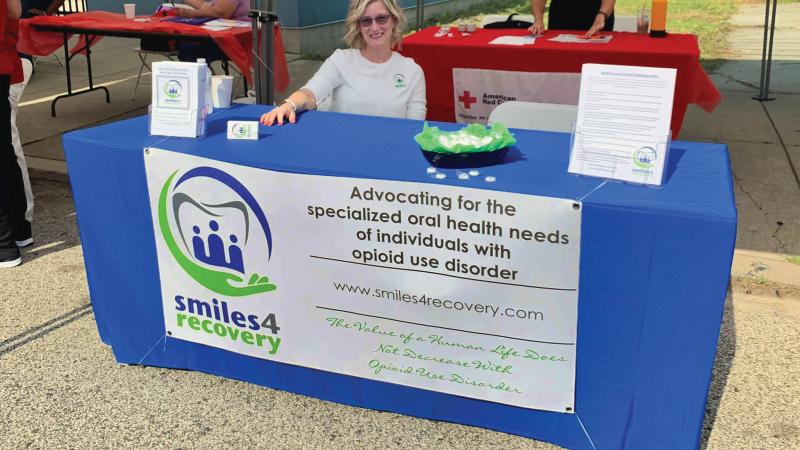
Zimmer is vice president of the Southern Component of the New Jersey Dental Hygienists’ Association and recently obtained a dental hygiene public health practitioner license, a relatively new credential in Pennsylvania that allows dental hygienists to help underserved populations. And she is a mom.
In August, she began classes toward a master’s degree in dental hygiene with a concentration in education/public health.
“My short-term goal is to start educating dentists and dentists’ offices about opioid use disorder: what to look for but also how to treat patients with compassion,” Zimmer said. “If we don’t do that, we’re not going to help.”
According to the National Institute on Drug Abuse, more than 70,200 individuals died from drug overdoses in 2017. Among them, more than 47,000 involved opioids.
“When I read Facebook posts with people saying, ‘Let them overdose,’ I cry,” Zimmer said. “Because the potential of that person is me. I really want to get the word out there about being compassionate. I want to educate people about real-life addiction.”

Share your comments
Penn College Magazine welcomes comments that are on topic and civil. Read our full disclaimer.
We love hearing from you