48%
Fall 2021 Penn College students
were first-generation college students
Definition: Following federal guidelines, Penn College defines “first-generation” as students who have indicated that neither parent has a bachelor’s degree or higher.

Published 09.19.2022
by Tom Wilson, writer/PCToday editor. Photos by Cindy Davix Meixel, except as credited

There’s that exploratory switch to solid food, not to mention the wobbly steps between a steadying coffee table and a parent’s waiting arms. Oh, and don’t forget preschool play dates and kindergarten tears. Or an exhilarating crush on a theretofore-unnoticed classmate, the rush of independence that accompanies a learner’s permit and the flush of pride when landing a perfect summer gig at the end of senior year.
The next chapter for some – higher education – can bring a double debut: A student leaves home for an extended time and, in many cases, is the family’s collegiate trailblazer.
Equally paved with elation and potholed with hurdles, that path is closely monitored by a vigilant lineup of advocates at Pennsylvania College of Technology. Recently joining the institution’s bullpen of resources is the LEAP Center, which holistically helps first-year and transfer students “learn, evolve, adapt and prepare” for their introduction to campus life.
“Being a first-gen college student, you are often beset with feelings of ‘Am I good enough to be here?’ ‘Can I make it?’ or ‘I have no idea what is going on.’”
Christie A. Bing Kracker director of Penn College’s LEAP Center
First-generation college graduate
Staff at the center, headquartered – both symbolically and conveniently – in the Davie Jane Gilmour Center at the gateway to the college’s main campus, provided a sampling of “rock stars” who have navigated the first-generation minefield without losing sight of what initially drew them to Penn College. While each arrived with a unique back story, there are common threads in the tapestry they weave: drive, focus, satisfaction, hope, involvement in student organizations – and the presence of mind to score big when playing whatever hands they’re dealt.
“I was always good at school, but it was never something I loved to do for eight hours a day for my K-12th grade years,” radiography student Brielle C. Moon said of her attraction to an associate-degree major. “When I was looking at colleges I wanted to apply to, four-year colleges were not on my list. Penn College has so many two-year programs, it made it so easy for me to find a field of study that I was interested in.”
Among the challenges faced so far, the Lewistown resident said, are the demanding science-based classes required for her program.
“I took Intro to Physics and Anatomy and Physiology Survey this past year and they were amazing, but also a stretch for me,” Moon said. “I love that the Tutoring Center is open and has so many resources to help in any class. The degree that I will get at the end of my years here will help me get a very good job with great benefits.
“Penn College has an amazing reputation when it comes to preparing students for success in the real world. I can honestly say that, so far, I have been thriving here and cannot wait for my next couple of years.”
Like so many of the college’s tomorrow makers, Melina K. Petrick, a dental hygiene student from Falls Creek, saw the merit of a hands-on learning environment when choosing where to expand her knowledge and skill set. But she also took notice of the school’s “friendly and beautiful” atmosphere marked by water fountains, flowers and art, and said she admired the hard-working college employees who make campus such a conducive environment for student success.
“Although I had a great first year of college, I did encounter difficulties along the way,” she said. “As I transitioned from high school to college, I had to adjust my study habits. I learned to make a study schedule so that I had enough time each day to review material. I also used the ‘active recall’ method to achieve productive studying.”
Among the campus’s “top-notch resources” for students, she said, one site saw more of her than others.
“The Tutoring Center staff is excellent at explaining things in a variety of ways,” Petrick said. “There’s also a broad selection of study materials. For example, I had the opportunity to use the detailed anatomy models and (organs from) cadavers, which helped me learn a lot of information quickly!”
Another first-generation student – Taryn A. Zimmerman, of Lock Haven, who is also enrolled in dental hygiene – points to her parents with pride and gratitude for providing an opportunity they didn’t have, as well as their support “every step of the way.”
“I wouldn’t be here if it wasn’t for them,” she said. “I am greatly motivated to make them proud!”
Once she decided to go to college, her selection was an easy one.
“I chose Penn College because it was close to home and I liked the small class sizes. The staff takes the time to get to know you, and you get a chance to know your peers,” Zimmerman said. “I also really enjoyed the thought of ‘hands-on experience,’ and the instructors have real-world experience in your major, so they know what is required for the industry.”
State-of-the-art equipment and an acknowledged high job-placement rate following graduation – no mere talking points for a national leader in applied technology education – helped to seal the deal.
Rough spots can and do crop up, however, and Zimmerman shares her peers’ ability to power through adversity.
“The main challenge I have encountered in the transition from high school was learning to study and teach myself,” she recounted. “College is more individualized work, whereas, in high school, everyone works together.”
Another stumbling block was learning the importance of time management, and – yet again – a familiar lifeline was manifest.
“The Tutoring Center has helped me significantly and worked with me, day in and day out, until I received the grades I wanted. The LEAP Center and my advisor have also been a huge help. They are always reaching out and looking to help in any way possible. They really take notice of the little things and help the first-year students greatly!”
With the wisdom of someone who’s been there, she offers this advice to other first-generation students: “Stick with it. It gets tough sometimes, but do not give up. Use resources such as the Tutoring Center, and reach out to your professors. Your professors are there to help you and guide you. Also, make friends! They are going through the same thing you are, so use one another to your learning advantage.”
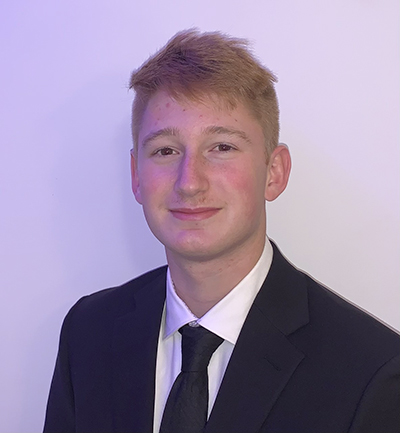
Lex R. Yocum, of Watsontown, who already earned an associate degree in architectural technology and is working toward a bachelor’s in building science & sustainable design: architectural technology concentration, knew about Penn College from friends and family (sister Latricia is in the physician assistant program) and attended a summer Architecture Odyssey camp during high school.
“The idea of being able to imagine a structure in my mind, designing those ideas on paper and in various programs, and then having the idea physically created has always been fascinating to me,” he said. “This concept is always pushing me, as the reward associated with being able to see my idea become a tangible object is incomparable.
“Moreover, sustainability and green architecture are two topics we have delved further into, which has furthered my motivation. This allows me to incorporate new concepts into my design work to ensure modern architecture is ecofriendly, while still being aesthetically appealing. Each semester reinforces the vast impact architecture has on everyone’s lives and the critical role I can play in ensuring designs are safe and sustainable.”
In addition to small class sizes and the instant feedback he gets from the faculty in his major, Yocum has “benefited tremendously” from his Career Services interactions – particularly in perfecting his resume and offering confidence-boosting mock interviews.
“Additionally, I have utilized the makerspace a few times for various class projects, such as the laser cutter and 3D printers. This has been a huge help when it comes to getting projects completed, specifically when the printers or cutter in the architecture lab are occupied. Anything you can think can be done in the makerspace, which is a huge help.”
Inner strength sustained another Watsontown resident, Kayleean A. Finan, when she determinedly worked through the competitive pre-stage to the full physical therapist assistant program.
“This kept me motivated because I knew that this was the career I wanted for myself,” she said. “I focused on my studies and made sure to keep free time for other activities, as well. Throughout my first year, I spent a lot of time visiting animals because I feel they help tremendously with stress.”
Some of that stress was attributed to the workload.
“I knew coming in it would be more, but that also means putting more time in and studying differently than I did in high school,” she said. “The LEAP Center and FYE (a required First Year Experience class) helped with different ways of studying. The professors also will give strategies to study for their exams.”
Finan has availed herself of the center, which provides first-year students with an academic advisor and a LEAP advisor to aid in smooth passage.
“This has made it easy, to know that I have someone there to help me if I needed it throughout the first two semesters,” she said.
“Help” also takes the form of knowledgeable and empathetic friends, such as Penn College President Michael J. Reed, the youngest of 10 children who enrolled at Clarion University as an undergrad.
“Like many other first-gen students, it took some time for me to believe in myself – believe that I belonged on campus – and learn how to be most successful,” said Reed, who assumed the presidency on July 1. (See more about Reed.) “I was fortunate to have a brother and sister-in-law who lived close to the university, and they served as invaluable mentors, particularly during challenging times. Their insight helped me succeed and discover unique opportunities to maximize my learning.”
Another passionate ally is Christie A. Bing Kracker, director of the LEAP Center, also a first-generation college student, who earned bachelor’s and master’s degrees at the University of Memphis before a career that began with a decades-long stint in Student Affairs.
Reflecting on her own adaptation to a new role, a new campus and a new division within higher ed, she was reminded how initial academic experiences can echo years after graduation.
“Being a first-gen college student, you are often beset with feelings of ‘Am I good enough to be here?’ ‘Can I make it?’ or ‘I have no idea what is going on,’” Bing Kracker said. “During this past year of transition for me, I could occasionally feel those same types of questions floating through my thoughts. It was important to find other first-gen colleagues or those with similar life journeys for me to connect with and find support.”
Working with students to help them transition into Penn College was also a way for her to ease any concerns, she noted.
“I was able to demonstrate that, what I may have been missing in specific knowledge about Penn College processes, I made up for in transferable skills and genuine desire to help students succeed. Much like my first year of college, I found ways to connect with others, reaffirm my belief that I did belong here, and that I had a lot to contribute to help move this campus community forward.
“I don’t believe we outgrow our first-gen identity and how it shaped us; we continue to integrate it into who we are today and into how we navigate new transitions,” added Bing Kracker, who is brainstorming a number of campus events to raise awareness of first-generation students’ needs – particularly in the admissions process and during that crucial metamorphic period following high school or transfer.
“I think that I am successful in work and in life because of the support I received as a first-gen. It helped develop a sense of resilience in me for all the transitions that life brings.”
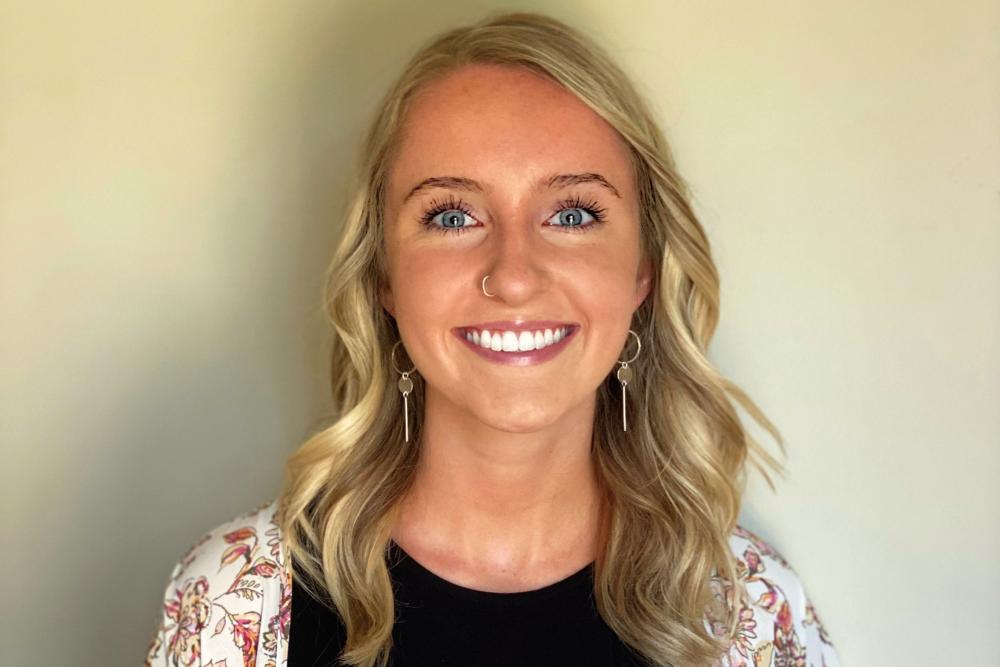
Dental hygiene student Taryn A. Zimmerman is motivated to make her parents proud. Photo courtesy of Zimmerman
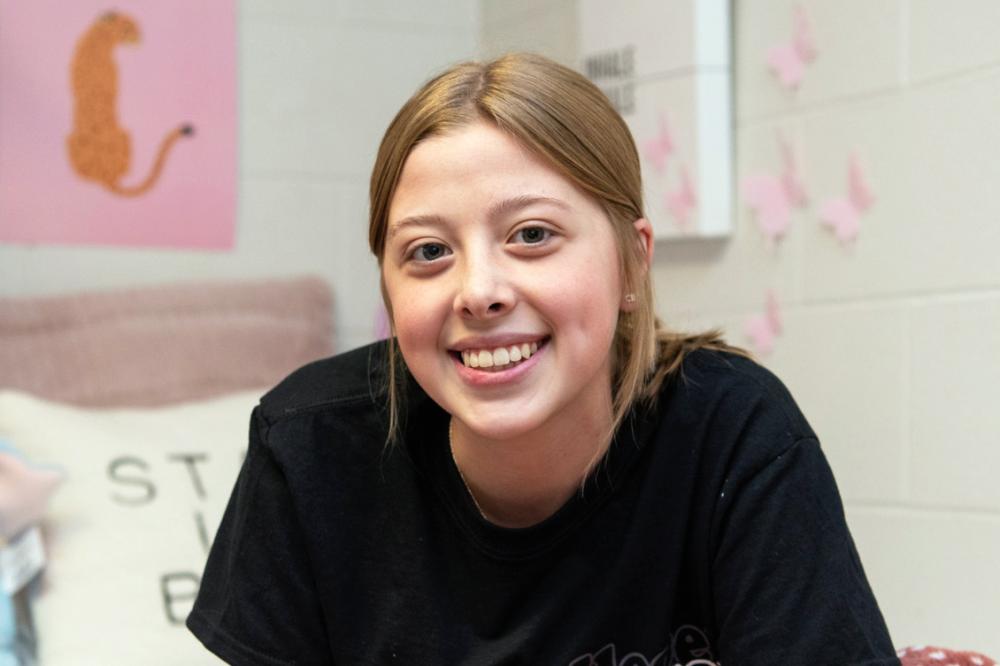
Brielle C. Moon says that she is thriving, with the help of on-campus resources, despite the demanding science courses required for competitive entrance into the radiography major.

Melina K. Petrick, a dental hygiene student, adjusted her study habits from high school to college, drawing on the Tutoring Center and other campus resources. Photo courtesy of Petrick