Penn College News

Penn College showcases education model, student success to Penn State trustees

Friday, July 17, 2026

photos by Rob Hinkal, social media specialist

 title=

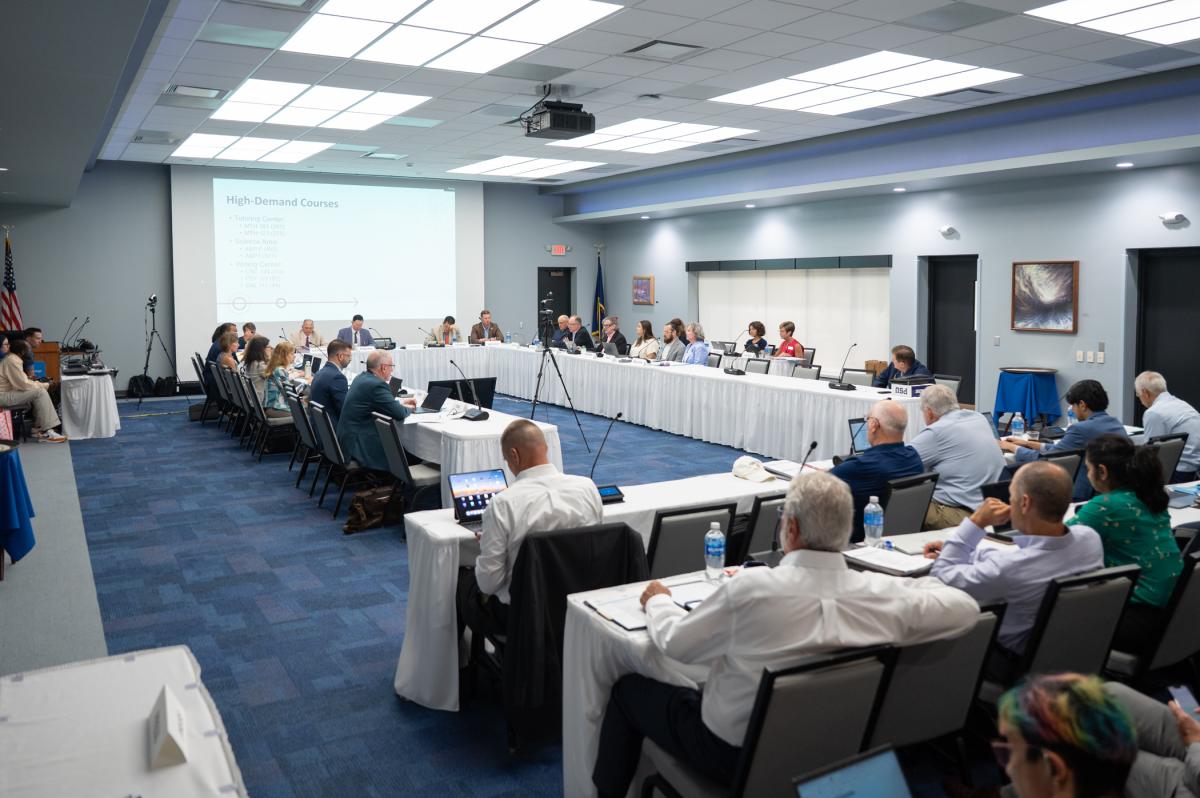
Penn College leaders outline the college’s Michael J. Hudock Sr. Center for Academic Excellence and other student support efforts during a Penn State Board of Trustees Student Success Committee session in the college’s Thompson Professional Development Center. The Penn State Board of Trustees made a two-day visit to Penn College, a special mission affiliate of Penn State, on July 16-17.

During the Penn State Board of Trustees’ visit to Pennsylvania College of Technology July 16-17, President Michael J. Reed showcased the college’s unique and successful model of applied technology education. 

“Our mission is to inspire and prepare the next generation with industry-focused, real-world experience and innovative spirit,” Reed said. 

Penn College is a special affiliate of Penn State and is united with the university in its land grant mission. Structured as a separate 501(c)(3) nonprofit corporation, Penn College has independent accreditation, distinct academic programs and separate federal reporting of institutional data.

The college serves a vital role in the Penn State system, offering technology-driven hands-on education and workforce development. Its students benefit from thousands of industry partnerships, supporting the college’s mission and purpose and its 98% graduate placement rate. Reed noted to trustees that Penn College’s enrollment has increased 11% since 2022, with 87% of current students hailing from Pennsylvania and 81% of college alumni working and living in the commonwealth. He also explained that every academic program offered at Penn College has an active advisory committee to identify industry trends and continually evaluate program curricula. 

“Last year alone we made over 150 curricula changes based on industry and faculty insights,” Reed said. He also highlighted new program additions including AI and project management.  

 Reed explained that Penn College is an “institution for life,” showcasing that the college has 4,700 students completing degrees in the schools of Engineering Technologies, Nursing & Health Sciences, and Business, Arts & Sciences. Additionally, the institution introduces over 2,000 high school students each year to the growing opportunities in applied technology fields through dual enrollment and upskills more than 5,000 incumbent workers annually through its Workforce Development division.

“Penn College is meeting learners where they are, helping them explore careers, gain hands-on education and grow throughout their professional lives,” Reed said. “We are proud to support learners at every stage of their educational and professional journey.”
 

 title=

Penn State Board of Trustees members, joined by Audriana L. Empet (left), executive director of admissions and secondary partnerships, and Patrick Marty (right), Penn College's chief government and international relations officer, embark on a campus tour.

Reed also reflected on the board’s campus tour the morning of July 16, reinforcing the college’s dedication to real-world learning through its 150 campus labs. Penn College has the largest welding and fabrication engineering teaching facility in North America and one-of-a-kind equipment, including robotic and laser welders and an electron beam welder.  

“I am incredibly proud of our team and being part of the Penn State family. Higher education is facing unprecedented times, and Penn College is positioned well to continually adapt and remain committed to embracing the opportunities of today and tomorrow,” Reed concluded. 

In a separate Student Success Committee meeting on July 16, Jennifer McLean, dean of students and chief retention officer, and Anthony J. Pace, vice president for enrollment and student success, shared information on the Michael J. Hudock Sr. Center for Academic Excellence and the college’s approach to supporting student success. 

The Hudock Center was established in 2023 to provide a tiered structure of intervention and support to all students and serves as a central point of contact for students seeking guidance as they navigate their Penn College journey. 

“The Hudock Center is a vital part of our student success infrastructure, continually growing and evolving the services it provides,” Pace stated.

The center fosters a culture of belonging, enhances academic skills, cultivates resilience and persistence, and creates opportunity through access. McLean and Pace highlighted the Starfish Student Support System, which is a submission tool used to collect information from across campus when concerns arise on behalf of a student. 

“Those closest to a student are likely to see concerns or challenges first. The early detection of these challenges can make a meaningful difference,” Pace said.

Starfish enables the team to provide referrals to appropriate individuals on campus, with main areas of focus including accommodations/accessibility, essential needs, mental health/emotional well-being and physical well-being. The team has seen strong use of the Starfish tool during the 2025-26 academic year, including 1,988 total alerts submissions and 314 referrals. 

The team also discussed student success and student advocacy programming. 

“Academic success is heavily impacted by a student’s essential needs being met,” McLean said.

Student success support strengthens academic performance and persistence through tutoring, proactive skill development, and success coaching and planning, while student advocacy connects students to veteran and military resources, Title IX support and peer mentoring. This past year, tutoring services saw strong and consistent use, and student advocacy efforts supported over 100 students through early intervention, generated 103 peer mentor interactions and reached more than 600 students through wellness programming.

Education of the campus community is an important element of services provided, according to McLean. The Hudock Center team provides a comprehensive range of training opportunities for faculty and staff to ensure their awareness of evolving student needs and enhance their ability to support their students.

“Educating the campus community is critical to meeting student needs,” McLean noted.

“It takes an extended team of experts to provide comprehensive and effective support to students, and I am proud of the important work our team is doing to support student success and retention,” Pace added.

 title=

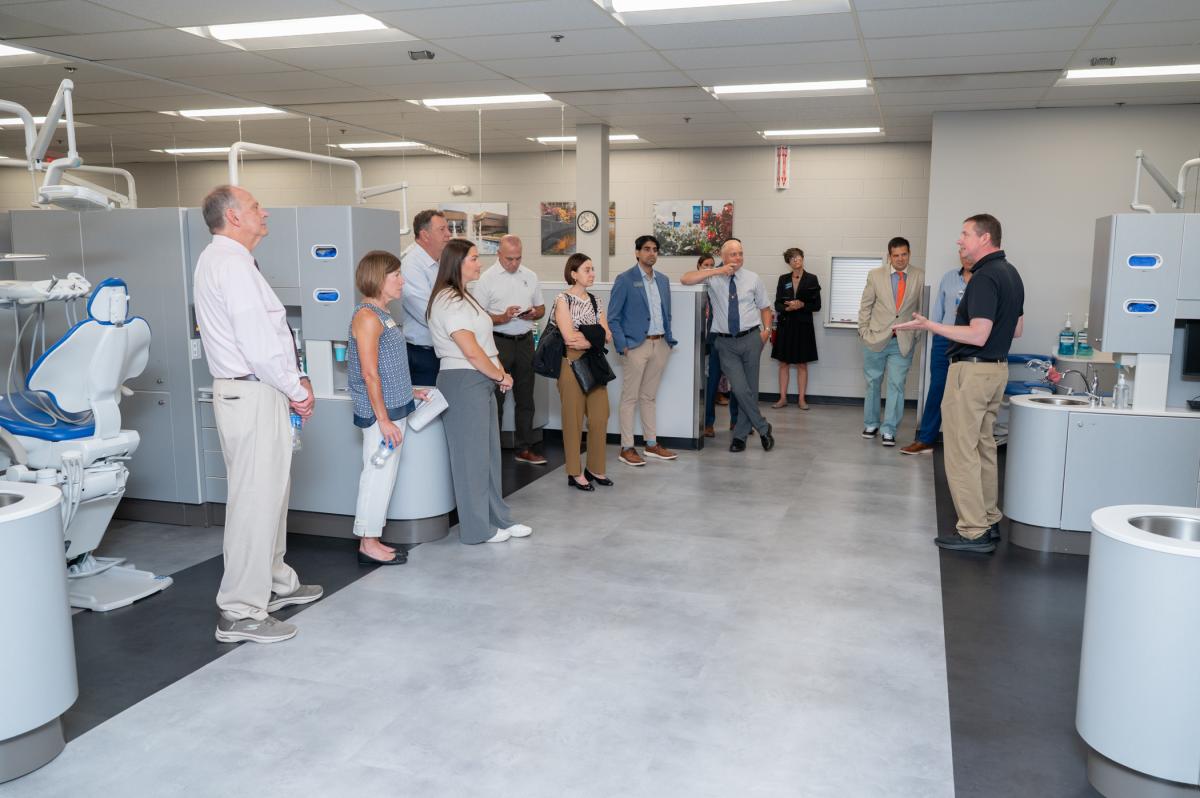
Shawn A. Kiser, director of dental hygiene, talks to Penn State trustees about the program and its Dental Hygiene Clinic, where students, under the supervision of faculty and dentists, provide low-cost care to the public.

 title=

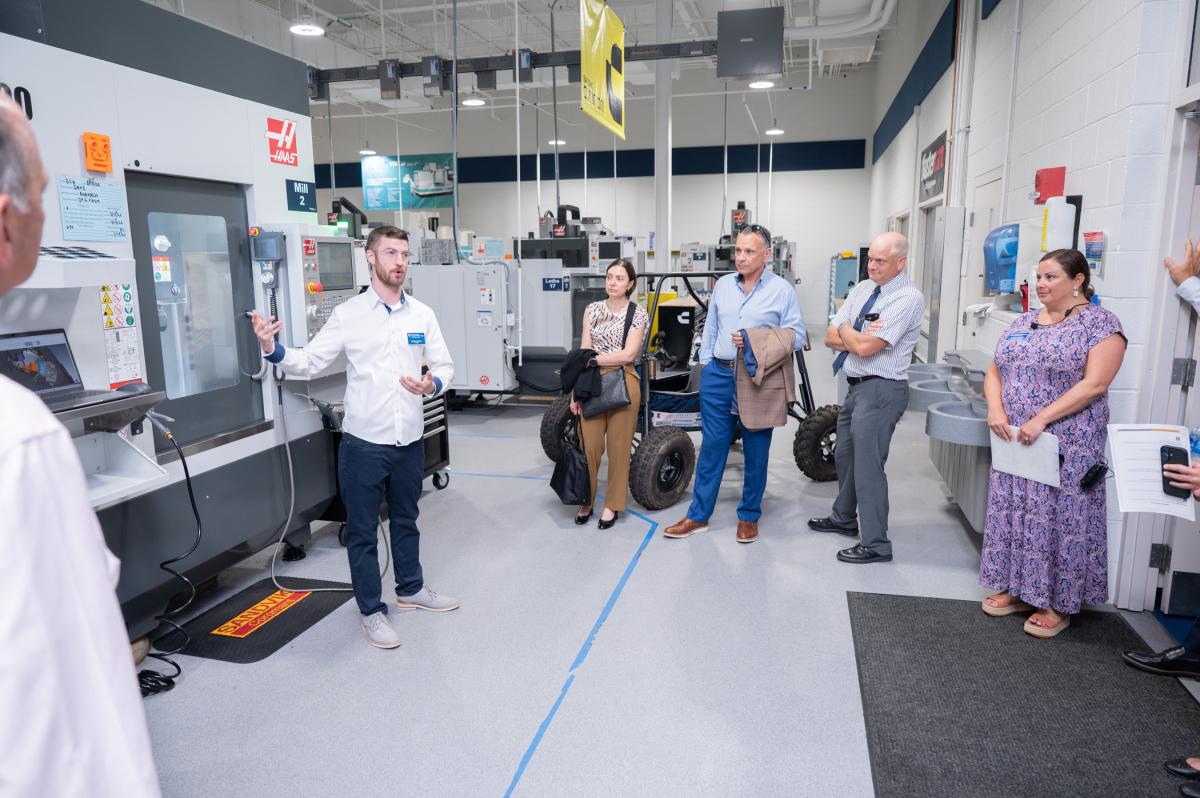
In the Gene Haas Center for Innovative Manufacturing, Dakota C. Harrison, instructor of CNC machining & automation, talks Penn State trustees through the functions of a Haas milling machine and how students use industry-standard equipment in their automated manufacturing and machining coursework.

 title=

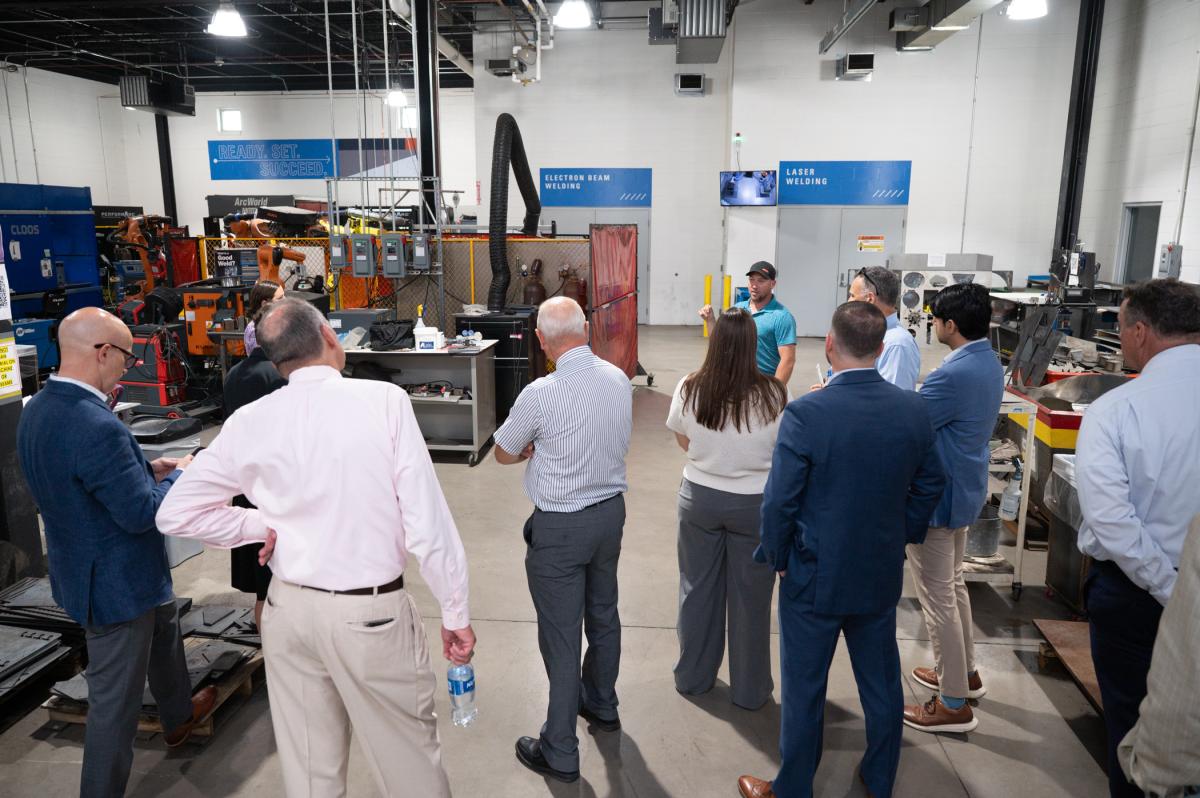
James N. Colton II, assistant professor of welding, leads a tour through the college's Lycoming Engines Metal Trades Center, the largest welding and fabrication engineering teaching facility in North America.

 title=

Anthony J. Pace, vice president for enrollment and student success, addresses the Student Success Committee meeting.

 title=

Jennifer McLean, dean of students/chief retention officer, joins Pace in sharing Penn College's efforts to support students.

 title=

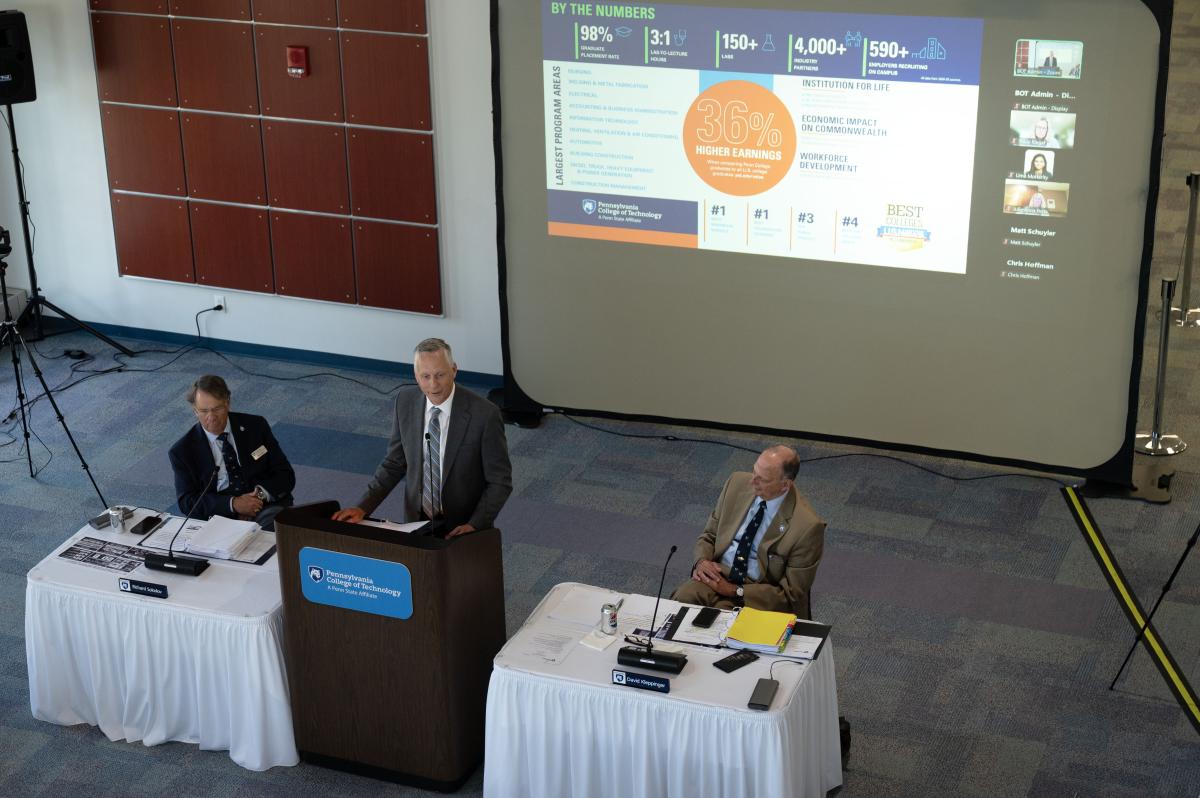
Penn College President Michael J. Reed, center, addresses the Penn State Board of Trustees during their July 17 meeting, highlighting Penn College's technology-focused, hands-on education and workforce development model.