Penn College News

Baja primed for New York competition

Tuesday, June 9, 2026

photos by Alexandra Butler, photographer/photo editor

 title=

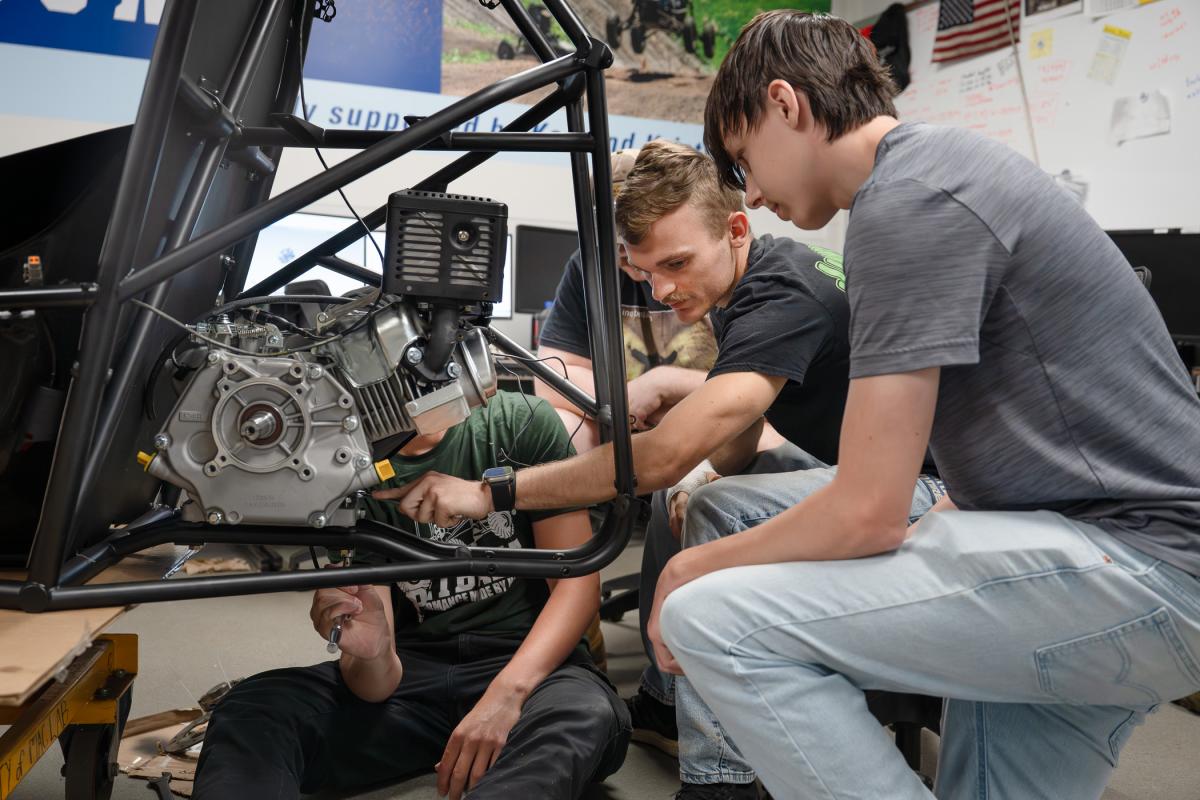
Baja SAE team members Nicholas J. Benninger (left), of Bloomsburg, and Seth A. Alderfer, of Telford, work on the engine of the Penn College car that will compete against 100 other colleges and universities this week at Baja SAE New York.

After several months of painstaking preparation by dedicated students, Pennsylvania College of Technology’s Baja SAE team returns to action this week (June 11-14) at Baja SAE New York. Penn College will compete against an international field of 100 other colleges and universities in Palmyra, about 20 miles southeast of Rochester.

“I feel we’ve done everything within our control to do the best we can. I’m more optimistic than usual,” said John G. Upcraft, instructor of manufacturing and machining and faculty adviser to Penn College’s Baja SAE club.

Baja SAE requires schools to design and build a single-seat, all-terrain vehicle to survive various tests that challenge the students’ ingenuity and the car’s quality. The premier event is a four-hour endurance race over hilly terrain, consisting of numerous obstacles.

“Our goal is always to do well in the endurance race,” Upcraft said.

Penn College has recorded 16 top-10 finishes, including two wins, in the endurance race since 2011.

For the past few years, SAE required all cars to be four-wheel drive. A recent rule change permits teams to field two-wheel-drive cars. Since Penn College’s two victories in the endurance race – both in 2022 – came with a two-wheel-drive entry, the team decided to return to its roots for the New York competition and Baja SAE Ohio, scheduled for September.

 title=

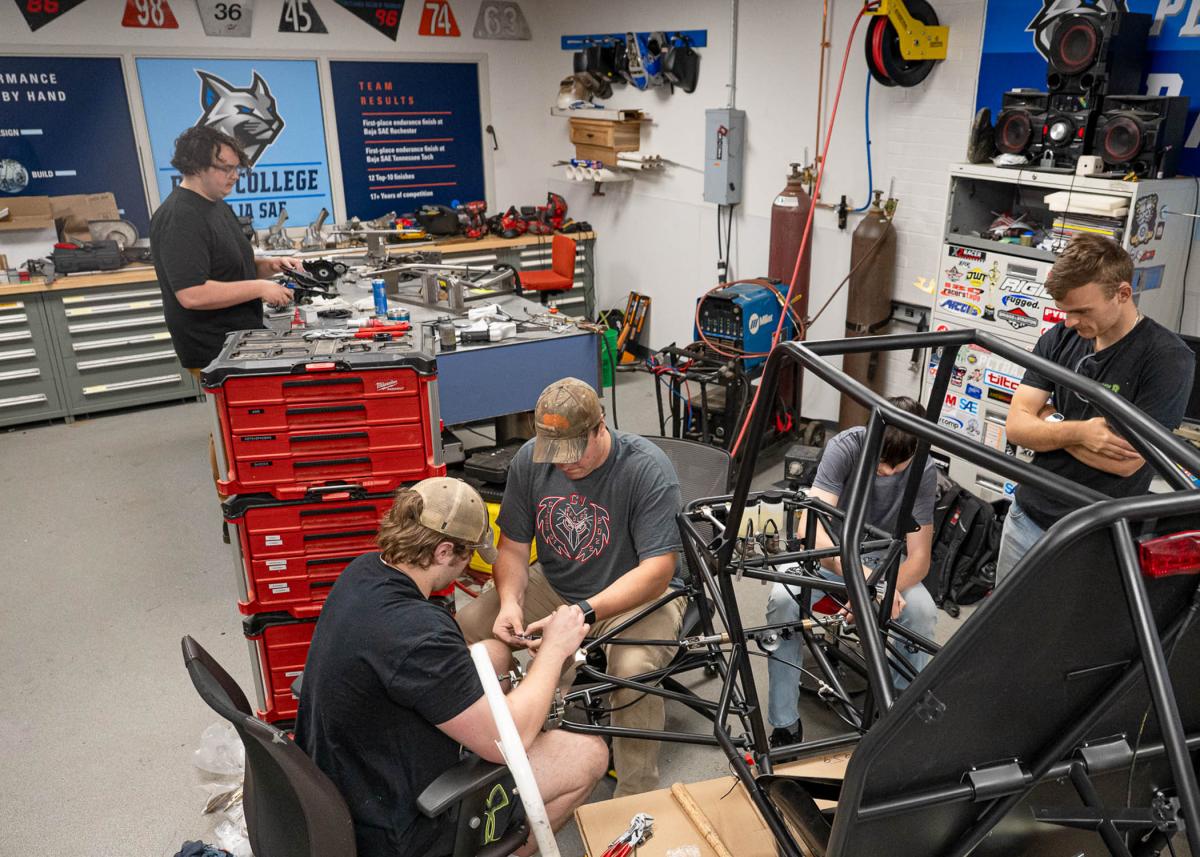
Students diligently reassemble the Penn College car in advance of Baja SAE New York. The Baja Room inside the Larry A. Ward Machining Technologies Center provides a dedicated workspace and organizational hub for the successful team, which has over 20 members.

“For this year, most of the prominent teams have stuck with four-wheel drive. So, we saw an opportunity to go back to two-wheel drive. We’ve had our best success with a fast two-wheel-drive car competing against more rugged, but slower, four-wheel-drive cars,” Upcraft explained. “If things go well for us in New York and Ohio, I think you’ll see movement from other teams to go to two-wheel drive.”

By transitioning from four- to two-wheel drive, the Penn College students dropped their car’s weight from 380 pounds last September for Baja SAE Carolina to 330 pounds. The team, numbering over 20 students, also installed a new H-arm suspension design to curtail the car’s tendency to flip forward, and they updated its clutch.

“Since we got the car completed and functioning early, we’ve had a month of testing and tuning and driver training,” Upcraft said. “That’s why I’m optimistic. I feel like we have a fast car, and we’ve had time to address the little issues that come up during the race. Our top speed downhill is 44 mph, and we’re averaging 38 on the flats and about 25 uphill.”

Team members, a mix of mostly engineering design and manufacturing majors, spent months using the resources of the Larry A. Ward Machining Technologies Center and Gene Haas Center for Innovative Manufacturing to design and produce most of the car’s components, minus the engine and the tires.

“We absolutely make more parts than the typical team,” Upcraft said. “We’ve made parts for other schools. That’s part of the camaraderie of Baja SAE.”

In addition to the endurance race, the Penn College team will participate in a series of dynamic events in New York, including maneuverability, suspension and traction, acceleration, and hill climb.

Penn College’s performance in New York can be monitored via the Baja SAE app, available for free on the Google Play Store and the Apple App Store.