Known as “one-day insects,” mayflies spend most of their lives underwater as nymphs (larvae) and only live for 12 to 48 hours when they emerge as adults. Despite their short lifespan, mayflies contribute to stream ecology and terrestrial ecosystems.
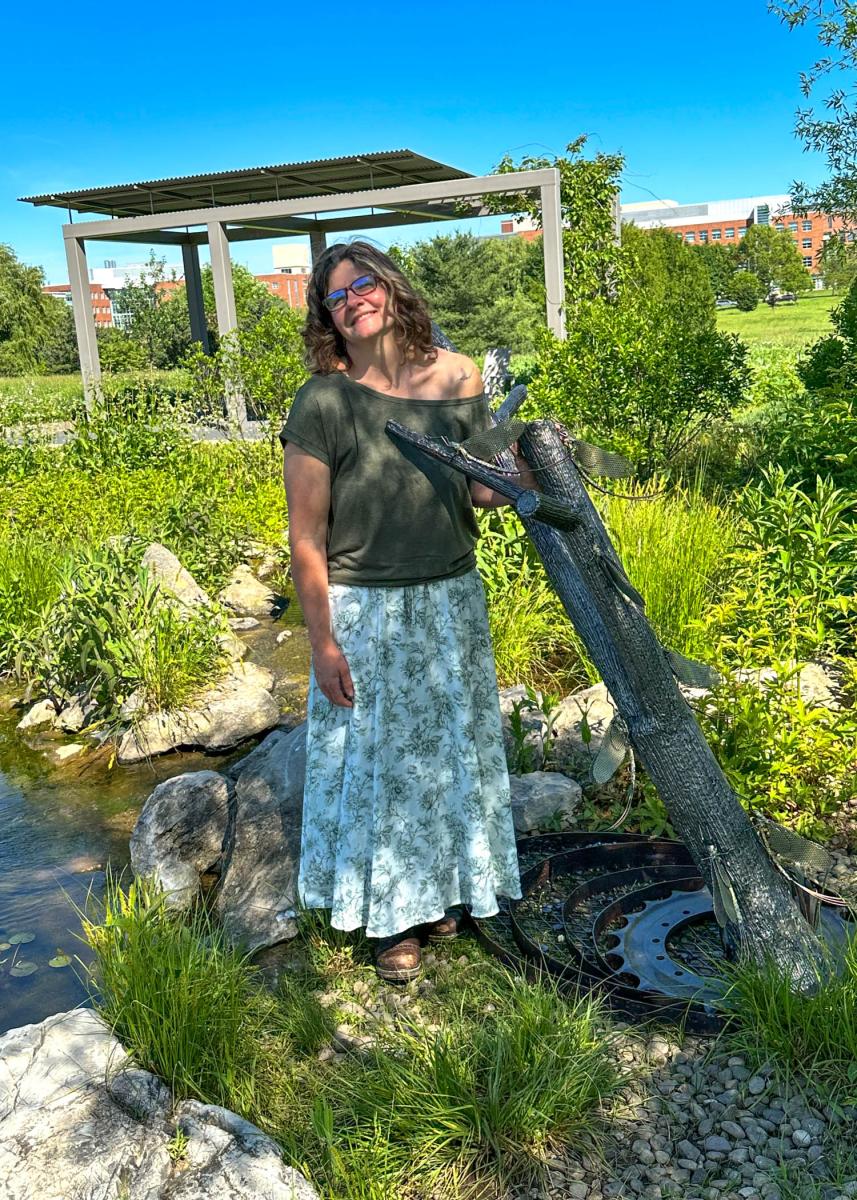
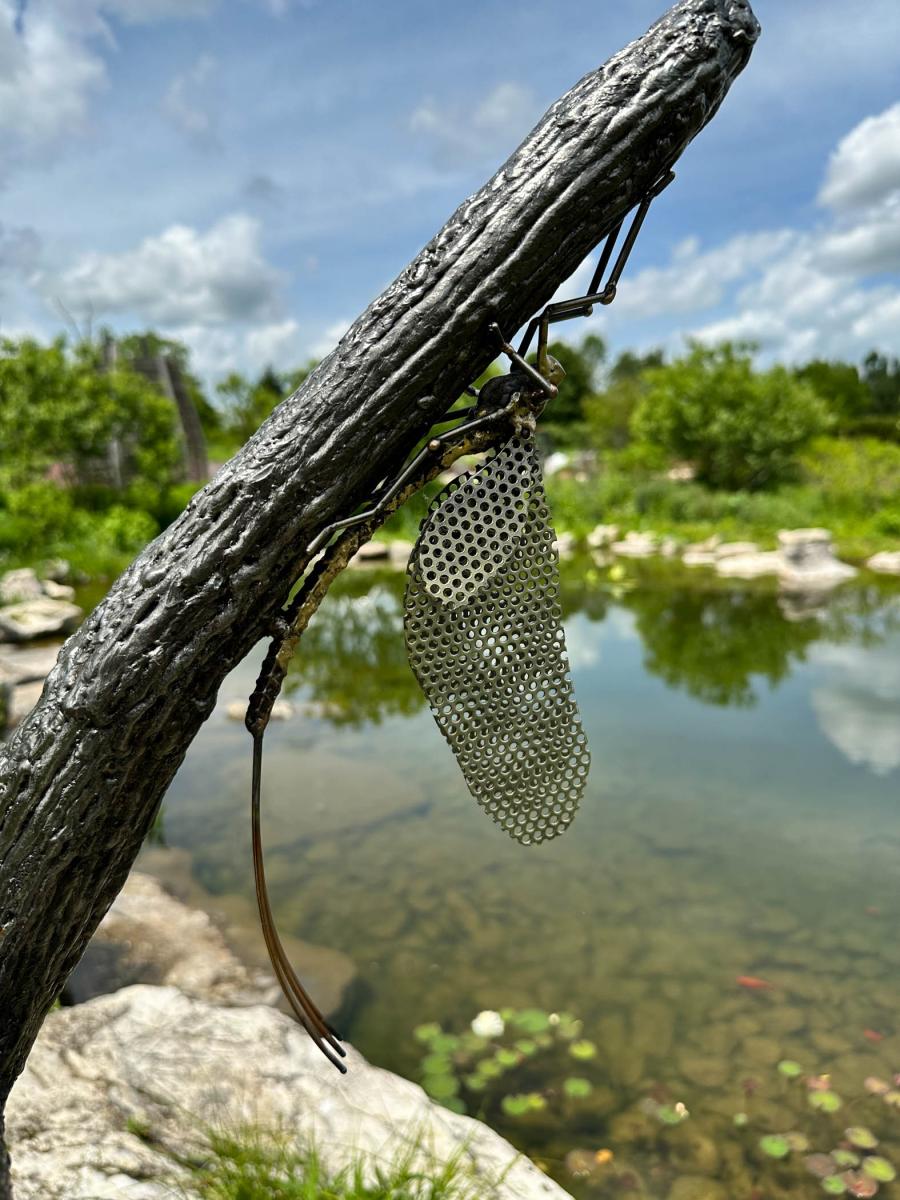
Appropriately, Alexander’s sculpture is placed by the arboretum’s pollinator pond.
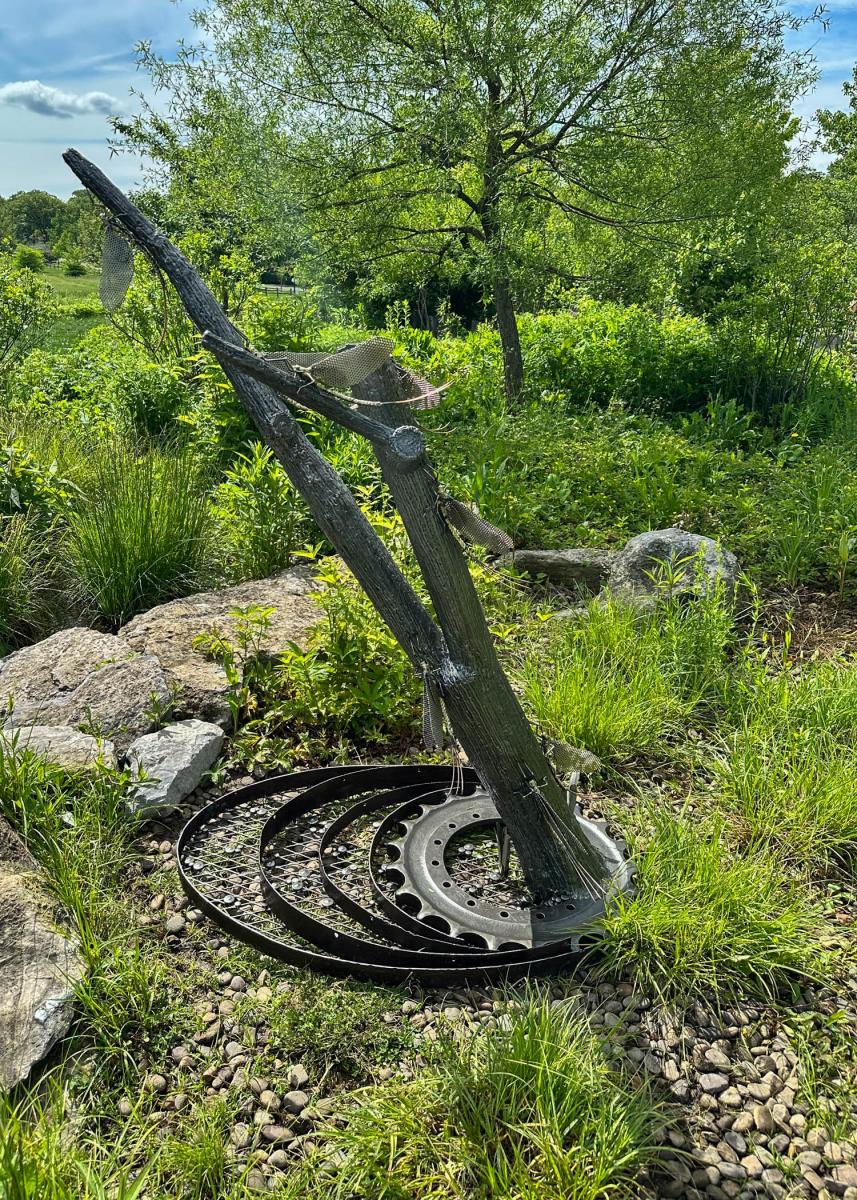
She spent nearly 100 hours fabricating “Keystone Hatch.” The branch is made from 14-gauge exhaust tubing, covered in weld beads to make the metal appear as bark. The tubing is attached at an angle to a bulldozer gear, acting as a base. Pieces of an old culvert pipe – cut into concentric circles – provide extra support for the base and create the illusion of rippling water.
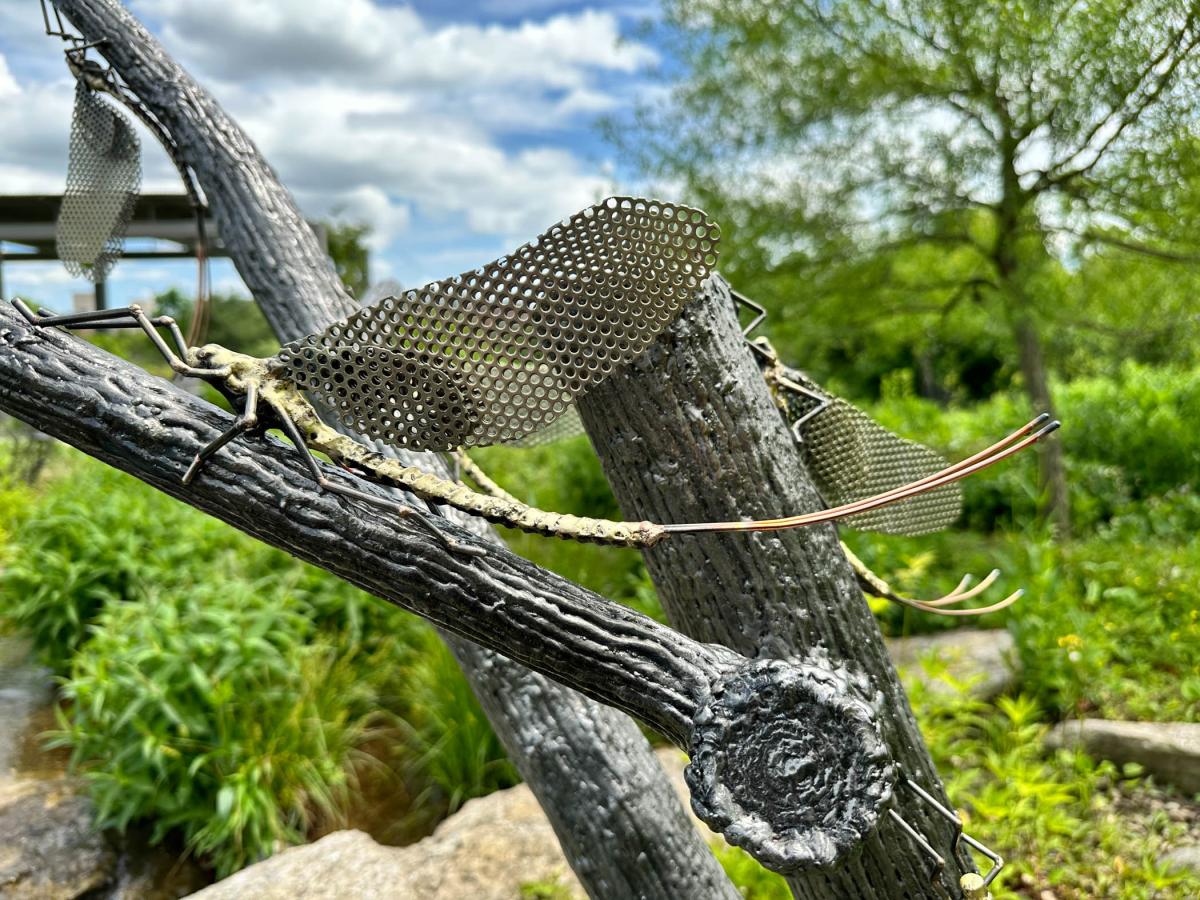
For the metal mayflies scattered about the branch, Alexander used a combination of scrap steel and rebar for the bodies, perforated steel for the wings and slender round stock for the legs. Her mayflies are much bigger to scale than they are in nature, where they usually don’t exceed 1.1 inches in length.
“The scale allows viewers to encounter the insects up close, noticing the small, precise gestures that define the mayflies’ distinctive posture,” she said.
Alexander’s resume since graduating from Penn College includes boiler work, hands-on welding instruction, and countless repair and fabrication projects. Making art is now her primary focus.
“At the moment, I’m balancing the practical side of running a small business with trying to break into larger public art installations and galleries, which has been a fun challenge,” she said.
The Penn’s Woods Outdoor Art Exhibition featuring “Keystone Hatch” will run through the end of August. A 370-acre green space adjacent to the University Park campus, the Arboretum at Penn State is open daily from dawn to dusk.
For more on Alexander and her projects, visit www.highergroundweldingpa.com or www.youtube.com/@highergroundweldingpa.