Marisa C. Sánchez, who has a doctorate in art history, is an assistant professor at Lycoming College and director of the school’s art history program. She has collaborated with Penny G. Lutz, director of The Gallery at Penn College, for several years. Lutz invited Sánchez to identify an art history student who could write a meaningful essay for the exhibition catalog.
“Nyx is a great student to work with because they are an independent thinker who leads with curiosity and creativity,” Sánchez said. “The strength of Nyx’s writing comes forward in a beautiful essay that conveys their research on Lehr’s artistic career. Nyx’s essay introduces Lehr’s early days as a young student at the Pratt Institute in New York City and then explores the development of his professional work as an illustrator, including artists who influenced him. Nyx conveys how Lehr pursued his interests, creating a style of his own that led to an increasing demand for his illustrations as the cover art on sci-fi publications and that, in turn, influenced a generation of illustrators.”
Eichner’s research and writing process took about 10 weeks, with up to six hours devoted each week to exploring a limited amount of information.
“I think the biggest challenge was finding sources outside of the ones provided to me by Penny Lutz,” Eichner said. “While the sources I was given were relatively thorough, I felt they didn’t quite give the full story, but there isn’t as much out there on Paul Lehr as some other illustrators and artists.”
Gelnett has worked at The Gallery at Penn College for about a year as a gallery attendant and graphic designer. She has completed exhibition logos, small brochures, large catalogs, the cover for the 2025 annual gallery catalog and other small projects.
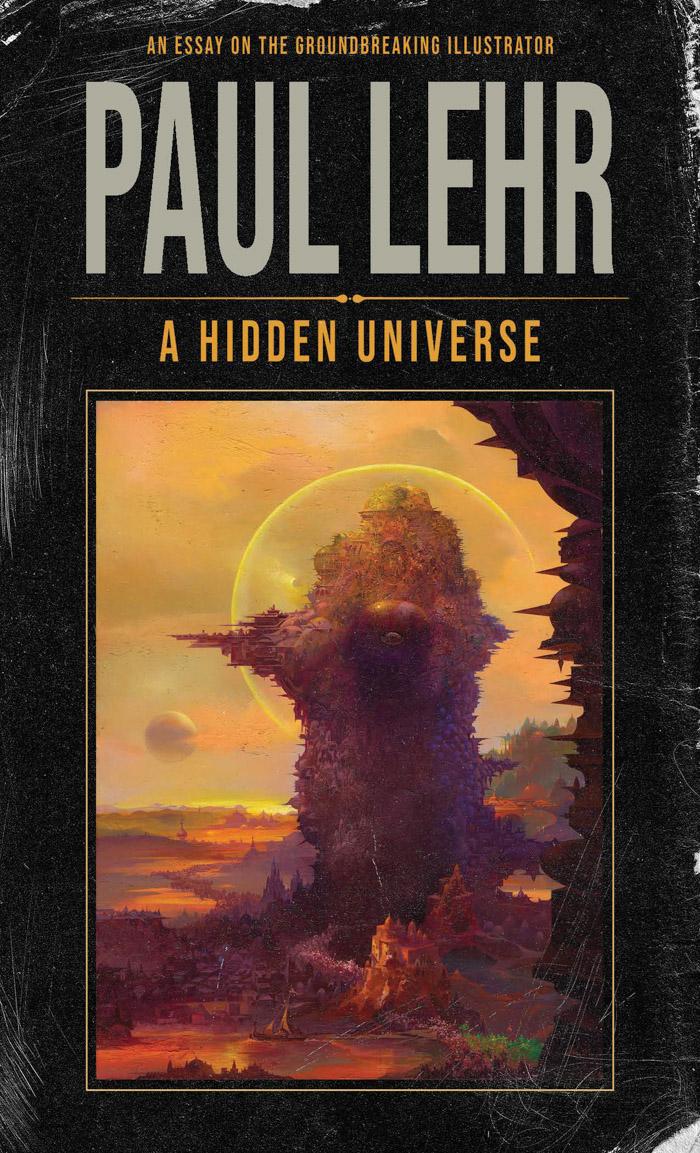
When Lutz presented the idea to design the book that would accompany Eichner’s essay, Gelnett already had a vision of the finished product: a 1970s paperback book.
Falling in love with Lehr’s work made the project easy.
“I was a little worried when Penny brought up that we were doing a sci-fi show, but once I saw his artwork, I was completely enamored,” she said. “It totally took my breath away, and I was literally stunned. The sheer size of many of the sculptures, the color used in the paintings – not to mention the attention to detail; impressive and stunning. Truly out of this world.”
Although Eichner and Gelnett spent very little time together, both artists are pleased with how their contributions have come together to create the finished product.
“I honestly love it!” Gelnett said. “I am super proud of it and love when people come into the gallery and want to talk to me about it. I am so happy I was given the chance to work on it, and I’m so glad people enjoy it and I was able to give people who like sci-fi and Paul Lehr something they can enjoy and take with them from the show.”
From the start, Eichner had simply hoped the project would be enjoyable, but in the end, it offered much more.
“As I kept writing, my love for this work deepened, and I felt this project would give me credibility in the art history research world,” Eichner said. “I am very pleased with my essay and how it turned out. As for the published book’s design, I’m extremely happy to see it in such a fitting style.”
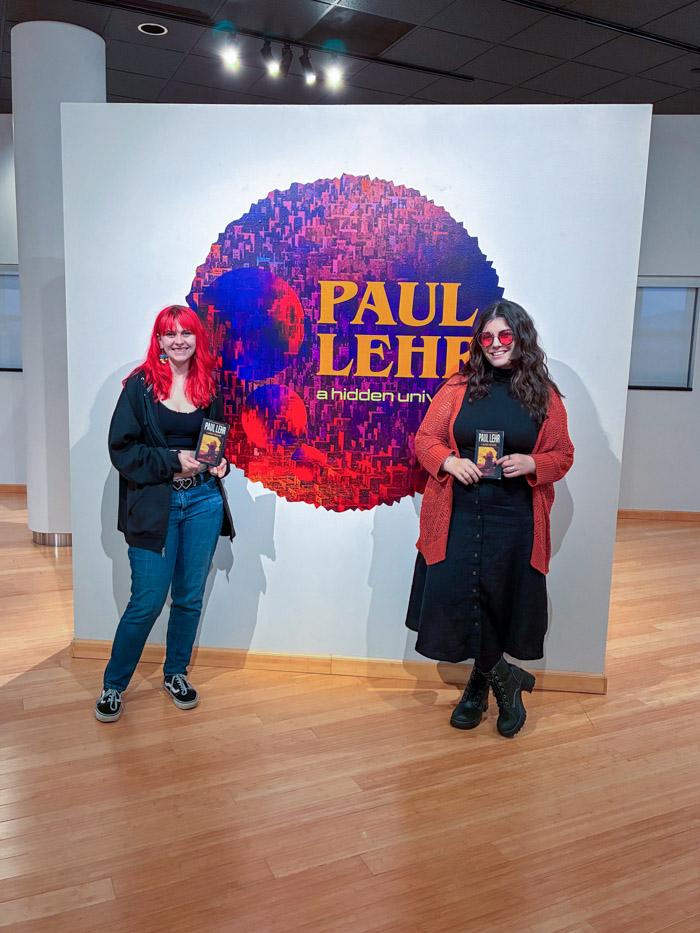
Sánchez received a copy of the catalog following the exhibition reception and public talk by Lehr’s daughter, Diana Lehr. She was immediately struck by its design.
“Maggie Gelnett’s inspired approach to designing the catalog so that it mimics a sci-fi paperback was smart and distinctive,” she said. “I have continued to enjoy the size and scale of the publication; it’s a great design that wonderfully reflects the content of Lehr’s artwork. I also especially enjoy the typeface Maggie chose for the publication.”
Lutz said one of the most rewarding aspects of presenting exhibitions is creating opportunities for students to participate in the process.
“This project demonstrates the power of collaboration, enriches the cultural life of our community, helps students build their portfolios and provides valuable professional experience,” Lutz said. “Seeing students contribute meaningful scholarship and design work is exactly the kind of hands-on experience we hope to provide through The Gallery.”
Copies of the catalog are free and available in The Gallery at Penn College. The “Paul Lehr: A Hidden Universe” exhibition remains open through Nov. 22.
The Gallery at Penn College is open from 2 to 8 p.m. Tuesday through Thursday, noon to 4 p.m. Fridays and 1 to 5 p.m. Sundays. It is closed on Mondays and Saturdays.
In addition to serving as an educational resource for Penn College students and a cultural asset to the college and community, The Gallery at Penn College is dedicated to promoting art appreciation through exhibitions of contemporary art.
For information about Penn College, a national leader in applied technology education, email the Admissions & Secondary Partnerships Office or call toll-free 800-367-9222.