Penn College News

Penn College civil engineering students present at symposium

Monday, November 16, 2026

photos by Kelly A. Butzler, professor of chemistry, and Camila Bogarin Cantero, assistant professor of civil engineering technology

Pennsylvania College of Technology students Katherine L. Butzler, of Jersey Shore, and Taryn A. Toner, of Mill Hall, presented research regarding the impact of road salt at the 21st annual River Symposium hosted by Bucknell University. The civil engineering technology students collaborated with faculty Camila Bogarin Cantero and David J. Fedor to compile their research and findings. From left are Cantero, Butzler and Toner.

Two Pennsylvania College of Technology civil engineering technology students presented research regarding the environmental impact of road salt at the 21st annual River Symposium hosted by Bucknell University.

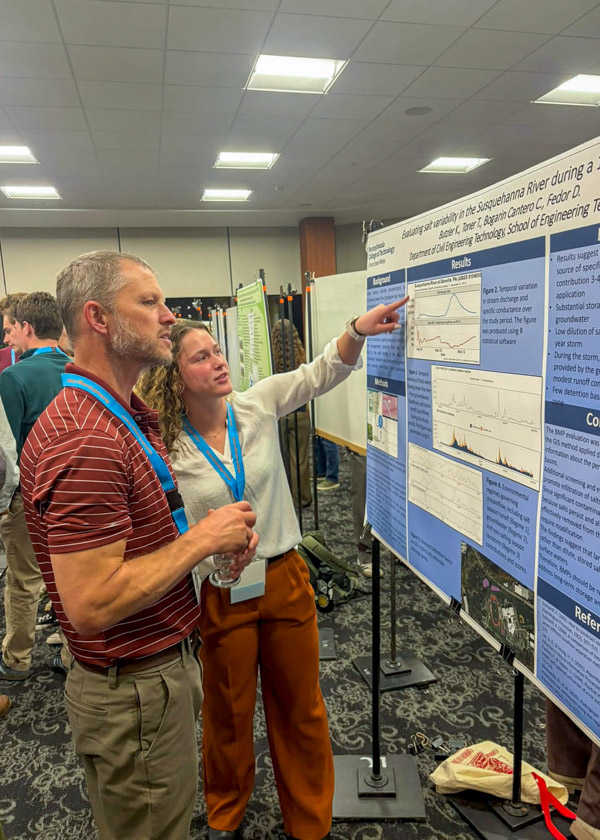
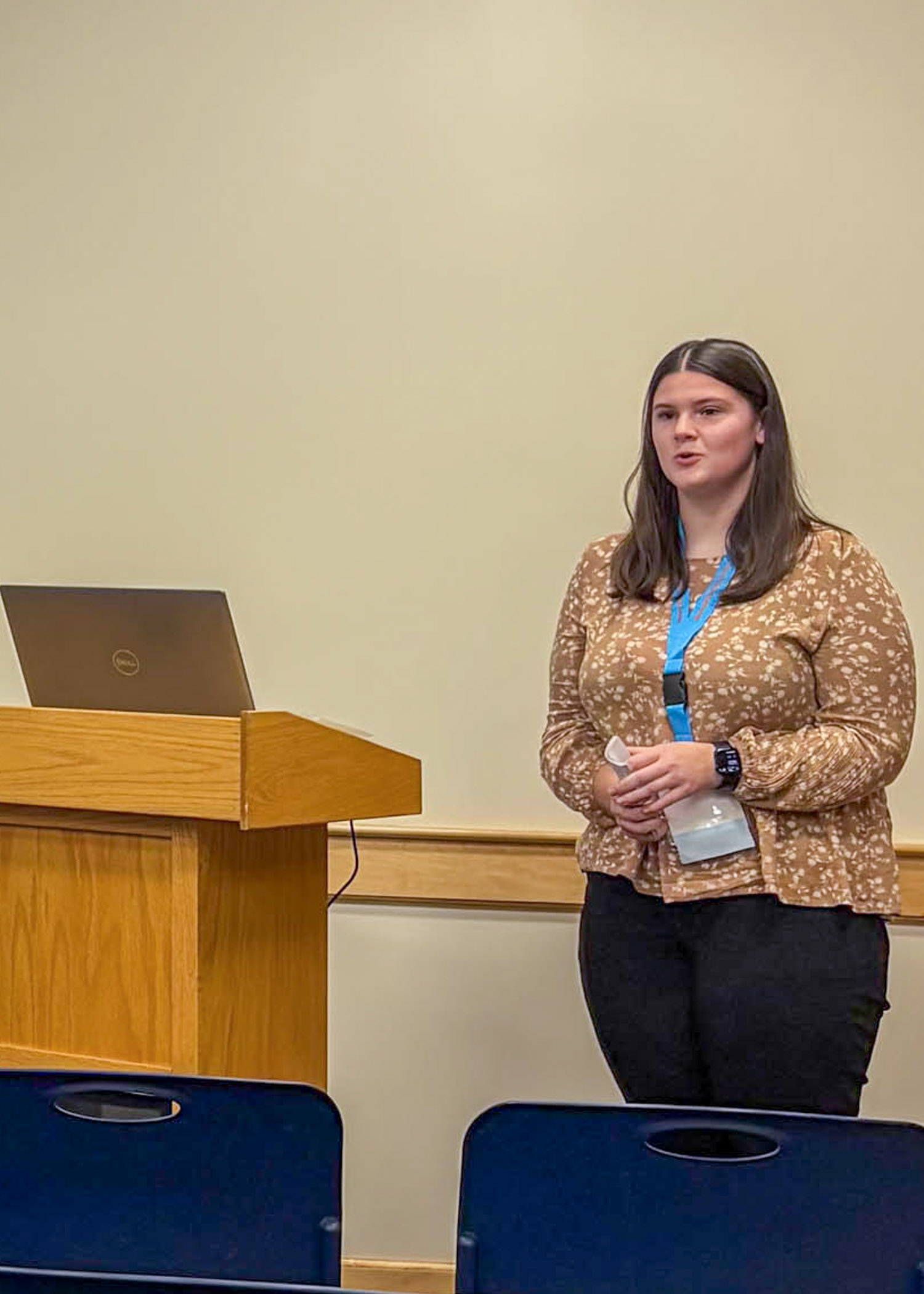
Katherine L. Butzler, of Jersey Shore, conducted a poster presentation, “Evaluating Salt Variability in the Susquehanna River During a 100-Year Storm,” and Taryn A. Toner, of Mill Hall, offered an oral presentation, “Data Driven Decision Making for Road Salt Management in the West Branch and Upper Susquehanna Basins.”

The River Symposium brought together scientists, educators, students, resource managers and community members to explore the health and resilience of rivers and watersheds. The event featured the work of about 150 authors from academic institutions, state and federal agencies, and numerous conservation districts, environmental agencies and watershed groups.

Butzler and Toner collaborated outside of class with Camila Bogarin Cantero, assistant professor of civil engineering technology, and David J. Fedor, associate professor of civil engineering technology, to compile their research and findings.

“The Pennsylvania Legislature has suggested that the quantity of road salt used by PennDOT is contaminating freshwater streams and needs to be managed better,” Fedor said. “Our program has a long relationship with PennDOT, so we chose road salt use as the problem for that reason.”

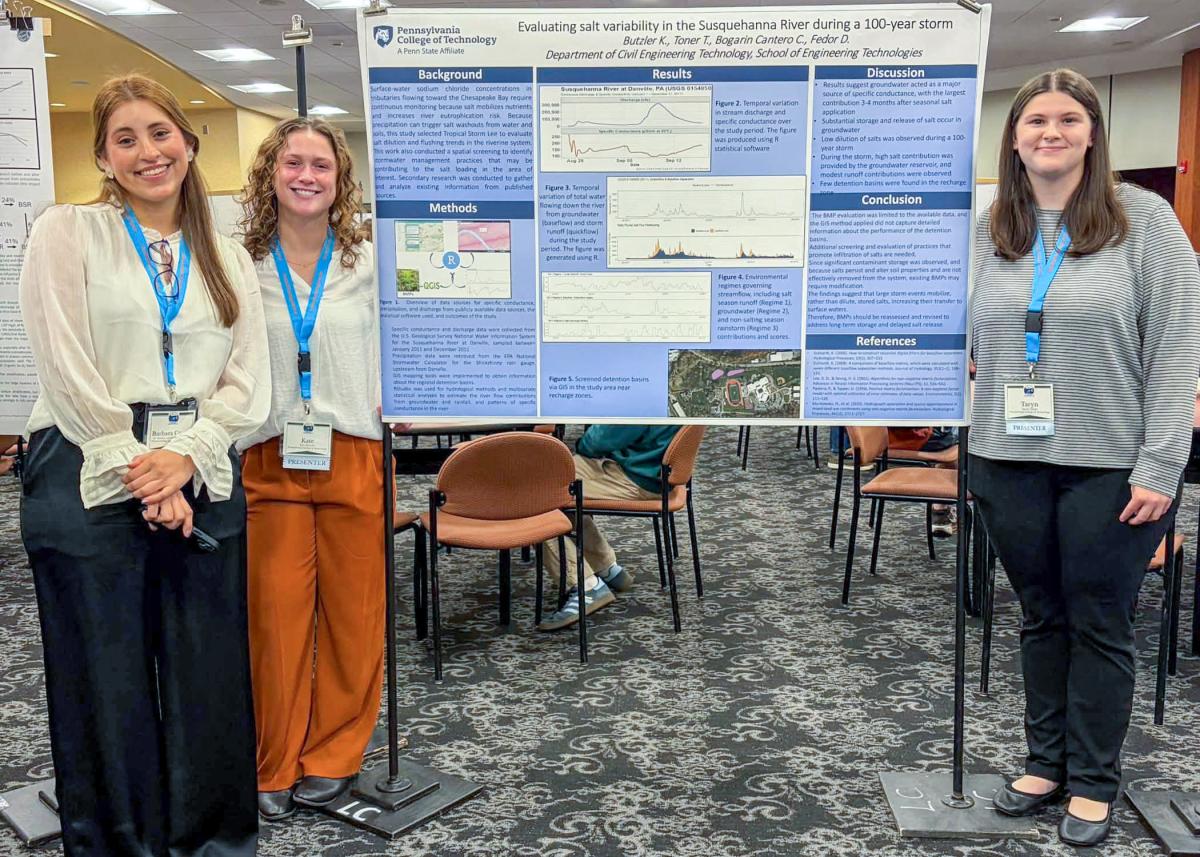
Toner studied estimates – made by the U.S. Geological Survey – on road salt use and salt contamination for the West Branch Susquehanna and Upper Susquehanna River basins. Butzler examined how much road salt stored in the soil in Danville may have been flushed into the Susquehanna River during Tropical Storm Lee in 2011. 
                                                                       
“One of our goals is to build the framework for an undergraduate research program,” Fedor said. “These students are the pioneers for that effort, and we are very proud of how enthusiastic they were to take on this new learning experience. Graduate students from another institution and a state agency were impressed with their work.”

Toner determined that a PennDOT road salt management plan shouldn’t use a uniform statewide approach and instead should be based on the specific land uses and salt contamination levels within each river basin.

Butzler found that stormwater best management practices, like detention basins, may store road salts in the soil that could be released when significant storm events flush the soil with large quantities of water, resulting in contaminated waterways downstream.

“This experience showed these students that they are gaining knowledge in our program that can be used for career pathways beyond the traditional civil engineering workforce,” Fedor said. “They can use their applied technology education as a foundation for science-aligned engineering careers with agencies like USGS or the Pennsylvania Department of Environmental Protection. Our degree also can be a pathway to graduate school.”

Penn College’s civil engineering technology bachelor’s degree is accredited by the Engineering Technology Accreditation Commission of ABET, the global accreditor of college and university STEM academic programs. The program has a 100% placement rate. For more about civil engineering technology and other majors offered by the School of Engineering Technologies, call 570-327-4520.

For information about Penn College, a national leader in applied technology education, email the Admissions & Secondary Partnerships Office or call toll-free 800-367-9222.

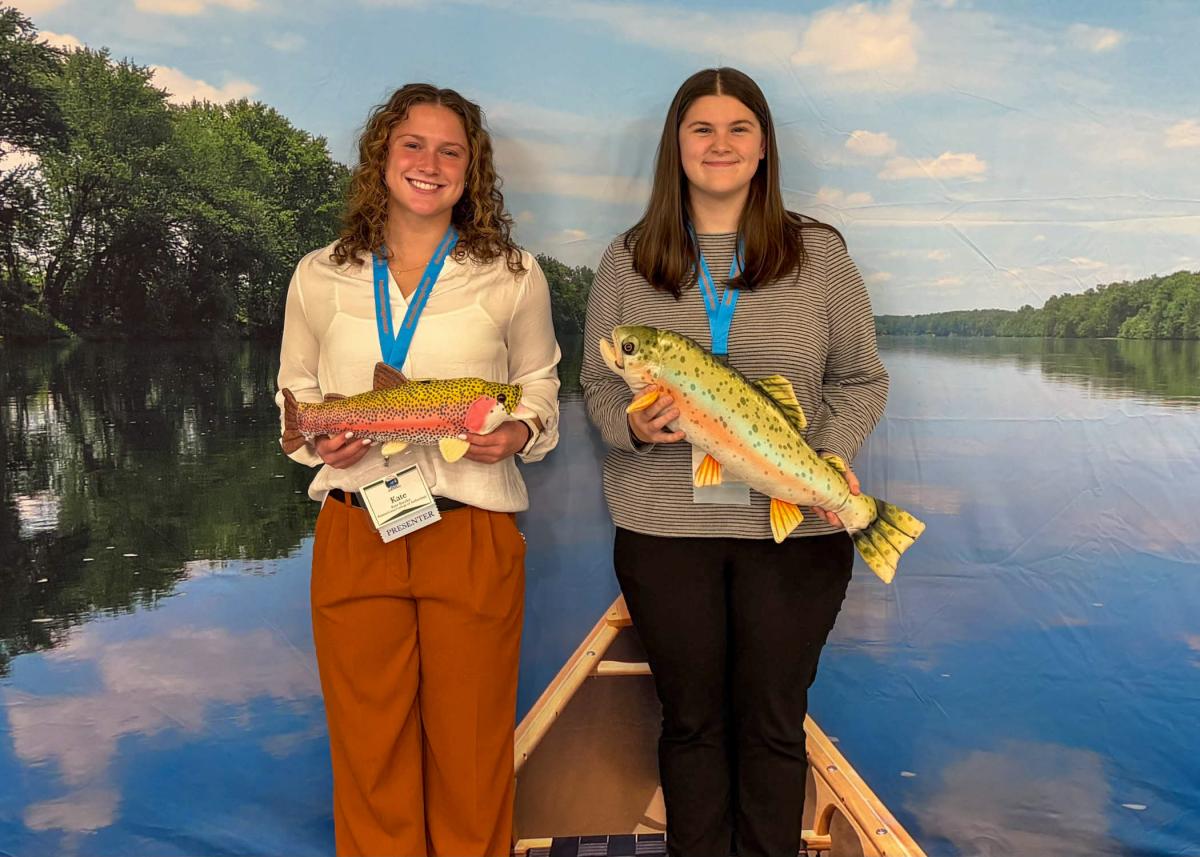
The Penn College student duo shares a lighthearted moment during the symposium, which explored the health and resilience of rivers and watersheds.