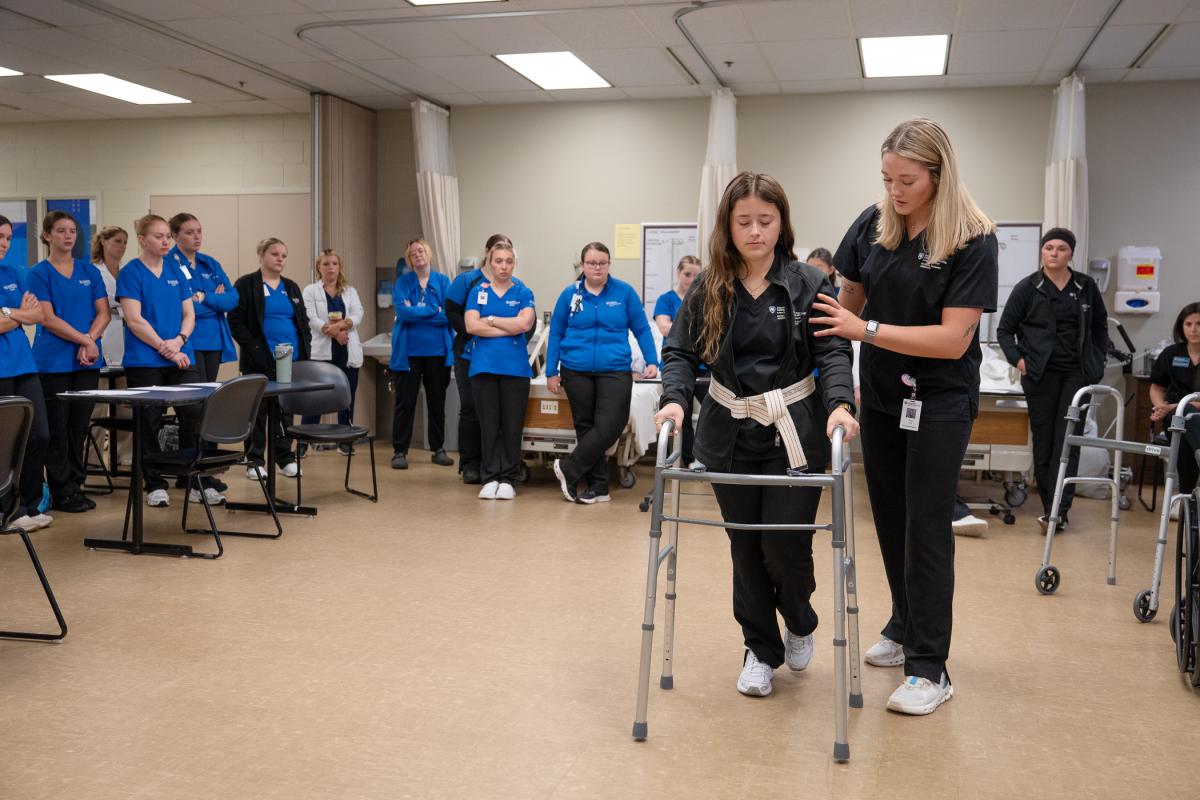
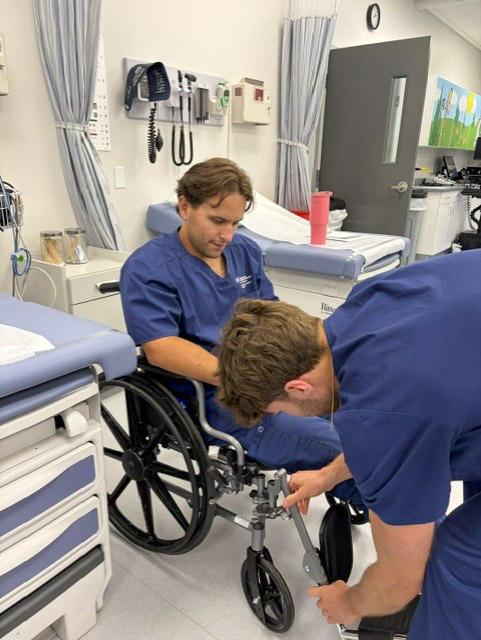
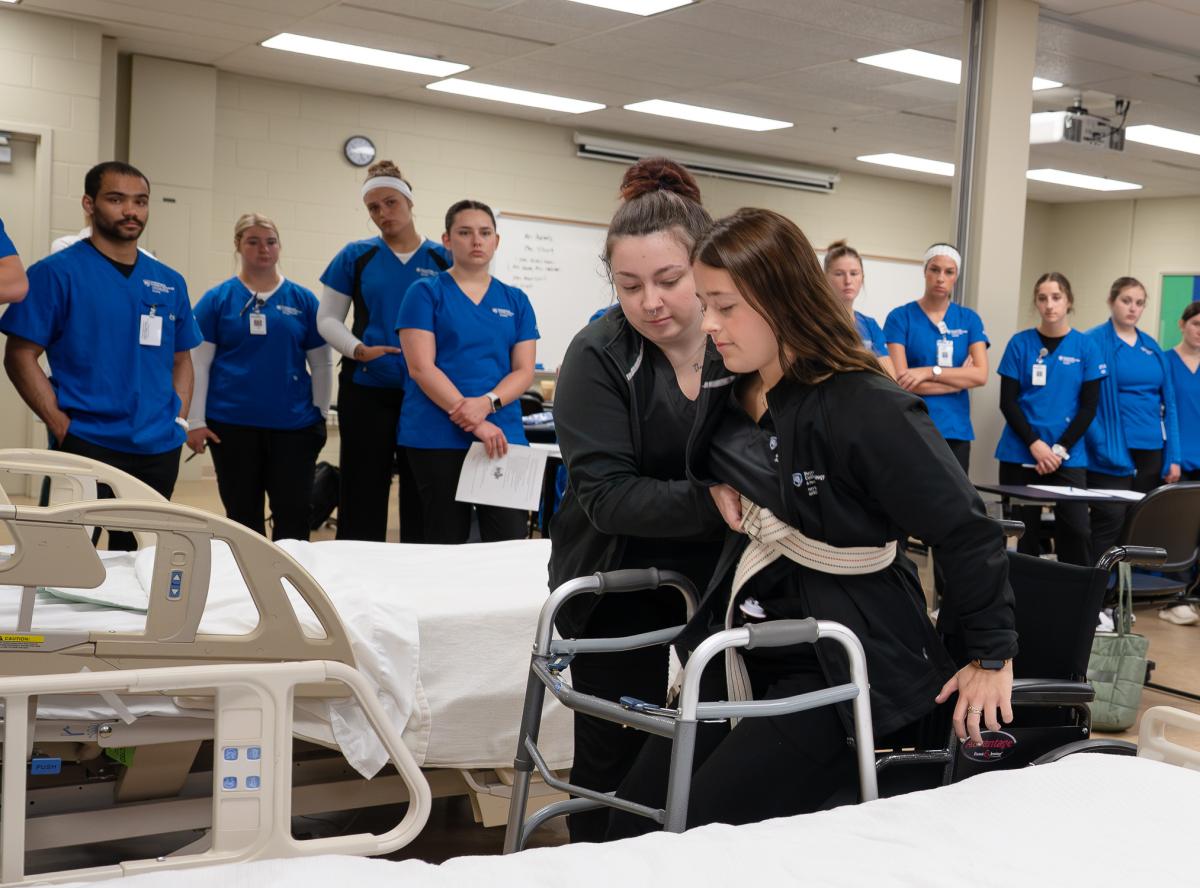
Students in nursing and health sciences majors participated in two interprofessional educational experiences hosted by physical therapist assistant faculty and students.
As part of a workshop in the Principles of Emergency Medicine and General Surgery course taught by Melissa E. Sedor, physician assistant program director, PTA students provided instruction and hands-on training related to rehabilitation and postoperative mobility.
“The experience enhanced PA students’ understanding of the physical therapist assistant’s role in patient recovery, promoted collaborative practice competencies and reinforced the value of team-based care in improving patient outcomes,” Sedor said.
PTA student Jessica D. Beasom, of South Williamsport, delivered a presentation titled “Early Mobility in Acute Care” before students participated in an interactive hands-on session to practice spinal precautions.
“The PA students had a wonderful experience learning about spinal precautions in a postoperative patient,” Sedor said. “The hands-on component was particularly engaging and enjoyable. I also want to recognize Jessica Beasom, who was outstanding. She truly exemplifies the dedication and support that the PTA faculty and staff provide to their students, helping them to develop into such capable and successful professionals.”
Sedor works closely each year with Victoria Hurwitz, director of the physical therapist assistant program, and Christine L. Tilburg, clinical director of the physical therapist assistant program, to create an educational session that effectively teaches PA students techniques to promote movement, function and health in individuals who have recently had surgery.
“These experiences allow PTA and PA students to learn about roles and responsibilities, communication, and collaboration in healthcare settings,” Hurwitz said. “PTA students benefit from this experience because they get the chance to educate peers using teaching methods utilized in clinical practice. Educating future PAs about the benefits of physical therapy and teaching them the skills and techniques needed to safely mobilize patients after surgery is essential for optimizing the patient care experience.”