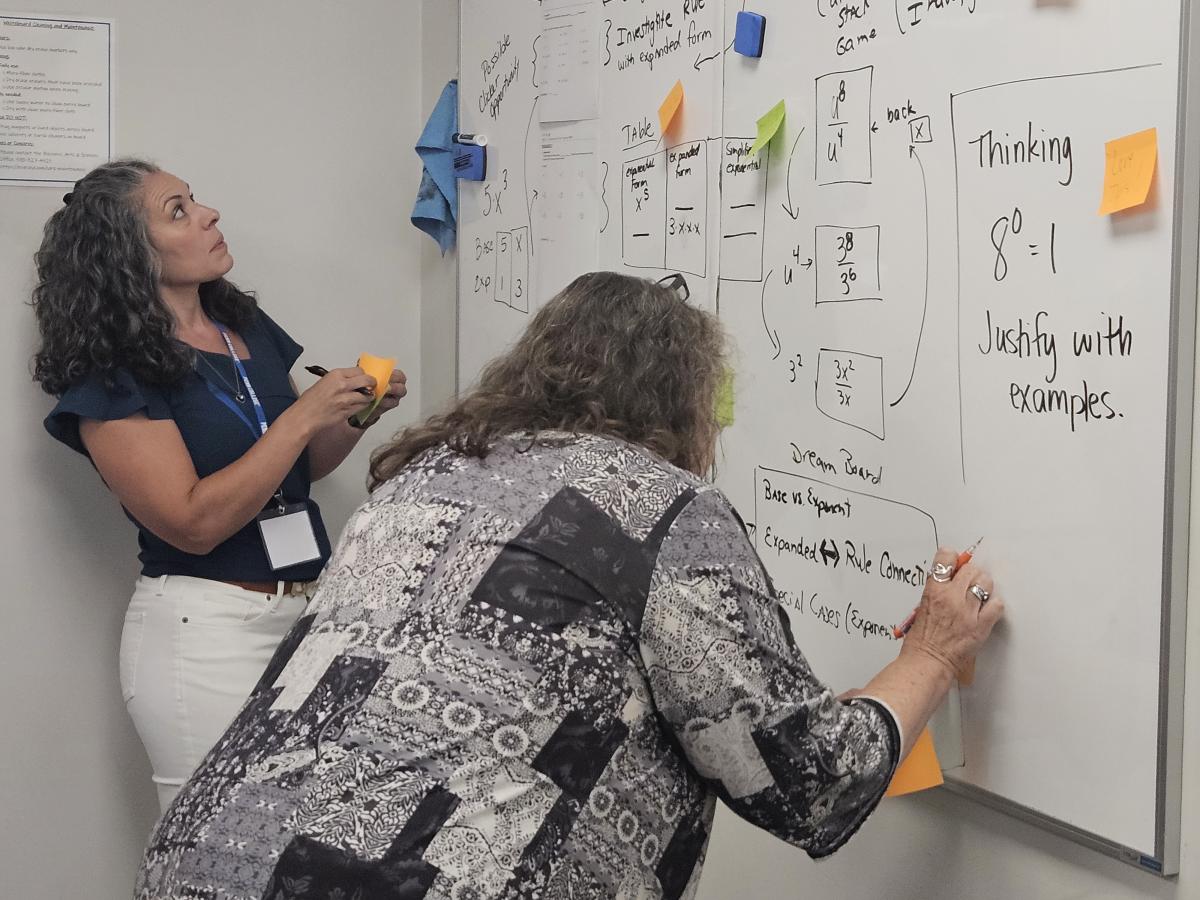
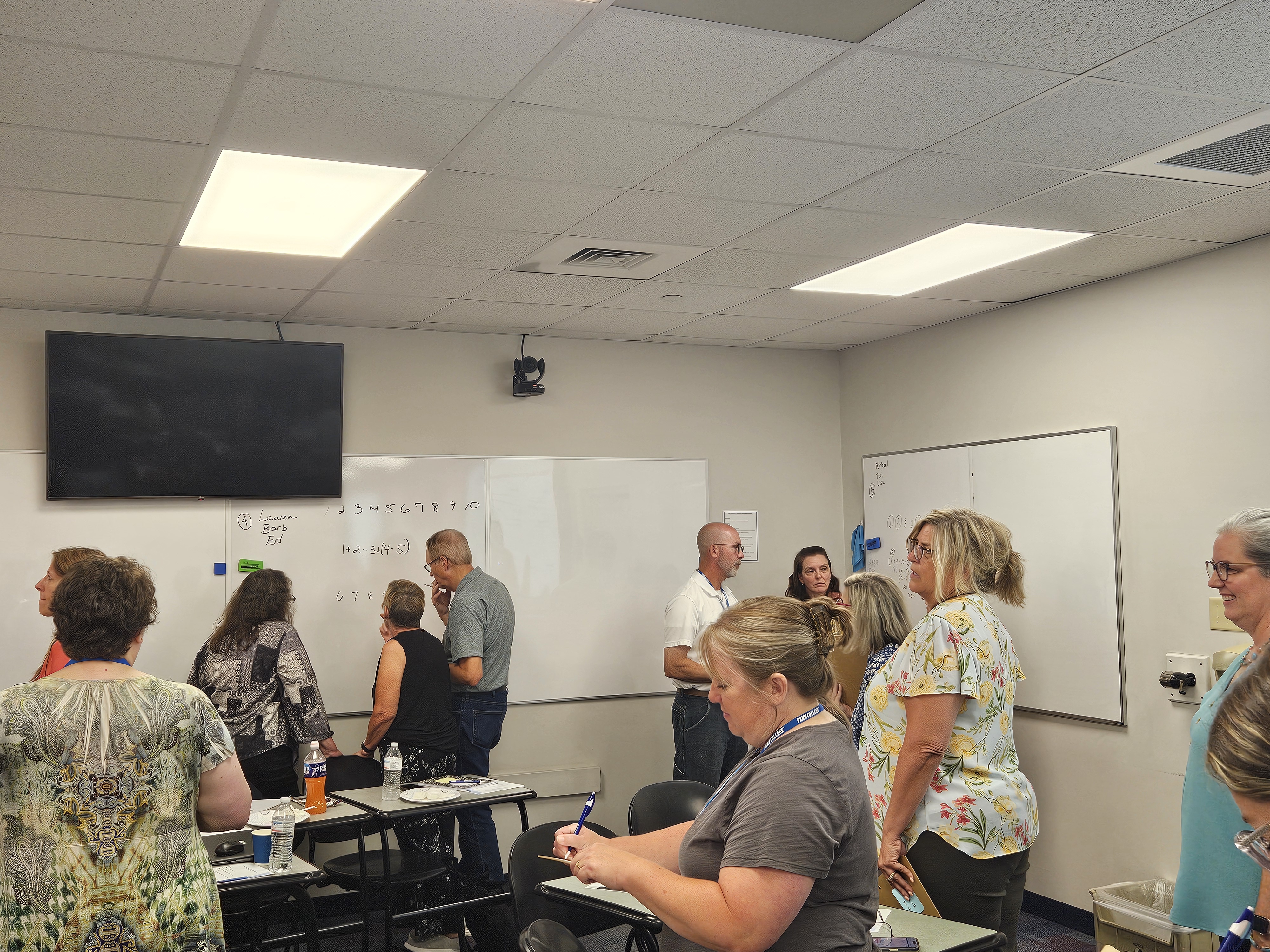
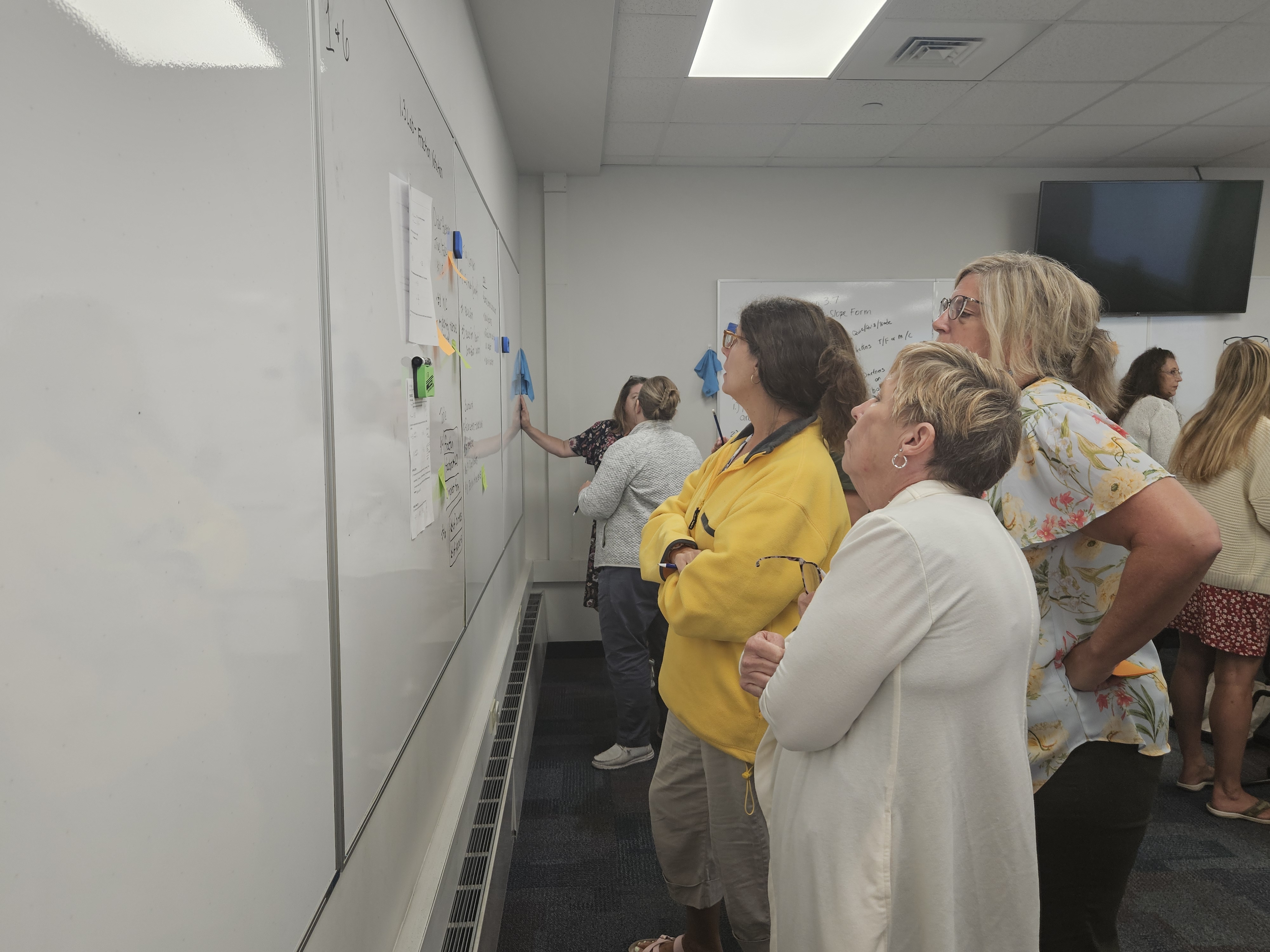
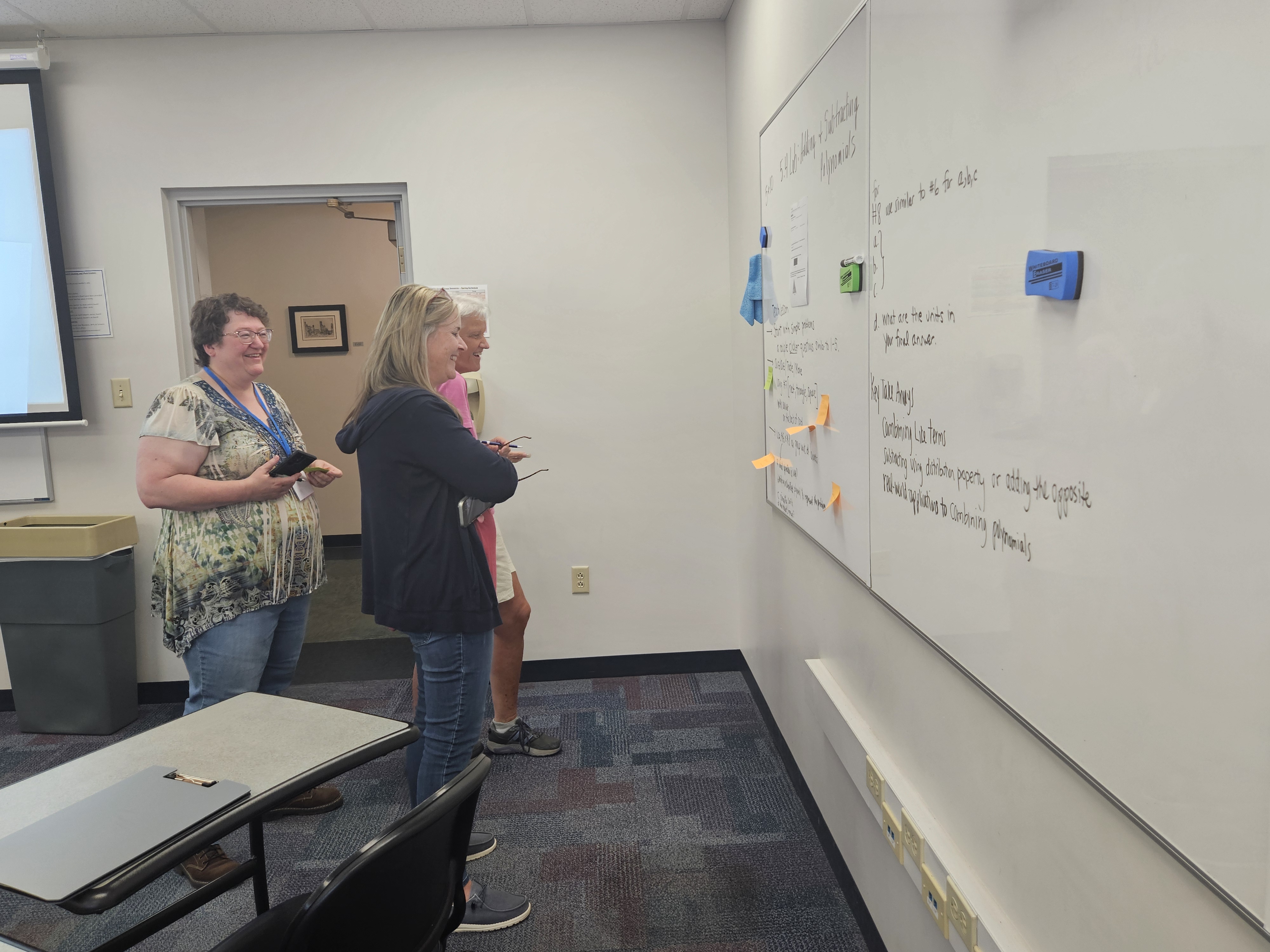
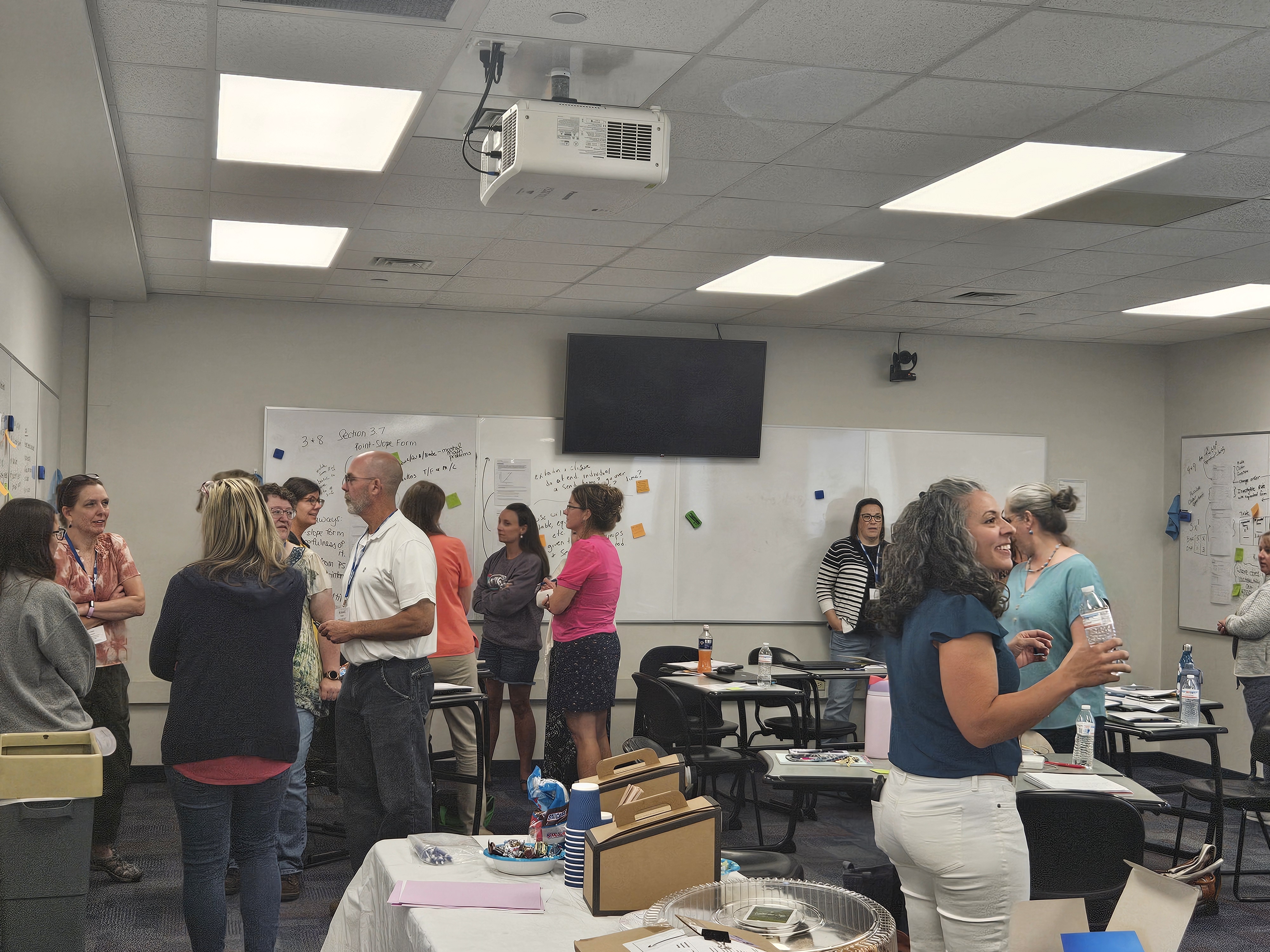
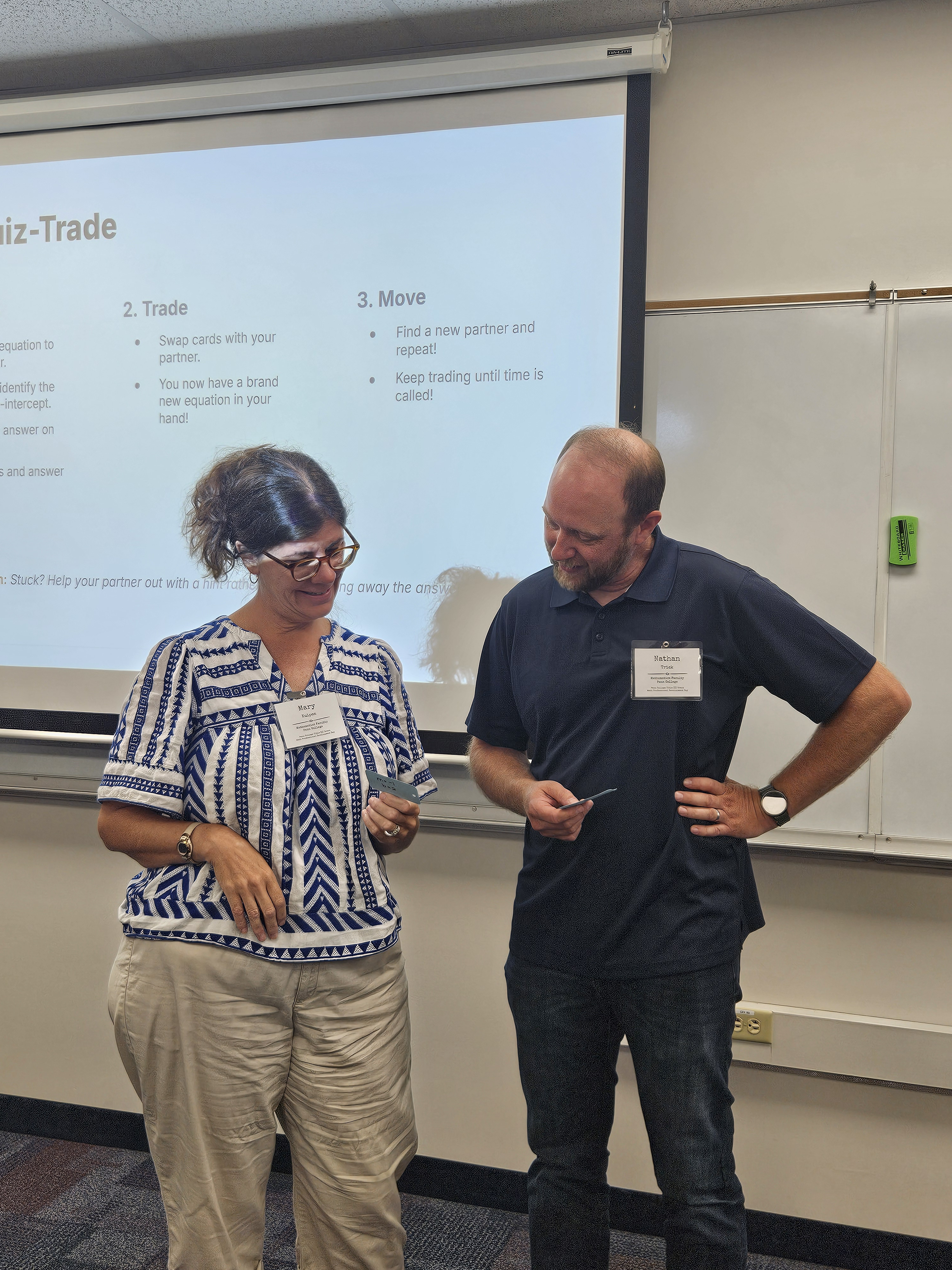
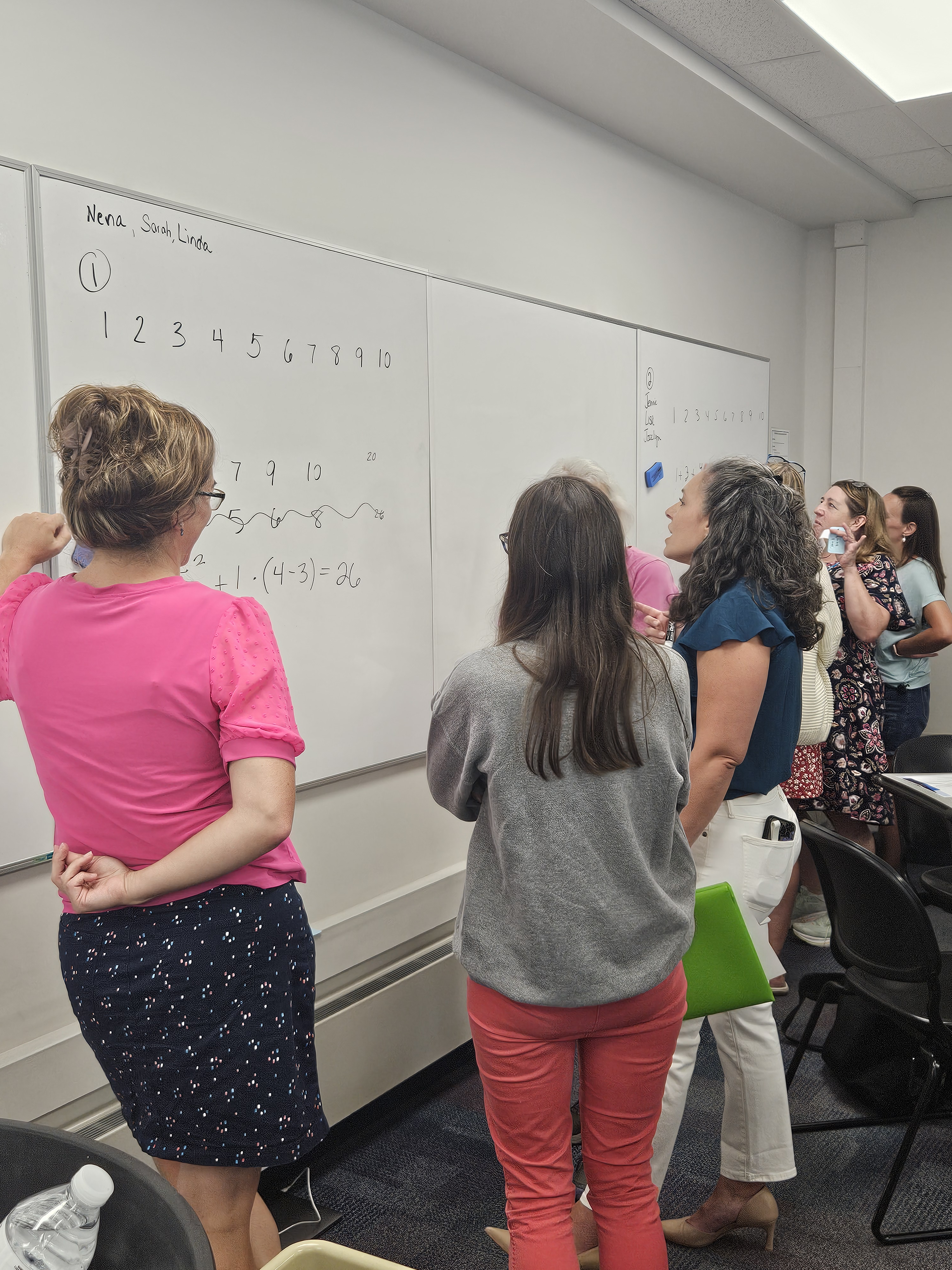
Led by AnnMarie O’Neil, professor of mathematics at Valencia College in Orlando, Florida, the Mathematics Professional Development Day focused on active-learning strategies, student engagement and practical approaches for creating more dynamic mathematics classrooms.
“I was especially impressed by Dr. AnnMarie O’Neil’s approach during one of the sessions I attended,” said Barb F. DiMarco, assistant dean for arts & sciences. “Rather than simply discussing active-learning strategies, she demonstrated them by engaging participants directly in the learning process.”
Part of the experience involved faculty members dividing into groups. Some took on student roles that included hidden characteristics while others served as observers of classroom interactions and engagement.
“Seeing these strategies unfold in real time provided valuable insight into how instructional choices can influence student participation, collaboration and learning,” DiMarco said. “By modeling the practices she advocates, Dr. O’Neil created an engaging and memorable experience that highlighted the power of active learning in the mathematics classroom.”
O’Neil earned a bachelor’s degree, a master’s degree and a doctorate from Syracuse University, and taught at every grade level from seventh through the first year of college during her first four years of teaching. During that time, she gained insight into the support students need to successfully navigate their mathematical studies. Today, her work focuses on active learning and bringing the collaborative problem-solving components of the “Building Thinking Classrooms” concept to life.
The evening before the all-day workshop, she presented to Penn College mathematics instructors. “Transforming Math Learning With Interactive Technology” explored the Amplify Desmos Classroom platform, interactive activities from a student’s perspective, effective use of the live Teacher Dashboard and a library of ready-to-use activities.
“The evening session served as an engaging kickoff to the following day’s professional development program and equipped participants with practical technology resources they could immediately implement in their classrooms,” said Michele R. Alexander, manager of academic initiatives, Title III project coordinator.
The following day’s workshop featured four sessions:
• Managing the Active Classroom: An interactive session that moved beyond the theory of active learning and into the practical realities of classroom facilitation. Participants experienced common classroom dynamics such as uneven participation, procedural dependence and student disengagement.
• The Pulse of the Room – Formative Polling & Questioning: O’Neil demonstrated how polling tools and purposeful questioning can provide real-time insight into student thinking. Participants experienced a “Poll-Discuss-Repoll” cycle designed to spark mathematical debate and uncover misconceptions.
• Beyond the Workshop – Adapting Course Materials for Active Learning: Participants worked collaboratively to examine existing developmental mathematics materials and redesign them to increase student engagement and cognitive demand. Educators explored multiple ways to transform familiar lessons into opportunities for deeper reasoning, discussion and problem solving.
(A choice of the following two):
• Thin-Slicing “The Meat” in the Sandwich of Building Thinking Classrooms: Full-time and dual enrollment instructors explored strategies for transforming complex mathematical procedures into a series of collaborative, inquiry-driven tasks that build procedural fluency through active problem solving rather than traditional lecture.
• MTH005 Sync Up: Penn College mathematics faculty members LeAnn M. Henry and Tiffany D. Schwanger led a session that gave faculty an opportunity to discuss course expectations, share instructional resources and effective teaching practices, and strengthen consistency across sections to better support student learning and success.
Henry and Schwanger worked directly with O’Neil to plan the day, which they described as “dynamic, practical, collaborative and motivating.”
“I came away with several ideas that I can immediately incorporate into my own classes, particularly purposeful questioning, formative polling and strategies for consolidating student thinking,” Henry said. “We wanted the day to go beyond talking about active learning and give faculty the opportunity to actually experience it, collaborate with one another and think about how these strategies could work in their own courses.”
Schwanger found O’Neil’s polling session to be enlightening.
“Although I have heard of Poll Everywhere before, she presented a more focused and thoughtful approach to incorporating it in my classroom,” she said. “She showed how using the Poll Everywhere software with specific concepts can quickly and easily change the direction of the day’s lesson in ways that will benefit the students and use the class time most effectively. She showed how choosing an active learning approach doesn’t have to take more time, and content does not have to be sacrificed.”
The Math Professional Development Day was funded through a Title III Strengthening Institutions Program Grant, which supports initiatives designed to strengthen teaching and learning and enhance student success.
“Supported by the Title III grant, the experience reflects Penn College’s ongoing commitment to investing in innovative teaching practices and strengthening mathematics education for students across the region,” Alexander said.
For information about Penn College, a national leader in applied technology education, visit www.pct.edu, email admissions@pct.edu or call toll-free 800-367-9222.