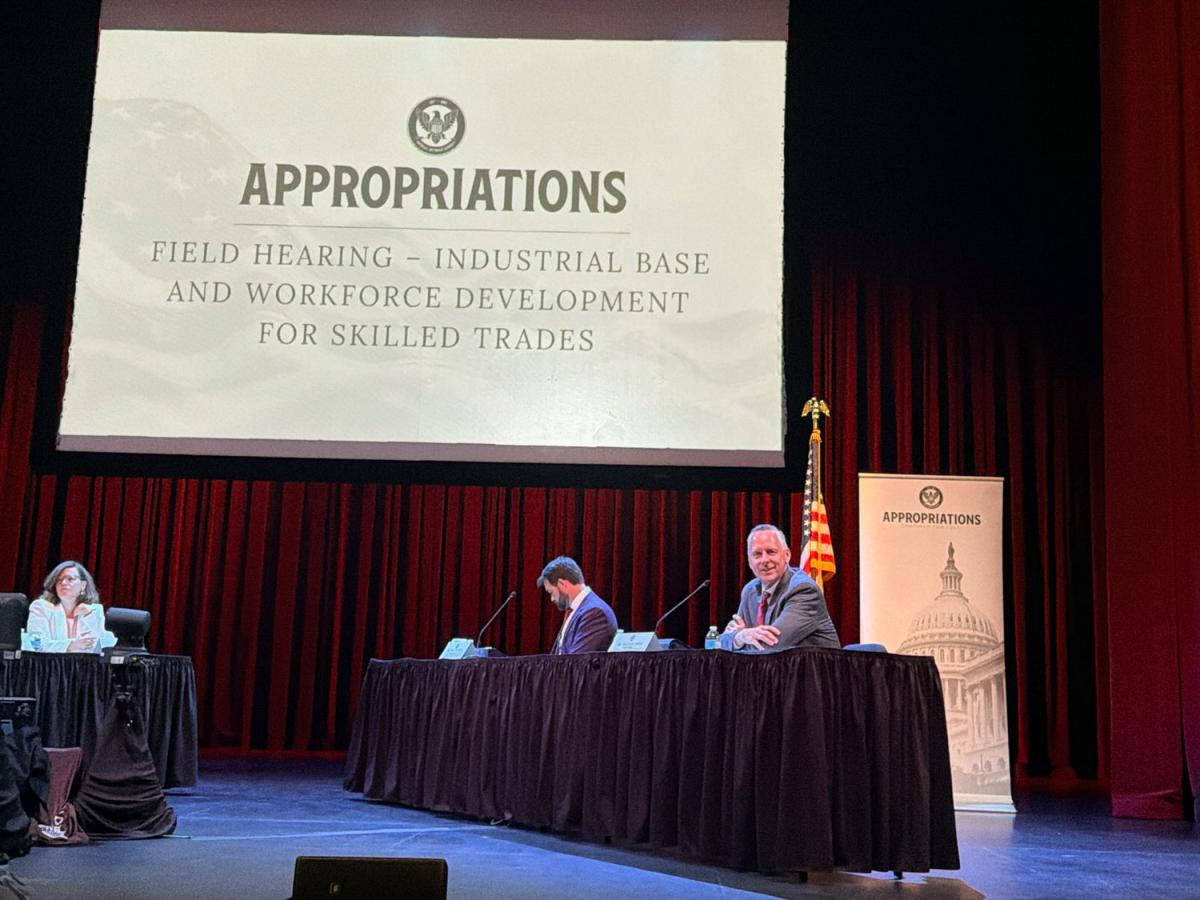
Reed urged the subcommittee, chaired by Rep. Ken Calvert of California’s 41st congressional district, to recognize education, particularly investments in skilled trades, as a strategic imperative for national defense.
“America has the most advanced military systems in the world, and those systems ultimately depend on skilled workers who can build them, maintain them, troubleshoot them and deploy them,” Reed said. “Aircraft, submarines, armored vehicles and weapons systems cannot exist without welders; machinists; electricians; electronics technicians; heating, ventilation, and air conditioning technicians; automation specialists; diesel and automotive mechanics; and countless other highly trained technicians.”
However, he told the committee, workforce demand continues to outpace supply.
Reed cited a 2026 report by Lightcast that indicates 20 million U.S. jobs, representing 9% of the nation’s workforce, fall within 135 skilled trades occupations, but just 800,000 individuals a year complete skilled trades programs – including all apprenticeships, certifications and two-year degrees.
“Across manufacturing and technical occupations, employers are competing for a limited talent pool while simultaneously confronting workforce retirements and increasing production demands,” Reed said. “At Penn College, we see this demand firsthand. Employers regularly recruit our students before graduation, and industry partners consistently tell us they would hire significantly more graduates if they were available. The challenge is not job availability. The challenge is talent availability.”
Reed emphasized that education and industry partnerships are essential.
Penn College boasts partnerships with more than 4,000 employers.
“Effective workforce development occurs when employers actively invest in the educational pipeline through scholarships, equipment donations, curriculum input, work-based learning opportunities, apprenticeships and internships,” Reed said. “These partnerships ensure students develop skills aligned with current workforce requirements while providing employers with direct access to future talent.”
Such initiatives will become more critical as the pool of traditional college-age students shrinks, Reed explained.
“As fewer students graduate from high school, talent competition will intensify,” he said. “The defense sector and other critical sectors will increasingly compete for the same limited population of skilled workers. To meet this challenge, we must expand pathways into technical careers, strengthen career and technical education programs, invest in apprenticeships, strengthen workforce development initiatives and increase awareness among students and families about the tremendous opportunities available in skilled trades.”
Reed urged Congress to support institutions and programs with demonstrated success and capacity for growth. Penn College traditionally maintains waitlists for programs that align most closely with defense industry workforce needs.
“By investing in and enabling expansion of proven, existing programs, the country can more rapidly address workforce shortages by providing the hands-on education necessary to develop the skilled talent needed to bolster our manufacturing and defense industrial base,” he said.
Penn College and its predecessor institutions have been providing hands-on applied technology education since 1914. Its graduates achieve a 98% placement rate and enter careers in fields essential to the nation’s economy and national security. According to the U.S. Department of Education’s College Scorecard, the median earnings of Penn College graduates who received federal aid are 36% higher than those of federal aid recipients graduating from colleges nationwide.
For information about Penn College, a national leader in applied technology education, email Admissions or call toll-free 800-367-9222.
Additional resources: