Transforming care in Liberia

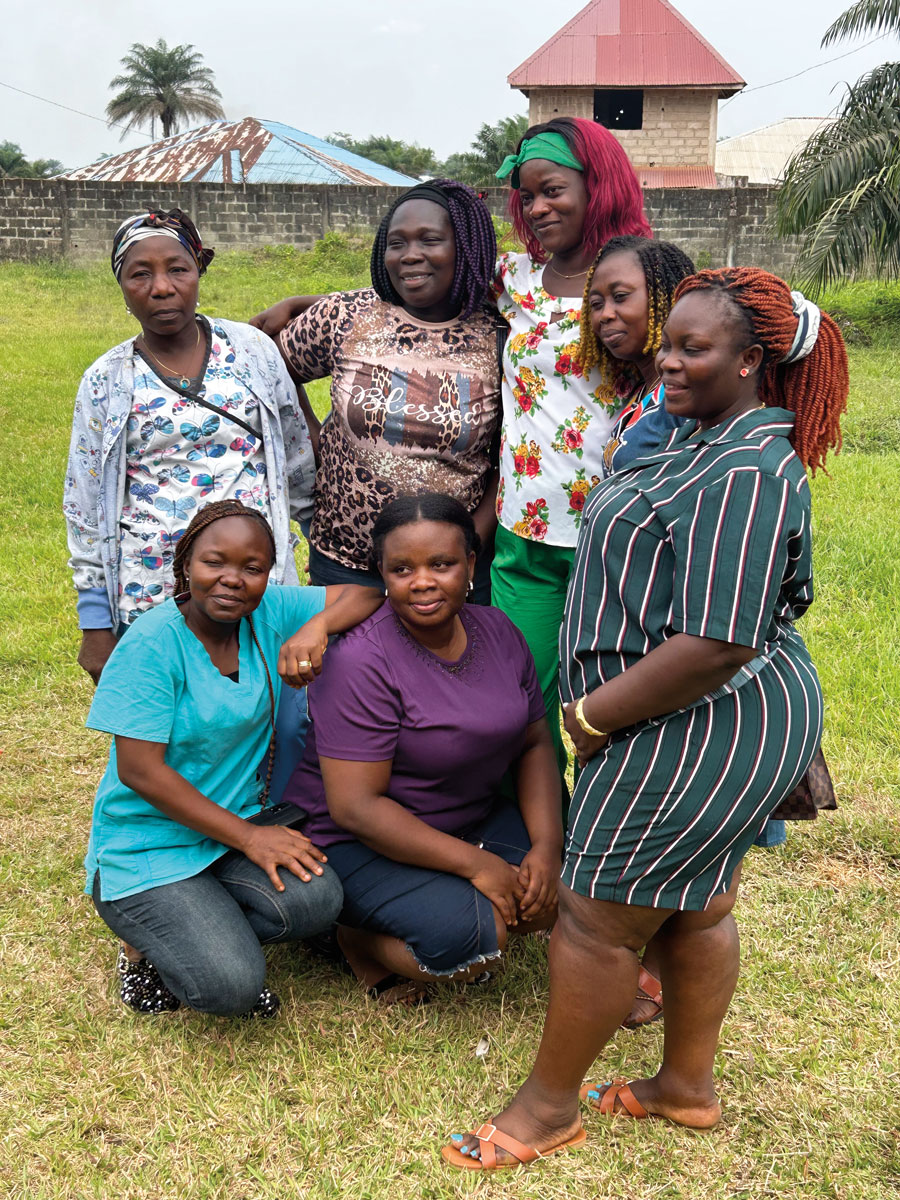
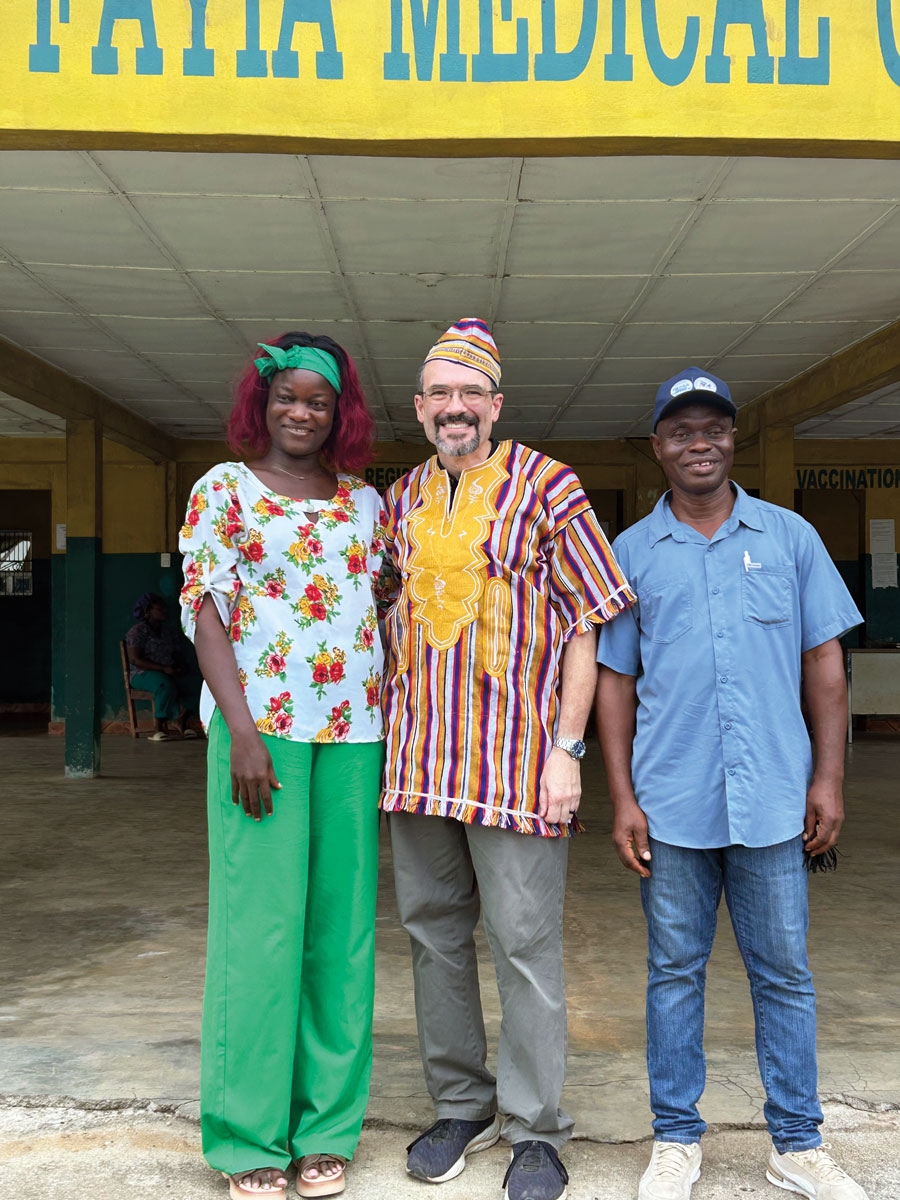
John Zentz '94 (back row, in striped shirt and hat) poses with the medical professionals who worked with him to learn how to use ultrasound equipment. Several participants gave short speeches expressing their gratitude, and Zentz was presented with the shirt and hat. “It has to be placed on you by a high-ranking person in their society and makes you an honorary member of high social status,” he explained.

Penn College Magazine Fall 2026, Volume 35, Number 2

Adrienne Wertz

by Adrienne Wertz

News Writer

JOHN ZENTZ HAD ONE GOAL when he decided to study radiography at Pennsylvania College of Technology more than 20 years ago: support and raise a family. The 1994 alum succeeded in meeting his mission – but with one small twist. His journey has extended beyond just his own family. Instead, he’s reaching thousands. Zentz’s career as an ultrasound applications specialist has opened doors to serve in developing countries, where the need for ultrasound equipment, and the training to use it, is significant. 

Zentz’s story began like that of many other high school students – with a change of plans. Although he was living with his father in North Augusta, South Carolina, at the time of his graduation, it was during a visit with his mother in Danville that he decided to attend college in Pennsylvania. X-ray school was his calling, and life beyond being a staff radiographer was not on his radar. But as is often the case, life had other plans.

THE BEGINNING

Zentz graduated from Penn College in the middle of a major upheaval in the healthcare industry. Full-time jobs were few and far between for a couple of years, and although he was working on an as-needed basis at Muncy Valley Hospital (now UPMC Muncy), he was unable to convert to full-time employment, so he headed back to South Carolina. Jobs there were scarce, too, so Zentz expanded his search to include nondestructive testing, a path that included doing X-ray, ultrasound, dye penetrant and magnetic flux testing in industrial settings all over the Southeast.

“NDT work was an amazing experience,” he said. “I got to inspect pipelines and boilers and watched as power plants were being built, along with a whole side of industry that most of us don’t even know exists. It was tough work and kept us on the road constantly, but I still consider it an important part of my education and part of who I am.”

After about a year, an X-ray job in Nashville opened, and Zentz spent the next few years working nights and weekends in operating and emergency rooms and performing portable X-rays. 

“Working the night shift and weekends was the best place to be in a large hospital,” he said. “I got to spend significant amounts of time in the NICU (neonatal intensive care unit), various other ICUs and the OR, along with working trauma as it came in. There was never a dull moment!”

THE SHIFT

Zentz decided the nightlife was no longer a viable option when his family began to grow. He took advantage of an increasing need for sonographers at the same healthcare facility and enrolled in an ultrasound class, graduating two years later from Volunteer State Community College in Gallatin, Tennessee, with an ultrasound certificate. He passed the boards and the rest, as he recalled, is a blur.

“My family grew up, and my job duties changed from hospitals to clinics and outpatient centers, where I was able to combine my X-ray and ultrasound credentials in the interventional suite,” he said. “I eventually ended up as a lab manager at a large vascular lab covering eight locations around middle Tennessee. Burnout was the order of the day, and I was heading face first into it at full throttle.”

It was after receiving a call about becoming an ultrasound applications specialist that things started to shift for Zentz. The company was a multi-manufacturer vendor, and he loved the challenge of learning all the brands and models. The owner of the company had a passion for mission work and donated as many machines as he could for use in medical facilities in other countries.

“The company was purchased by Probo Medical, the company I am currently employed by as an ultrasound applications specialist,” he said. “Fortunately, this much larger company has the same passion for mission and charity work, and they have helped support and encourage my trips.”

THE MISSION

Zentz’s first overseas ultrasound mission trip was to Mongolia. For two weeks, he set up and trained locals on ultrasound machines that were donated for use at four clinics in the capital city, Ulaanbaatar, and one in the Gobi Desert.

“It was an amazing experience, and I would love to get back out there someday,” he said.

But others were in need, and they were calling. Four ultrasound machines were donated through PreBorn!, a nonprofit organization that supports life-affirming pregnancy clinics, to the Nancy Fayia Medical Clinic, located outside of the capital city of Monrovia in Liberia. The facility is run by Hope and Care for Children Inc., which supports humanitarian and Christian outreach work in Liberia, and its story is much like Zentz’s, gaining impact as it develops.

Linda Kurtz, executive director of Hope and Care for Children and the U.S.-based Hope and Care Outreach, played an integral role in the formation of the clinic.

Kurtz began with building a home for war orphans through Faith Community Lutheran Church and Schools, where she was a staff member. As the facility grew, she saw the need for education and built an on-site K-12 school for the orphans and surrounding village. The healthcare clinic came next, and it is staffed every hour of every day with nurses who also are certified midwives. They deliver several babies each week in addition to offering other medical care.

“One of the huge problems in Liberia is the maternal and infant mortality rate,” Zentz said. “Currently one in 10 women in Liberia dies as a complication of pregnancy. We are trying to combat that statistic, which is unheard of here in the U.S. Part of the answer is ultrasound. (Kurtz) was able to secure two ultrasound machines through Mission PreBorn! The machines that PreBorn! sent were sourced through my company, Probo. That is how it got around to me.”

The donation of equipment was a big step for the clinic, but there was just one problem: No one knew how to use it.

“Phone and internet coverage is very scarce, and attempts to train the local nurses remotely failed,” Zentz said. “They decided that the only way they would be able to put the machines to use was to have someone come out and do the training in person. My reputation for being adventurous and willing to do the hard stuff got out. My name came up as someone who may be willing to tackle it, and a couple months later, I was on an airplane.”

In March of 2025, Zentz took his first trip to Liberia, where he quickly learned that there are no ultrasound schools and no good means for anyone to learn. The initial training had been as successful as possible given the length of time available.

“We decided it was good, but not enough,” he said. “That trip was very successful, and the machines were put to use over the next year, taking care of many women and (their) children who were delivered at the clinic.”

Zentz and his team spent the remainder of the year developing plans to start a more formalized ultrasound training program for medical professionals who could then put the technology to use saving lives. With the help of individual donors, HCO, Probo Medical and PreBorn!, Zentz put together a longer visit with the goal of teaching an Introduction to Ultrasound course.

THE IMPACT

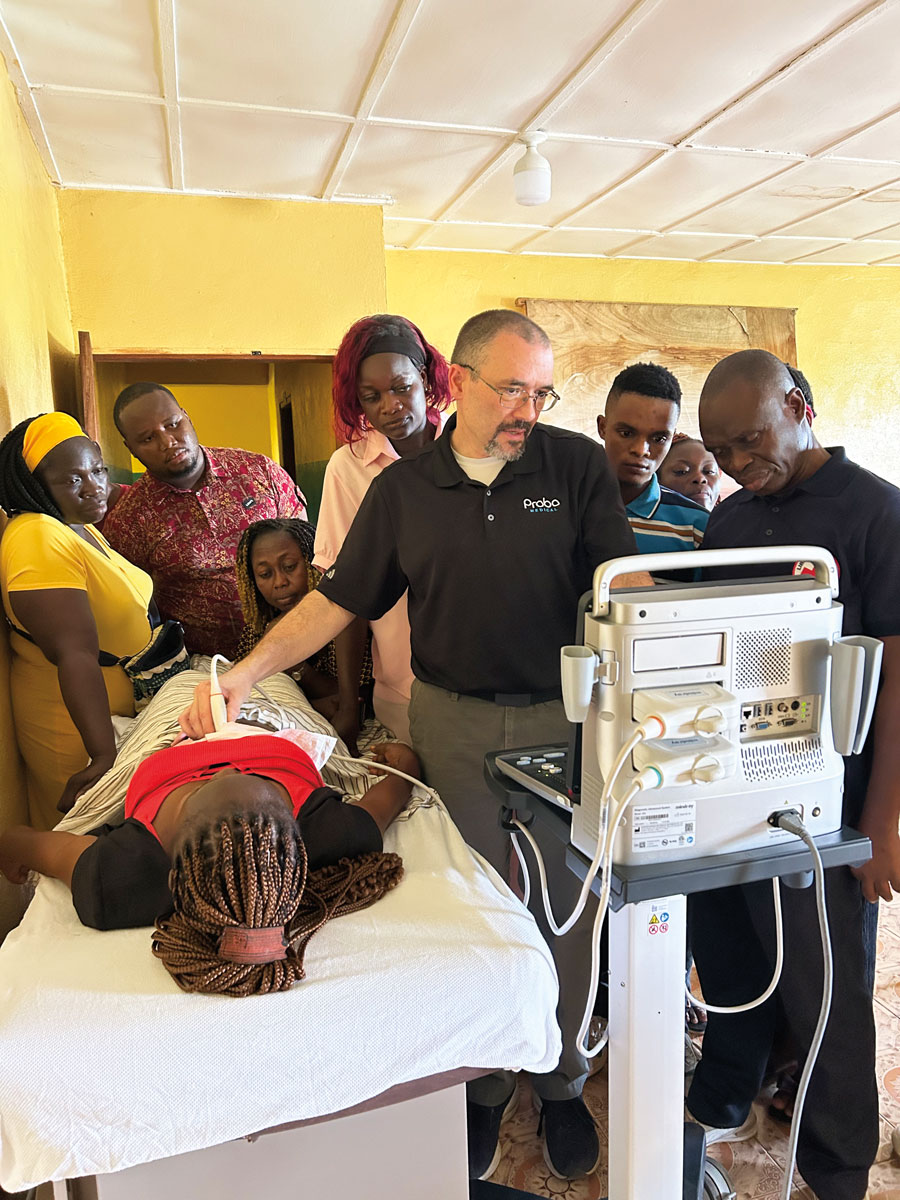
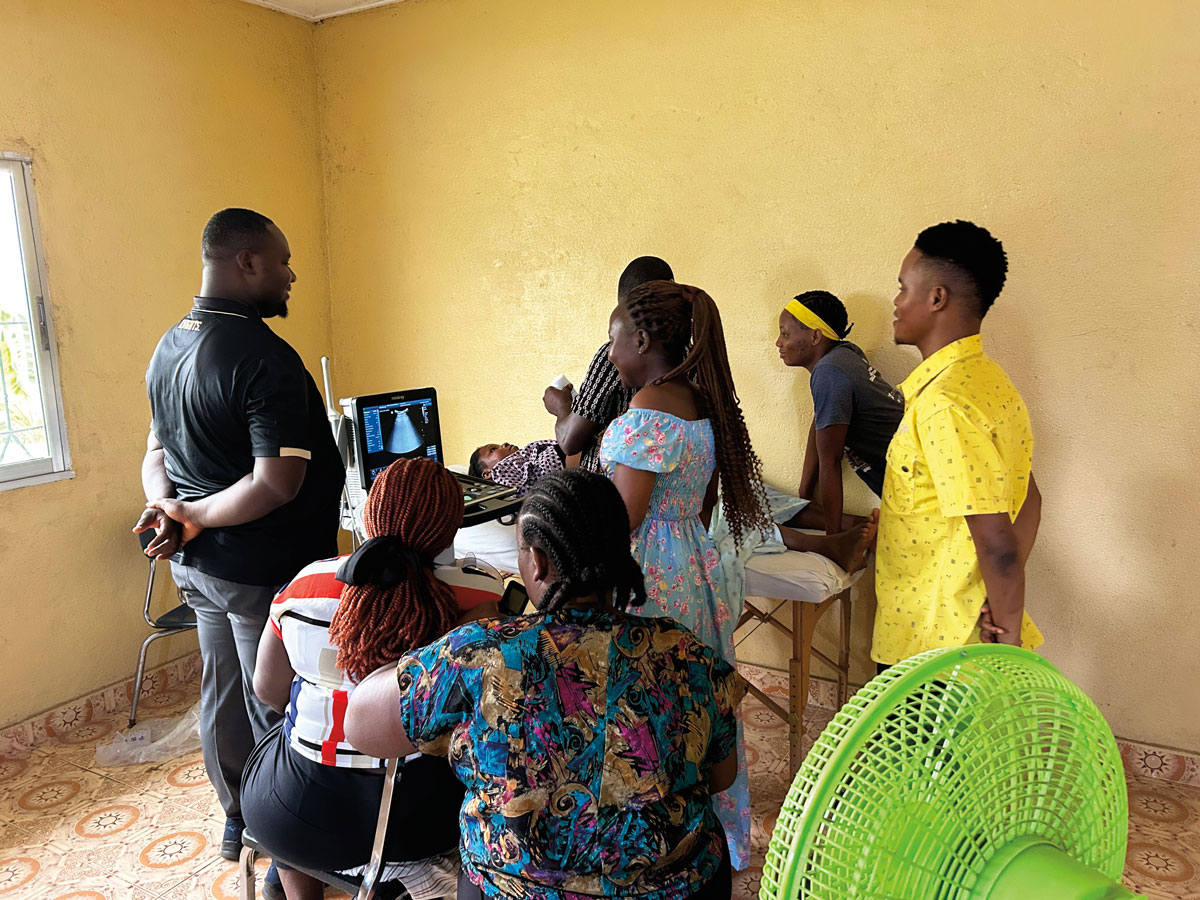
Over the course of two weeks, Jan. 24 through Feb. 8, Zentz trained 12 physicians and nurses from hospitals and clinics throughout the region and the Ministry of Health with nothing more than donated textbooks, a chalkboard and handwritten notes.

The first day of class was spent going over the fundamentals of ultrasound and overviewing the anatomy and pathologies of the organ systems they would be scanning. Zentz said the lecture portion of the training went much faster than typical due to the nature of the trainees – all established medical professionals with a solid foundation of anatomy and physiology. Scanning began on the second day, and thanks to radio advertising, an outpouring of locals gave the technicians plenty of learning opportunities.

“We had two exam beds set up for us to scan patients, and those beds stayed full every day for the rest of the two weeks,” he said. “By the end of the training, we had scanned over 300 individual patients, many of whom ended up with multiple exams. For those unfamiliar with ultrasound exams, that is a lot of patients. A quick exam usually takes about 30 minutes, with many exams taking an hour or more. Couple that with the fact that these were ultrasound students who had minimal to no experience with ultrasound before we started, and those numbers are truly amazing. We worked very hard for long hours and squeezed as much as we could into the two weeks we had available.” 

Some of the patients were sent for follow-up evaluation or with instructions on next steps. Zentz credits the qualified physicians in the room as a huge help in assisting with the aftercare of patients.

“The nurses and staff I spent time with on my last trip were amazing,” he said. “They are hardworking and smart, absorbing an incredible amount of information and putting it to practice to help save lives. The students are as passionate about the mission as I am. Without their hard work and drive, everything I am doing is worthless. I am providing the one little piece that they can’t get; they are doing the rest.”

The training, he added, was a huge success. Zentz regularly receives questions from some of the trainees about their findings. He said it is rewarding to see the medical professionals putting their skills to use.

“My goal in Liberia is to create something that is self-sustaining,” he said. “It is not tenable to keep going out to train small groups. What I want is to create the next generation of educators who will go on to teach these skills to more people. This can be a force multiplier. By focusing on a small number of highly motivated professionals, I am planting the seeds for something that will continue long after I am unable to travel out there. As a sonographer, I can touch eight to 15 lives per day with my work. As a trainer of sonographers, I can touch thousands of lives every day.”

But, as Kurtz said, Zentz’s impact doesn’t stop in the present day.

“He is changing the future of the medical field in Liberia,” she said. “He trained people from the Ministry of Health, who oversee all of Liberia’s medical facilities and healthcare professionals. He trained doctors at the largest teaching hospital in Liberia. This is truly life changing. My heart breaks for Liberia. Eighty percent of our children in the orphanage home are here now because their mothers died in childbirth. Many of the deaths could be prevented through ultrasound screening and proper antenatal healthcare.”

“Eighty percent of our children in the orphanage home are here now because their mothers died in childbirth. Many of the deaths could be prevented through ultrasound screening and proper antenatal healthcare.”

WHAT’S NEXT?

There are big things on the horizon for continued expansions in Liberia. Hope and Care for Children recently secured a donation for building and opening a college. The organization aims to start with medical and trade skills and hopes to have the only ultrasound program in the country within a couple of years.

“Our goal is multifaceted and ambitious,” Kurtz said. “I would say next on our list is to establish a university in Liberia, where we can offer excellent education at an affordable cost. It is challenging to find excellence, especially in the health and educational sectors. Our goal is to add Hope Lutheran Technical University, which we hope will include a sonography school. The university will also have business and education colleges and a few technical skills such as tailoring, mechanics, electric and plumbing. Corruption and a destroyed infrastructure keep the masses in a constant state of vulnerability.”

Zentz and his wife reside in Spring Hill, Tennessee. They have three children: a son, who serves in the Air Force and resides in North Dakota, and two daughters, who live close enough to visit. His wife, he said, “holds down the fort and is the rock I rely on to keep me grounded and sane when work pulls me all over creation.”

One Discipline, Many Paths

John Zentz thought he had a plan:

1. Earn a degree in radiography at Pennsylvania College of Technology. 2. Become a staff radiographer. 3. Support a family. He was successful, graduating in 1994 and working as a radiographer – a role that he said he wouldn’t hesitate to fill again, if needed.

Little did Zentz know that a two-year degree in radiography was opening a door to multiple career pathways; specifically, for him, sonography and nondestructive testing.

“John is the perfect example of where a career in radiography can take you,” said Christine L. Eckenrod, Penn College’s director of radiography. “Many people think of taking X-rays of broken bones or of the chest when someone has lung disease, but it is so much more than that. Making his way to nondestructive testing is unique, as there is no requirement to be a radiographer since the imaging is not on humans, and it is a pathway not many radiographers would think of. To be able to take his skills and implement them across career fields is inspirational.”

The possibilities for radiography graduates are endless, she added, with most starting in radiography as a technologist and later branching into CT, MRI and interventional radiology with on-the-job training and continuing education. Other options (with additional education) include ultrasound, radiation therapy, dosimetry, nuclear medicine and radiologist assistant.

“Graduates are eligible for jobs with the state and federal radiation protection agencies, manufacturers of radiology equipment, professional organizations, higher education and so much more,” Eckenrod said. “If students have a love for science and a desire to help others and make a difference in patients’ lives, then this is the career for them.”

For those wishing to use X-ray technology in the industrial setting, as Zentz did when medical imaging work was unavailable, Penn College offers an associate degree in nondestructive testing.

Nondestructive testing techniques are used by certified inspectors to identify defects in welded joints before they fail. Throughout Penn College’s two-year degree, students earn essential hours toward American Society of Non-Destructive Testing certification. Coursework covers radiation safety, radiographic testing, ultrasonic testing and welding for NDT.

Although Zentz’s story is not typical of someone with a radiography degree, welding instructor Michael J. Nau said radiology (the interpretation of medical images) and X-ray (the capturing of medical images) is the same in the medical field as it is in an industrial setting.

“X-raying legs, arms and metal welds is very similar,” he said. “A crack in a bone will look similar to a crack in a weld. We are looking for areas that have cracks or holes in a weld or other things that could have been put there by the welding process.”

Nau said students should consider adding NDT to their academic journeys because it opens doors that they may not see early on.

“Most every weld made in industry needs to be inspected,” he said. “Whether that is just a visual test or X-ray for a look at the internal makeup of the weld, NDT needs to be done somewhere along the way. Having a background in NDT will give them more opportunities to select from upon graduation.”

A student in Penn College’s nondestructive testing major uses ultrasound technology to detect flaws in a weld.

A student in Penn College’s nondestructive testing major uses ultrasound technology to detect flaws in a weld.