
Human Services & Restorative Justice
About this program
With a degree in Human Services and Restorative Justice, you’ll have an opportunity to help and make a true difference. Your work will empower others, inspire change, contribute to healthy communities, and promote advocacy.
At Penn College, you’ll join a community of tomorrow-minded students and instructors dedicated to transforming tomorrow. In coursework and internships, you'll learn how to apply a well-rounded approach to enhance services for those who need them most. And thanks to small class sizes, an immersive approach to learning, and expert faculty by your side, you’ll have the skills and confidence to spark change in this rewarding field.
You'll be prepared to address substance abuse, family violence, counseling, policing, and aging in diverse professional settings such as probation services, group homes, mental health centers, and children and youth services agencies.
Join the Penn College Human Services & Restorative Justice Community 

Ethical Standards, Background Checks and Clearances
The Human Services and Restorative Justice program abides by the National Organization for Human Services (NOHS) ethical standards, which can be found here. Additionally, field experiences and internship sites may require background checks and clearances. Learn more.
Next steps...
You're on your way to becoming a tomorrow maker.
State-of-the-Art Learning Labs
3
Immersive In-Field Placements
Flexible Curriculum
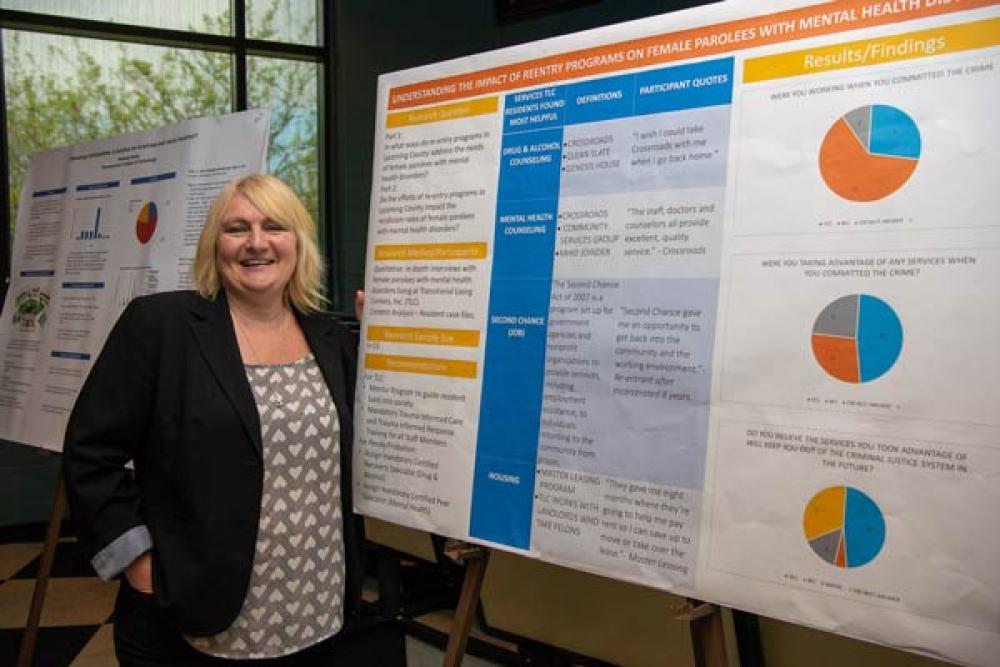
Careers
- Social services caseworker
- Drug & alcohol counselor
- Youth development specialist
- Probation officer
- Restorative justice coordinator
- Parole officer
- Police officer
- Corrections officer
Courses
At Penn College, we believe your educational experience should go beyond specialized skills. Real-world ready means taking a broader approach that builds communication skills, inspires collaboration, and encourages exploration of arts, history, and science.
Specialization requires in-depth knowledge and high-level proficiency. Students learn and apply major-specific concepts, skills, and methods.
- HSJ115Introduction to Human Services & Restorative Justice
- SOCANTSelect One Course: SOC111 or ANT113
- HSJ120Introduction to Interviewing Skills & Intake Processes
- HSJ212Diversity & Inclusive Practices
- HSJELCHuman Services and Restorative Justice Application Elective
- HSJ223Assessment, Case Management & Crisis Intervention
- HSJ263Criminal Justice
- HSJELCHuman Services and Restorative Justice Application Elective
- HSJ225Counseling Theories & Techniques
- HSJ255Internship I
- HSJ275Serving & Surviving in Human Services
- HSJ261Families in Crisis
- HSJ304Management & Administration in Government & Non-profit Agencies
- HSAELCHuman Services Application Elective - 300 Level
- HSJ302Trauma-Informed Care
- HSJ312Community, Advocacy & Change
- HSBELCHuman Services Application Elective - 400 Level
- PSC141State & Local Government
- HSJ420Contemporary Issues in Human Services & Restorative Justice
- HSJ401Legal Advocacy
- SOC313Research Methods
- HSJ455Internship II
- HSJ495Capstone
Perspectives are points of view, offering a variety of ways of understanding, interacting, and influencing the world. Students identify, explain, and utilize the approaches used by academics and professionals to study, analyze, or understand problems, and offer solutions.
On the Podcast
Dr. Craig Miller, History Professor, and recent Human Services & Restorative Justice grad Ashlee Felix-Taveras discuss prison education and restorative justice in this can't miss episode of the Tomorrow Makers podcast.
Featured Video
Leadership challenge course
The challenge course is designed to enhance problem-solving, leadership, teamwork and communication skills for students.
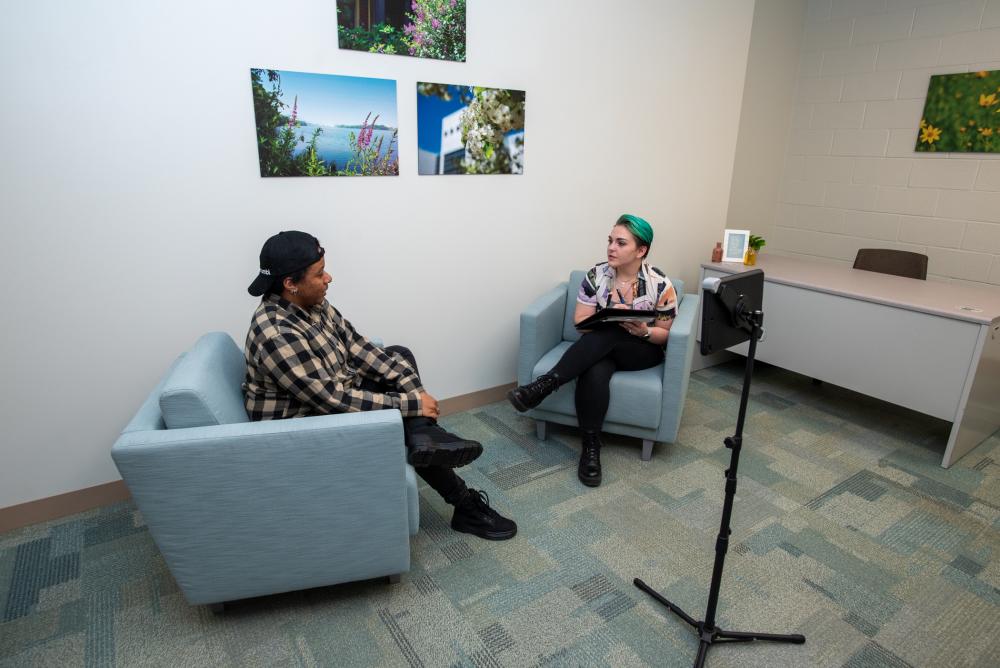
Facilities
Counseling Lab
Also reserved for Human Services and Restorative Justice students, this applied learning space is used for mock one-on-one and group counseling sessions—all of which are captured via video for the future review and can be used as part of a resume. Upper division students play the role of the clients while students taking lower level courses act as counselors.
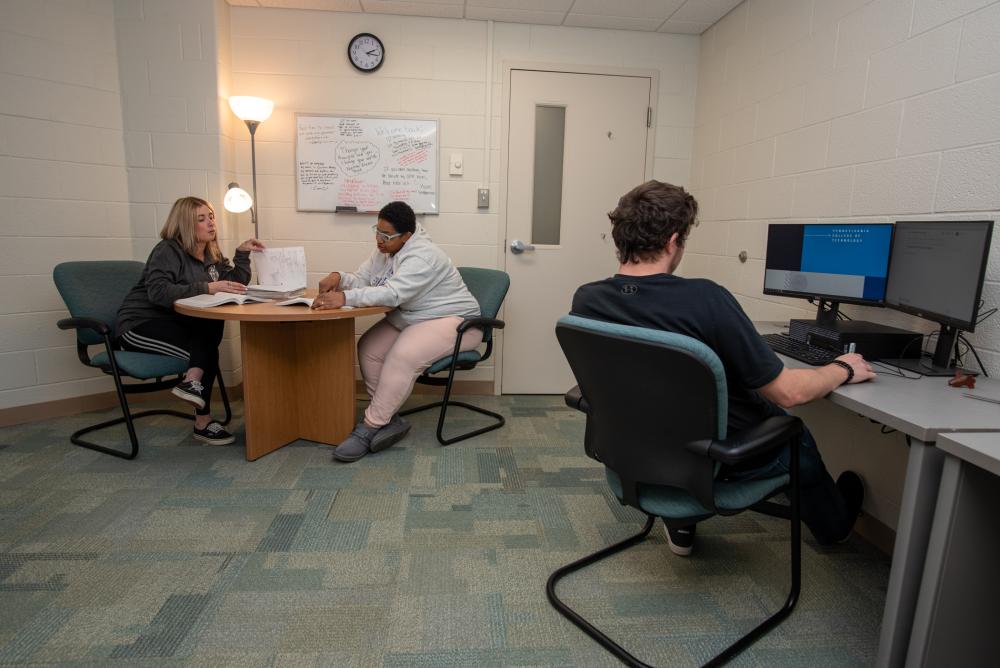
Facilities
Mentoring Lab
Reserved for Human Services and Restorative Justice students, this lab is the premier location for our mentoring program. All incoming students are paired with current students. Together they design a study plan for their time at Penn College. The lab can also be used for study sessions and peer-to-peer advising.
Maker Profiles
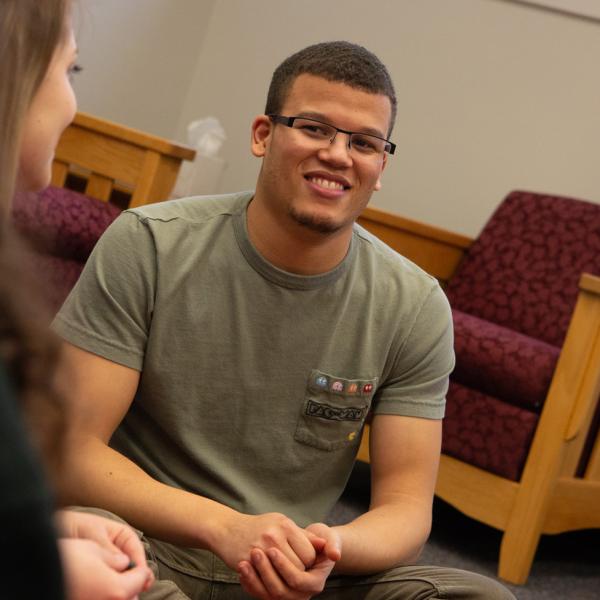
Student
Jerome Frazier
Human Services & Restorative Justice
Jerome's writing a better future for himself by helping others succeed.
Faculty
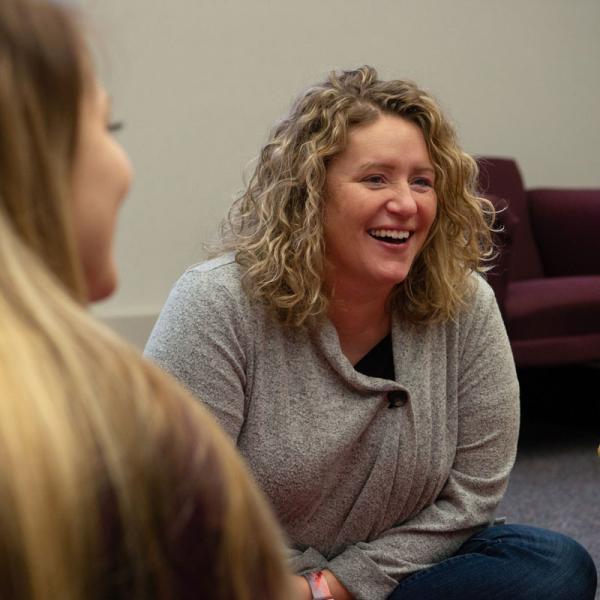
Sarah Moore
Human Services & Restorative Justice
Compassionate and caring, Sarah leads by example, inspiring tomorrow's agents of change.

Student
Colin Browne Jr.
Human Services & Restorative Justice
He knew from a young age that he was destined to make a difference. The Human Services & Restorative Justice program at Penn College was the perfect fit.
Industry
Central PA Food Bank
Accounting & Business Administration
Human Services & Restorative Justice
Information Technology
Industry
Diversified Treatment Alternative Centers
Human Services & Restorative Justice
Student
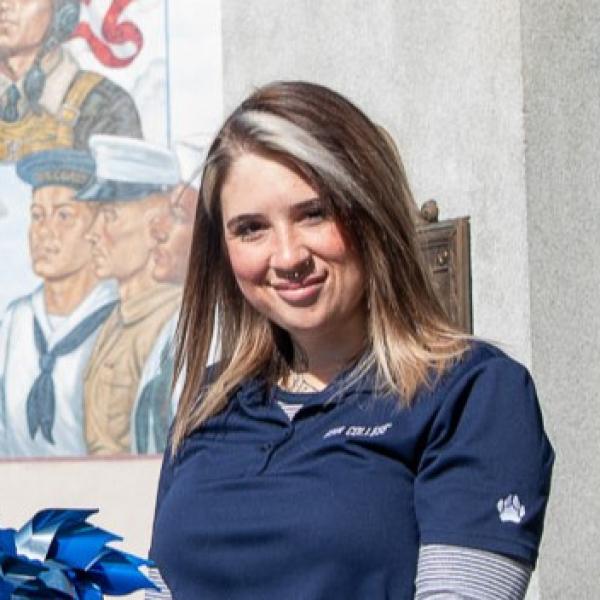
Krystle Richardson
Human Services & Restorative Justice
She found countless opportunities to challenge herself, quench her passion for serving others, and grow with each new semester. Above all, Krystle discovered a home and a community at Penn College.
Industry
GEO Reentry Services
Human Services & Restorative Justice
Industry
Maryland Department of Public Safety and Correctional Services
Automotive
Baking & Culinary
Electrical
Electronics & Computer Engineering Technology
Heating, Ventilation & Air Conditioning
Human Services & Restorative Justice
Information Technology
Welding & Metal Fabrication
Student
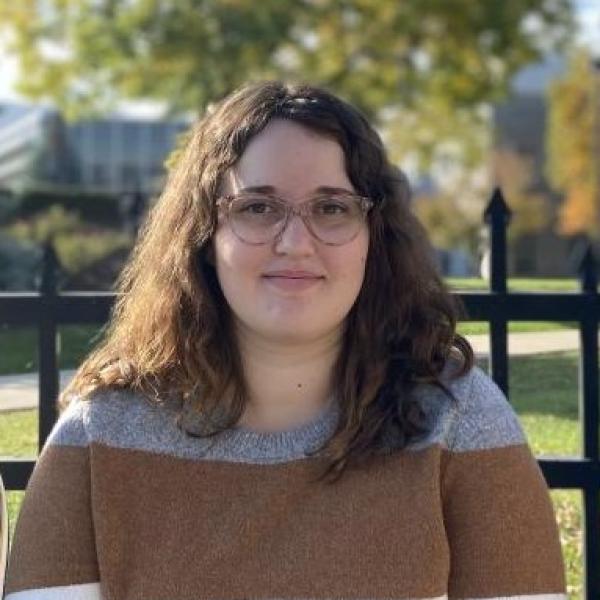
Savannah Zook
Human Services & Restorative Justice
Called to help people, Savannah is honing her skills sets and exploring her professional passions through a variety of academic and career resources across campus. Inspired by faculty and the vast opportunities within her industry, she is well on her way to transforming tomorrow's workforce.

Industry
White Deer Run
Human Services & Restorative Justice
Nursing

Industry
County of Lycoming
Accounting & Business Administration
Emergency Management & Homeland Security
Heating, Ventilation & Air Conditioning
Human Services & Restorative Justice
Individualized Programs of Study
Information Technology
Nursing
Nursing & Health Sciences

Industry
Federal Bureau of Prisons - FCC Allenwood
Human Services & Restorative Justice
Industry
BLaST Intermediate Unit 17
Accounting & Business Administration
Allied Health
Applied Technology Studies
Electronics & Computer Engineering Technology
Graphic Design & Art
Human Services & Restorative Justice
Information Technology
Physical Therapist Assistant
Nursing

Industry
Commonwealth of Pennsylvania
Accounting & Business Administration
Civil Engineering
Construction Management
Electrical
Forestry
Heating, Ventilation & Air Conditioning
Heavy Equipment Operations
Human Services & Restorative Justice
Information Technology
Nursing

Alumni
Kalie Kostelnik
Human Services & Restorative Justice

Alumni
Sydney Telesky
Human Services & Restorative Justice
Her passion for helping older adults began with a part-time job in a nursing home and grew through hands-on experiences at Penn College—including an internship that led to her current role.
Tour Schedule
Seeing is believing.
Think Penn College might be a good fit for you? Make plans to visit and discover what hands-on learning is all about.
Feb 21
Undergraduate Open House
Saturday, February 219 AM - 3 PM
Apr 26
Undergraduate Open House
Sunday, April 269 AM - 3 PM
Immersive Learning
Selfcare is vital to the success of human services professionals. As part of a class activity, student Natalie Schrader, led a guided meditation with a focus and peacefulness and mindfulness. Students participating in the activity shared their take on being a Human Services & Restorative Justice major.
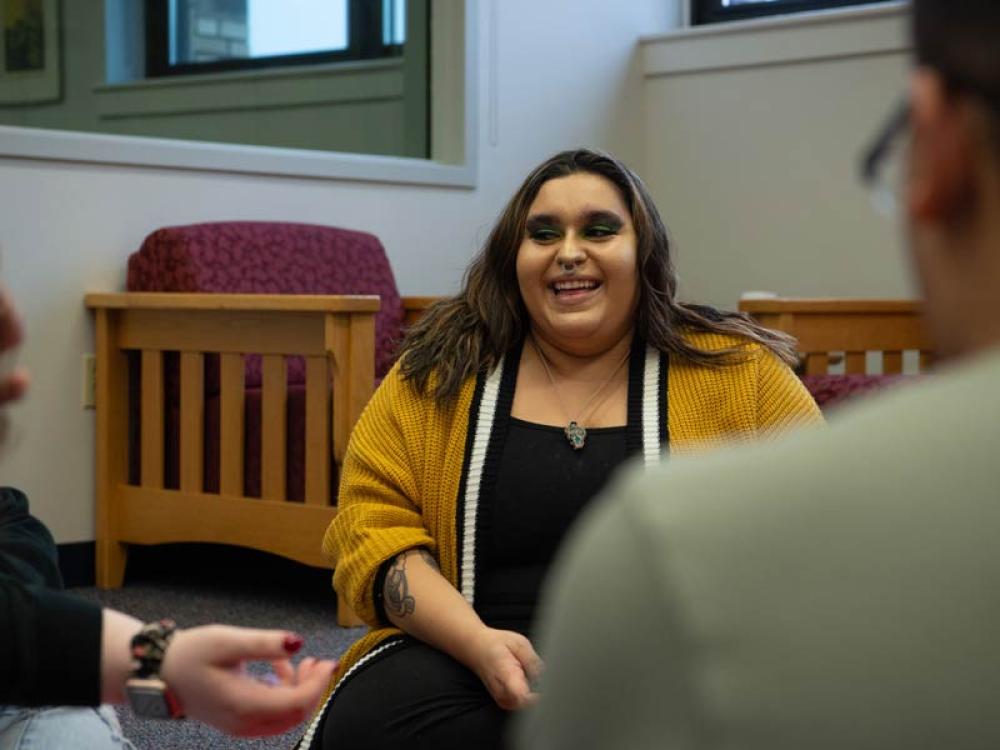
Helping Others
“We need to really make time for ourselves. All of us want to help other people, and that's what this activity is centered around, taking care of ourselves so we can help other people.”
– Natalie Schrader
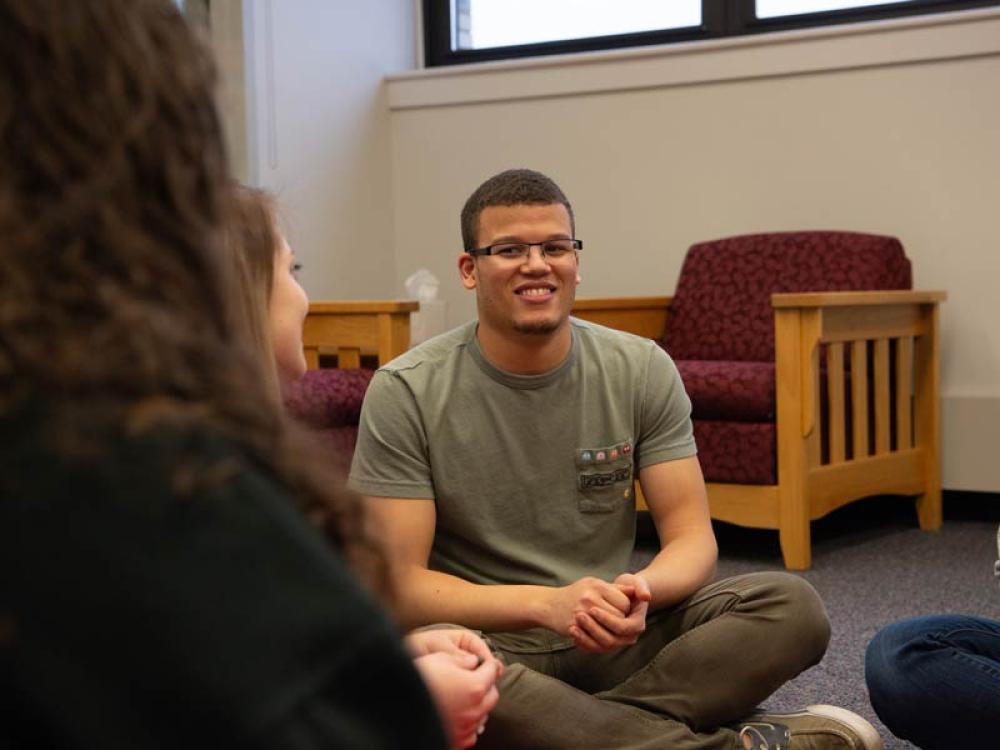
Impactful Moments
“When I first got here, I wasn't too sure what I wanted to do. Dr. Winder sat me down one day and she just said, “tell me your story.” And that was the first time I actually told my story. I believe those were the most impactful moments, just knowing that the faculty cares as much as I do.”
– Jerome Frazier
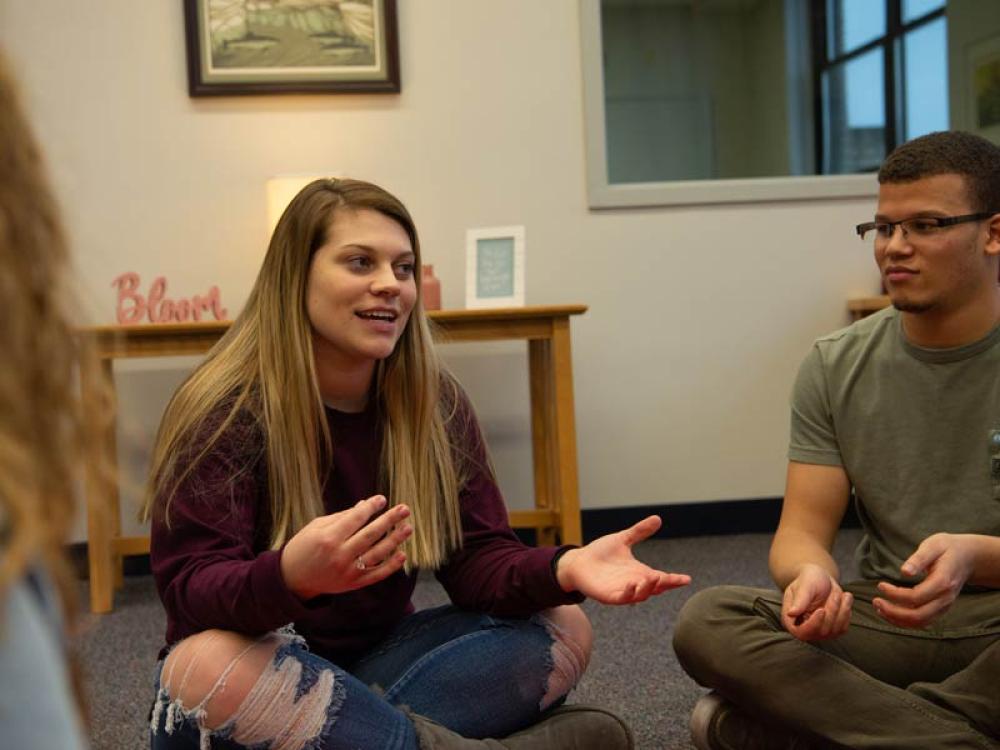
Experienced Faculty
"One of the real-life scenarios that's really impacted me is crisis intervention. I've really gravitated towards that aspect of this major - learning how to respond to individuals who are in crisis. Some of the professors have had jobs that deal with counseling and they share their experiences with us."
– Skylar Bartholomew
Industry Partners
Work with experts to become an expert
Penn College's strong corporate partnerships impact every step of your journey – from your first day in the classroom and labs, to career placement (oftentimes before graduation) and beyond.
Related Programs
Follow your passion

Student Life
Lead and put your skills to the test

National Human Services Organization
The National Human Services Organization has established a code of ethics, which is designed to protect the rights and dignity of human service professionals and their clients. Students are introduced to this early in their coursework and it is reinforced through the internship experience.
Student Organizations at Penn College
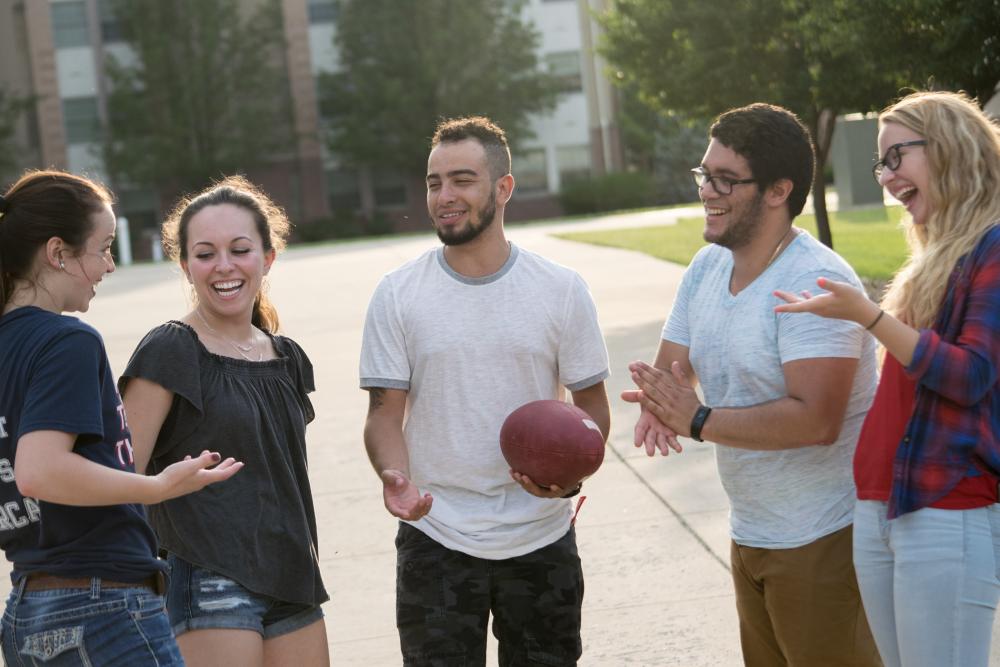
Your college experience is about more than the classroom. Join one of 65+ clubs and organizations, or create your own.
Penn College News

Friday, December 12, 2025
Restorative Justice Week highlights importance of empathy
Friday, November 14, 2025
‘Food4Fines’ kicks off Nov. 17

Tuesday, May 6, 2025
Cross-curricular collaboration explores poverty
Study Abroad
Gain global experience
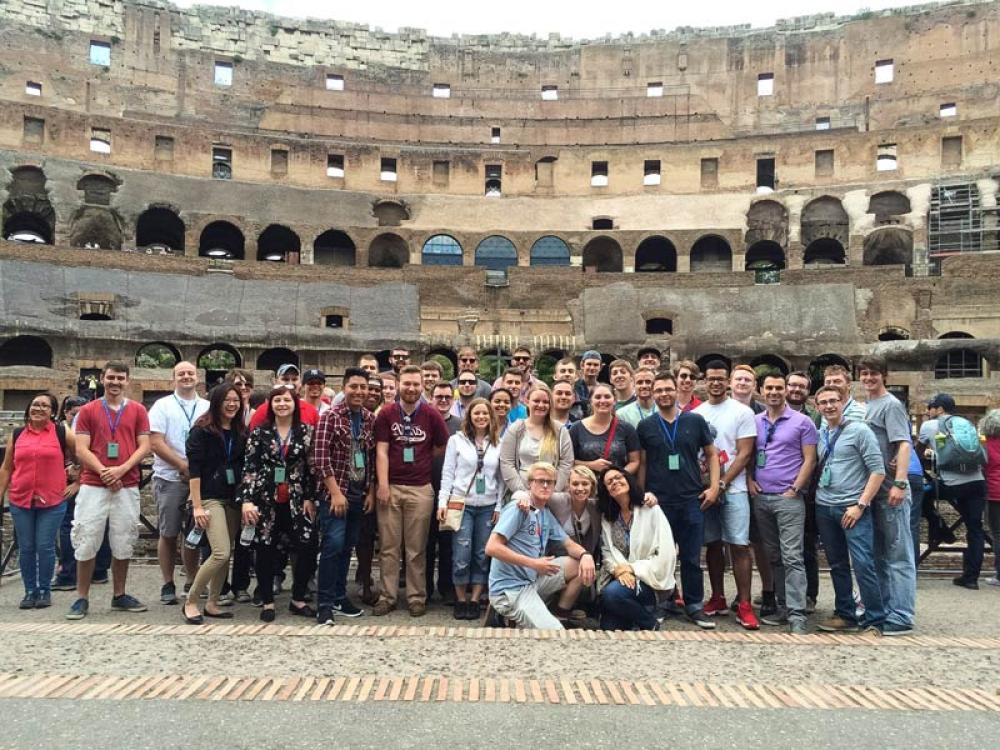
See the world via Williamsport. Take your education abroad and get hands-on experience learning about your industry on a global scale.
Internship
Your knowledge in practice
Internships are key for career preparation. As part of this curriculum, you’ll participate in three in-depth practical learning internships including 30 hours of observation in the community, a 175-hour internship and 350-hour internship.

Student Experience
The community as their classroom
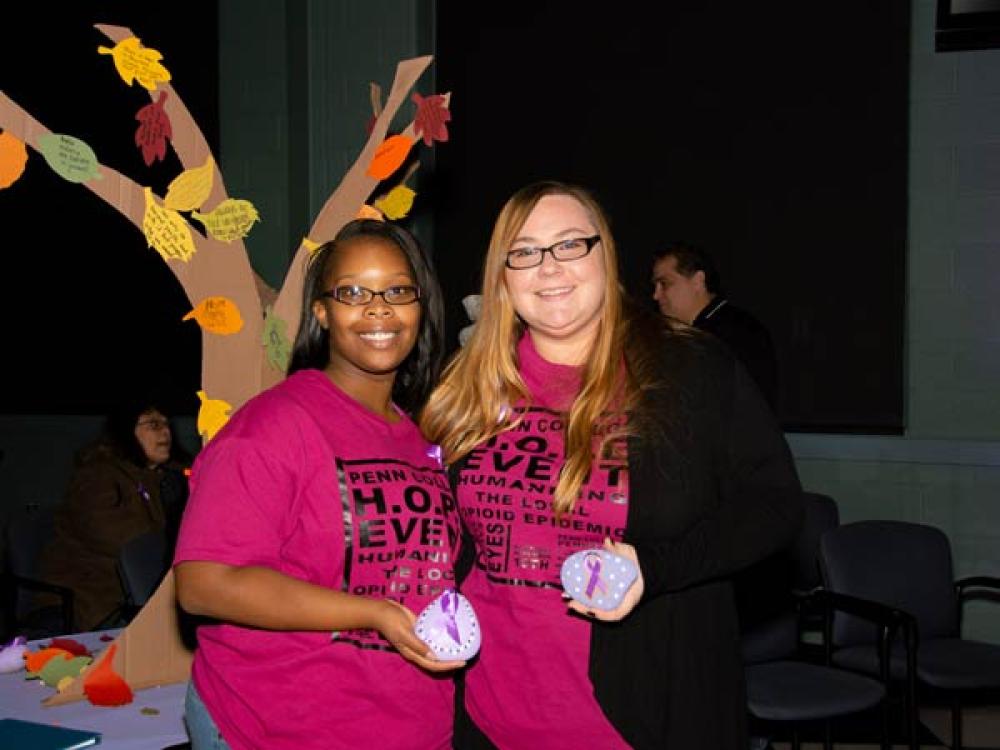
Human Services students host ‘HOPE’ opioid event
This student-organized event was designed to raise awareness and humanize the local opioid epidemic.
More Information
Students must complete all HSJ-designated courses and ENL-designated courses with a grade of 'C' or above. Failure to achieve a grade of 'C' or above in a course after the maximum attempts allowed by College policy, results in withdrawal from the major. Students should work closely with their academic advisors and program faculty to ensure that they are meeting all criteria for satisfactory progress in the program.
Continued progression in the program, to include eligibility for internship courses and graduation, is predicated not only upon satisfactory academic performance, but also upon satisfactory demonstration of professional and ethical responsibility, personal responsibility, and satisfactory demonstration of skills and abilities prerequisite to the ethical delivery of services in the field. For more specific information about the criteria used to evaluate students' progress, a copy of the program manual can be obtained from the School of Business, Arts & Sciences.
The following grading system applies to all HSJ-designated courses for students in the
Human Services & Restorative Justice major:
A= 90-100%
B= 80-89.99%
C= 70 –79.99%
F= Below 70%
Alternative Credit refers to academic credits earned through means other than traditional college course completion, including: credit by exam, articulation, proof of competency gained in high school, work/life experience, and advanced placement.
Visit the Alternative Credit Options page in our Course Catalog for general requirements and procedures and for information on credit through Advanced Placement.
The Human Services and Restorative Justice program abides by the National Organization for Human Services (NOHS) ethical standards, which can be found here. Students in this program must complete a 350-hour internship in addition to the requirements of the associate’s degree. Depending on work site requirements, some of the placements may require some or all of the following background checks: completion of standard basic health appraisal form and receipt of Children's Services Protection Act 33 clearance, State Police clearance, and FBI clearances. Please note that we do not assume responsibility for the requirements of any external organization, and we cannot guarantee placements if the necessary clearances are mandated but cannot be secured by the student.
- Ms. Robin Dadzie, Case Management Supervisor, AIDS Resource Alliance
- Mr. Christopher T Kriner, Detective Sergeant - Criminal Investigations, Old Lycoming Township Police Department
- Ms. Amber B Morningstar, YWCA Program Director, YMCA Northcentral PA
- Mr. Zane R Pardoe, Supervisor of Education, USP Lewisburg
- Ms. Penny L Sines, Social Worker II, DOC SCI-Muncy
- Karey Snook, Counselor, Lycoming County Pre-Release Center
- Nicole J Spring, Esquire, Chief Public Defender, Lycoming County Public Defender
- Ms. Rachel Thompson, Workforce Specialist, CareerLink
- Mr. Joseph J Weber, Permanency Services, Unit Supervisor, Lycoming Children & Youth Services
- Mr. Jeffrey P Wheeler, Assistant Clinical Director, White Deer Run - Allenwood
- Ebony Young, Talent Acquisition Manager, Diversified Treatment Alternative Centers