Game & Simulation Programming
About this program
Whether you dream of launching the next epic video game or hope to make a difference with life-saving simulation programming, your path to a career in the field starts at Penn College. Specialized gaming and simulation design and programming coursework paves the way for a future in this thriving market that spans from commerce and entertainment to training and healthcare.
Next steps...
You're on your way to becoming a tomorrow maker.
4
Specialized Computer Labs
Develop Technical Plus Teamwork Skills
100%
Students Employed Within 3-6 Months After Graduation
Careers
- Simulation developer
- Computer game programmer
- Software application developer
Courses
At Penn College, we believe your educational experience should go beyond specialized skills. Real-world ready means taking a broader approach that builds communication skills, inspires collaboration, and encourages exploration of arts, history, and science.
Specialization requires in-depth knowledge and high-level proficiency. Students learn and apply major-specific concepts, skills, and methods.
- CIT160Introduction to Programming
- EET145Networking I
- CIT260Programming II
- CIT180Introduction to Database
- CIT224Game & Simulation Design Principles I
- CIT360Data Structures & Algorithms
- CIT246System Analysis I
- CIT281Secure Database Development
- CIT243Discrete Structures in Computer Applications
- CIT216Game Programming
- MGT115Principles of Management
- CIT240Introduction to UNIX/Linux
- CIT324Game & Simulation Design Principles II
- CIT230Fundamentals of Information Security
- CIT444Game & Simulation Seminar
- CIT412Computer Simulation Applications
- CIT382Programming for Mobile Devices
- CIT351Web Systems & Technologies
- CIT365C++ Game Development
- CIT419Gaming & Simulation Capstone
- CIT344Operating Systems Concepts I
- MGT410Management of Organizational Behavior
Perspectives are points of view, offering a variety of ways of understanding, interacting, and influencing the world. Students identify, explain, and utilize the approaches used by academics and professionals to study, analyze, or understand problems, and offer solutions.
Foundations are the practical, intellectual, and social skills: communication, collaboration, critical and ethical thinking, quantitative thinking, and technological literacy that are crucial to every student at every stage of education and at every stage of life.
- CSC132Introduction to Gaming & Simulation
- MTDELCMath Elective (MTH180 or Higher)
- ENL111English Composition I
- CSC124Information, Technology & Society
- CSC142Interactive 3D Modeling
- MTCELCMath Elective (MTH182 or Higher)
- ENL201Technical & Professional Communication
- SPC101Fundamentals of Speech
- MTH255Linear Algebra
- MTH161Statistics for STEM Fields with Computer Applications
What's the difference between Information Technology and Computer Science?
Computer science (CS) is more theoretical, with increased math requirements. Many CS programs have a core focus on programming with a heavy emphasis on algorithm design and computer science theory.
While IT still includes theoretical topics, it is more applied and people-focused, making the tools of computing accessible to fit the needs of people and organizations, as well as creating computing tools and systems to meet user needs. IT is a bit broader at its core as it covers a variety of foundational skills in programming, networking, databases, modern platforms, systems analysis, and cybersecurity, while also allowing for specialization in a given IT area.
Virtual Tour
Information Technology
Get a glimpse inside the labs where future IT professionals learn how to install, configure, and maintain computing systems. Meet Dr. Sandra Gorka, Associate Professor of Computer Science. And check out everything from gaming and simulation spaces to the hands-on labs decided to cyber security, networking, database management, and Linux systems.
Facilities
Game & Simulation Labs
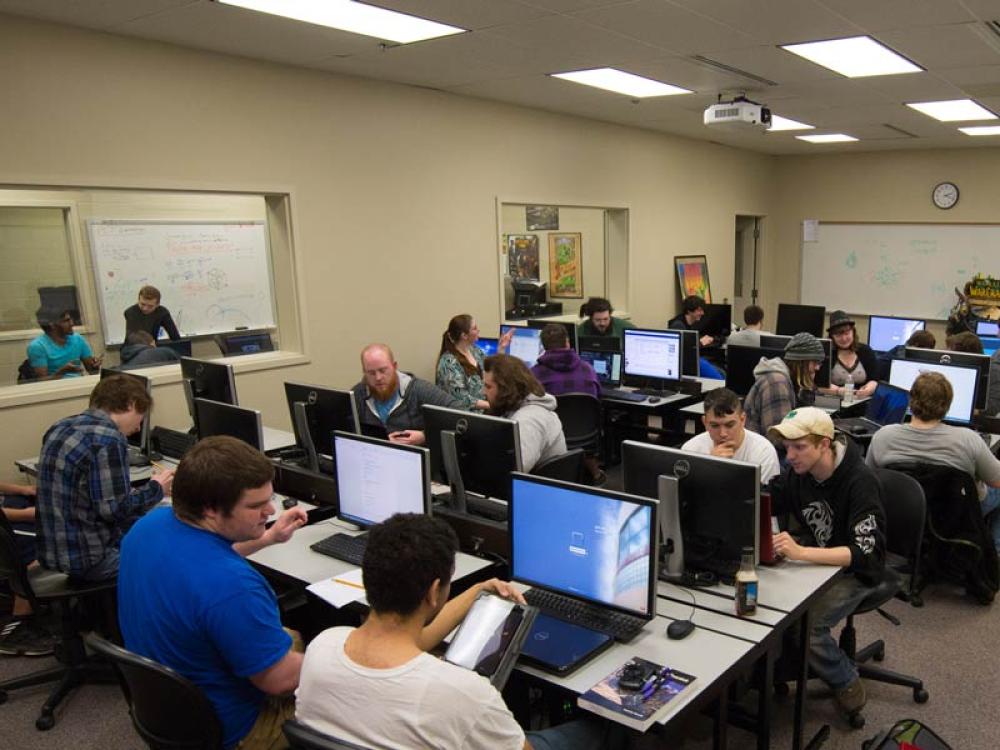
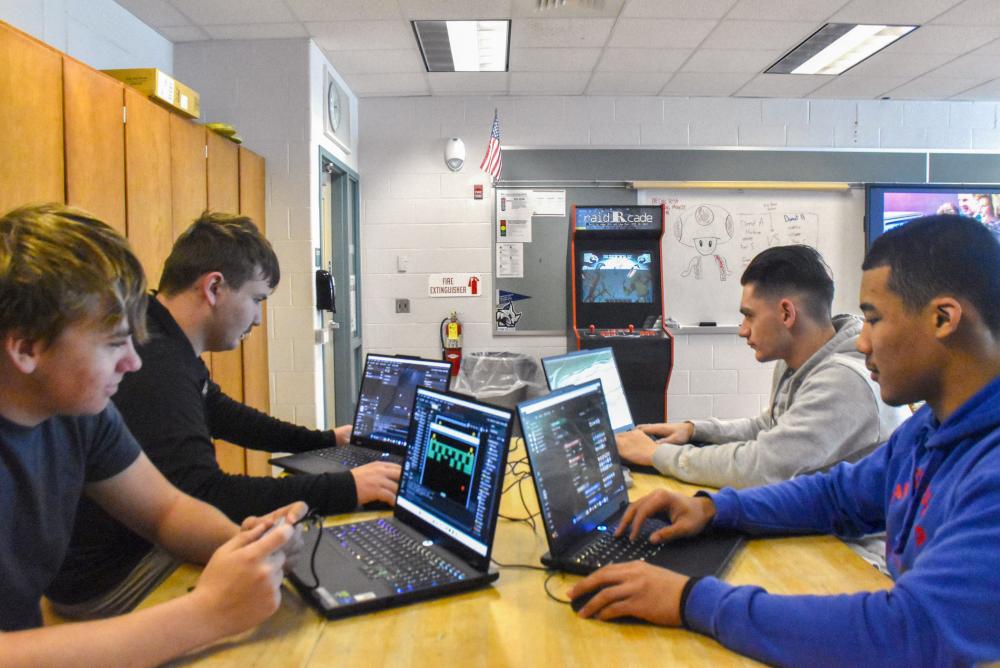
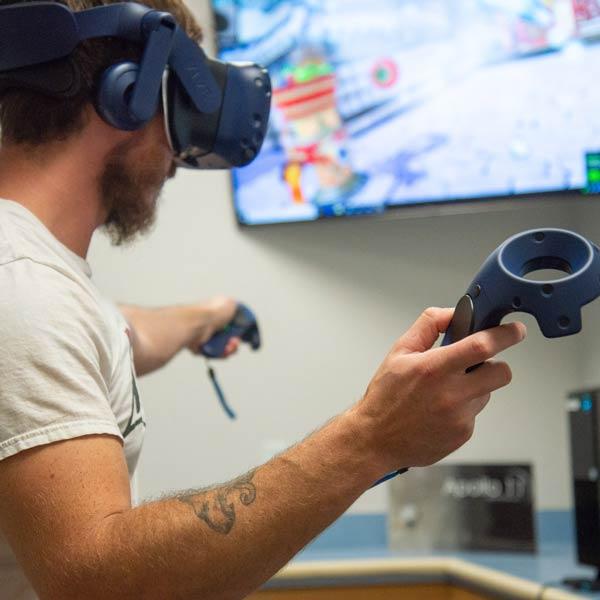
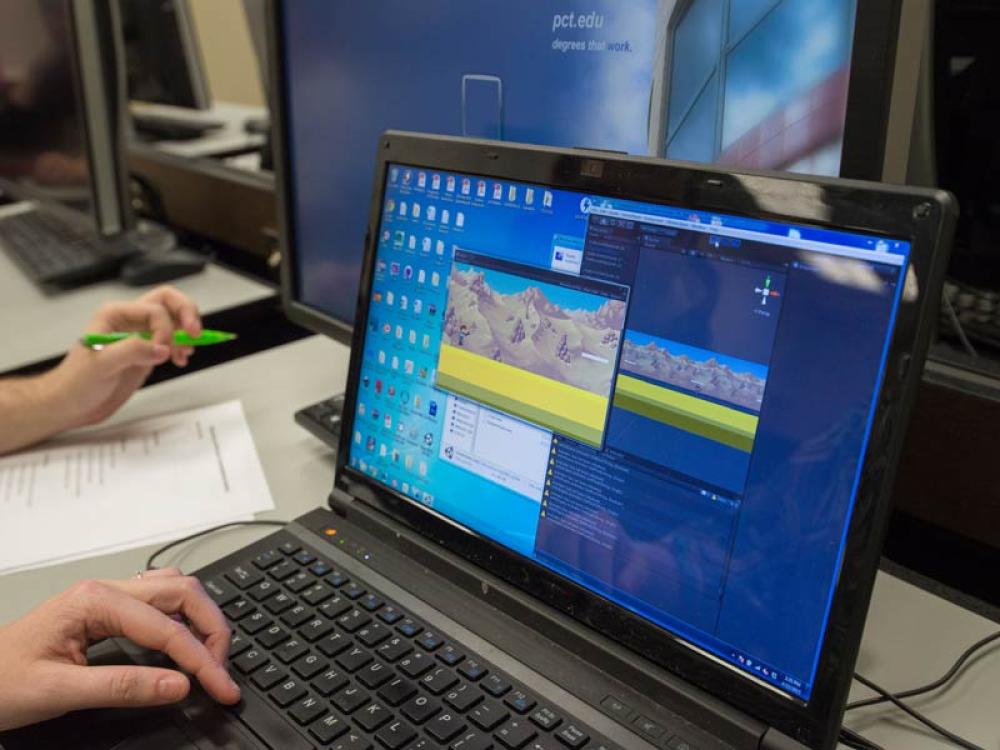
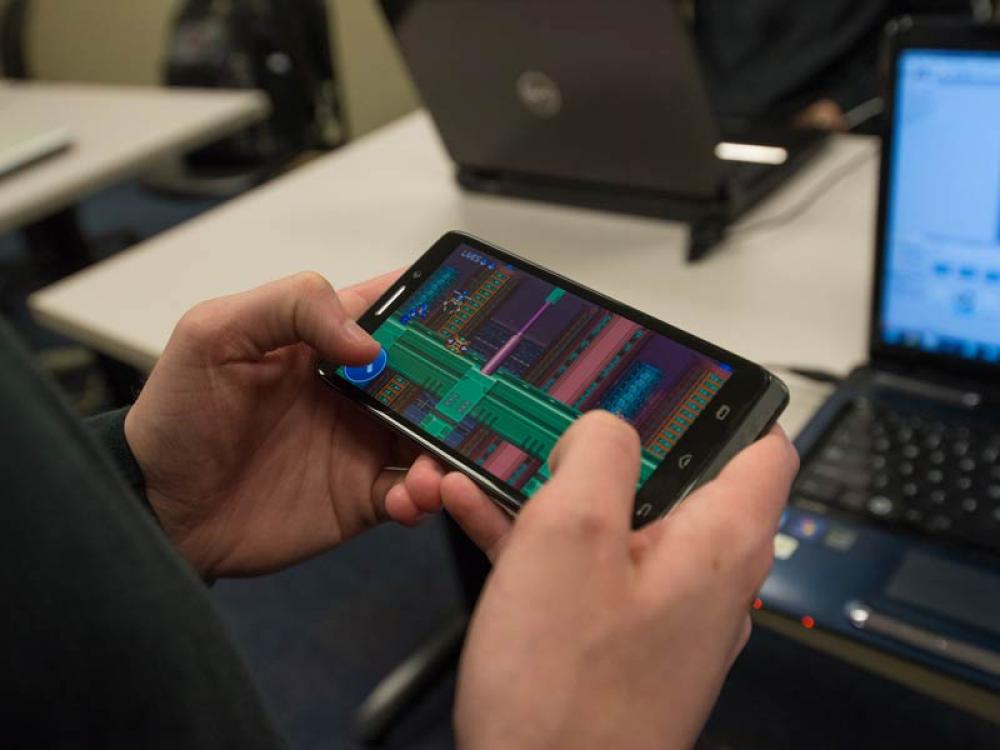
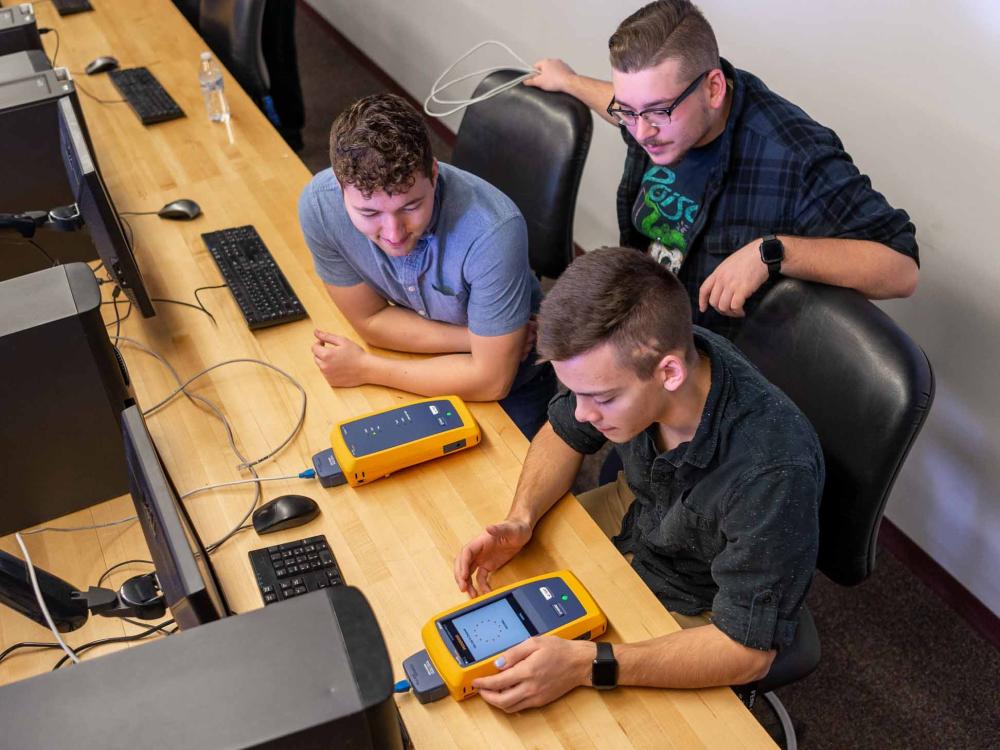
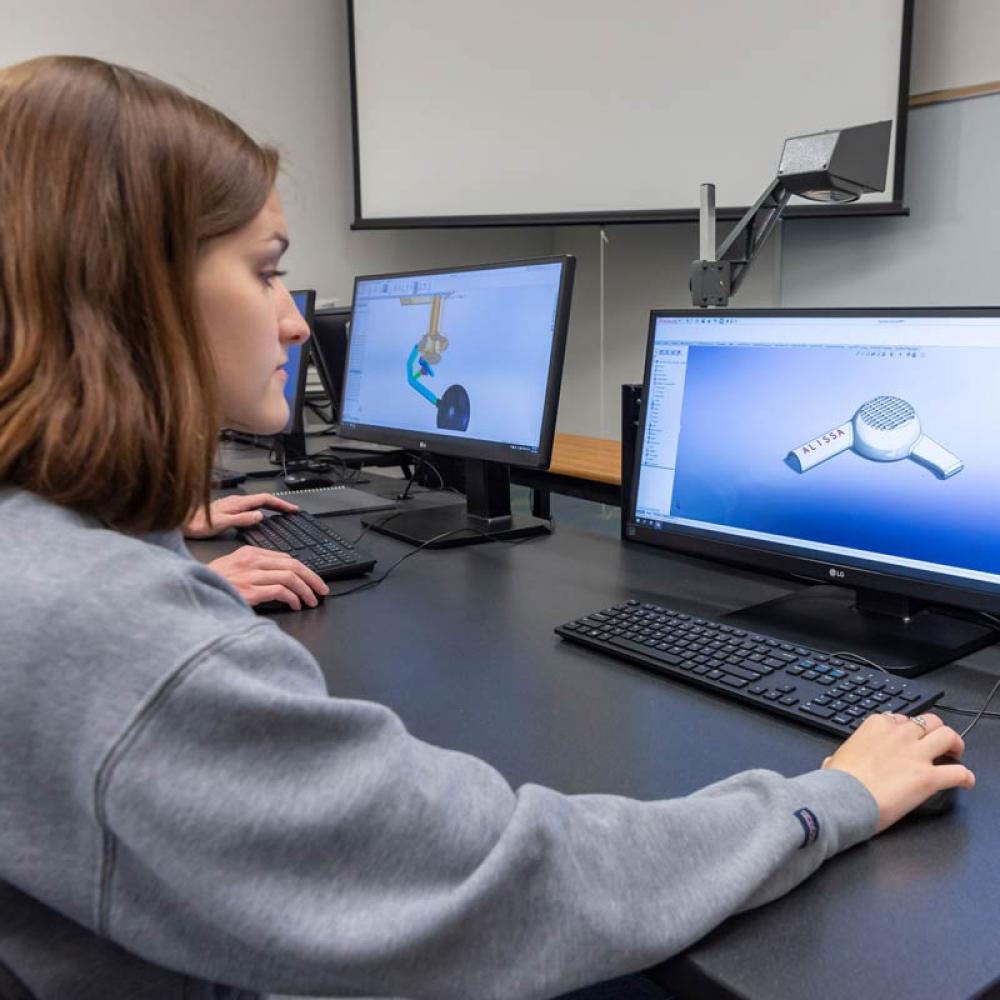
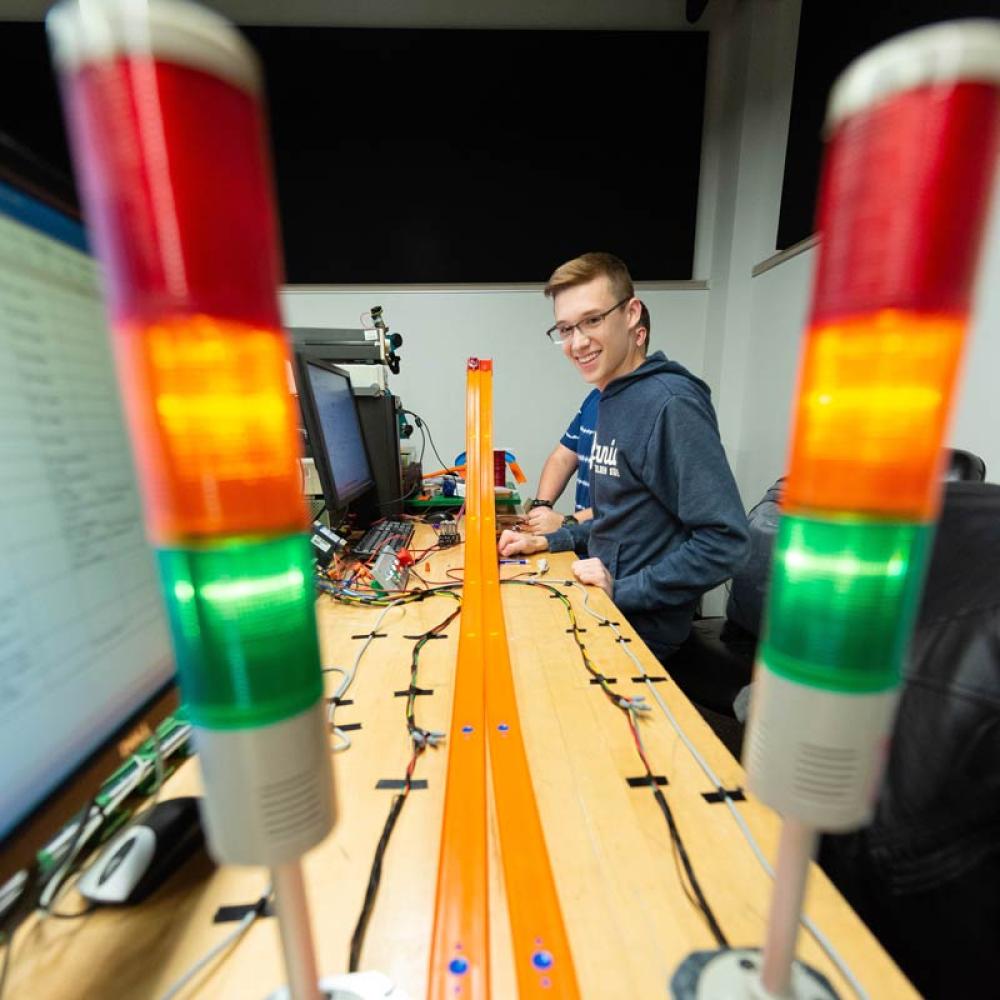
Apply theory to the real thing in our specialized IT labs. Here, you’ll have access to both physical and virtual labs designed for networking, IT security, operating systems, and gaming. Apply the principles of ethical hacking, intrusion detection, and digital forensics in both physical and virtual environments. Labs also allow students to create 3D models, investigate hypervisors, build networks from bare metal to full production, and simulate a host of applications and network configurations.
Maker Profiles
Featured Video
Women In STEM
What does it take to succeed in a STEM career? Curiosity. Critical thinking. A can-do spirit. And an educational experience that meets your passion head-on. Here, you’ll meet a community of innovators. Future pioneers who are learning by doing. Breathing new life into old concepts. Testing theories. And breaking barriers. Because the more you explore, the more you grow. And the bigger difference you can make.
Tour Schedule
Seeing is believing.
Think Penn College might be a good fit for you? Make plans to visit and discover what hands-on learning is all about.
Feb 21
Undergraduate Open House
Saturday, February 219 AM - 3 PM
Apr 26
Undergraduate Open House
Sunday, April 269 AM - 3 PM
Related Programs
Follow your passion
Student Life
Lead and put your skills to the test
Game Development Club of Penn College
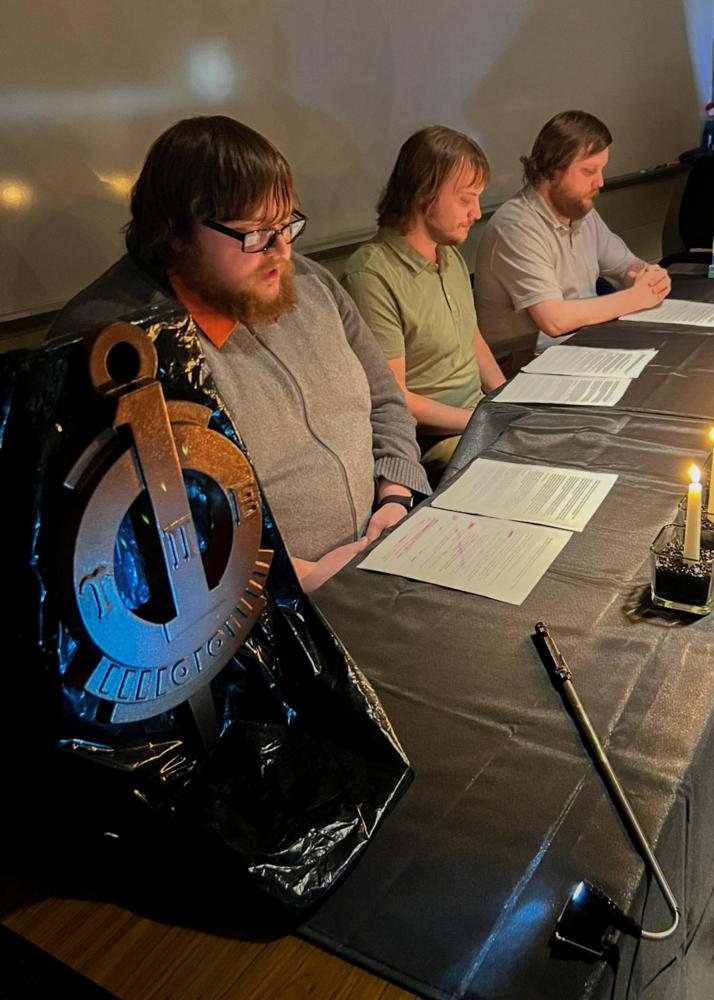
The Game Development Club is a platform to share lessons, news, updates, and discussions on the game development industry. The club encourages and assists students in the creation of individual and class-based game development and promotes professional development.
Gamers’ Guild
Gamers' Guild is devoted to the continued enjoyment of classic games ranging from pen and paper RPGs like Dungeons and Dragons to classic console games, such as Nintendo and other major game producers.
Student Organizations at Penn College
Your college experience is about more than the classroom. Join one of 65+ clubs and organizations, or create your own.
Penn College News
Friday, September 5, 2025
Alpha Chi members collect supplies for Kenya medical clinic
Wednesday, June 11, 2025
Penn College prof to fulfill ‘dream’ with Challenger Game
Tuesday, April 29, 2025
'Inspired by IT'
Study Abroad
Gain global experience
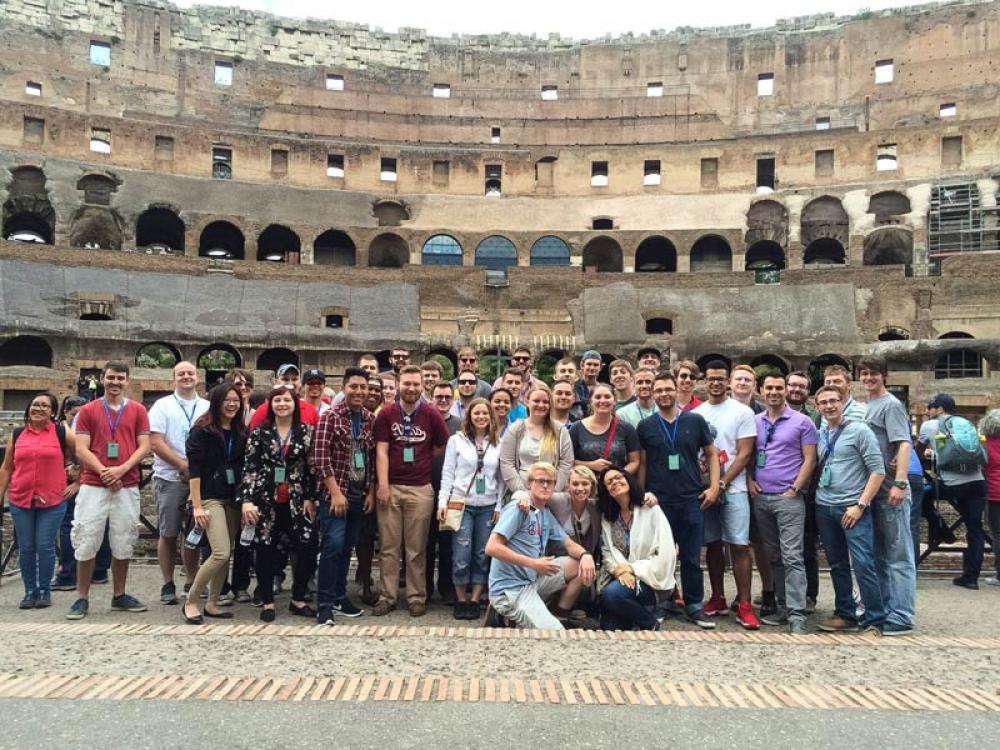
See the world via Williamsport. Take your education abroad and get hands-on experience learning about your industry on a global scale.
Internship
Your knowledge in practice
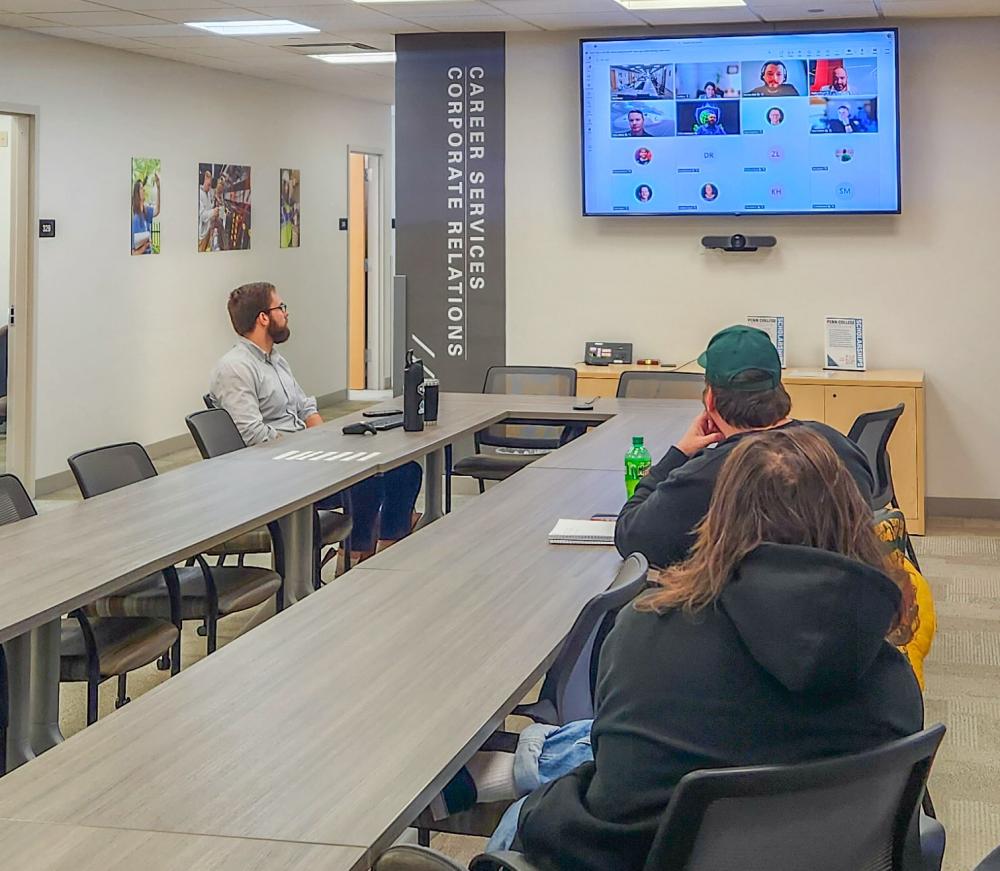
Internships are key for career preparation. Apply your knowledge to the workplace and learn about the industry first-hand.
Student Experience
The community as their classroom
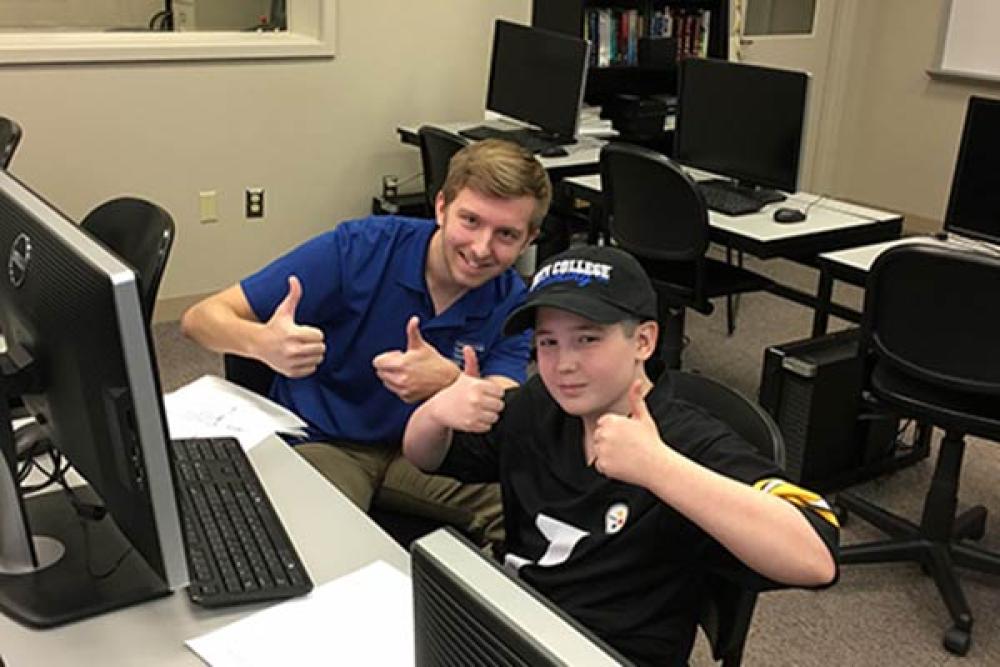
Gaming student mentors teen
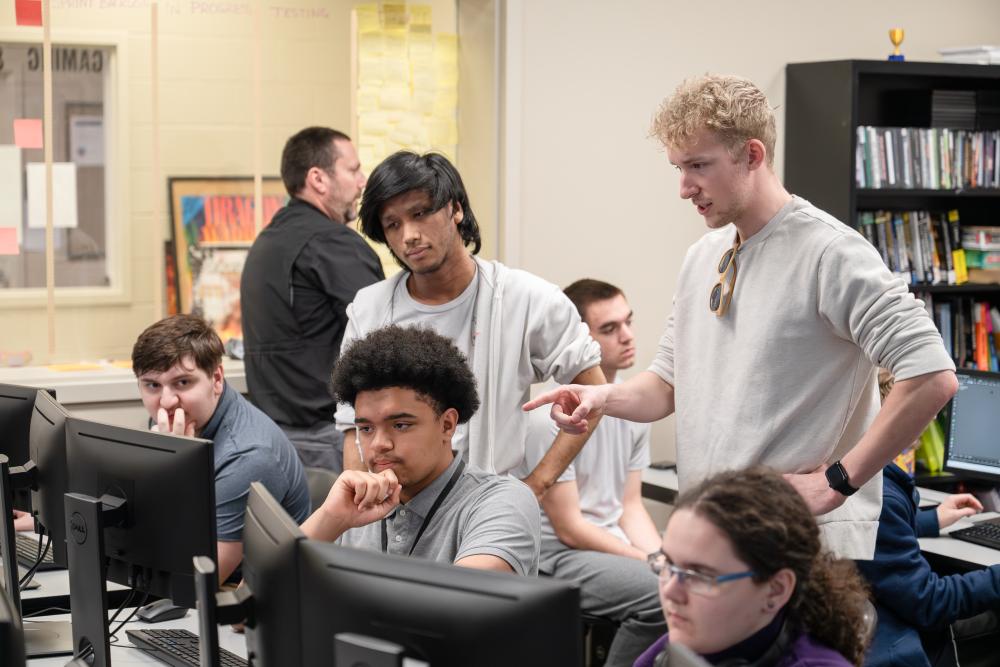
The gaming and simulation lab hosted WBRE-TV’s monthly segment that showcases children seeking a permanent family. James Temoshenko, shares his expertise with 13-year-old Mitchell.
More Information
Students must complete all required major courses in the Game and Simulation Programming major (those with the alpha-designators CIT, CSC, EET, and MTH) with a grade of “C” or higher.
Students seeking entrance through transfer into Game and Simulation Programming major should strive to take courses at their respective institutions that provide competency in the following areas: pre-calculus; programming (two semesters minimum - same language preferred); database; system analysis; and networking. Students transferring from institutions that have articulation agreements with Penn College should seek advisement from their respective institutions.
A laptop/notebook computer is required for enrollment in all Information Technology majors including the Game and Simulation Programming major. Laptop specifications
Uniforms and tools are available for purchase through The College Store and Penn State Computer Store .
Alternative Credit refers to academic credits earned through means other than traditional college course completion, including: credit by exam, articulation, proof of competency gained in high school, work/life experience, and advanced placement.
Visit the Alternative Credit Options page for requirements and procedures and for information on credit through Advanced Placement.
- Mr. James R Ankers, CISSP, CISA, IT Specialist (INFOSEC), United States Navy
- Mr. Daniel J Clarke, '07, Senior Solutions Architect, Arraya Solutions
- Dr. Todd W Griffith, Chief Technology Officer, Discovery Machine Corporation
- Mr. Brandon J Howe, '01, Sr. IT Analyst, Anadarko Petroleum Corp.
- Dr. Karl M Kapp, Assistant Director, Institute for Interactive Technologies, Bloomsburg University
- Mr. Brad E Lenig, 2018, Senior Enterprise Network Engineer, Pennsylvania College of technology
- Dr. Krish Pillai, Ph.D., Assistant Professor, Lycoming College
- Mr. Mark J Watson, '85, Administrative Director, Corporate Information Technology, Susquehanna Health