Electronics & Computer Engineering Technology
About this program
When you set your mind to something, you make it happen. Working hard to find a solution, you test and tinker. Chase possibilities and arrive at sound solutions. In this ABET-accredited program, you’ll hone these talents and develop the skills to become a leader in the dynamic field of electronics and computer engineering. Learn industry standards. Apply circuit design principles. Analyze sophisticated networks. And take the lead to manage projects from kickoff to completion.
Next steps...
You're on your way to becoming a tomorrow maker.
17
Average Class Size
Extensive Hands-On Experience
ABET
Accredited Program
Careers
- Process engineer/technologist
- Test engineer/technologist
- Controls engineer/technologist
Courses
At Penn College, we believe your educational experience should go beyond specialized skills. Real-world ready means taking a broader approach that builds communication skills, inspires collaboration, and encourages exploration of arts, history, and science.
Specialization requires in-depth knowledge and high-level proficiency. Students learn and apply major-specific concepts, skills, and methods.
- EET114Introduction to Digital Electronics
- EET115Digital Circuits Applications
- EET116Electronic Circuits & Devices I
- EET124Engineering, Technology & Society
- EET154Introduction to Microprocessors
- EET155Microprocessor Applications I
- EET156Electronic Circuits & Devices II
- EET158Software Tools for the Engineering Technologist
- EET204Network Installation & Maintenance
- EET205Network Maintenance Laboratory
- EET206Linear Integrated Circuits
- EET207Linear Circuits Applications
- EET209Systems Troubleshooting Applications
- EET202Microprocessor Interfacing
- EET203Microprocessor Applications II
- EET304Digital Systems
- EET305Digital Systems Lab
- EET324Electronic Prototyping & Design
- EET325Electronic Prototyping & Design Lab
- EET311Computer Solutions of Engineering Problems
- EET306Analog Systems
- EET307Analog Systems Lab
- EET320Measurement & Tests
- EET321Measurement & Tests Lab
- MET321Engineering Ethics & Legal Issues
- EET340Control Theory
- EET400Digital Signal Processing
- EET401Digital Signal Processing Lab
- EET497Senior Project Design
- EET498Senior Project Implementation
- MET315Engineering Economics
- BEEELCDirected Technology/Math/Science Elective
Perspectives are points of view, offering a variety of ways of understanding, interacting, and influencing the world. Students identify, explain, and utilize the approaches used by academics and professionals to study, analyze, or understand problems, and offer solutions.
Featured Video
Guaranteed Momentum at QorTek, Inc.
Creating aerospace and electronics components for the United States’ Department of Defense is a tall order. Thanks to their innovative approach and talented team, QorTek, Inc. has become a world leader doing exactly that. In this video, you’ll get a glimpse of their facility, learn about the organization’s mission, and meet the Penn College graduates who are pushing the needle forward in their field.
Facilities
Electronics Lab
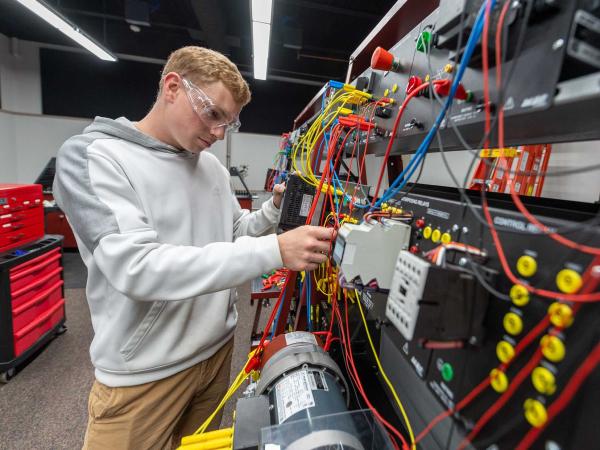
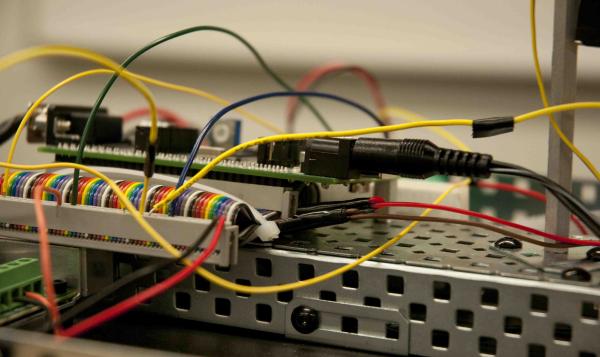
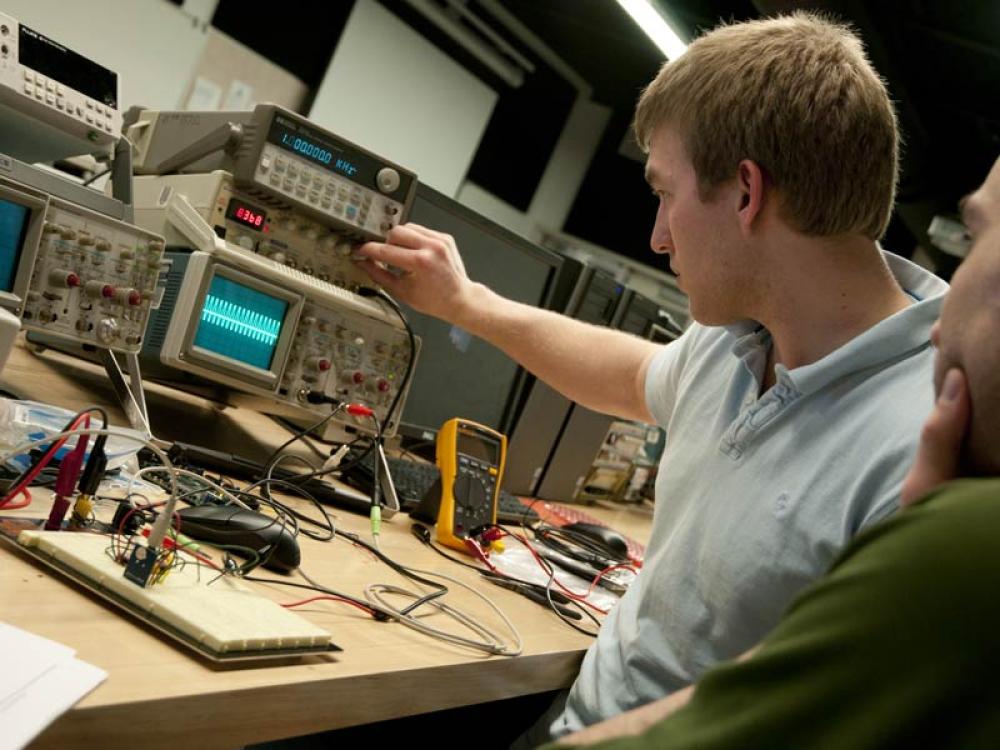
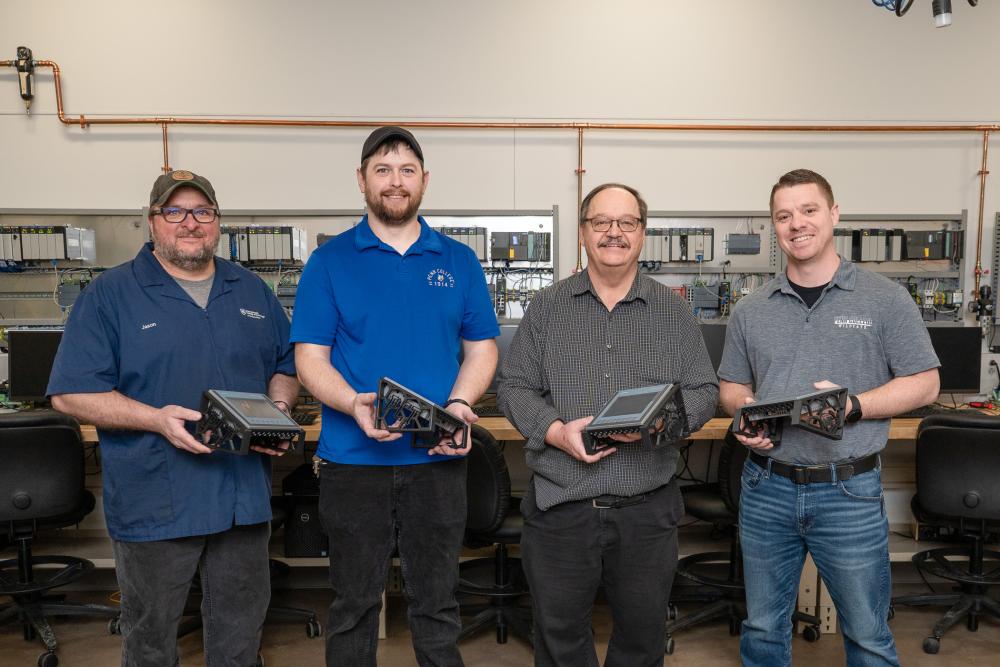
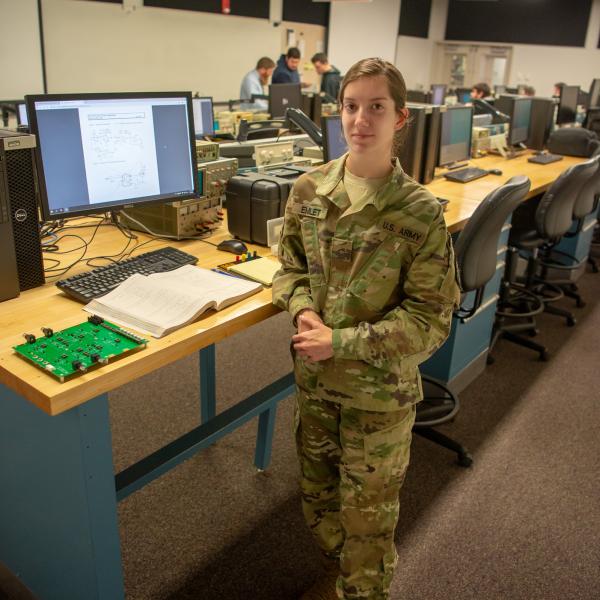
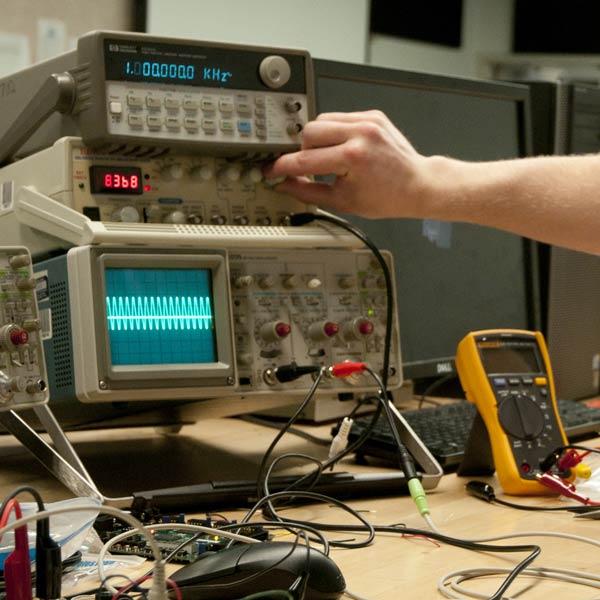
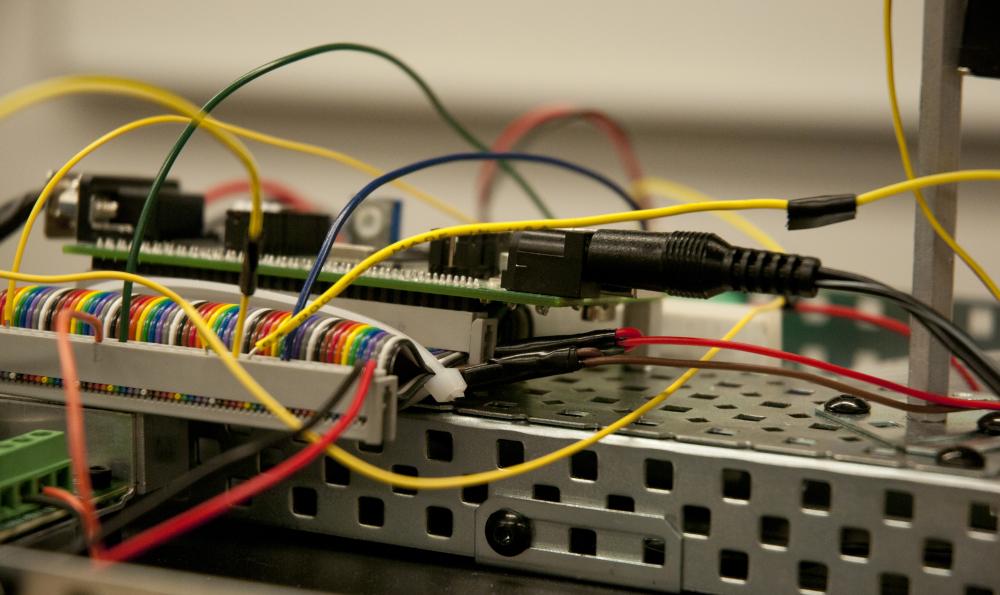
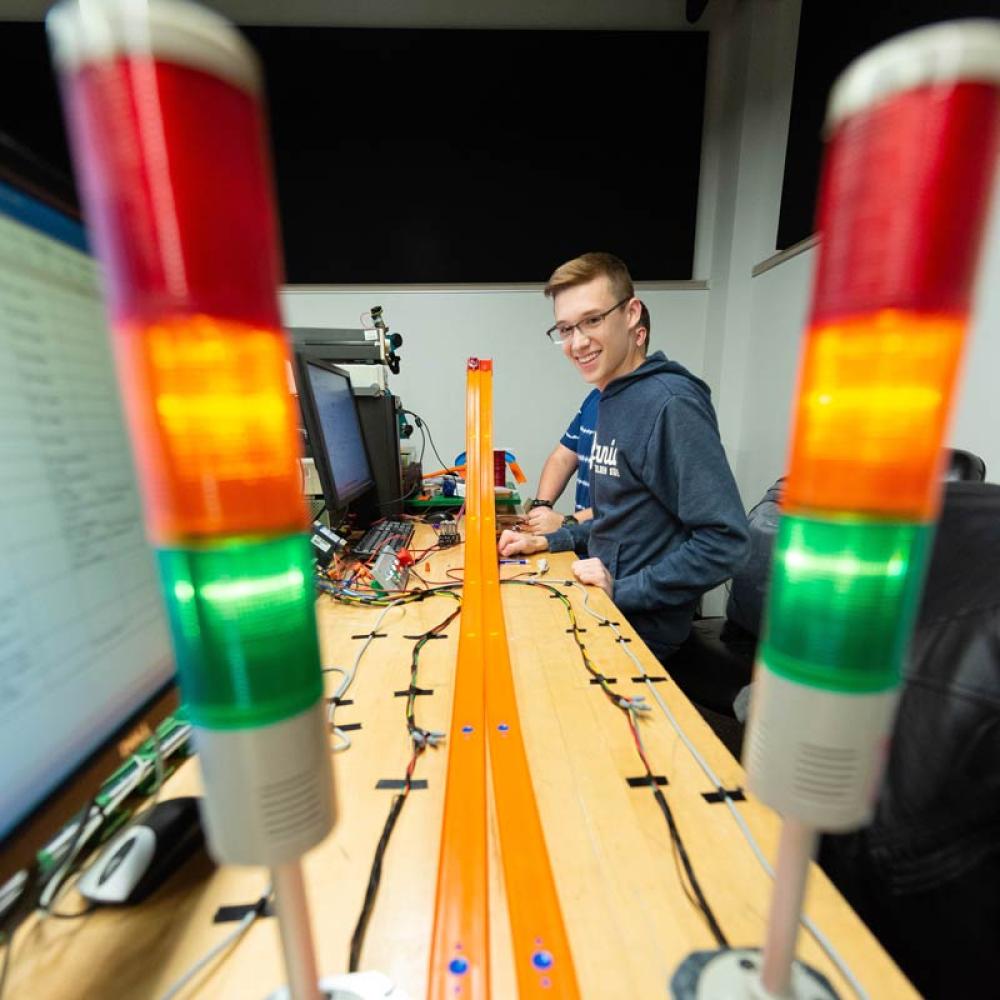
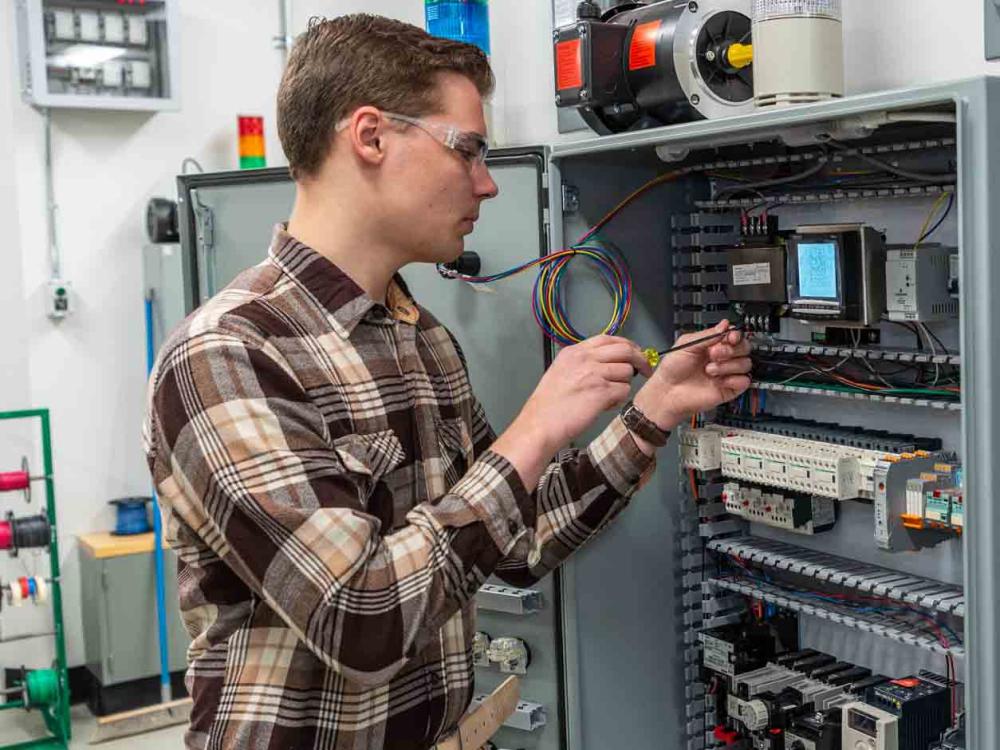
Get hands-on experience in specialized labs using industry-standard equipment, embedded controller boards, and other tools just like you'll see in the real world.
Always Learning
Electronics overlaps areas of IT and electrical. Not sure which one might be right for you? Take a look at the similarities and differences below.
Electronics vs. IT
Electronics and IT overlap in software and networking skills, but they’re also very different. IT is the software/people side, while electronics is the hardware/machine side of computing.
Electronics
As an electronic student you’ll learn how to design, implement, and troubleshoot software and hardware (sensors, microprocessors, and output devices.) You’ll also learn how to write software to work with hardware to control electronic equipment, and how to troubleshoot PLCs (Programmable Logic Controllers) and the equipment connected to them.
IT
As an IT student you’ll learn how to work mostly with traditional computers to develop software applications used by individuals and businesses, cybersecurity, connecting computers (networking), and technical support.
Electronics vs. Electrical
Areas of overlap in electronics and electrical include programming and troubleshooting of automation systems, such as PLC software and hardware. Electronics work more in the initial programming and engineering areas whereas electrical positions usually involve more hands-on work as a technician.
Electronics
Electronics students experience lower voltage systems, and typically encounter voltages less than 120V in their work environment. Electronics involves microprocessor-based controllers and PLC programming.
Electrical
Electrical students are involved in the installation, commissioning, maintenance, and troubleshooting of residential/commercial/industrial systems, motor control & drives, PLCs, and basic electronics.
Maker Profiles
Tour Schedule
Seeing is believing.
Think Penn College might be a good fit for you? Make plans to visit and discover what hands-on learning is all about.
Feb 21
Undergraduate Open House
Saturday, February 219 AM - 3 PM
Apr 26
Undergraduate Open House
Sunday, April 269 AM - 3 PM
ABET-Accredited Program
The B.S. in Electronics and Computer Engineering Technology program is accredited by the Engineering Technology Accreditation Commission of ABET, under the commission’s General Criteria and Program Criteria for Computer Engineering Technology and Electrical and Electronics Engineering Technology.
Internship
Your knowledge in practice
Internships are key for career preparation. Apply your know-how in the workplace and learn about the industry first-hand.
Related Programs
Follow your passion
Student Life
Lead and put your skills to the test
IEEE Student Branch at Penn College
Dedicated to advancing technological innovation and excellence for the benefit of humanity, the Penn College IEEE Student Branch meets regularly to work on professional soft skills, projects, and leadership.
SkillsUSA Champions at Work
Participation in SkillsUSA gives students a chance to compete in more than 80 national competitions.
Student Organizations at Penn College
Your college experience is about more than the classroom. Join one of 65+ clubs and organizations, or create your own.
Penn College News
Friday, September 5, 2025
Alpha Chi members collect supplies for Kenya medical clinic
Wednesday, February 5, 2025
TC Energy Corp. awards grant to Penn College
Study Abroad
Gain global experience
See the world via Williamsport. Take your education abroad and get hands-on experience learning about your industry on a global scale.
Student Experience
The community as their classroom
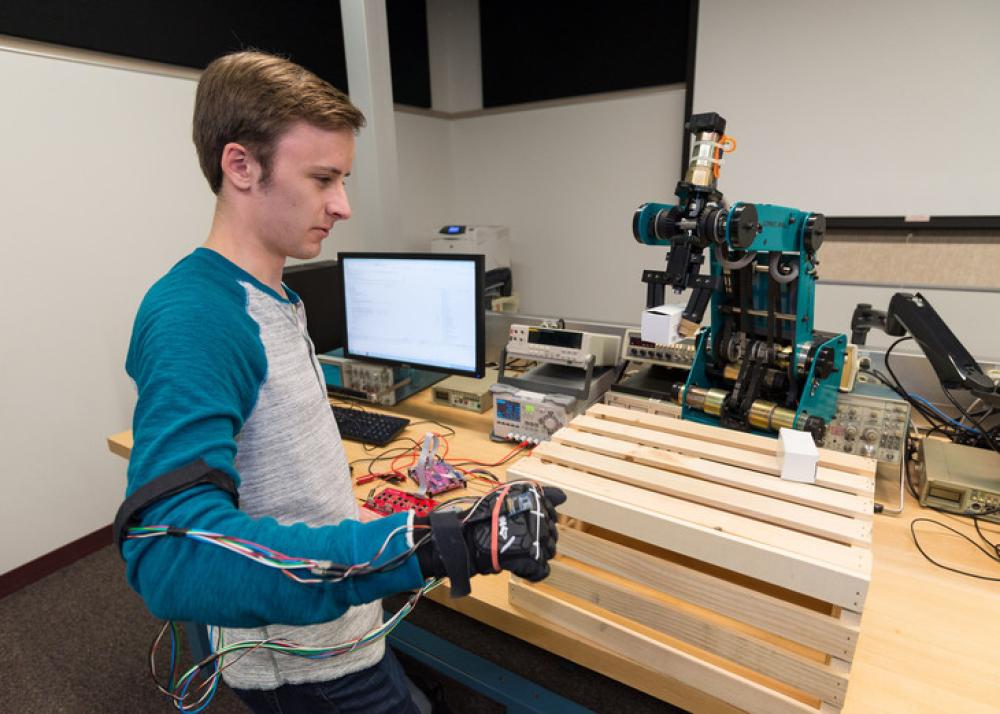
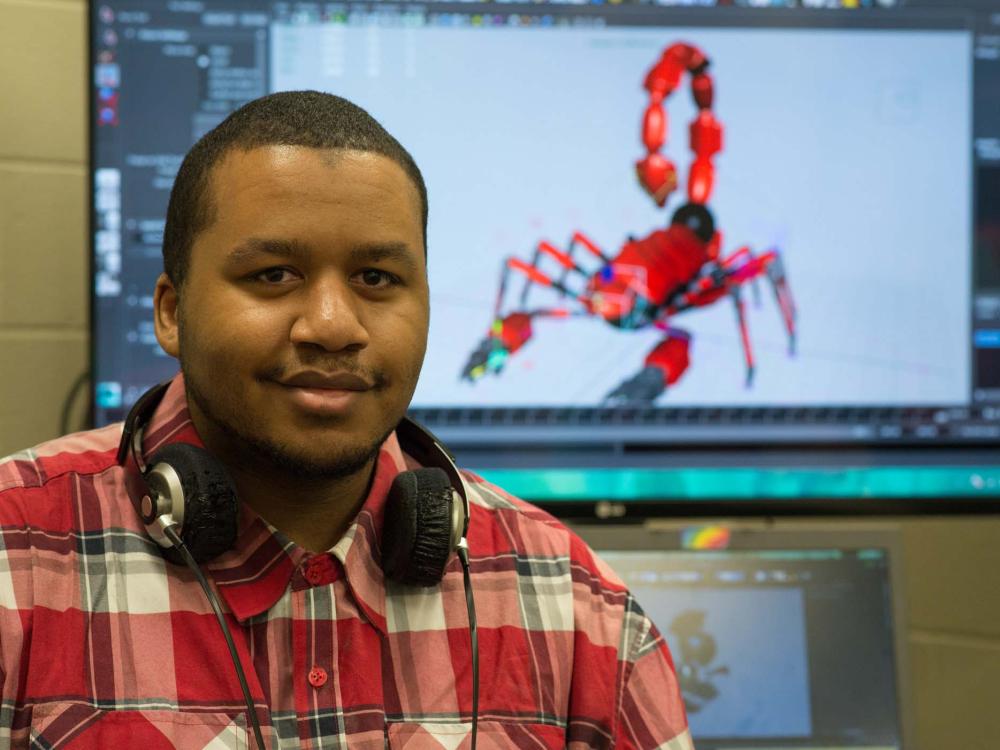
Student gives life to robot
More Information
Accredited by the Engineering Technology Accreditation Commission of ABET (www.abet.org), under the General Criteria and the Program Criteria for Computer Engineering Technology and Similarly Named Programs and the Program Criteria for Electrical/Electronic(s) Engineering Technology and Similarly Named Programs.
This four-year degree major allows transfer from associate-degree majors in electrical/electronics/computer engineering technology from other institutions, as well as those offered by Penn College. This major is subject to the transfer standards established by the College (see http://www.pct.edu/admissions/transfer/Transferring-Credits). Exceptions must be approved the school dean.
Students are advised not to purchase new tools before meeting with faculty on the first day of classes.
It is suggested that students have at least the recommended tools. Instructors will help identify what tools are needed during the first day of class. Free lockers are located in the laboratory area.
View the Electronics & Computer Engineering Technology Tools.
Uniforms and tools are available for purchase through The College Store .
Electronics & Computer Engineering Technology Program Review Executive Summary
Cadence University Program Member
Cadence products presently used at Penn College. Read More
Alternative Credit refers to academic credits earned through means other than traditional college course completion, including: credit by exam, articulation, proof of competency gained in high school, work/life experience, and advanced placement.
Visit the Alternative Credit Options page for requirements and procedures and for information on credit through Advanced Placement.
- Ross Bird, '01, '99, VP of Operations, QorTek
- Mr. Eli Hughes, '01, Co-founder, Tzero
- Mr. Carl J Krause, Vice President - Operations, KB Systems Inc.
- Mr. Nelson May, '03, Director of Systems, Gerhart
- Mr. Chris Roush, Vice President, Multi-Dimensional Integration
- Mr. Jonathan S Schall, '95, '99, Controls Engineering Manager, First Quality Products
- Mr. Leonard D Schwartz, Technical Instructor, OWL Services
- Mr. Roman J Scicchitano, '15, '18, Senior Supervisor, Electrical Engineering - Power/Analog, L3Harris Technologies, Inc.
- Mr. Gregory C Stanek, Technical Services Supervisor, Lutron Electronics Company, Inc.
- Mr. Thomas J VanSant Jr., '86, Measurements Engineer, Corning, Inc.