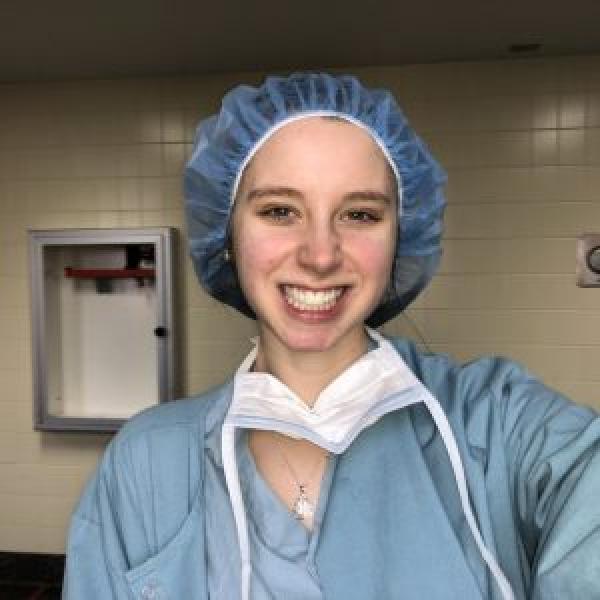
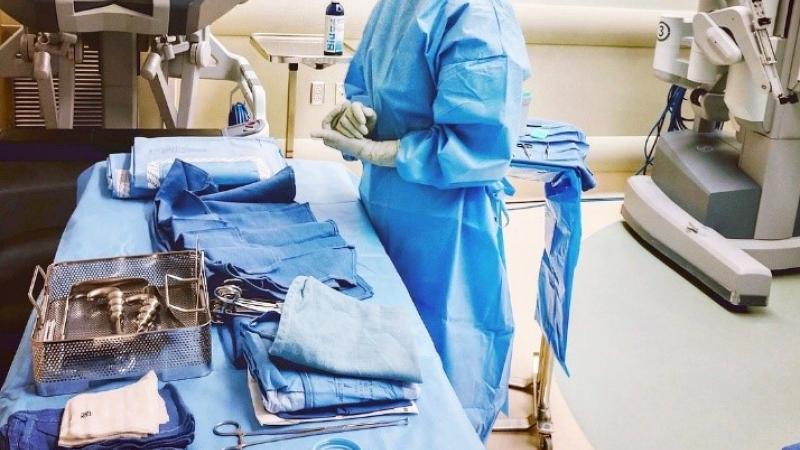
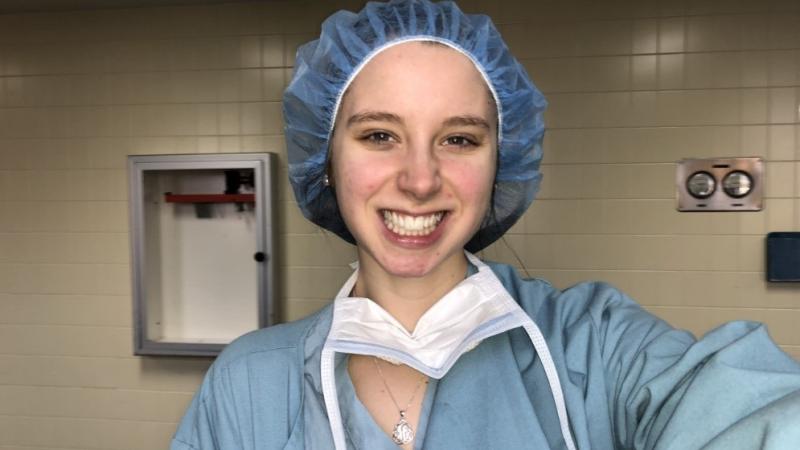
I was still in orientation and was only in the room really to observe the ebb and flow of these unique cases, but when they requested an additional set of hands, I was ready to scrub in. We worked from easily 2200 (10 o’clock) that night to nearly 0600 (6 o’clock) that next morning without a break, without a pause, because sometimes time simply does not allow that. We ran on adrenaline and whatever caffeine was still in our system from the beginning of the shift, and when I sat down afterward, after hours of being on my feet, I was truly amazed at the mentality and focus that one is able to achieve when a case requires it. It was such a moment of self-satisfaction, proving that I was capable of the endurance and mindset necessary to be a surgical technologist when I was just starting out.
A couple weeks later, the OR received a letter from Gift of Life describing the lives that had been impacted by our efforts, those who had been given a second chance by somebody who no longer needed those organs. It was that impact, that knowing that people’s lives were ultimately changed for the better because of what we accomplished that night, that makes this job truly rewarding.
Your patients are often not able to express their gratitude. What makes up for that?
To be frank, every moment of being in the room makes up for that. You don’t become a surgical technologist with the intentions of being given gratitude for the work you do. It’s almost a running joke, actually. But when a patient comes in the room and looks you in the eye, and you see the nervousness or fear on their expression, that moment right before the anesthesia hits, or sometimes even when they are just waking up after, is all the gratification that I need.
When I am not scrubbed in, I like to stand by my patients and hold their hand or smile at them as we prepare them for surgery or to leave the room after. Sometimes they smile back or say thank you, and it’s those little moments that make me know that my job is worthwhile, and that they appreciate the care they are about to receive.
Any advice for surgical technology students?
Well, as my instructor told me on my first day of clinical rotations: It does not matter how much you are able to do today – just don’t pass out!
But in all seriousness: Don’t be discouraged by a bad day, a bad case or even just a poor preceptor. There may be days where you are so frustrated you could cry because you just aren’t “good enough” to scrub cases. You may feel embarrassed over the mistakes you make. But the one thing that always got me through surgical technology rotations was the knowledge that everybody (and I mean EVERYBODY) has done something similar before.
Take each mistake as a memory and an opportunity to improve yourself next time. Don’t be fearful for the next time you scrub that case. Be optimistic to prove that you have improved since the last time, that you are still learning and bettering your skills every day. I assure you, we do so many cases a week, even though a particular experience may be ingrained in your mind, we may not even remember it the next time we see you.
And one last thing: Don’t be afraid to take a moment to breathe. Learning to work at such a high speed with a whole new skillset can be overwhelming, and once that hits, you just forget everything you know that you know. So take each case one step at a time, and don’t give up on yourself for needing a minute to collect your thoughts.
What traits do students need be successful surgical technologists?
To be successful, I think it requires a certain drive, confidence and resilience. By this, I mean you have to be committed to an environment of constant learning; you have to strive to be independent but be capable of admitting your mistakes.
More than that, the OR can be a tough environment. It is not for the faint of heart. My preceptors and instructors always told me to not be pushed around, because it can be a very tough environment to step into if you are not confident, but you also have to know that you cannot take criticism to heart.
It can take a while to develop trust from your colleagues in the OR, so I believe it is integral to have confidence in your abilities that you belong in this environment and to utilize criticism for your own improvement instead of allowing yourself to be discouraged or upset.
Even after being in the OR for more than two years, I still make mistakes from time to time, and I definitely don’t know everything, but now I laugh at myself and correct these inadequacies for next time. It is all about mindset, really!
What do you love about your work?
It might sound strange, but I love the thrill of emergency cases. They can be incredibly stressful, and I definitely do not know every doctor’s preferences, but there are basic supplies that I know I will need, and it truly is just figuring out the rest as you go.
I know I will need cautery, sponges and clamps. Everything else comes as we progress, because sometimes you do not know what to expect when you open these patients.
I have done emergency fasciotomies listening to DMX, and I have done cases where we looked inside and there was nothing more we could do to save this patient. To learn and see certain landmarks, structures and malignancies within the body is a humbling experience.
Every time I do cases such as these, I find myself appreciative for my life and grateful for the opportunity to save somebody else’s. That is without a doubt the coolest part of my job.
How did Penn College help prepare you to excel as a surgical technologist?
Penn College helped prepare me to excel as a surgical technologist by not only giving me every opportunity to train in a clinical setting, but by really caring about the skills that I believed needed the most enhancement throughout my training.
Being a student representative for the Surgical Technology Advisory Committee allowed me to see firsthand how the surgical technology board and directors structured their teaching around student feedback and results.
My instructor went out of his way to ask what worked best for our learning preferences and how he could improve his class structure toward our success.
More than that, my clinical adviser took the time to speak to my peers and me regarding our strengths and went out of her way each week to make sure we were assigned adequate case placements throughout our clinical rotations.
I believe Penn College and my wonderful instructors took the initiative to care about my development, and that support allowed me to learn to be the best surgical technologist that I and they believed I could be.
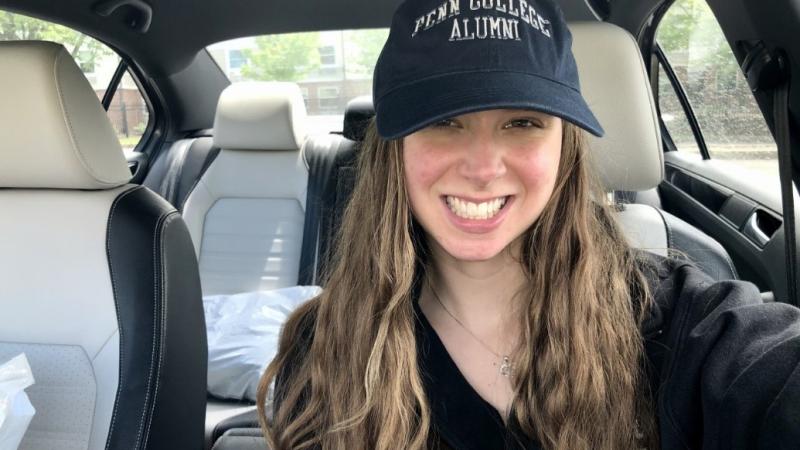
Overall, I have heard and seen nothing but positive commentary regarding the excellent students Penn College produces as surgical technologists, and I am proud to be one of them.