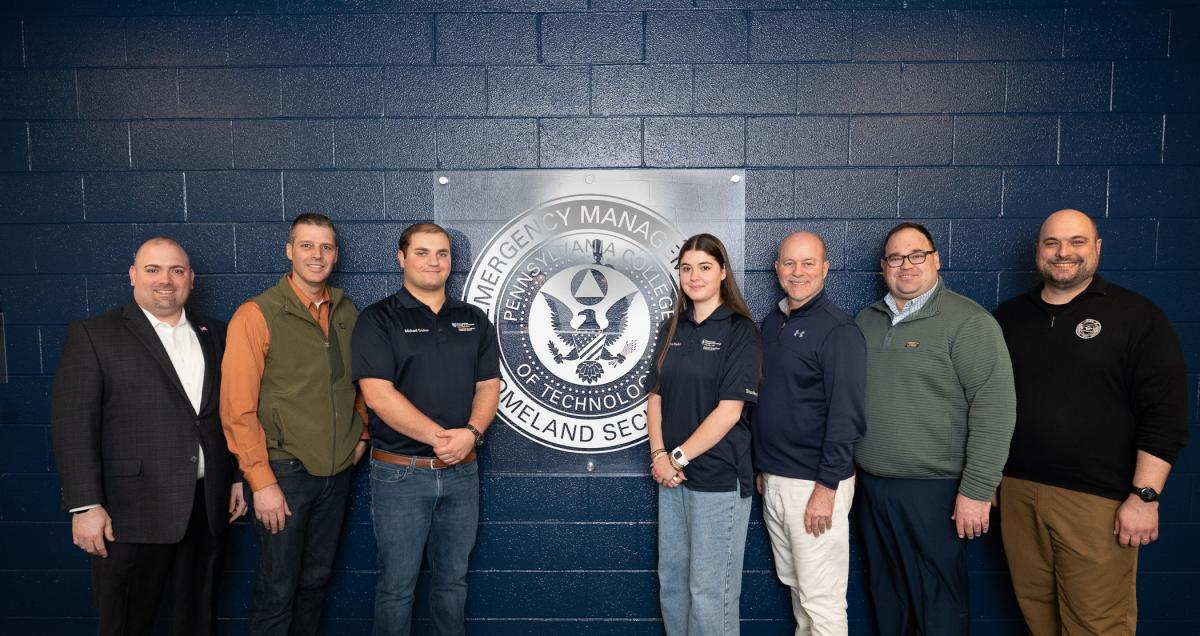
Four state representatives visited Penn College on Monday to learn more about its emergency management & homeland security degree and to try out the program’s new interactive simulation tool.
Getting a closer look at what students are learning – and how the program is benefiting emergency response and emergency management organizations – were representatives Jamie Flick (83rd PA House District and a Penn College graduate), Joe Hamm (84th PA House District), Clint Owlett (68th PA House District and a Penn College Board member) and Michael Stender (108th PA House District).
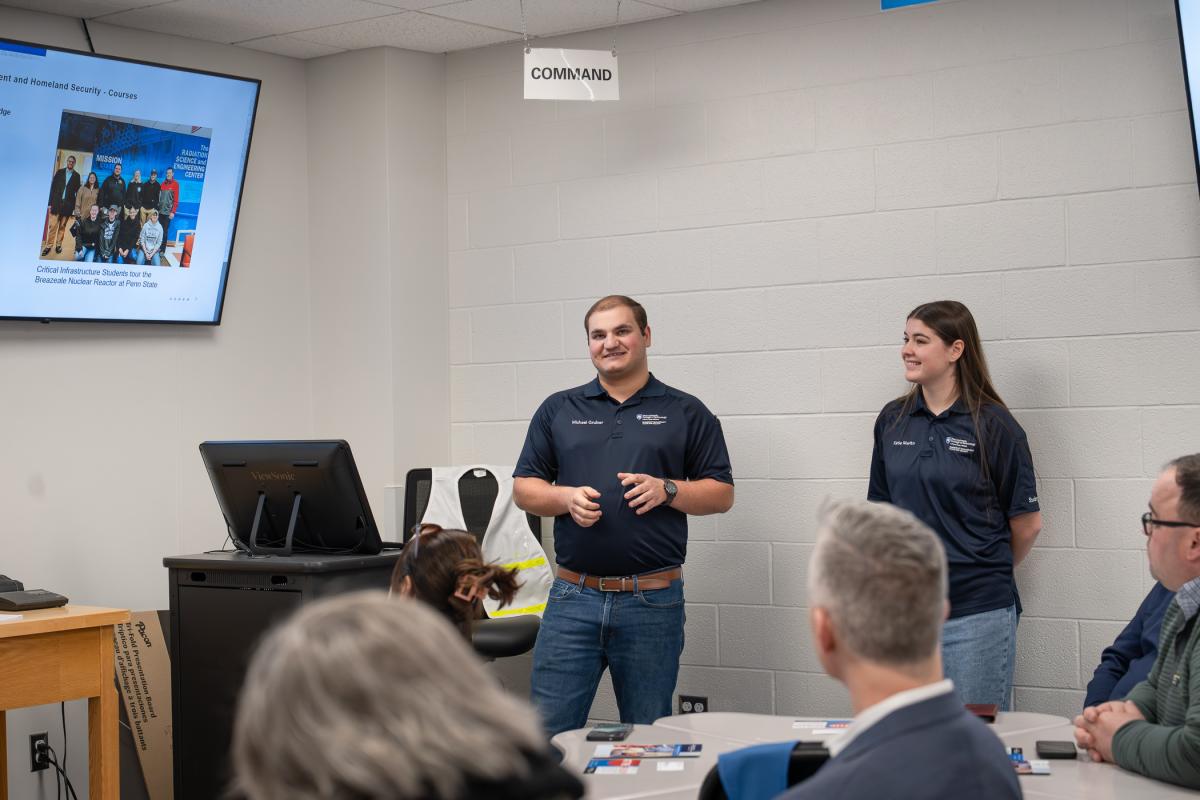
William A. Schlosser, instructor of emergency management and homeland security, and students Michael J. Gruber, of Rockville, Maryland, and Katie E. Martin, of Ocean View, Delaware, provided an overview of the field and the distinctive hands-on approach of Penn College’s degree – from disaster preparedness and planning to crisis communication, and from bioterrorism to critical infrastructure protection.
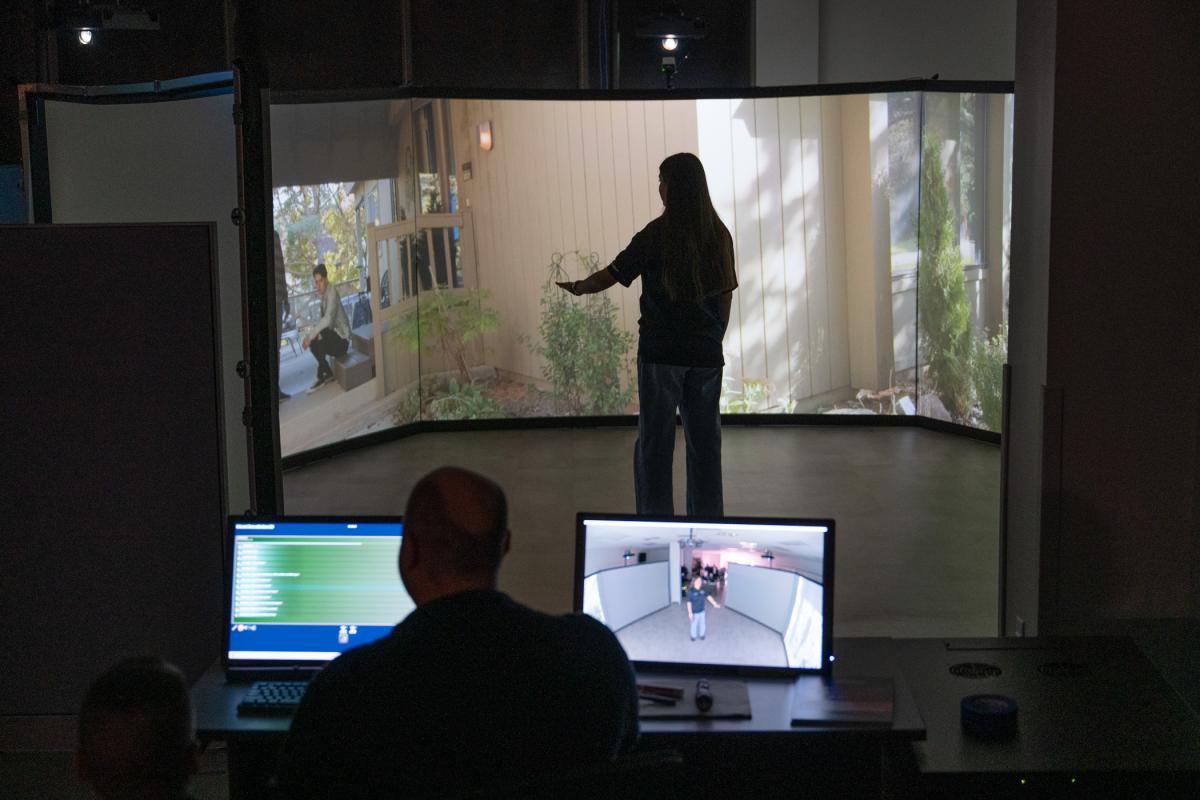
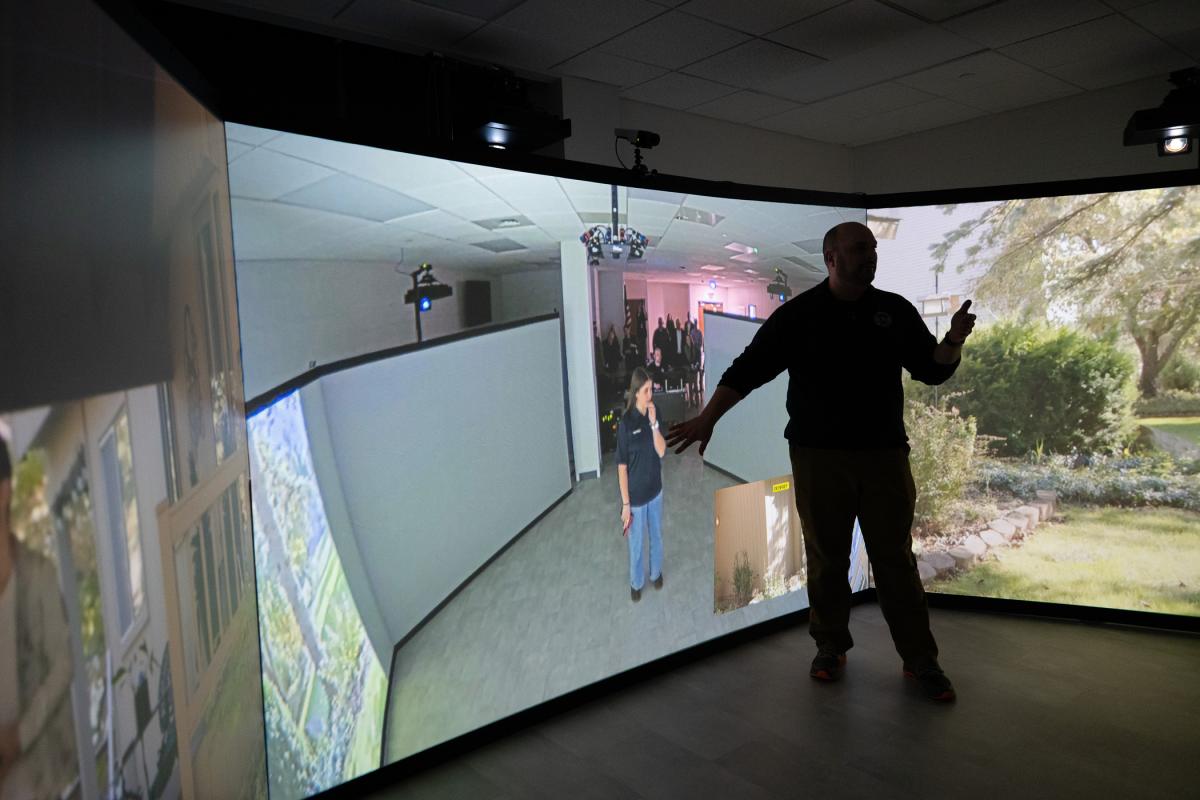
Asked how emergency managers learn to stay calm while leading a community or business through a crisis, Schlosser said repetition is key. To enhance those opportunities for students, the program recently installed a Multiple Interactive Learning Objectives system that the legislators are eager to see used by a variety of organizations.
The system employs full-surround video to simulate numerous situations, from target shooting with prop guns to communicating at a press conference. Instructors can change how simulated characters respond based on a student’s choices.
With the nearest full-surround MILO system about two hours away, in Allentown, the emergency management program anticipates sharing the technology with not only other academic programs at the college (such as health sciences and human services & restorative justice), but with local police and other entities.
Hamm, who serves on the Pennsylvania House Veterans Affairs & Emergency Preparedness Committee, said it is valuable to see the education that students are receiving within the district.
“And the hands-on portion of that being so important, it’s really nice for us to see the program in action,” he said.
Owlett added that better understanding the college’s programs helps the legislators as they come into contact with parents and students. “As we interact with students, we can better help to point them in a direction that will be most helpful to them.”
To learn more about the college's emergency management & homeland security degree, visit www.pct.edu/em.