Middle schoolers experience STEM at Penn College
Thursday, May 15, 2025
Photos by Alexandra Butler, photographer/photo editor, unless otherwise noted
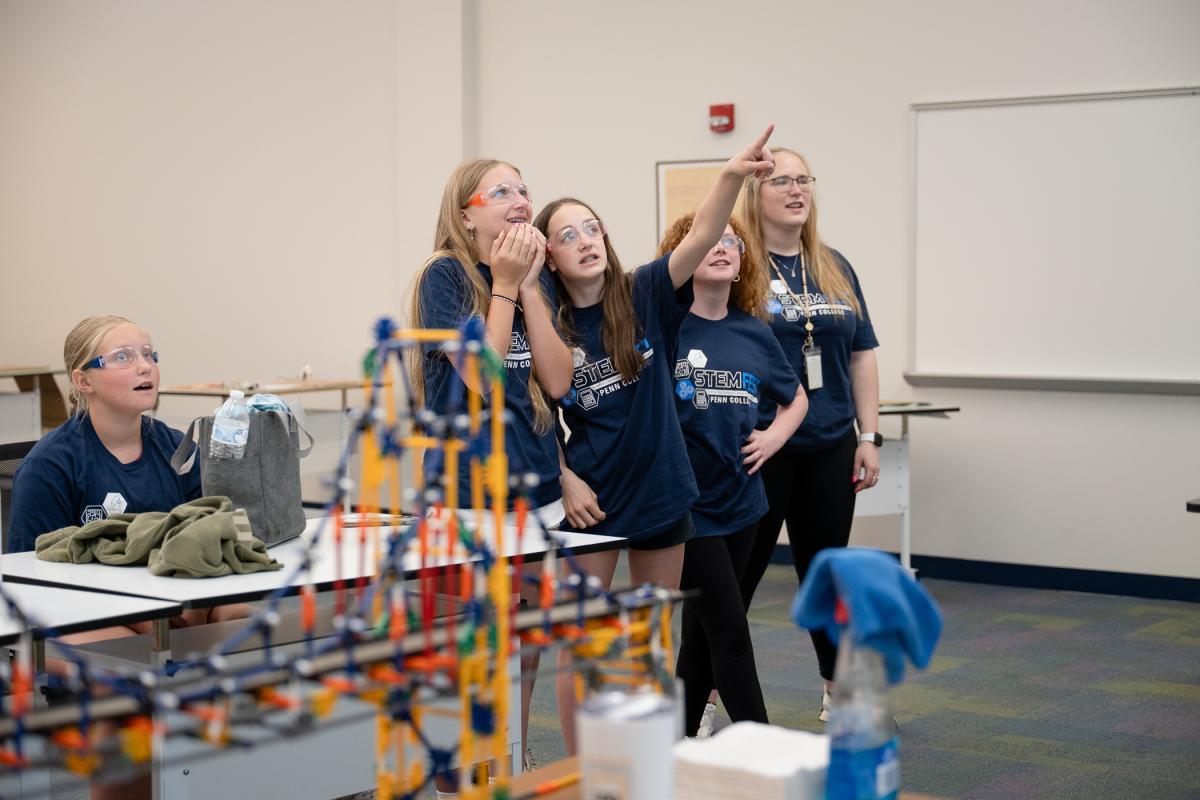
Middle schoolers from South Williamsport Area School District beam with pride after successfully erecting a geodesic dome with pine board struts and 3D-printed connectors during STEMFest at Pennsylvania College of Technology. The second annual event introduced about 160 students to career paths rooted in science, technology, engineering and math. In addition to the geodesic dome, hands-on workshops ranged from concrete science to robotics. (Photo by Tom Speicher, writer/video producer)
About 160 middle school students recently experienced the promise of careers rooted in science, technology, engineering and math during the second annual STEMFest at Pennsylvania College of Technology.
The students – representing schools from Clinton, Lycoming, Northumberland and Tioga counties – engaged in a series of hands-on activities, ranging from concrete science to robotics. Supported by a grant from the EQT Foundation, the workshops were led by Penn College faculty and staff.
“We think middle school is the sweet spot to introduce STEM because the students haven’t really committed to anything,” said Kathy D. Chesmel, assistant dean of materials science and engineering technology. “They haven’t had tremendous peer influence or even unconscious bias by parents. We just want to give kids broad exposure and try to find that spark in them.”
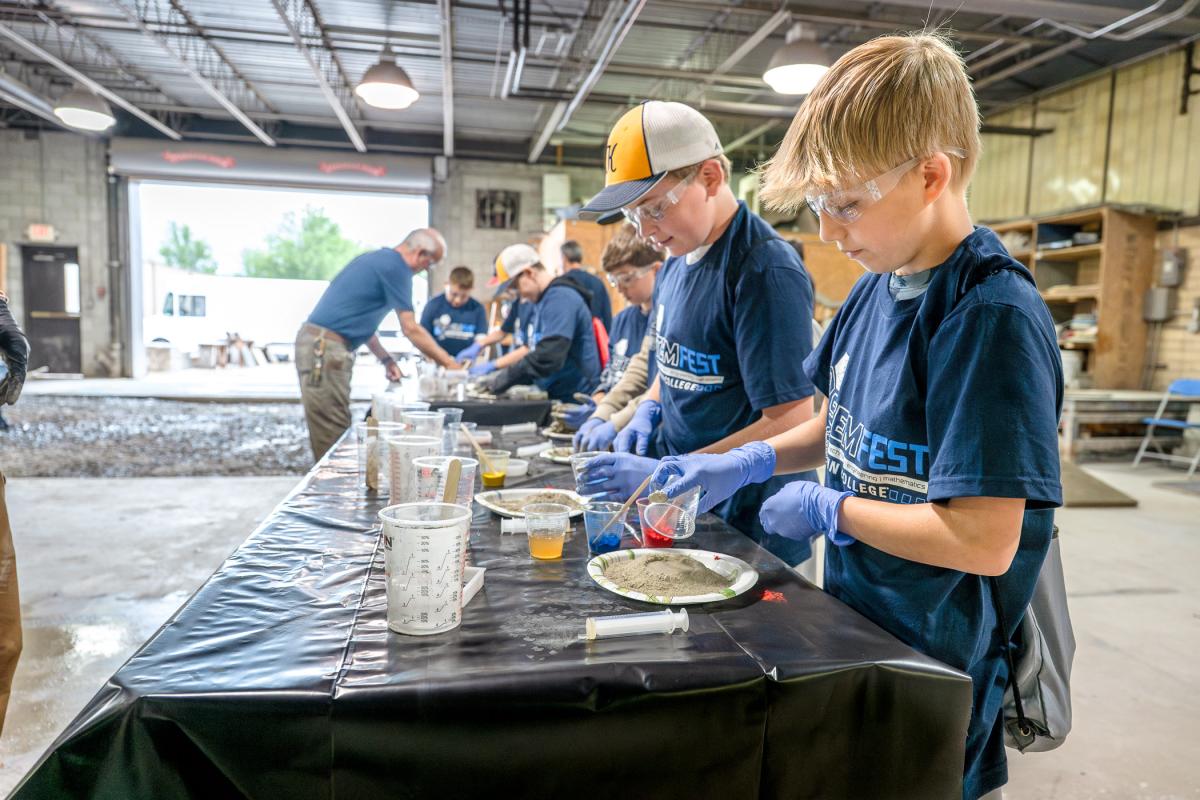
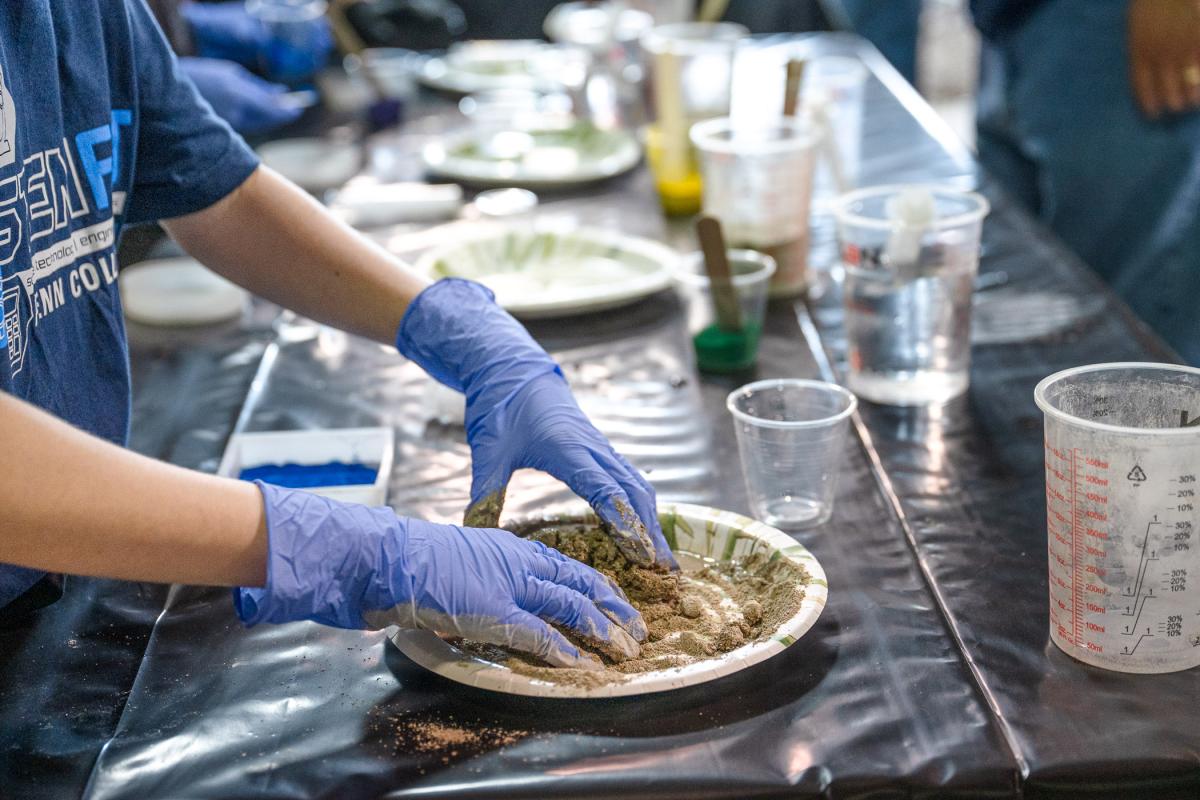
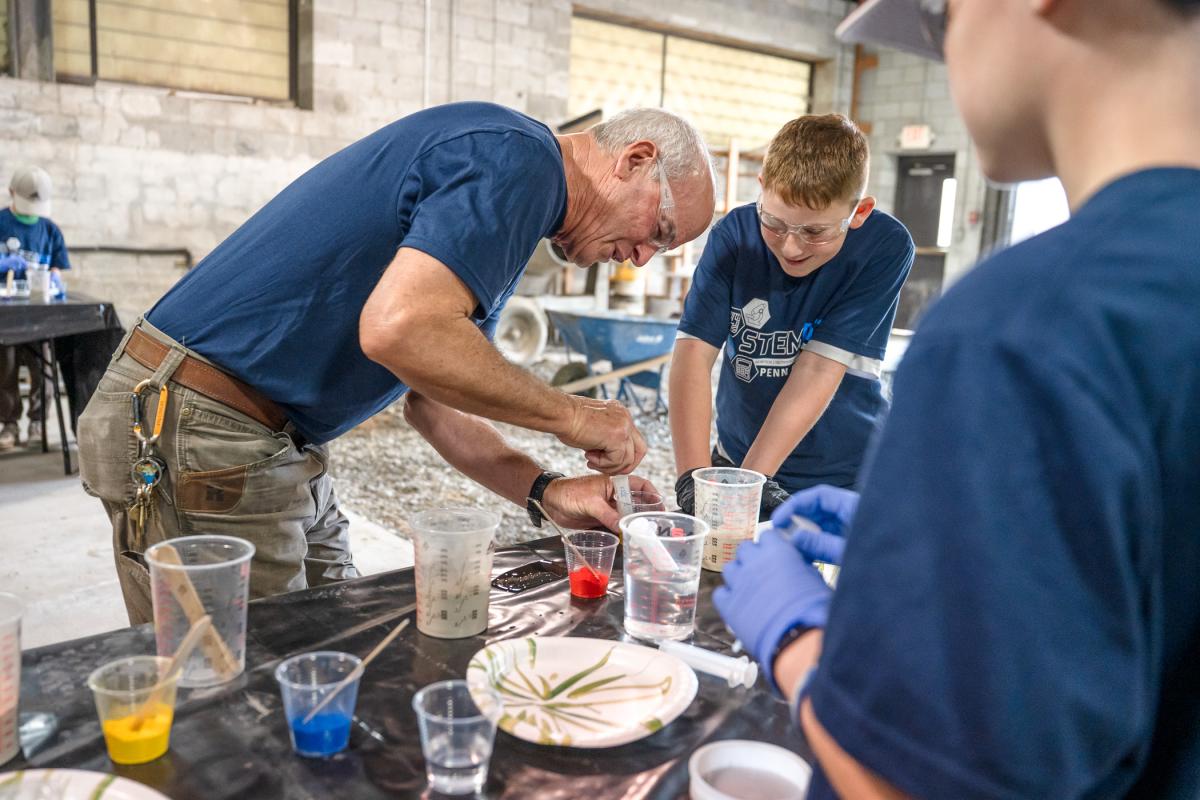
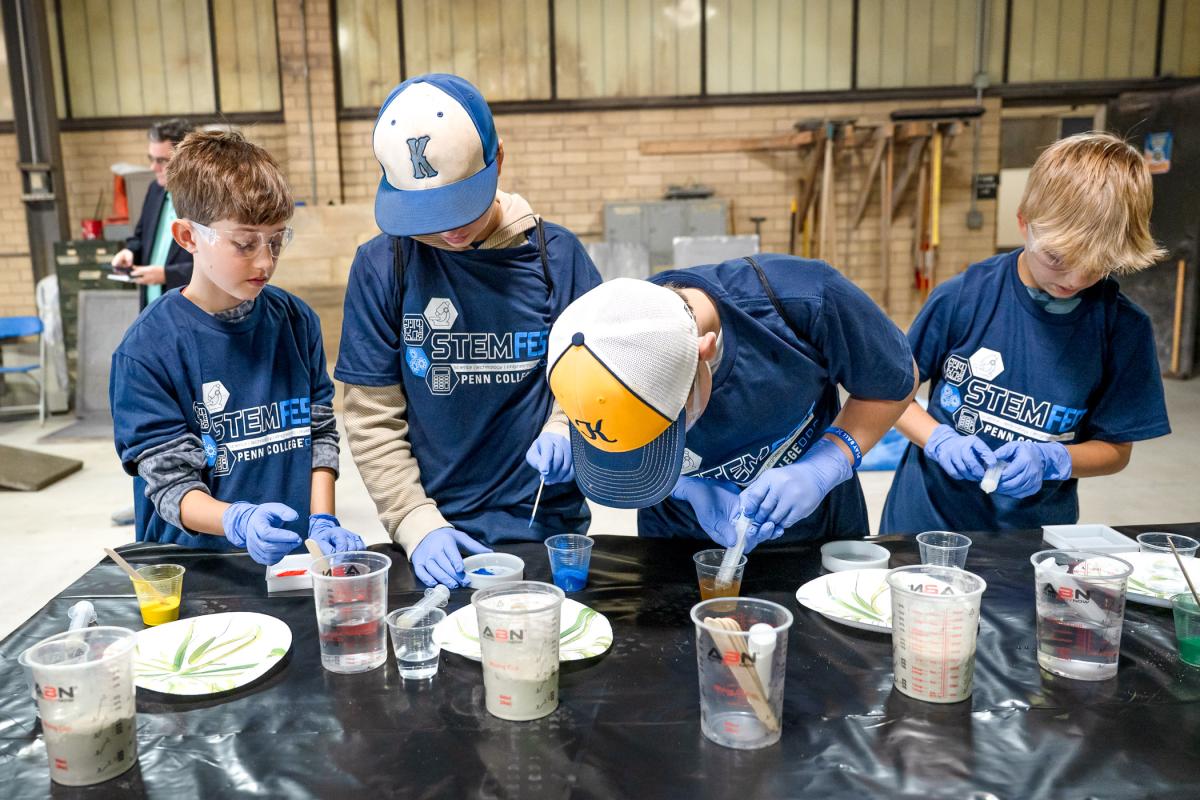
The smile of Ethan Anderson, a sixth grader at Central Mountain Middle School, revealed his spark. He had just combined 44 milliliters of water, 1 milliliter of water reducer and 300 grams of concrete mix to form a concrete coaster.
“This gave me an opportunity to come to a college to do STEM activities. STEM is really fun. It’s hands-on. I’m actually really interested in technology and engineering,” Anderson said.
Getting hands-on in a concrete science lab as part of the recent STEMFest, supported by a grant from the EQT Foundation
So is Ayden Diparlo, a seventh grader at North Penn-Liberty High School. After completing an electronics workshop, Diparlo said he “definitely” wants a STEM career. “Probably doing something with designing or coding,” he noted.
In the electronics session, the students used small programmable microcomputers to learn about coding and other digital skills.
“These simple low-powered computers are designed exactly for activities like this,” said Mario A. Tombasco, instructor of electronics/automation and robotics. “The single-board computers have different inputs and outputs that you can use to do pretty much whatever you want. Some of the students have made electronic nametags and others are playing different animations.”
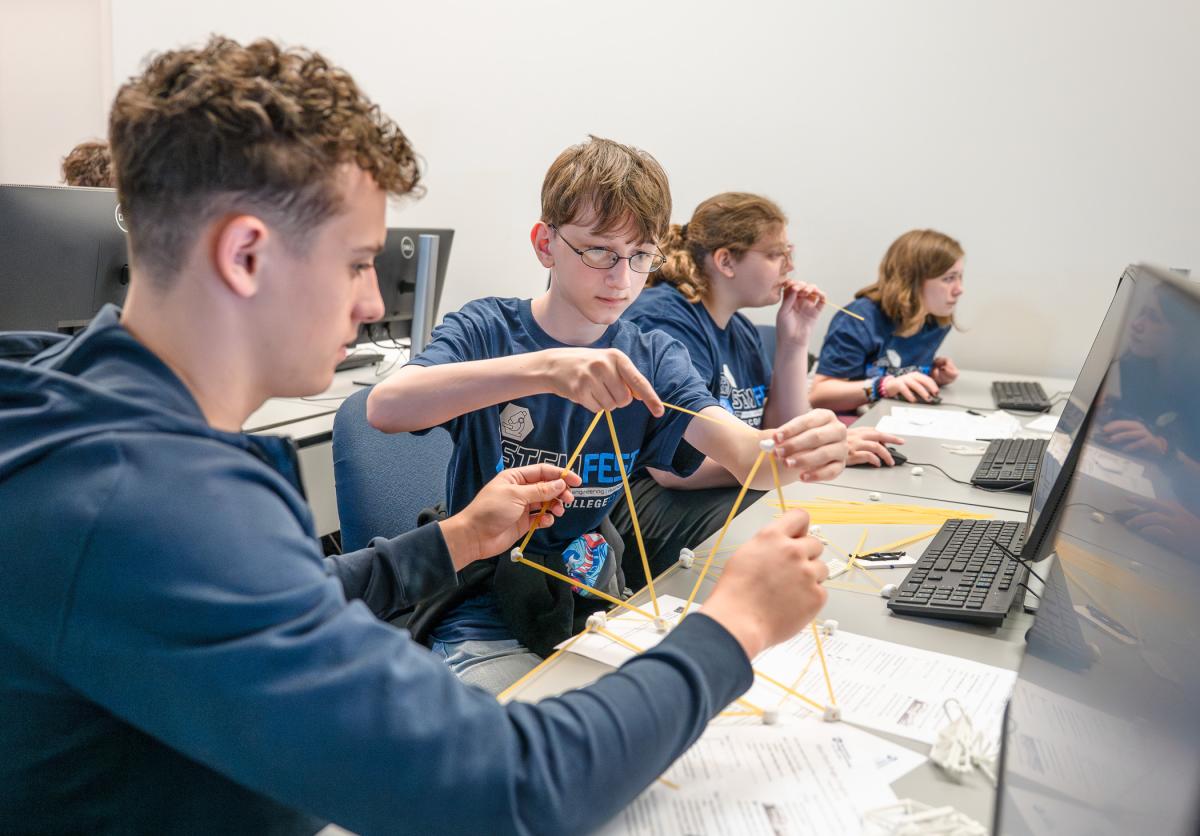
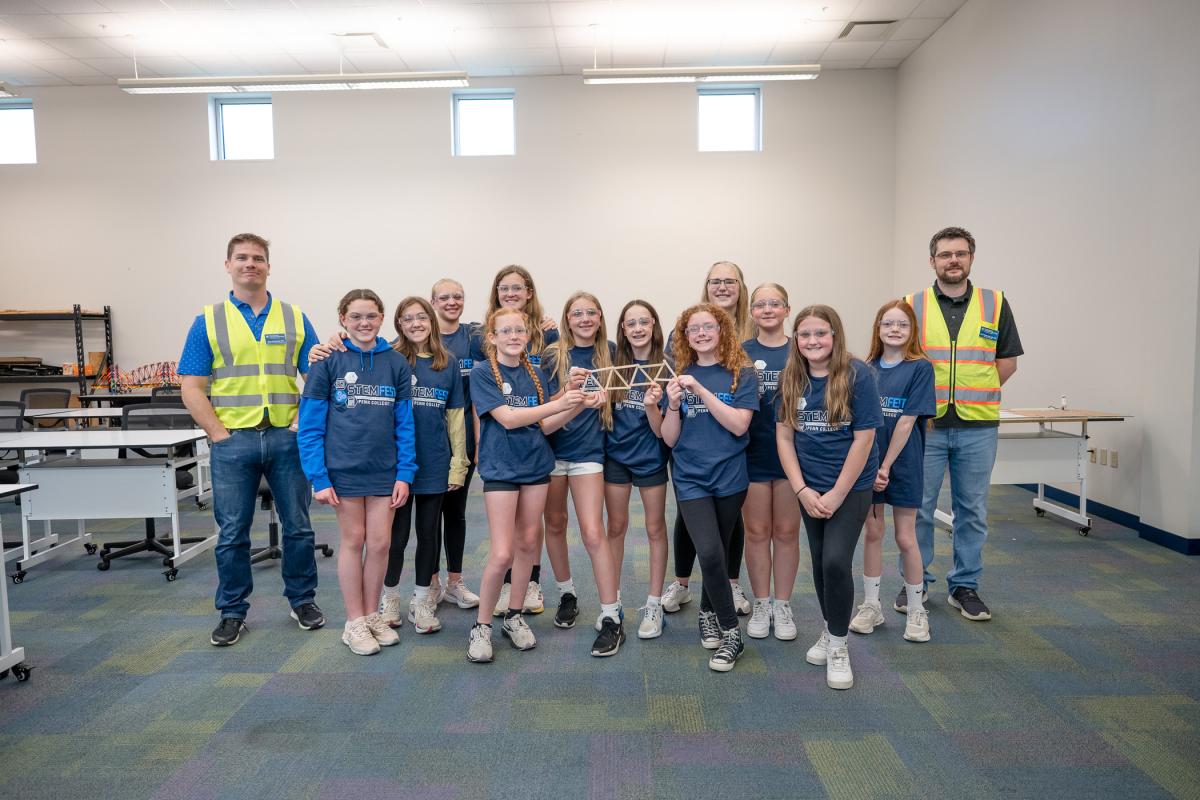
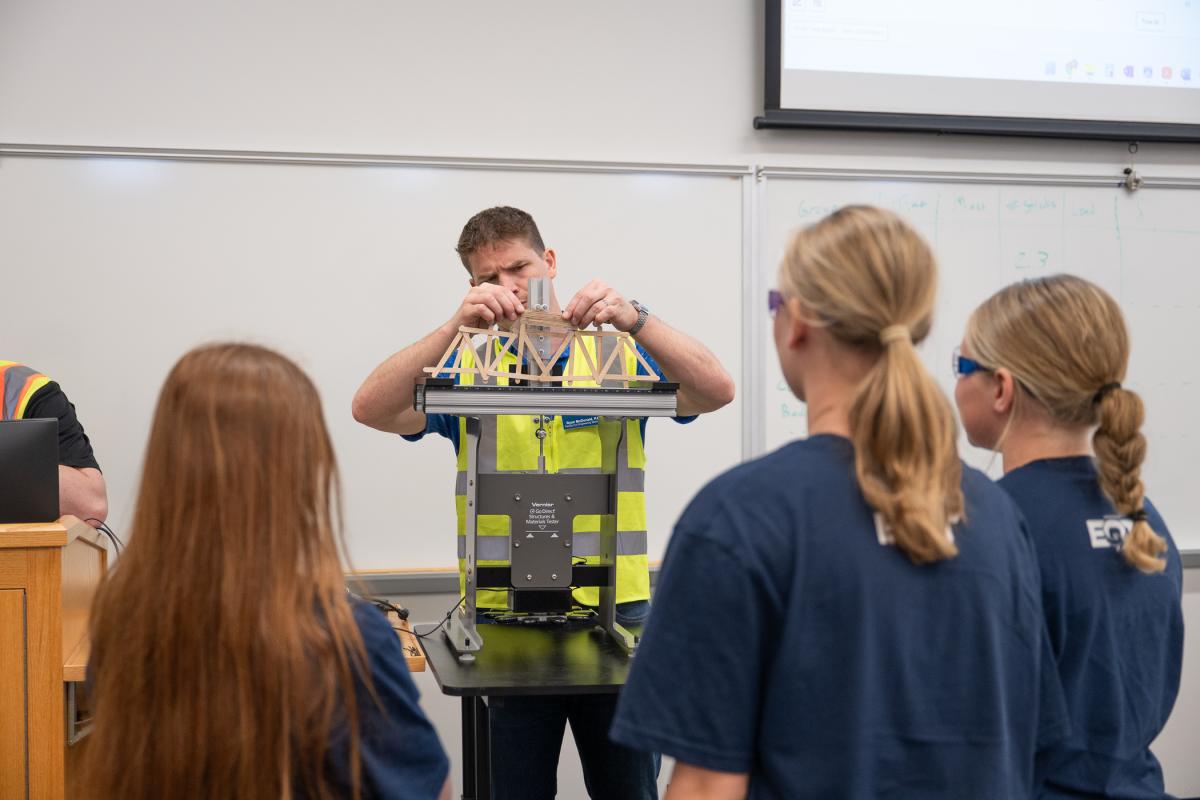
The civil engineering activity required participants to design and build a small model bridge with one of the following combination of ingredients: spaghetti and marshmallows, toothpicks and mini-marshmallows, or balsa wood sticks and super glue. The bridges were tested for “structural strength.”
Isabella Moore, a sixth grader from Central Mountain Middle School, chose the balsa wood sticks and super glue for her bridge materials. “It snapped pretty quickly,” she laughed after moving on to the robotics session.
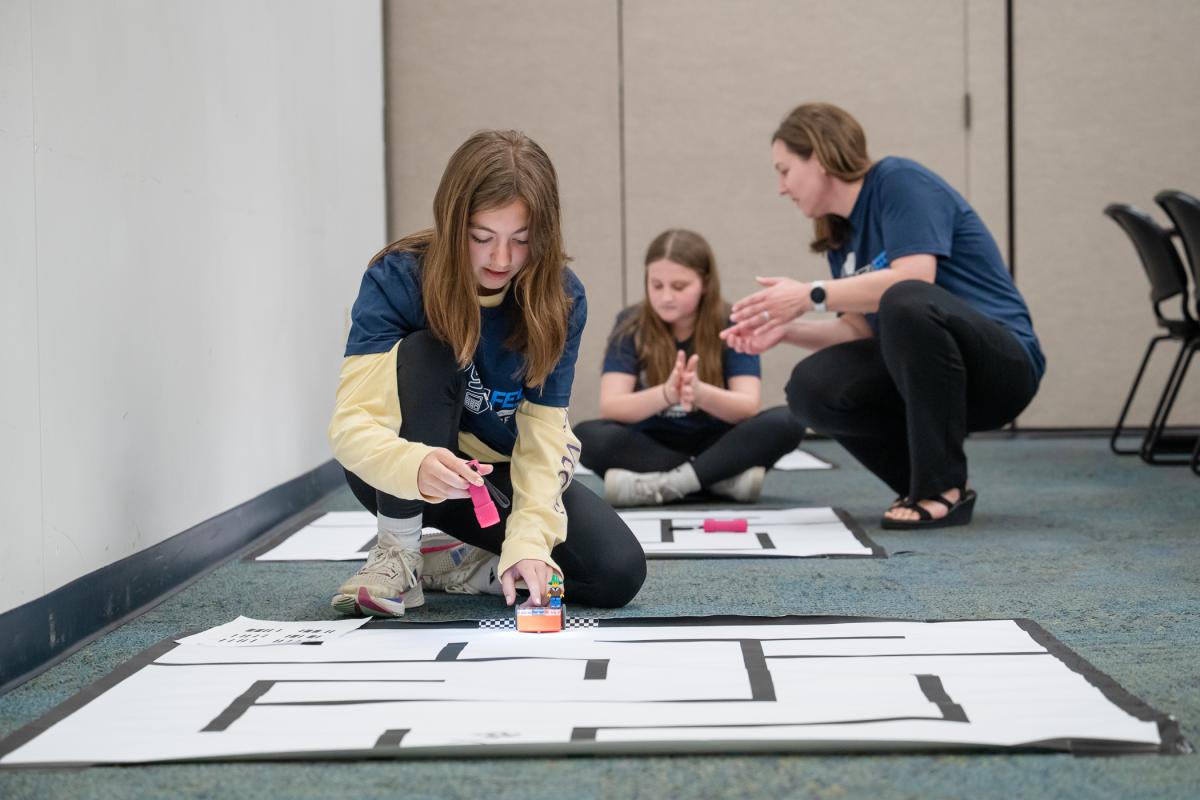
There, students programmed miniature mobile robots to complete a maze. “I’ve always liked playing with robots,” Moore said. “When we clap our hands once, the robot spins. When we clap twice, it goes forward.”
“They can control the bots in a variety of ways. The bots have a lot of different options,” explained Alicia L. McNett, assistant professor and co-department head of computer information technology. “We want the students to troubleshoot with the options and figure out which ones are the best.”
Young students program miniature mobile robots to complete a maze. In background on right is Alicia L. McNett, Penn College assistant professor and co-department head of computer information technology.
Saige Whipple, who teaches STEM at Central Mountain Middle School, welcomed that challenge. “We don’t have robotics in our STEM classes, so this is really neat that the students get to step out of their comfort zone, get out of the classroom and do hands-on activities,” she said.
Other workshops featured polymer science and a geodesic dome. In making slime, students learned about polymers and changes in material density. To erect the geodesic dome – a self-supporting structure that resembles a half-sphere – the middle schoolers, working as a team, had to interlock a series of pine board struts with 3D-printed connectors.
Caleb A. Line, makerspace coordinator at Penn College, devised the geodesic dome test. “They are used a lot at STEM workshops and fairs,” he said. “Students learn how geometry works and need to figure out where everything goes. It’s less about the dome and more about the teamwork.”
A group of about 20 students from South Williamsport Area School District beamed with pride after they successfully built the dome in under 40 minutes.
Whipple expressed appreciation for the entire STEMFest experience. “We like to go out of our way to make sure students get all the opportunities they can, so I really like that Penn College offered this,” she said. “I think STEMFest really opened their eyes. The kids didn’t know there were different types of engineers. They thought engineers were just one thing.”
Chesmel cited misperceptions about engineering in the trades and STEM careers in general for the shortage of such professionals in the workforce. According to the Bureau of Labor Statistics, STEM occupations are projected to grow by 10.4% through 2033, compared to the 4% growth rate for all occupations. Also, the median annual wage in STEM occupations ($103,580) is more than double that of non-STEM jobs ($48,000).
“We’re talking about rewarding, diverse careers touching a variety of industries that are vital to the economic health of our nation,” Chesmel said. “That’s why it’s important to reach kids at this age. When they’re curious, they’re motivated. When they’re motivated, they become successful. That’s the pathway we’re trying to ignite.”
Pending funding, the college hopes to host STEMFest again next spring.
Penn College is a national leader in applied technology education. Email the Admissions Office or call toll-free 800-367-9222.
Designing a small model bridge with spaghetti and marshmallows? It's all in a day's fun (and learning) at Penn College.
STEMFest opens eyes to the possibilities in engineering.
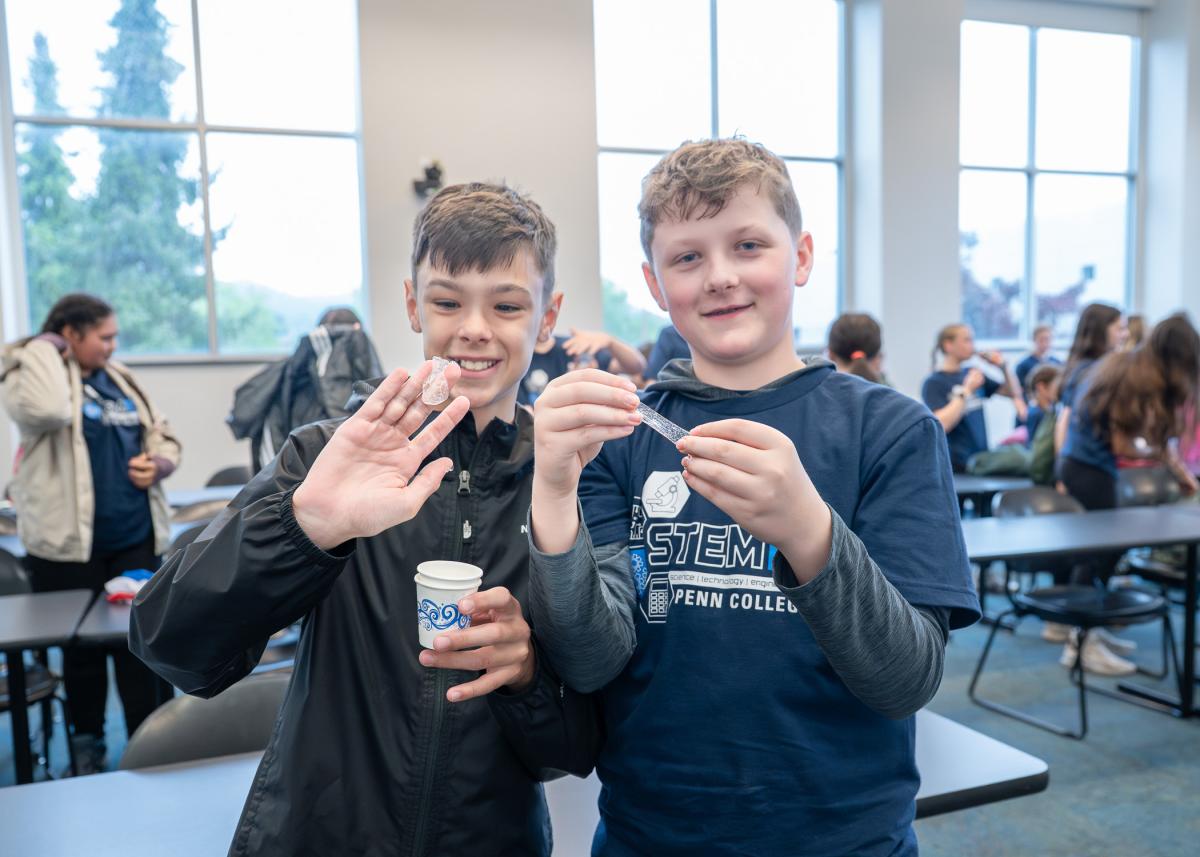
Making slime! This experiment occurs in polymer science, teaching kids about polymers and the changes in material density.
More gooey fun in concrete science, combining water, water reducer and concrete mix to form a concrete coaster
Bots in hand, middle schoolers test and troubleshoot.
Balsa wood sticks and super glue join spaghetti, marshmallows and toothpicks in the bridge-building adventures in civil engineering technology, guided by Penn College faculty Ryan J. McDonald (left) and David J. Fedor (right).
McDonald tests a bridge for structural strength, as the eager engineers-in-training watch on.
Sage advice, courtesy of Harry W. Hintz Jr. (left), a longtime member of the college's building construction technology faculty
Stirring curiosity, sparking motivation and setting up future engineers