22
Podcasts

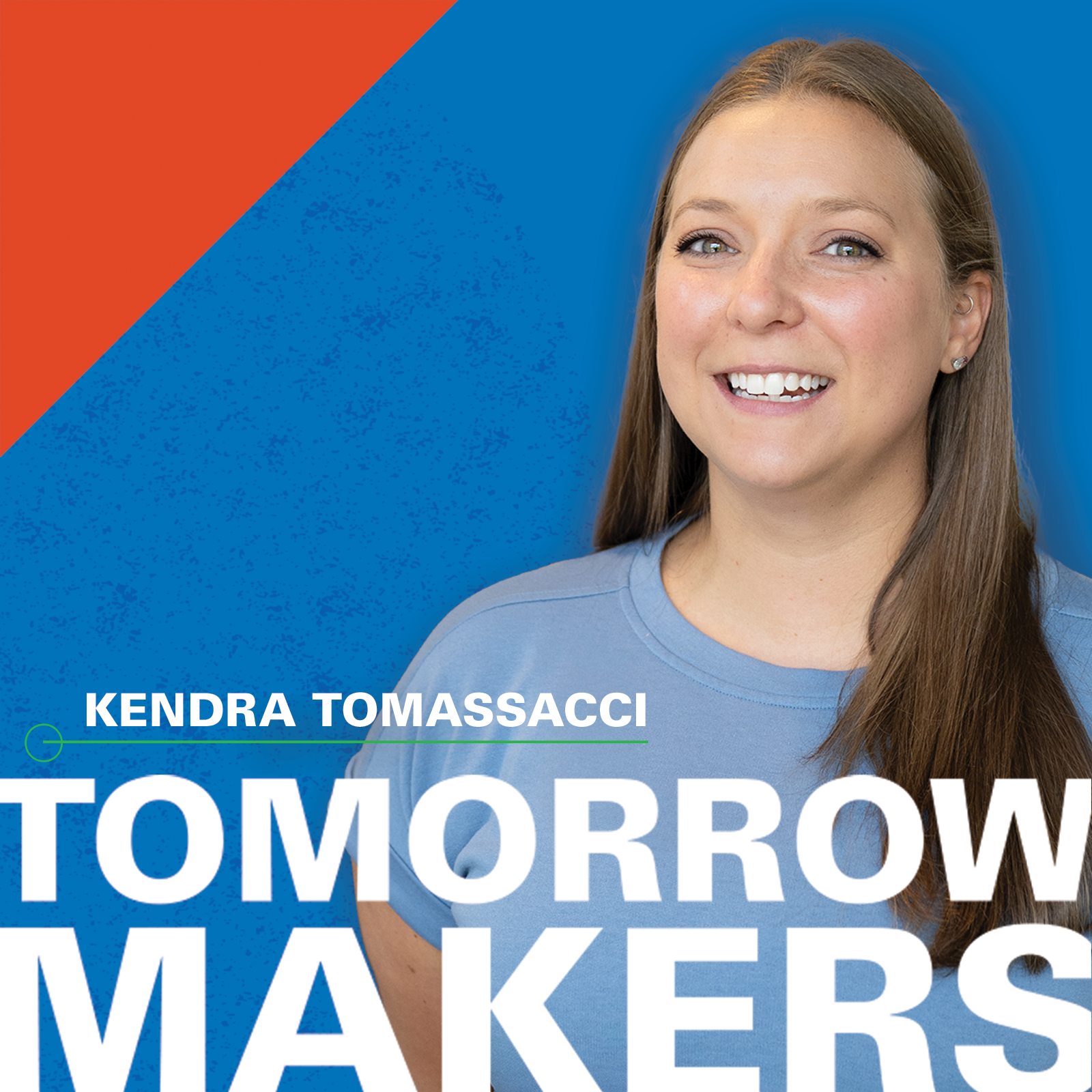
Kendra Tomassacci: Engineering Design Technology

S5 E2
September 02, 2025
Listen on

We couldn't have timed this one better! Instructor Kendra Tomassacci sat down with us to discuss Engineering Design Technology—the latest Penn College program to receive ABET accreditation. When we spoke, the news wasn't finalized yet so we didn’t mention it in the recording. However, we couldn’t be more excited to celebrate this accreditation and what it means for our students and graduates. We hope you enjoy learning about Kendra’s field as much as we did. It’s amazing how a single discipline can influence the development of nearly every product we use on the daily!

Mentions in this Episode

00:00:00 Sumer Beatty: Welcome to the Tomorrow Makers Podcast. 00:00:06 Carlos Ramos: Hey, Sumer. 00:00:06 Sumer Beatty: Hello. We are here today with Kendra Tomassacci, Engineering Design Technology Instructor. 00:00:13 Carlos Ramos: That's a mouthful. 00:00:14 Sumer Beatty: It is. This was an awesome conversation. I think you would've asked me what engineering design technology before this conversation, it might have taken me a minute to come up with an answer. 00:00:24 Carlos Ramos: It's a fun major. I didn't realize, especially when I was the age to get into college, like I knew what some of the stuff was for drafting and whatnot, but if you would've told me, oh my god, I can marry my love of computers for doing stuff to, you know, blueprinting and all that other stuff that... I'm probably using all the wrong words 'cause I still don't know anything. That would be something I would love to do if I had to go back. 00:00:47 Sumer Beatty: Yeah. There's that creative infusion into the process. 00:00:50 Carlos Ramos: Yeah. 00:00:51 Sumer Beatty: And one thing I think that it was really cool that she talked about was the difference between engineering, design, technology and what she called the sister program industrial design. Because I think if you're comparing them, it might be a little confusing. Like which one's which, what can you do? And she makes it very simple. She talks about drills and how things feel and how things function. And it is a fascinating field. 00:01:12 Carlos Ramos: It is. And if so, if you can get here to campus and you can see that program and you can see industrial design, 'cause you may, you may actually like one over the other. And I think you can actually do both in a way, taking one as a major, one as a minor. So. 00:01:26 Sumer Beatty: Yeah, listen up. She talks about that too. 00:01:28 Carlos Ramos: All right. Well, let's get into it. 00:01:30 Sumer Beatty: All right. 00:01:40 Carlos Ramos: Right before preparing to release this episode, Kendra informed us that Penn College's Engineering Design Technology, Bachelor of Science degree, has earned ABET accreditation, a quality assurance recognition that backs the program's preparation of graduates, who have a 100% placement rate, for a global workforce. We had a great sidebar conversation about this during our recording, but unfortunately we're not able to include it in this episode. But the rest in true Tomorrow Makers fashion is quite illuminating, so please enjoy. 00:02:15 Sumer Beatty: Can you tell us, those of us who know, imagine we know nothing about this industry, about this field, what, what is engineering design technology? 00:02:24 Kendra Tomassacci: Anything that you hold, consumer goods, anything that you use. All of that is. Engineering CAD technologies, engineering design technologies. However, between the two year and four year degree, it's really creative problem solving and engineering all like mixed into one. We kinda get the best of both worlds. So anything that you use needs a design. Anything from a cup, the plastic bottle you drink from the scissors you use, that all took someone to design it so that it can be manufactured. So that's what we do. 00:02:55 Carlos Ramos: And you have a sister program over there, right? 00:02:59 Kendra Tomassacci: Industrial design. 00:03:00 Carlos Ramos: Industrial design. 00:03:01 Kendra Tomassacci: Mm-hmm. 00:03:01 Carlos Ramos: So how does that compare? How do those two differ? 00:03:05 Kendra Tomassacci: The biggest explanation that we've been using for years now is kind of like a drill because everyone can relate to a drill. So, the drill mechanisms, what makes the drill physically function, is going to be what we do as engineering design technology, right? But the look of it, the feel in your hand, ergonomics, how it's packaged, how it's presented to consumer is going to be more industrial design. So that's kind of the easiest comparison that we use. Just because everyone can relate to some sort of drill being in their garage. Yeah. That's kind of where we come from. 'Cause everyone has a different eye and then we all need it to work properly. 00:03:41 Carlos Ramos: Function versus aesthetic? 00:03:43 Kendra Tomassacci: Yeah. But, industrial design's more than just aesthetic. Right? Industrial design, again, is more art focused. But it, it is also how it feels. So it's not just like the way it looks, it's how it feels. 'cause like your hand's gonna be a different size than my hand. And so we have to take on those, you know, different consumers and think about it in a different way. Same with the way you sit in a chair, you know. Those types of things. So how you interact with something. I don't know if there's actually words that go with that, but it's like the interaction with products. 00:04:15 Carlos Ramos: Okay. So a little different psychology and the approach behind both of those. So I'm assuming then the student, when you're trying to match them up between those two programs, and of course you have that interest in the engineering design side of it. 00:04:27 Kendra Tomassacci: Yes. 00:04:28 Carlos Ramos: How does that marry up to the student? 00:04:30 Kendra Tomassacci: Well, what's great about it, and this is like kind of a highlight of our program, is what's great about it is you can do both. So you can identify both ways, and we have minors in both ways. So maybe they are a little more interested in the mechanical side of things, but yet they wanna dive into that art. So you can major in one and minor in the other and you can kind of go back and forth, which I think is very fluid and great for students that might want to just dabble in both or feel the need to do both. 00:05:00 Sumer Beatty: Yeah. So you mentioned that whole critical thinking, problem solving as being a mi... a major skill for this. 00:05:07 Kendra Tomassacci: That's correct. 00:05:07 Sumer Beatty: Are there other, if you're a student out there, a parent, are there other things that make a good or a successful person, you know, a successful, would it be engineering designer? I don't know what the end role is that these students are graduating and taking on. What's the title? 00:05:25 Kendra Tomassacci: I mean, you're, you're correct. We're, we're engineering designers. 00:05:28 Sumer Beatty: Okay. 00:05:28 Kendra Tomassacci: I have students that look for designer jobs. I have students that look for mechanical engineering. That's probably the one that we are fluid with the most, but we're not traditional mechanical engineering. 00:05:38 Sumer Beatty: Okay. 00:05:38 Kendra Tomassacci: Yeah. We are a little different in the fact that our students don't just sit and watch formulas or products. They, they do, right? I mean, that's what Penn College does. We do, we make things and the students that are successful are the ones that like, have the drive, but still. Have the handset and scale. So we don't sit and do formulas and calculations. Yes, that's a big part of it, but we're actually modeling, and in the modeling software packages, we are hands-on from day one. And that's kind of really what sets us apart. If an employer was to ask and come for one of our students, they tell us, you know, I can teach how to do the formulas and how to, but I can't teach them how to model good. And that's what our students do from day one. They're modeling. So if a student really likes to tear things apart, sometimes not put them back together, right? But tear things apart, look at how things work. They're just interested in those types of things that they're gonna fit well with our program. 00:06:36 Sumer Beatty: So when you say modeling, this is software. 00:06:38 Kendra Tomassacci: Software. So we run four software packages and our students are fluid in the four software packages. To be quite honest, most of our students leave with multiple certifications in all those software packages, which are all free to our students. So we kind of push them. there is a slight charge for our Autodesk ones, but we run SolidWorks. That's from day one. They start the first day in that package and they grow with every year. We also do AutoCAD, which is the ancient guy in our. Field. But I will tell you it is my favorite. That is where we love to start. And then we have Inventor and Creo that we're using. Some classes right now are dabbling in Fusion 360, which is the online platform. 00:07:18 Sumer Beatty: You got it all. 00:07:19 Kendra Tomassacci: For now we got it all. But we're ever evolving. You know, we continue to push and love new ideas, new software packages come out and we always entertain those to see if we need to continue to grow. Right? I mean, that's what our goal is. 00:07:31 Sumer Beatty: What is that process like? So are they sitting down and are they hand sketching or are they going directly into one of these programs? And then are they throughout the coursework creating some tangible piece of... Like, are they doing a project where it's actually taking that and you know, bringing it to fruition? 00:07:49 Kendra Tomassacci: Yes, yes, yes and yes. 00:07:51 Sumer Beatty: Okay. 00:07:52 Kendra Tomassacci: So they do start with just modeling something. We have different models of objects. A lot of times it's very blocky in the beginning because, just 'cause it's easier to see from different angles. We also do hand sketches, not as much as when I went to school here. We did a lot of board drafting. When I came here, that's where we started, but now we've kind of. Switch that process. They have to be able to visually see something in all angles, which can sometimes be a little difficult for a new student coming in, but that's what they're here for. But anything from a wrench, you know, they build up to the bigger like systems. Like, I don't know, we have I think a car frame sitting over there and a jack system. We also take things and make small scales and 3D print them. So they get to do that in their first year as well. I think they 3D print, a C clamp and they do the threads and the C clamp and everything like that. So it is exciting 'cause you get to not only, not, not that they're designing that, right, they're just remodeling it. But remodeling something and then having it in their hand is still the process of designing something from scratch and then printing it. Right? Because printing is our new fastest way to get a product to be seen and held. 00:09:03 Carlos Ramos: So in the first year, you're the cover band, essentially? 00:09:06 Kendra Tomassacci: Yeah. 00:09:07 Carlos Ramos: Of engineering. 00:09:07 Kendra Tomassacci: We're just doing it. We're we're doing it all. And then we build upon those as we go. 00:09:12 Sumer Beatty: Are your students coming from career and technical education centers, or are they, is it a mixed bag? High schools and CTCs? 00:09:20 Kendra Tomassacci: Both. It's really a mixed bag of students. Okay. sometimes we don't even get to know where the student's physical background is. It's not like, you know, we, they share. All the time. But we have, we have great coming in from the dual enrollment program. We have quite a few that come from there. I can't say it's really a split and some of 'em come in with no solid works or no 3D modeling at all. 00:09:45 Sumer Beatty: Yep, that's where I was getting at. I just wondered, it sort of sounds like a little intimidating, you know, from somebody who has, it sounds very cool and what you know, the possibilities sound amazing. But I'm thinking, boy, I would be like, oh, I don't have any experience. But it sounds like no experience necessary. You're, you're getting hands on, but you'll be able to feel it all out and get the instruction. Of course, you need to be successful even with no background in solid works or... 00:10:11 Kendra Tomassacci: Yeah. A lot of our lab time though, is split to help with that diverse group of students. So our classes are three hours long normally. That's the average, two and a half to three hours. The first half. Three quarters sometimes, depending on the day, right, is lecture and their learning skills where the other side is spent doing. And those labs, some students can get 'em done in 45 minutes. Some students take, you know, extra time outside of class. And that time then is spent with instructor student one-on-one. Sometimes it's classmate one-on-one, you know, some stronger students really help. The students that don't have as much background. And I always tell my students, if you help out, you know you actually are learning again. 'cause teaching makes you learn more. And so it's really exciting to see a student help another student because the instructor is tied up. 00:11:02 Carlos Ramos: See one, do one, teach one. That seems to be a thread when we are talking with any faculty here. 00:11:07 Kendra Tomassacci: Yeah. So much growth comes from that. 'Cause then they see struggles that you might not have even... 'cause it went smoothly for you. But it didn't go smoothly for someone else. And the same with sometimes during lecture you can get behind or a step or two. 'Cause a lot of it is like, Hey, do this, click here. And if you get behind and you don't ask a question, they ask their classmate to help 'em. If we couldn't get to them, you know, fast enough or whatever. And then they're like, well, I didn't think of it that way, or I didn't see it that way. And so it's really interesting to see that process of a student helping another student. 00:11:44 Sumer Beatty: And so in those three hour classes slash labs, how many students are you typically having? It sounds like you have a smaller, manageable group to where you can have those types of conversations. Mm-hmm. 00:11:56 Kendra Tomassacci: Yeah. So max normally is 20. We really only have like 25 seats in the class. But again, if your computers break, you kind of have to have one or two seats available for like SOS moments of like, we gotta move you. But yeah, normally 20, we try to not be any higher than that. 22 is probably the max that I'd feel comfortable with. I will say that. I like smaller classes a little more, 'cause there is that more one-on-one time and transfer. But hey, we, we want the students, so we want to teach you. So if we're, if we're at 20, we'll we do it. 00:12:32 Carlos Ramos: A beautiful thing for the student. There's nowhere to hide either. 00:12:34 Kendra Tomassacci: No. 00:12:35 Carlos Ramos: When you're in a, a group of 20. 00:12:37 Kendra Tomassacci: Mm-hmm. I chose to come to Penn College because of that. I'm a name here. You know, when I walk down the hallways, I know pretty much every student that comes down that hallway with me and I can say, Hey, good morning Scott. Good morning Dean. You know, whatever it may be. And that meant something to me. I'm not number 400 and whatever sitting in an auditorium, and I think that's special. 00:13:00 Sumer Beatty: I am glad you brought up that you came to Penn College, because I, one of, you know, the things we wanted to talk about was how, how did you find this field and why Penn College? 00:13:11 Kendra Tomassacci: The kudos goes to my mom, to be quite honest. My mom saw something in me before I guess I saw it in myself. When I originally came to Penn College.... so long story, my dad worked at Penn State 33 years. I got a discount to come to Penn College. And that's a factor. You know, money, price is a factor. But I chose Penn College because I wasn't a number. And that, that's solely the reason I entered here in Civil Engineering, which is kind of a funny piece of my background. I, I knew I wanted to do something with my hands. I knew I wanted to design, so I thought Civil Engineering, 'cause everyone knows about Civil Engineering, right? And my mom's like, that's gonna be a great fit. And then I got here and I tested low end of math. Not low low, but low. I wasn't a calculus person. I was passing Cal High School calculus by the skin of my teeth. Calculus is not my thing. So when I tested two courses behind in math and realized that my math skills weren't where they were supposed to be, I couldn't come to terms with that in my head. And then someone, actually, a, a previous faculty member here sat me down and talked to me about this program. And I was like, well, that's what I want to do. I didn't. Want to do this, you know, she explained what it was. And back then, and even now, I think we're still a secret. Like I think we still loom in the darkness and we don't get a lot of shine time, if that makes sense. And people don't understand because you're not a mechanical engineer. No, I'm not. And I, I will never put that stamp on myself. I am not. I design products, I test products. I know how products work. I'm the person underneath the mechanical engineer, and I'm okay with that. 00:14:50 Sumer Beatty: So can we bring to life some of those things? I know you use the drill as an example, but what are some of the products that maybe graduates have designed or people you know or have connections to in this arena? What are, what are they creating? 00:15:06 Kendra Tomassacci: So, my specialty actually is structural steel. I worked at Gertrude Hawk and Proctor and Gamble in the industry kind of side of things. So, but really I can tell you, our students go everywhere. Every product needs a design before it gets manufactured. Every product needs a drawing before it gets manufactured. How do you think the manufacturers do it? Right. And so we have students designing baby gear. We have students designing cars. We have students down in the ships down in Virginia Beach. You know, I mean, it's absolutely insane. What our students are doing, I think we're a recent grad, is out designing like the, the cars, like the Sprinter vans. He does the conversion kits to make them into those like campers, like the overnight campers. Like how cool would that be? Literally our students are living their dreams and that's what they say. They like email us back. They're like, we have one guy in the Sprinter race car. He's designing Sprinter race cars like crazy. He's like, this was my dream job. And I could attest that student was always designing car parts in the middle of class. I'm like, and now he's like living his dream. You know, but they go medical. I have people doing spinal designs and, you know, and dental. I, I was like, oh, what are you doing in the dental field? Oh, well we're designing like the teeth. And I'm like, oh my gosh. Yeah, it's crazy. Absolutely crazy. 00:16:25 Sumer Beatty: And it's awesome. They're keeping in touch with you and sharing that. Yeah. It sounds like they're proud of what they're doing. 00:16:29 Kendra Tomassacci: Yeah. I'm proud of them. 00:16:32 Sumer Beatty: Yeah. Yeah. It's nice to have that reward and feeling of accomplishment both on the teaching side and the graduate side. 00:16:39 Kendra Tomassacci: Yeah. 00:16:40 Carlos Ramos: So on a continuum, you put the mechanical engineer above and, and I hate to say above or below, I think, 00:16:46 Kendra Tomassacci: oh yeah. 00:16:46 Carlos Ramos: I think it's, there's a different aspect there. So what is that difference then between coming out as an engineer designer? Engineering designer? 00:16:52 Kendra Tomassacci: Yeah. Engineering designer. Yeah. 00:16:54 Carlos Ramos: Versus a mechanical engineer. And is there a path for someone who's coming to Penn College who, who wants to become a mechanical engineer? 00:17:03 Kendra Tomassacci: Yeah, I mean they, they have paths. Some of our students go on to like Penn State University to get their mechanical engineering degree. Really, it, it's, I think just the requirements. To be quite honest, I've never been a mechanical engineer or taken that side of things. I know many of our faculty are mechanical engineers. I know there's some classes we just don't do, so that you can't put a mechanical engineering degree on. But I also know those mechanical engineers don't sit behind a desk and run the software as much as our students do. So I think it's like a fair switch and really it's what the company needs. It's not like a negative, you know. Sometimes they say, I, I don't need another mechanical engineer. I need someone that models, and that's us. You know, the Career Fair is just a great... since like when employers literally say we want another one of, and they put in the student's name. Like, we need that person. We need a carbon copy of that. And obviously you can't do that. That's not how that works. But it's exciting because we know we are doing something right. 00:18:05 Carlos Ramos: And when you said your specialty was structural steel? 00:18:08 Kendra Tomassacci: That's correct. 00:18:08 Carlos Ramos: And the next thing you said was Gertrude Hawk? 00:18:11 Kendra Tomassacci: That's correct. 00:18:11 Carlos Ramos: I'm like, okay, there's definitely no steel in that chocolate. But so are you then talking about the production? 00:18:17 Kendra Tomassacci: That's, well, I, I do, I did a lot of design work for their floor. I actually did, I worked for a turnkey company. So Gertrude Hawk has no designers in house. So they hire out, so that's why I was able to get to Jeld-Wen, which does all your doors like for your offices. I worked, like I said, at Proctor & Gamble, I worked at Gertrude Hawk. Now Gertrude Hawk, I did a lot of piping design for them. They have what's called a vat room, and it's a very hot room where all the chocolate is stored and kept as it pumps through the lines. 00:18:47 Carlos Ramos: Otherwise known as heaven. 00:18:50 Sumer Beatty: That's...! 00:18:52 Kendra Tomassacci: It was the cleanest facility I was ever in in my entire life. You could like legit lick off the floors and it smelled like heaven every day. But what I did was I designed the chocolate chute. So the chocolate products, right, the cocoa powders and all the things, they're actually stored in a different level and they have to be piped down into the big vats and be mixed together. So the chute had to be, you know, food grade materials and it had to be certain sizes. 'cause they mix it in these carts and they just roll these dolly carts out and pull a pin and it like drops down the chute. It's great. 00:19:25 Sumer Beatty: It's Willy Wonka. 00:19:25 Kendra Tomassacci: Yeah, it it legit is, it's great. I tell you it's very hard not to touch and eat any of the chocolate that is like made on the lines as it's going and drying and... 00:19:36 Sumer Beatty: They gave you some when you left though, right? 00:19:38 Kendra Tomassacci: Yes, they did. They... 00:19:39 Sumer Beatty: Like when you would visit? 00:19:39 Kendra Tomassacci: They also had a shop up there and you could go and they were like the defective chocolate? No, the defective chocolate's good enough for me. 00:19:47 Sumer Beatty: Was this in the Altoona area? 00:19:48 Kendra Tomassacci: No, Gertrude Hawk is up, like to, like, I don't even wanna say that. Tunkhannok, Towanda. 00:19:54 Sumer Beatty: Okay. 00:19:55 Kendra Tomassacci: It's like up that direction. I grew up in State College and I moved to Shickshinny, Pennsylvania. And so I worked higher up. So I worked outta Lake Winola for over a year. 00:20:05 Sumer Beatty: So you have all this industry experience and then you decided I wanna go back to Penn College. I liked it so much, I want to be back there. 00:20:12 Kendra Tomassacci: Yeah. 00:20:13 Sumer Beatty: What was that decision? What factored into your decision to come back and teach? 00:20:18 Kendra Tomassacci: Honestly? I didn't have the best experiences out in the industry to be a hundred percent just transparent with that. It wasn't the best working world for a female in an all male area. So I was sitting kind of unhappy with where I was at. And my mentor was sitting there, she worked here, and she said, you know, she was talking about her work. I was talking about my work, and she's like, we're looking for an adjunct. And I didn't even tell her. I was like, I'm gonna give it a try. Like, and so I applied kind of like secretly. And she, like my name came across her desk and she's like, I didn't know you were gonna apply. I said, I didn't wanna put you in a position, you know? And so I just applied for an adjunct position. It was an adjunct position in plastics and polymers, and it was teaching Inventor. And I was like, I can do this. And in my brain it was 16 weeks. And so I said, I can give anything a shot for 16 weeks. I'll know at the end of 16 weeks if I'm good enough or not. And I just fell in love with it. I, I, I truly did. I, I love what I do now. it's the most rewarding. So I just found, I like to talk a lot. And I like to teach. So here I am. 00:21:43 Sumer Beatty: Does the, does your experience in the field factor into conversations you have with students when they're at Open House or talking? I mean, do you, are you getting those questions from students or parents saying, hey, I am a female in the field, or I'm a female and I wanna enter this field? What can I expect? Are those conversations happening or is it just sort of, and maybe it's better now. 00:22:06 Kendra Tomassacci: We don't, now we don't see a lot of female students. It's really sad. And that's really part of my dissertation and, for my doctorate degree is like focusing on the students that we do get. Because I don't, there's a lot of funding going into females in stem, females in engineering, but we're just not seeing numbers. I graduated here umpteen years ago. Right? And I was the only graduating female from my class. And we only graduated like three, not even every year. Like we graduated I think three last year and to the year before that. So I mean, the numbers are just aren't, aren't there. And I, I don't understand, like I don't understand it, it blows my mind that we're still not getting matriculation on those numbers of female students. And I'm not sure what those factors are. I try to leave my personal experiences out of it because mine were so negative. I did not have good bosses that were very supportive. The feel of having to go to work every day and prove yourself is a very hard place to be, and it's just very downward, you know, and doesn't feel good, right? And so I try. My job now is to make a difference and at least maybe have my female students have the confidence when they leave to stand on their own two feet, knowing that that might still be the case. And my hopes in the years that I haven't been out in industry, that it has made changes and that there are more female bosses or more supportive situations for females students. A bunch of my, a few, a bunch. I talk like there's hundreds of them. Right? A bunch. Right? But I guess it is a bunch because it's like all of them. The ones that have gone out and gotten internships have had very good feedback from very supportive bosses, very supportive leadership, which has been very rewarding to hear that there is changes being made in industry. 00:24:01 Sumer Beatty: Yeah. And I would think when it comes to creating and designing products, you're only getting half of the puzzle. If they're all men creating all these products. I mean, women use products too. 00:24:12 Carlos Ramos: Yeah. You were talking about the drill earlier. 00:24:13 Kendra Tomassacci: Yeah. 00:24:13 Carlos Ramos: That, that's gonna fit my hand. 00:24:15 Kendra Tomassacci: Mm-hmm. 00:24:15 Carlos Ramos: Versus, you know, Sumer's hand for example. 00:24:18 Kendra Tomassacci: Yeah, that's correct. There's tons of ideas out there, but if you look at like the working world. Like 26% of industry in this area, engineering, is only made up of females. 26. I'm like, what the heck? But we graduate the most bachelor's degrees, which blows my mind too. Like females, right? If you look at the population of females, females graduate with a bachelor's degree more than males do. Statistically. 00:24:46 Sumer Beatty: In the technical fields or just generally? 00:24:48 Kendra Tomassacci: It just said in generalized. 00:24:49 Sumer Beatty: Okay. 00:24:49 Kendra Tomassacci: Right. In generalized, we're graduating more females, but they are not coming from our degrees. You know, maybe nursing, I, I don't know where they're coming from or what they're graduating in, but it's not engineering. 00:25:00 Carlos Ramos: Well, even when you take a look at other engineering technologies that Penn College has programs for, for example, welding. As a percentage, they're graduating more women in the program then the percentage coming out of your program, if I'm... 00:25:14 Kendra Tomassacci: That's correct. 00:25:14 Carlos Ramos: If I have my stats right in my mind. 00:25:17 Kendra Tomassacci: Mm-hmm. 00:25:18 Carlos Ramos: How do you explain that? Because I, I would, in my mind, you know, I'm thinking, you know what, what we understand of the work environment, what we understand of the work that's being done, and it doesn't seem like welding would be the place where you'd see that higher number. You would expect it in that, that. Yeah. Not to say welding's not creative, but engineering has that, I think on the surface a little bit more about creative. 00:25:44 Sumer Beatty: Yeah. And I don't think you're required to like lift heavy beams and re like no, you know, throw stuff around and I mean, I might be painting the wrong picture. 00:25:52 Carlos Ramos: But this one's really tough 'cause I'm already am like editing out some things that I'm, I'm saying. 00:25:57 Sumer Beatty: No. But I think that engineering design technology just feels like it needs an equal perspective. Yeah. And it's, so hopefully your work and what you're learning through your dissertation and all of that will... 00:26:10 Kendra Tomassacci: Yeah. 00:26:11 Sumer Beatty: ...make a difference. And it takes time. Everything takes time. 00:26:13 Kendra Tomassacci: Yeah. I'm hoping, and maybe just getting the word out, like what we do, you know, products, consumer products. I mean, how many times have you used something and it's like, no offense, I know a, a man designed this. Yeah. Like, it, it doesn't function right. In my world. And it's like, you know, whether it's a grip that's too big or whether you can't do something with it, it's like, come on, we just need another aspect to it. And I use the example of town homes. We don't want every town home to look the same. And I'm not saying all men think alike or all women think alike or anything like that. 00:26:45 Carlos Ramos: I don't think guys want them to look alike either. 00:26:46 Kendra Tomassacci: No, I don't think so. But like females think differently. And, and your experiences, and that's why I try to teach my students all the time, your experiences make you think differently. You know, growing up on farm life versus growing up in the inner city or whatever it may be, those, that's why your team of designers and engineers need to all be from different backgrounds. Because if not, you're gonna end up with a town home. They're all gonna look the same. The products are all gonna function the same. So a big diverse background is so key to creating good products. 00:27:20 Sumer Beatty: I always think when I go in my kitchen, I can't reach stuff. And I'm like, who? And there's standards. There's standards to how high your, you, your cabinet should be. 00:27:29 Carlos Ramos: Mm-hmm. 00:27:29 Sumer Beatty: And how much space is here? I mean, I'm sure they're in a book somewhere, ASTM something or another there. 00:27:33 Kendra Tomassacci: Yeah. 00:27:34 Sumer Beatty: But it's like. To what standard. 00:27:37 Kendra Tomassacci: That's correct. 00:27:38 Sumer Beatty: When I wear high heels, I'm like, oh, this is sweet. I can get stuff off my top cabinet. 00:27:44 Kendra Tomassacci: Absolutely. Or like a cabinet. I just saw these, these were amazing. the bottom kickboard is no longer an actual kickboard. They have handles on them and you pull them out and they're like a step. I was like, this is great. 00:27:56 Sumer Beatty: Oh yeah. 00:27:56 Kendra Tomassacci: Like so when they had like a tall one, they had the kickboard and you just pull it out and it's like a step to stand on to like get to the top. I was like, this is genius. 00:28:02 Carlos Ramos: Seems like a no brainer design. 00:28:04 Kendra Tomassacci: Exactly. Like it's a wasted space. Kickboards are wasted space. So let's make something of that space. Yes, yes. 00:28:11 Carlos Ramos: Alright, so let's talk about, we, we talked about just generally the, yeah, mechanical engineer. 00:28:17 Kendra Tomassacci: Mm-hmm. 00:28:17 Carlos Ramos: And engineering designer, but what are those opportunities that are available to graduates. Like, name those positions. 00:28:26 Kendra Tomassacci: Like literally anywhere, like anywhere you want to go, you can get a job. The probably the hardest is searching for that job. That's probably where the, the key is. 'Cause like we kind of fall between a designer, but we should be getting paid more than a designer and, but we're not as far as a mechanical engineer. And you have to be able as a student to articulate that very, very, very well. Just like what your skillset is, and be very proud and stand where your skillset is. And I think that's where our certifications come in really good. Students that try really hard and get, you know, their SolidWorks Associate, SolidWorks Professional. We've been graduating SolidWorks experts, which is like. Very rare within the field. And then some students pay for those inventor and AutoCAD certifications. And those are really just stamps, like visual stamps for companies to hire. But where are they working? I literally mean anywhere. You know, UPMC has hired our students for medical designs and down in Northfolk, Virginia for the military side of things. So sometimes our students can't even tell us what, what they're designing. You know, they send us these great pictures of these big boats that they're like working on, like, hey, I'm working on this. And that's where it ends, right? But like I said, they're out, you know, out west doing van design and they're doing car design. We had a student that interned down at Mercedes-Benz for a semester, down in North Carolina. So they're really just going anywhere. This past year we had someone at Graco. Designing different, like gr, it's not Graco, but that's like the common name. Designing car seats and pack 'n plays and you know, crazy. 00:30:02 Sumer Beatty: So anywhere geographically in anywhere, industry wise. 00:30:08 Kendra Tomassacci: That's right. 00:30:08 Sumer Beatty: Just so vast. 00:30:09 Kendra Tomassacci: I mean, structural steel, different plant layouts. We have people, you know, in plastics and polymers designs, you know, designing plastic goods, kids toys. They're really, kids play equipment. That's a big one. They've been going to lately, like Playworld, and they're designing like the gym equipment, you know, the playgrounds. That's pretty cool. 00:30:29 Sumer Beatty: Are your students involved in the Baja car? 00:30:32 Kendra Tomassacci: Our students are very involved in the Baja car. In the last five years, we've been, I think it's five. Don't quote me on that. We've had, at least the last three presidents in a row have come from our specific program of the actual Baja car. That's kind of exciting. 00:30:49 Sumer Beatty: Oh, that's really cool. And I'm, I think everybody out there knows what Baja is, but... 00:30:54 Kendra Tomassacci: I actually was surprised. I went at residency last weekend and I saw Wilkes's Baja car and I like went ballistic 'cause I'm like a nerd. And then I saw their 3D print lab and I was even a bicker nerd. And like all my classmates are like, oh my gosh, like I have not seen you this excited. And I'm like, because this is me. And like I crawled in their car and got a picture because I had to. So there's a picture of me out there in, in Wilkes's Baja car. Sorry, Penn College. But I had to do it. And like, and then I had to explain it, and I guess this isn't a big thing. Like this area I think knows a lot about it, but these other teachers from other areas are like staring at me like, what the heck is Baja? I'm like, it's like an off-road buggy. It's the greatest thing. And then I had to explain how we like made our whole track here and how like so many disciplines from our college, like the whole college made it like it was an a cross-disciplinary like activity. And then they're like, that is so awesome. So I think they're gonna follow our Baja now because of me. 00:31:55 Sumer Beatty: Of course. 00:31:56 Kendra Tomassacci: Not to too their horn. 00:31:56 Sumer Beatty: Were you on the team? Did you help with it when you were here? 00:31:59 Kendra Tomassacci: I did not. 00:31:59 Sumer Beatty: Okay. Why not? 00:32:00 Kendra Tomassacci: I have three young kids and it just didn't pan out for, for me. 00:32:03 Sumer Beatty: When you were a student? 00:32:04 Kendra Tomassacci: When I was a, no, this is. 00:32:06 Sumer Beatty: Fairly new. 00:32:07 Kendra Tomassacci: Yeah. Baja wasn't, I mean, it might've been a thing, but I was really a hermit as a student. 00:32:13 Sumer Beatty: Hmm. 00:32:14 Kendra Tomassacci: Like I never lived on campus. I lived off campus. And I only really, I'm gonna be honest, I just went like, I didn't make a family at Penn College. I really didn't. Now I have a family at Penn College 'cause I work here. But... 00:32:27 Sumer Beatty: So how does that impact the conversations you have with students? Are you encouraging? 00:32:32 Kendra Tomassacci: Oh, absolutely. 00:32:33 Sumer Beatty: To participate and take in the whole college experience and not just travel to class and back? 00:32:37 Kendra Tomassacci: Absolutely. Yeah. Now I do. Now I see the value in it, but I couldn't tell my 18-year-old me that that was the case. 00:32:44 Sumer Beatty: Right? 00:32:45 Kendra Tomassacci: That's useless. Yes. So, I mean, now I do, I, I do the robotics club, right? Our battle bots, you know, side of things. I talk about the Baja and how really what we see is the students that work on the Baja, right. Their senior projects are just phenomenal. Like absolutely phenomenal, the strength that they have because it's such a big collaboration across so many disciplines that they just, they're asking the right questions and they're diving into the design and they can articulate very well. And that bodes very well to our senior projects when they finish our program because if you have a student that doesn't find something that they really love and that's what they're designing, then they don't, they can't articulate it as well, or they can't defend their design as well, where these students with Baja, they're just so well-rounded and it's like such a team environment. It's great. 00:33:43 Sumer Beatty: Yeah. You mentioned senior projects and I just learned the other day, I don't know how old this story is, but there was, apparent like some, one of the students for their senior project created an EpiPen Design, and then I heard that a company contacted them and asked if they could use it. 00:33:59 Kendra Tomassacci: Yeah. Sometimes they do that. Yeah, absolutely. 00:34:02 Sumer Beatty: I thought that was a really cool story. 00:34:04 Kendra Tomassacci: Yeah, so our students, some of us, like we sit in, we do like a panel thing and they have to put up their senior projects and they kind of have to go through all of their decision making processes. And then we kind of ask questions and they, it's, it's like, I mean, it's nice, it's a nice way to do it. But we ask questions back and then they have to kind of defend what decisions they've made or, you know, just answer the questions that we have. But some of us at the end, we like raise our hand and we're like, have you ever thought about patenting this and like, putting this out to market? They, they come up with some great ideas. Or they come up with revisions that really do need to be made to these products. My senior project was a prosthetic hook because, our family friend is a quad amputee and so I found like making her a prosthetic hook was very meaningful. And we manufactured it and it's through the whole process. Sometimes students don't get a tangible thing at the end. Sometimes they get a tangible thing that they found that doesn't work, which is all part of that engineering process. 00:35:04 Carlos Ramos: What other projects have come along that, that were developed in, in the program that have gone on to find success? 00:35:10 Kendra Tomassacci: One of our students, their family owned the one that like sticks out in my brain. They're family owned, holloway garbage type of stuff. And if you think about a dumpster, right? And everyone's kind of used a dumpsters probably sometime in their life. You have to like haul stuff over like the edge, right? And that height is pretty big, substantial. So he actually, for his family, designed a fold down gate. And actually the two walls folded down. You could do one at a time. So we had like locking mechanisms so you could push the end over and you could like drive a lawnmower in or push a lawnmower up into the dumpster, or you could fold down the big side and you could just kind of pack it all in, right? And I thought that one was really practical. Might not have been the hardest thing, but was really practical. Practical designs and easy designs are always the most successful for our students. And like my colleague says, a, a Bic pen, like a pen could technically be a good senior project, right? Because changes can be made to a Bic pen and it's how you present it. And like our students aren't just mechanically making drawings so that it can be made. They're also doing renderings and animations. And we always say like, that IKEA book, like we all know about the IKEA bookshelf that we all say bad words about, because the directions and the pictures are horrible. Our students do that too. So hopefully they're making better guides to build their products together. So that's kind of like the whole thing. We're like a whole package. 00:36:44 Sumer Beatty: So they're making instructions for somebody to put. That's really cool. 00:36:48 Kendra Tomassacci: Yes. So they have to be able to articulate how to use or function or put together, depending on what their, their product is, right? And again, some senior projects need it and some senior projects don't. And, and students are able to, you know, we have minimums for their participation and completion, but we also have students that go way above and beyond those types of things. 00:37:12 Sumer Beatty: Anything you wanna leave our listeners with in closing? 00:37:16 Kendra Tomassacci: Hmm. See now you put me on the hotspot. 00:37:19 Sumer Beatty: Well, that's okay. You can take it however you want. I think it often works well to consider those people out, those high school students out there, those parents who might be trying to guide a student into a particular career path and. You know, what makes a successful engineering designer or... 00:37:40 Kendra Tomassacci: I just, I, I hate saying it. I, I just really want females to come be with us. Like, I really want them to feel like they belong and wanna come. And I think that's why I'm like focusing all my studying and, and research on it is, you can do this. And though you might have hard days, everyone has hard days. But like we need, we need females. Like we, we really need, the industry needs, females and products need females. And so, sorry to toot the female horn. I just, we're missing out, you know? And, and it's a great economic position to take and they're good paying jobs. And it's just needed. You can do this. Like some people say, I can't do math. You can do math. Every person in this world can do some sort of math, and I always use my sister as an example. I can't do math. Like my sister. She's a nurse. I can't calculate milliliters and blah, blah, blah, blah, blah, blah, blah. But I can do calculus and I can do physics, and that's okay. Math looks different for everyone, and you all can do math. Everyone can do math in this world. So that's what I'm gonna leave you with. Everyone can do some sort of math in this world and to not let that hold you back. 00:38:59 Sumer Beatty: All right. I love it. Thank you. 00:39:01 Kendra Tomassacci: Yes, yes. 00:39:01 Carlos Ramos: Thanks, Kendra. 00:39:02 Kendra Tomassacci: Yeah, thanks. 00:39:04 Sumer Beatty: Thanks for hanging out with us today. 00:39:06 Carlos Ramos: Don't forget to rate, review, and subscribe wherever you listen to your podcasts. 00:39:11 Sumer Beatty: Check out our show notes for bookmarks to your favorite sections and links to resources that we mention in today's episode. 00:39:17 Carlos Ramos: You can also find past episodes and see what's on deck for upcoming ones at pct.edu/podcast. 00:39:24 Sumer Beatty: And of course, we are open to your thoughts, ideas, and suggestions. So send those over at podcast@pct.edu. 00:39:32 Carlos Ramos: It's been real. 00:39:33 Sumer Beatty: Catch you next time. 00:39:37 Kendra Tomassacci: I'll try to keep the secret secret.