11
Podcasts

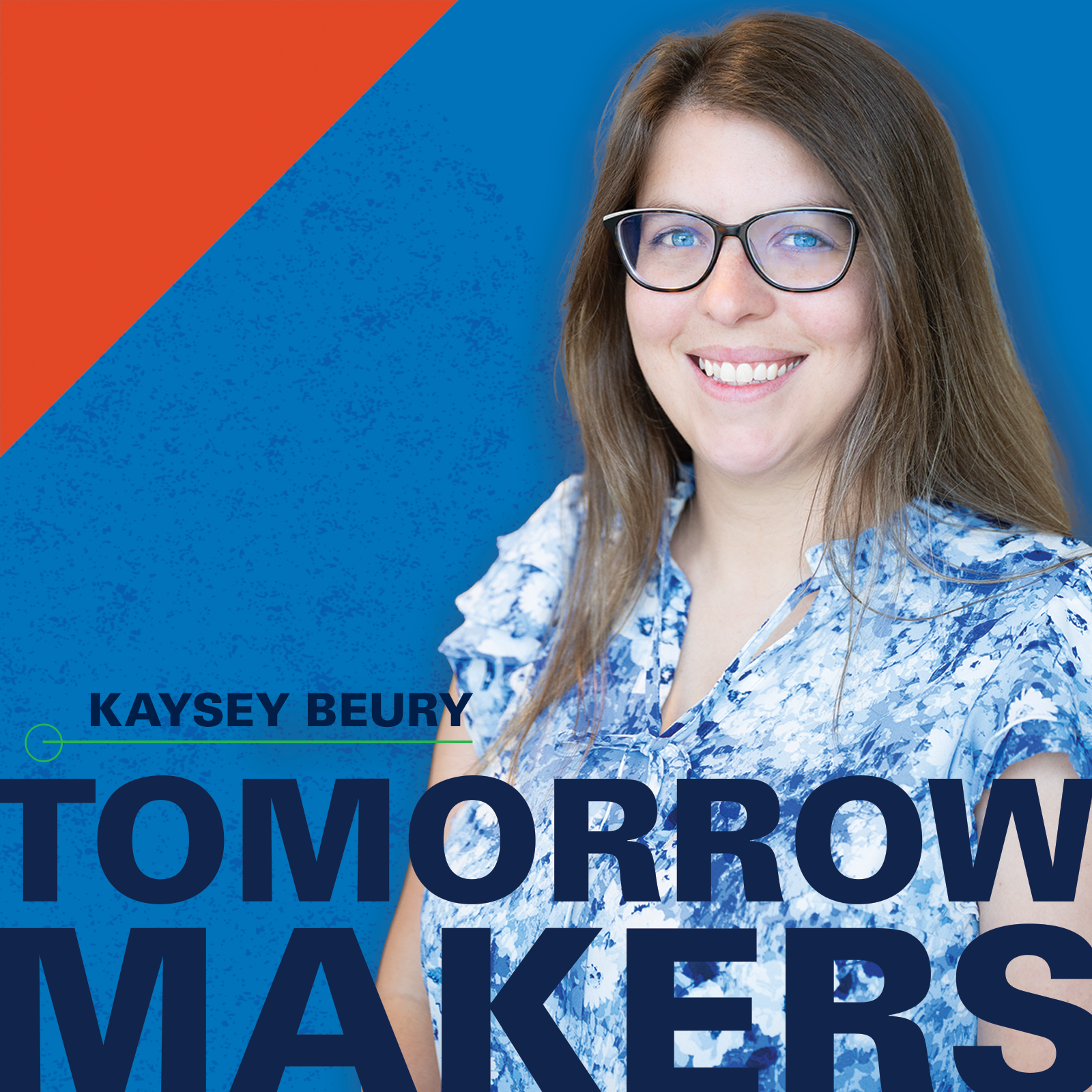
Kaysey Beury: First-Generation Student Success

S5 E1
August 21, 2025
Listen on

As we kick off the first week of classes at Penn College, we're thrilled to share a conversation with Kaysey Beury, Coordinator of Success Solutions at the Michael J. Hudock, Sr. Center for Academic Excellence. Fortunately, we caught up with her before the semester began—because we’re certain she’s incredibly busy connecting with new students. Go Kaysey!

If you're unsure about the support systems available to our students, this conversation is for you. Did you know that nearly half of our student population are first-generation college students or the first in their families to pursue a bachelor's degree? Kaysey is a passionate advocate for first-gen students—and for all students. In this inspiring discussion, she shares her own higher education journey and how it fuels her commitment to student success and her daily work at Penn College.

Thanks for listening!

Mentions in this Episode

00:00:00 Carlos Ramos: Hey, Sumer. 00:00:04 Sumer Beatty: Hey, 00:00:05 Carlos Ramos: It's Fall 2025. 00:00:06 Sumer Beatty: It is. Can you believe it? 00:00:08 Carlos Ramos: I know. 00:00:09 Sumer Beatty: Welcome back everyone. 00:00:10 Carlos Ramos: Season five. 00:00:11 Sumer Beatty: Yeah. 00:00:12 Carlos Ramos: Of Tomorrow Makers. 00:00:13 Sumer Beatty: Here we are. 00:00:14 Carlos Ramos: Here we are. This is how we're gonna roll from now on. It's just whatever we want to do for the intro of the podcast. No more of that other stuff that we were doing. 00:00:23 Sumer Beatty: We're giving you like just direct access to the good stuff. 00:00:26 Carlos Ramos: That's right. 00:00:28 Sumer Beatty: All right. 00:00:28 Carlos Ramos: So what do we got? 00:00:29 Sumer Beatty: Got Kasey Beury with us today. 00:00:31 Carlos Ramos: Why do we have Kasey Beury? 00:00:33 Sumer Beatty: Well, if you don't know Kasey, you should. So she is the Coordinator of Student Success Solutions. 00:00:40 Carlos Ramos: Well, that's appropriate. We just started classes yesterday. 00:00:42 Sumer Beatty: How about it? I'm sure she is downstairs just working feverishly. 00:00:48 Carlos Ramos: Right. So... 00:00:49 Sumer Beatty: Student after student, she is in the Michael J. Hudock, Sr. Center for Academic Excellence here at Penn College. 00:00:56 Carlos Ramos: And if you're a student, you probably, unless you're studying already right now, and have this in your ears, which is great, always listen to one of these podcasts while you're studying. You never know what you're gonna learn. But you're probably not. This is probably hitting faculty/staff. Why is this important? 00:01:11 Sumer Beatty: I think the Hudock Center is touching so many different bases, and you have an awesome staff down there, and Kasey being one of 'em, you can just, this girl cares. I mean, she came to us, she was a teacher, so she has that background and you can just, she wants what's best for our students. And she also brings this passion for first generation student success specifically, I mean all students, but being a first gen student herself, you can, you just, you know that she's got a heart for these kids and wanting to see them succeed. So this is filling in the blanks and just giving them, you know, that information about test taking, just that single point of contact for anything that someone might need, some questions like where do I go? Who do I talk to? You've got your admissions representatives throughout the beginning of your process here connecting with Penn College, and then once you get to campus, don't know who to who to ask. I think the Hudock Center answers a lot of those questions. 00:02:12 Carlos Ramos: Yeah, and Kasey is just one of the, the many down there that are helping students find their path to success. And the earlier that you can do that as a student, the better. So if you're a faculty member and you recognize that of a student, refer 'em. If you're a parent, refer 'em. If you don't know anybody, still refer 'em. 00:02:33 Sumer Beatty: I think they're, they're welcoming to, I mean, you can just walk in. I'm sure there's a process involved. They've got a, a great secretary. Look for Carol down there. She's gonna be like... 00:02:42 Carlos Ramos: Oh my gosh, Carol's awesome. 00:02:43 Sumer Beatty: Yeah. So, yeah, let's get right to it. Let's talk to Kasey. I think you're gonna really enjoy this one. So we're here with Kasey Beury. Welcome. 00:02:59 Kasey Beury: Thank you. I'm excited to be here. Also very nervous. 00:03:02 Sumer Beatty: No reason to be nervous. You did a little, test run on our open house one day. 00:03:07 Carlos Ramos: I was gonna say, this is your second time on the podcast. 00:03:10 Sumer Beatty: it technically is. Yeah. 00:03:11 Kasey Beury: Did we release her other? 00:03:13 Carlos Ramos: Yeah. 00:03:14 Kasey Beury: It was a surprise. 00:03:16 Sumer Beatty: Oh. 00:03:16 Carlos Ramos: So you found it did. 00:03:17 Sumer Beatty: How did I miss that? 00:03:18 Kasey Beury: I did. 00:03:18 Sumer Beatty: Okay. 00:03:19 Kasey Beury: At the end of Lasada's podcast, there was just like a little clip snuck right in there. 00:03:24 Sumer Beatty: Oh, Easter eggs. 00:03:26 Carlos Ramos: Yeah, it was, it was like five, 10 minutes. 00:03:28 Kasey Beury: Yeah, it was really good. It was pretty long. 00:03:29 Carlos Ramos: It was a lot of fun. 00:03:30 Sumer Beatty: Did you do one of those, like the sound effect at the end? 00:03:35 Carlos Ramos: No. 00:03:35 Sumer Beatty: I've been noticing podcasts are doing that. 00:03:37 Carlos Ramos: No, I didn't do that. I, it just kind of like the music trailed out like it normally does and then there we are. And that was a lot of fun to mix because the door was open to the studio. There was like, I dunno, half a dozen to a dozen people outside. And so we're having this conversation, me and Kasey and the group out there, and then everyone disappeared, but the door was still open, so it was still pretty noisy out there. 00:04:01 Sumer Beatty: Hmm. 00:04:01 Carlos Ramos: It was fun. 00:04:01 Sumer Beatty: Okay. Well I'm gonna go back and listen to that. 00:04:04 Kasey Beury: That one wasn't scary to record. I didn't know it was going anywhere. I thought we were just having fun. 00:04:08 Carlos Ramos: You did. You just sat down and you're like, okay, let's do this. 00:04:11 Kasey Beury: I was like, I wanna check out this equipment. 00:04:15 Sumer Beatty: Well, you're a natural. I think it works great. You're, you're doing a good job so far, so let's keep it going. So, I think we'll start with your role here at Penn College. You are the coordinator of Student Success Solutions. So tell us what does this mean? 00:04:32 Kasey Beury: So I actually got to help develop this title, which is pretty cool, not something I've been able to do before in my career. But in short, I just tell students that it's my job basically to help them find solutions to any challenges they're facing that could impede their. Progress. So I wear a couple of different hats in the Hudock Center. I officially am under academic operations, so I work primarily with some students who are returning to the College after a break in their enrollment. But then I also serve as, kind of a coach to them, to help them navigate challenges and lead. You know, them two better academic outcomes during this enrollment. We also, in the Hudock Center, all of us serve in a capacity where we're working with students who are doing walk-ins or doing some outreach to students who have been referred to our office. So I do a bit of that as well. And then the last sort of leg of my role is that I help to support dual enrollment and secondary partnerships. So when we bring students to campus, I help to facilitate some of those tours or give presentations, which is also really cool because I recently got to present to my high school, like where I graduated from. So that was kind of a full circle experience for sure and also very mind opening about just how old I am. 00:05:52 Sumer Beatty: And she's not very old folks. I think you said you had two things you do and that sounded like about a dozen. 00:05:59 Kasey Beury: There was actually quite a few more. 00:06:02 Sumer Beatty: I know. So I think that's really cool. And regarding those coaching opportunities, so what are some of the things students are coming in asking for help for how were and PRM often promoting, you know, the Hudock Center and it's one of those entities that's so all encompassing and the word success is so broad. 00:06:24 Kasey Beury: Yeah. 00:06:24 Sumer Beatty: What are a couple examples of maybe things that you might help students with? 00:06:29 Kasey Beury: We have students who come in and they might be looking for Tutoring Services. They're technically under our umbrella, but they're located in a different building. So students might say, you know, I. I am struggling in this class, or I'm not struggling yet, but I wanna be connected with a tutor, but I don't know exactly how to do that. So, you know, we can go on to the portal and help students look at their schedule and say, okay, these are the times that are available with these different tutors that fit into your schedule. Here's where you'll find them. I've actually met students over at tutoring before and said, why don't you meet me in, you know, the first floor of the ACC, and I'll take you to, you know, Tutoring Center and introduce you to Michelle so that you're, you know, have a connection there. We also do some other work regarding things like time management or study skills, so some of those durable skills that students can take into any class or out into the workforce. So think things like when we're talking about time management, it kind of goes also beyond just like looking at their schedule, but also saying like, okay, when are you making time to do all of the other things that you need to do, like eat lunch or include study time with study groups and go to work for some of our, a lot of our students actually. Or you know, when are, are you factoring in commuting time? Right? Because that also plays a key role and students don't always think about that in the morning, right? They're like, well, I get ready, but I, you know, I'm here late, like every day. Well, already you're starting off kind of on the wrong foot, right? So, yeah. So, we try to work through, you know, just going beyond their academic or their class schedule and really look sort of at the student holistically. And then we also get students, so because Student Advocacy is under our umbrella, we find that students, their academic challenges aren't always related just to academics, right? So there's oftentimes a lot of external factors that are impacting that performance in the classroom. We can help them sort of navigate some of those things. So that might mean a referral to Counseling Services 'cause that's something kind of outside of our wheelhouse where the student might need a little bit more support. Or it might be that they are, you know, working multiple jobs and are looking maybe to transition to a part-time position on campus to help facilitate or cut down on the commute time, for example, or to take a job that maybe is more conducive to their class schedule. Student Advocacy does a little bit of that work. Really all of us do. But Student Advocacy also is able to do some more with things like surrounding food insecurity or if students are facing housing challenges or some other more serious relationship concerns. That's I think, where, you know, Tanya, Dr. Berfield would come into play. 00:09:12 Sumer Beatty: And she was on a previous podcast with us, so we will link that in the show notes. 00:09:17 Carlos Ramos: So before you got here, you were an English teacher. Ninth graders. A little bit different than the the college set. What prompted you to leave junior high? Right? Ninth grade? 00:09:29 Kasey Beury: Junior high. 00:09:29 Sumer Beatty: Middle school. 00:09:30 Kasey Beury: Junior high. 00:09:30 Carlos Ramos: Middle school. 00:09:31 Sumer Beatty: Yeah. Whatever you wanna call it. She knows. 00:09:32 Kasey Beury: High school. 00:09:32 Sumer Beatty: High school. 00:09:33 Kasey Beury: I did teach middle school too for a little while before that, so. 00:09:36 Carlos Ramos: All right. So what prompted you to leave them behind and come up to college? 00:09:41 Kasey Beury: So, COVID is my short answer. I left in 2022. You know, we're kind of in the thick of it. I remember when I arrived at Penn College, we were still masking, I think, here on campus or maybe had just transitioned off of that, but we were still masking at my school and I had students here, there, and everywhere. So I had students who were full in classroom during COVID. I had students who were online full-time. I had some students who were a hybrid in two different groups, and so it was just a lot of chaos. I really, really loved my job as an English teacher and I really loved my students, and in fact, I still actually teach FYE and Composition here because I enjoy the classroom so much and I just like that perspective. But I also have a degree, a master's degree in higher ed. So this was actually always sort of my plan. Even before I graduated with my undergraduate degree, I was like, I'm gonna, I wanna work in higher ed because I worked in the admissions office. And so it just took me a little while to get ready for that change, I think. And because I'd been in the classroom for almost nine years. And so I, you know, I think COVID really made me get to the point where I was ready to make that transition. I can tell you though that my initial position at Penn College was as a first year advisor in what was then the LEAP Center. And the ninth grade students are not much different than the college students coming in. So there's a lot of things, you know, that happen with that transition from middle school to high school. And I taught eighth grade for a couple years before I was at the high school level. And those same transitional experiences happen when students come from high school to college, and so I really appreciated that aspect. But that first position in the LEAP Center really allowed me to sort of blend my experience in the classroom and working directly with students in that capacity and to kind of take a step in a different direction. I actually also worked in higher ed before. So as a student intern during my program at Penn State, in higher ed, I worked at Lock Haven University, which is actually also my alma mater. I did some of their summer bridge programs. So I taught in their summer bridge program for a little, for I think, I think I did it for one summer. I taught a literature class. And then I also, when I was a student intern, I worked with their tutoring director at the time, Pam Chapla. And I helped her support the Jumpstart and EOP programs there, which was super exciting. So, that position really allowed me to kind of bring all of those things together into one role as kind of an introduction to Penn College and into higher ed. 00:12:26 Carlos Ramos: So you were teaching ninth grade when COVID hit. Those students are now, or sophomores, juniors in college. What are you seeing from those students that... That was such an impactful event. I mean, it's so impactful on everybody, but we have this pocket that's moving through and even behind that, it means that, that this is just gonna be something that's a way for, for quite a while. But did you see anything specific with those students? 00:12:55 Kasey Beury: Because every school was handling things a little bit differently. We have a lot of students coming in with various experiences during COVID and also had various learning opportunities or lack thereof. And part of that is due to access. I know at my school, and actually I've never taught at a school that I didn't have access to one-to-one devices. Even my first year teaching my first school. We started out, that was the first year that they had laptop carts and they had one for the one, I think they had three maybe for the entire middle school, but they were housed in the English classroom. So like the sixth grade had a cart, the seventh grade had a cart, and the eighth grade had a cart, and it just happened to be in my room. So I used them all the time in when I got to Bellefonte. Our students were one-to-one. And so, I think we had maybe a bit of an easier time to transition to some of the things that we needed to transition to, like going completely paperless for a while, you know, really relying heavily on our online learning management system, whereas many schools did not have that. And so I think that in some ways many students are maybe better prepared or acclimated to some of those things that we rely heavily on at the college level, like our learning management system than maybe some other students had been. Also, blows my mind to think that that ninth grade class, the last one that I left, just graduated high school. So, and I was class advisor at the time. So like those students, they're, they are, I think the, the first class, that class of 2020, they just, they just graduated. and so time really flies by. 00:14:39 Sumer Beatty: So you may have students that you're going to work with here at Penn College that you could have taught. 00:14:44 Kasey Beury: That's my favorite part. I think about working at Penn College is seeing some of my former students around campus. I think it's one of the most rewarding, like parts of, of working kind of close to where I used to teach. It's really interesting to see students go from ninth grade to being seniors, right? And so they would always come back to my room, you know, and continued to give me gray hairs. But to see them as like grown adults out in the world, you know, you're at Penn College or you know, to hear about, you know, what they're doing now. A couple weeks ago, actually, it's probably longer than that now, one of my former students, I took my car to the Subaru dealership for, you know, just an oil change in State College. And one of my former students came out. He had done the work on my car and he was like, Ms. Beury, I just wanted to say hello and let you know that, you know, I was the one that did your oil change. And he was a student at Bellefonte who had, was, think he graduated, was graduating that spring, from here at Penn College from our automotive program, which is super cool, to see kind of like so much growth from the time they're little, tiny baby ninth graders, you know, to like grown adults working on my vehicle. So. 00:15:54 Sumer Beatty: I hope he did a good job. 00:15:56 Kasey Beury: He did. 00:15:58 Sumer Beatty: So you are very passionate about the first gen experience. Have you had any students come through for first gen opportunities that you've worked with? 00:16:09 Kasey Beury: I know several of my former students would've been first gen. It influenced my teaching, right? Like I talk to my students a lot about how like education is really important and how it can have a huge impact on your life. It's like the one thing that nobody can really take away from you once you have it. You know, they can't just pluck out that information from your brain. I am sure that, that there are students, you know, who maybe were first gen that I just wasn't also aware of. 00:16:39 Sumer Beatty: Since we've worked together, I've kind of always thought of Kasey as the first gen advocate. I know you're so passionate about that. Is that something you kind of created for yourself? Or did it, was it just a natural fit? What inspired you to take that on? It seems like such a natural fit, and when I hear you talk about that, it's just, you can just tell it's, it's like a part of you. 00:17:02 Kasey Beury: I kind of explicitly asked for it. We had done some things in the Hudock/the LEAP Center and some things around campus, around first gen celebration. And I wanted to keep that momentum going. And so I went to Anthony Pace and to Dan Clasby, who is my direct supervisor, and said like, I would really like to maybe take on this project and, you know, work towards something greater or something bigger. And they were like, okay. I think I'm really passionate about it because I, myself was first gen. And it gives me a lot of perspective, in my work. I will say, you know, I had my heart set on attending one school early on. You know, when I was graduating high school, I was going to Keystone College to play field hockey, and that didn't exactly work out the way I thought it would. So two weeks before I graduated, my parents had a baby, which was super exciting at home, but also changes, you know, some of the dynamic and some of the plans. And there was gonna be a gap of about $5,000 for me to attend college in the fall. I sort of panicked and I was like, there's no way I'm gonna be able to make this at my summer job, even though I did in the end. But, I was like, there's no way I'm gonna be able to do that. I knew I couldn't go to my parents, you know, to ask them to pay that gap with a new baby. We were already, you know, from a low income household. And so I went to my guidance counselor, I remember like in tears and I was like, I don't know what I'm gonna do, you know, I was planning to go and now it's June and I have no other plan. I had thankfully applied to some other schools because of my high school AP history teacher, Mr. Antonetti. I remember when I was applying to Keystone, he was like, where else are you applying? And I said. Nowhere. It's like the, the applications cost like $50, like nowhere. And he was like, you need to apply to a couple other schools. He's like, I'll write you your recommendation letter, but you need to apply to some other places. And thankfully I had, because one of those places was Lock Haven and my guidance counselor, you know, he called the admissions office and really helped facilitate that process to get, you know, all of my documentation sent to Lock Haven. It had been accepted, but you know, like at my FAFSA stuff sent there and, and all of that. And, I never stepped foot on campus before I arrived for move-in. I didn't even like I didn't know that orientation was like a thing I should be looking out for. And because I was sort of like so late in the process, I just completely skipped over that whole process. I didn't even know that existed. And my parents didn't know, right? So I just like showed up there with my bags on move in day and went, you know, I knew where my room was, but that's about all I knew. And I just, I want students to not have to feel that way and to know that there are like folks on our campus who are here to help them. I also had a not so great experience with my financial aid office at Lock Haven at one point, so I already told you, you know, I, I was working an awful lot, three part-time jobs actually, and I was taking 18 credits every semester, and my roommates and I had moved into a house off campus. And, we got, an electric bill that was like $500. And, you know, for college students we were like, oh my gosh, how are we gonna pay this? At that same time or roughly around that same time, I was selected for verification. I went to financial aid and I was like, I don't know what to do about this. Like, you know, I'm, I am, my parents are, you know, three hours away and like I have all this other stuff happening, and I didn't really get the best support or help. And so my hope is that by bolstering some of those supports and creating, you know, some connections across multiple offices on campus. You know, we can connect students to folks who they will feel safe going to. We are so fortunate on our campus that we have people that are so dedicated and so friendly, and I feel like our customer service is probably one of the best things that we do. Like students and parents know that they can come to any office and they will get help and support and not get the runarounds. You know, go to this office. You know, we actually walk them to that office. And so that's the kind of culture that I hope that our first gen students see and that they know exists for them, so they know that, you know, you can do it alone. They are resilient, you know, are first gen students are very capable, but also they don't have to do it alone. There are lots of people here to help support them along the way. 00:21:35 Sumer Beatty: And some of the work you are doing is to provide not just the mentorship in terms of the support services, but also giving them peers and connecting them with peers who may be going through the same thing. How is that working? You had mentioned the FYE, which here, we all know what FYE is, but for those who don't, that's first year experience. So that's a class all of our freshmen are required to take that gives them an introduction to the College and the services that we have available to them. 00:22:06 Kasey Beury: In regards to like the FYE class specifically, I'm really hoping that we can, there's, so there's four main projects in FYE that all of the students complete no matter what class they're in. One of them is a group project, and I would really love to get more student voice, like on our first gen webpage and just out for students who are coming to Penn College to know that, you know, our campus is actually, right now, I, I think the most recent data is that we're somewhere around 40% first gen, so 38-ish percent. There are lots of other students who are in similar situations to them that, you know, it doesn't hurt to connect with and see like, well, how did you navigate this? I'm really hoping that that group project, our students will be able to maybe produce some things that they can share out with other students across campus that can be helpful to other students. We also have a first gen celebration in the fall, and I'm hoping that those students will want to take a bigger role maybe in participating in planning, you know, that event for the fall semester. We're working to try to also give students opportunities that maybe will help them build some skills. You know, things they can add to their resume. We know our students are very career driven here at Penn College. And so we just had our first induction for Tri Alpha in March. And that is the National Honor Society for first generation honors or first generation college students. And that was a really eyeopening experience. So it was very stressful to plan. I've never planned really anything before. I was class advisor, but, and you know, we planned to like prom things. But because of COVID, I didn't really have to go through all those processes, you know? And, when you're working with like an outside vendor, you don't have to do as much of those things. But here, you know, I had to like book the rooms. I had to feed, they were like, what kind of food do you want? And I was like, I have no idea. I don't, I never even planned a wedding. Like, what do people eat at these things? Right. So that was a really eye-opening experience and a growth opportunity for me. But it was so rewarding to see. I had students RSVP. And I said, you know, bring your, your supporters. We want, we want them to come. One student responded, they're like, can my friends come? And I was like, yes, absolutely. How many of them do you want to come? I had one student who requested five of their family members to come, which was super exciting. And then like everyone was just so happy. It was such a celebratory moment. And so we wanna create more of those opportunities and things that students can work towards during their time here at Penn College. As far as the resume building part that we're hoping for Tri Alpha and for some of the other, you know, just in general for our first gen students to be able to experience is, we want to provide some service learning opportunities for them. So we have Service Saturday here on campus. We would like to get a group together to be able to participate in, you know, one or two of those per semester or over the course of the academic year. And then also, you know, is there opportunity for us to bring, first gen alumni to campus? I'm hoping to get maybe a first gen alumni panel together for first gen celebration for students to be able to like ask questions of people out an industry who were in their situation, you know, maybe not too long ago. Because it can be difficult, you know, to to see yourself at the end when you feel like you're in the thick of it, right? And potentially facing so many different challenges. 00:25:28 Sumer Beatty: I would imagine this, of course it's important for our students, our first gen students, but I would think too, the parents of first gen students and having that support and knowing, you know, maybe I'm, I'm a parent and I don't know what this, what is this FAFSA you're talking about? You know, and there are all these things that maybe you don't have experience with, but knowing the high number of first gen students that are attending here at Penn College and the success I think from the parent perspective is probably pretty valuable. Are you speaking with families during Open House who seem to be coming from that background and are finding support and just comfort and knowing that they are, you know, being taken care of here at the College? 00:26:08 Kasey Beury: New Student Orientation has been a really great opportunity to talk with families and supporters and parents about what it means to be first gen. So on our campus, we define first gen... there's not really an official national accepted, but most institutions define it the same way we do. And that is any student who, whose supporters or guardians, they're legal guardians have not yet earned a four year degree. That makes us a little bit unique because we used to be a two year institution. I actually just yesterday had a parent say to me, you know, I, I actually have an associate's degree, but could my students still participate in this FYE class? You know, even though I have an associate's? And I said, absolutely. Because our definition is that four year degree. Right. And their experience might be a little bit different than if you had gone to a community college where there's different resources in different, you know, it's a different structure. Our families are very interested in this and also like very supportive. Right? It's really exciting to be sending your kid or you know, your student to college. I've seen grandparents coming with, with students who are like, this is going to be, you know, so, so important and impactful for the rest of their lives. We understand, you know, I think that being first gen, you are trailblazing not just for yourself, but also sort of paving the way for others who are gonna come after you and your family. After I went to college, I really tried to get my siblings to go, and it just wasn't what my sister wanted. My sister has a successful career, you know, working out in industry, and she really loves what she does. And that's fine. And my brother was kind of similar. He was out working actually at the same place my sister works. And one day he came to me and he was like, hey, I'm gonna go on some college tours. Will you come with me? And I was like, oh my God. Yes. Right? Like I was so excited to be able to share and talk about like my experience with him, and he just needed time to like come to it on his own. So he went to Penn State, he was at Penn State Berks. He graduated with a degree in either finance or accounting. I'm sorry, BAS, I can't remember the difference between those two. I always get them confused. But, he works at Lockheed Martin now, and he is super successful. In fact, when he got his like first job offer, so like, he was like, can you read my resume, you know, a hundred times my cover letter, all this stuff. And I was like, okay, okay, okay. And then, he got his first job offer and he was like, is this good? And it was more than I was making. And I was like, yes. Yes, it's good. It can really change not just your own perspective and your own situation, but also like it's really changing for an entire family in every generation that's going to come after. 00:28:51 Carlos Ramos: So, Kasey, you graduated from Leadership Lycoming. For those not familiar with that program, could you give us an overview of that and what was your experience in the program? 00:29:01 Kasey Beury: Leadership Lycoming is a skill building that connects budding local leaders from across Lycoming County with other business leaders in the community. So think of it sort of like a little bit like a mentorship program, but really it's about connecting those leaders with the various resources that might benefit them or where there could be like potential collaborations. So I know that Penn College has sent multiple people through the program. You're kind of like part of your own network then afterwards, which is a really great opportunity. I think as someone who didn't see themselves in any leadership capacity before this, I was actually really surprised, when they were like, we, we think that you should apply for this program. I was like. Me? What? Why me? Like, I don't, I don't, I'm not a leader. The cool thing about the program is that you get to meet other people who maybe are already in a leadership role at their, you know, their institution or running their own businesses, but then you also have people who are just looking to step into those roles or who maybe the expectation is coming for them to step into those roles. And so this is an opportunity to network with folks who have sort of already gone through the process as you are trying to learn or maybe step into a role like that or, or looking to see yourself in a role like that, you know, at some point in the future. 00:30:24 Carlos Ramos: So from what I've seen, that group, each year they tend to work with a nonprofit. Is that right? 00:30:29 Kasey Beury: They, I think, changed up a little bit of the structure in the last year or so. We were given the opportunity to explore some of our own volunteer projects as part of our requirements this year. And they might've done that last year too. So some of the, one, like I volunteered with the, the Master Gardeners and worked on a project over, In like the Muncie area. That was a really fun opportunity just to like do something different. I wanted to kind of go outside my wheelhouse. I just wanted to volunteer some time. And my partner Dustin, makes me do a lot of gardening stuff at home. you know, carrying dirt and sprinkling stuff on the stuff to make it grow better. All these things, right? And so I was like, well, I have some skills so maybe I can contribute there. So that was, that was fun. But I also did some other volunteer projects. So I did one with the United Way, where we packed books that were going out to be donated to kids in the local community. And that was really awesome. I was a part of the Bellefonte READS program when I worked at Bellefonte, which was our community read. And we also donated books. So I was super excited to see something similar happening here in Lycoming County and wanted to make sure that I was a part of that. One of the other requirements is kind of goes a little bit off topic from the volunteer piece is that they really wanted us to get exposure to like what being on a board or serving on a board looked like. Because ultimately they, the goal is that, right, you take some of these opportunities, these skills, these connections you've made, and then you step into some of those leadership roles out in the greater community and not necessarily just within your, you know, place of business where you work. For my board requirement, I went to the James V. Brown board. I attended a board meeting there and I learned a lot about sort of how things work at that library. And I thought, you know what? Like I could probably do this at my local library. And so I showed up to a board meeting and I was just like, hi, my name's Kasey and I just wanna learn about the library. And I'd already been going to like a book club, there. And so some, two of the other folks who are in that book club with me were like, I'll go to the board meeting with you. And I was like, great. And so we all show up. And it was clear very quickly that they do not get a lot of community members just showing up. So they were like, why are you here? Right? 00:32:47 Sumer Beatty: Like maybe a little bit skeptical, they're ready, answer your questions or, or address your problems. 00:32:52 Kasey Beury: Yes, exactly. Yes. And so, you know, I kept coming back, and one of the last board meetings maybe in like May, I've been to a couple now, they like had, you know, a copy of the agenda ready to go for me, like waiting. And, you know, it was, it's really fun to now sort of feel like I'm a part of my community when, like, I've lived, like I went to college there, I've lived there for like the better half of a decade, almost 15 plus years I guess, at this point. And like I never like attended any of these things or did any of stuff. And so now, like I, like I said, I had already been a part of that book club, but now also like I'm going to the board meetings just to get involved. And I got involved, the board members, one of them came up to me after and said, you should join the Friends of the Library. And I was like, what's that? And it's their like volunteer organization for supports at the library. They say, you know, keep coming to the board meetings, but we, this probably is really where you wanna be. And so now I'm on the Friends of the Library committee, and I, just earlier this week, we had our first fundraising meeting. We're working, like, I feel like I'm actually like having an impact and able to work on projects and all of that happened because of Leadership Lycoming. Like I never would've showed up to a board meeting just to like say hello and see what was going on had I not been forced to do that. I don't know if forced is the right word, but asked to do that as part of the requirements for Leadership Lycoming. And so I'm, I'm really thankful that, you know, someone above me thought that it was important that I do this program and that I should apply and saw something in me that could be fostered through that program. 00:34:28 Sumer Beatty: Yeah, sounds like an amazing experience for you. 00:34:31 Kasey Beury: Oh my gosh, I would highly recommend it to anyone. We got to see so many different things. So my dad is a welder by trade. One of the days we went to Lycoming Engines and to PMF industries. And I will admit I was not as excited for that day because I thought I sort of like knew what I was going to experience. I was like, oh, you know, industry is maybe not for me and kind of boring to me. I was so fascinated by literally all of the things. I asked a hundred questions. And afterwards, like PMF, they, they do, I think it's called flow forming, but basically they like take one piece of metal and they make all this cool stuff out of it. And basically it's all just through like using pressure. I was like, oh, do you like heat it up? Like on, you know, that show on the History Channel Forged in Fire? And they were like, not really. But like afterwards, you know, my classmates were joking and they were like, Kasey, we thought you were gonna leave with a job application. Like you were asking so much stuff. But it was just super exciting to see things outside of my wheelhouse and learn so much about what our community has to offer. Because now I also get to bring those things back to my students and say like, hey. I know that you're looking for a job and this local, you know, partner maybe is somewhere you wanna look. Like I've been there. Their facilities are great. Maybe you should check it out, right? It doesn't hurt to, to make a connection there. One of the other, the first experiences we had, we were in, First Community Foundation Partnership, and someone brought up that they have a person who does dedicated scholarship stuff in their office. And a lot of it happens at the local high schools. But they have scholarships that go unused every year who are sometimes earmarked for Penn College students, or Lycoming County students, or Clinton County, you know, our surrounding counties. They needed some help getting students connected with them. And so, Marsha Lemons, I reached out to her, you know, I had a meeting with her. She gave me a list of some of the ones that, that our students here at Penn College would be eligible for. And when it came time for the applications to open, she reached out to me and said, Hey, we have this forestry scholarship and we haven't had any applicants. Could you maybe help me out? And so I sent the list over to Brad. Brad was able to help me get a list of our forestry students and I sent the information, you know, so that they would know what, that it was available to them. And they had a additional applicants. I don't know if anybody got, you know, the scholarship, but she, I did confirm with her that they did finally get some applicants. 00:37:08 Sumer Beatty: Oh, that's fantastic. 00:37:08 Kasey Beury: A result of that. So like, what a great connection to make, you know, to students in the greater community, especially, you know, coming back to first gen, those ones who maybe don't know that those things exist. Like, I, I've worked here for several years. How many folks, you know, I've worked here in, in, didn't know that that was a thing. Right? The, there are external opportunities that I think we could take better advantage of if we know that they're there. And Leadership Lycoming has helped connect me, I think, to some of those so I can pass those along to my students. 00:37:38 Carlos Ramos: It baffles me how so much scholarship money is left on the table because of certain requirements that need to be met, but maybe that's the idea for your FYE project is can we create a app, a system that connects students in these scholarships in the local area? 00:37:55 Kasey Beury: That would be super awesome. 00:37:57 Carlos Ramos: Yeah. 00:37:57 Kasey Beury: I always say, you know, the students come up with way better ideas than I ever could, and they're all mostly way smarter than I am in a lot of these areas. And so I'm super excited to, to think about, you know, those possibilities. You put out an open-ended question, and when I was a young teacher, I didn't, I was really skeptical of that. I was like, no, they need all of the things, you know, step by step, like how it's gonna work. And my mentor, one of our projects, she was like, no. Just give them this question and they will figure it out. They will hate you for it in the beginning, but they will figure it out. And they always did. They always did. And they would come up with the most amazing projects and ways to showcase what they've learned. And I'd be like, how did you even like think of, of this? And they're like, oh, I don't know. I just, I just did it. And I'm like, this is amazing. Right? Like, it's amazing what students can do when you don't put any limitations on them. 00:38:51 Sumer Beatty: I love that as a parting thought. Any advice for those listeners out there? It could be parents or supporters of first gen. It could be our first gen students themselves. Anything that you wanna share with our audience? 00:39:05 Kasey Beury: Keep going. College is hard and it's meant to be hard, but that doesn't mean that it's insurmountable or that it's out of reach. And then I think a request. I am always looking for more support and folks who are interested in getting involved in this work too. It takes a village to support our students, and I think the more people we have connected, the better. So if you have an interest in doing something or participating in first gen celebration. Or having a, something that you think might be useful, some type of workshop or presentation or just a connection you wanna make, or if you're an alumni listening and you wanna participate in the alumni panel in November, I'd love to have that. I just went to a conference and someone brought up that they did an outreach and a faculty member said, you know, I could do a cooking demonstration at your first gen fair. I was like, what an awesome, like opportunity, a unique, you know, something that like we, we might not have typically asked for. And apparently their students like loved it. They thought it was so cool that they got to, you know, see one of their instructors out, you know, outside of the labs, right? But like, and everybody got to experience it. And so like, there are so many folks on this campus doing such awesome things, you know, students doing independent study projects. And this could be a really great opportunity for them to showcase their work and and make connections. 00:40:30 Sumer Beatty: That's fantastic. 00:40:31 Carlos Ramos: That's great. We'll put the contact information in the show notes, but I think you can go out to the website, look for the Hudock Center. You'll find Kasey listed out there on the staff page, so reach out to her. 00:40:41 Sumer Beatty: Pct.edu/first-gen. Yeah. 00:40:45 Carlos Ramos: Thank you, Kasey. 00:40:47 Sumer Beatty: Thank you. 00:40:47 Kasey Beury: Thank you so much. 00:40:49 Sumer Beatty: Thanks for hanging out with us today. 00:40:51 Carlos Ramos: Don't forget to rate, review, and subscribe wherever you'd listen to your podcasts. 00:40:56 Sumer Beatty: Check out our show notes for bookmarks to your favorite sections and links to resources that we mention in today's episode. 00:41:02 Carlos Ramos: You can also find past episodes and see what's on deck for upcoming ones at pct.edu/podcast. 00:41:09 Sumer Beatty: And of course, we are open to your thoughts, ideas, and suggestions. So send those over at podcastat@pct.edu. 00:41:17 Carlos Ramos: It's been real. 00:41:18 Sumer Beatty: Catch you next time. 00:41:22 Kasey Beury: Like almost every time it gets super emotional. So I prepared my answer so we could just like hit that one and then move on. That would be great. 00:41:31 Carlos Ramos: Oh, I am going to tease out the emotion. 00:41:33 Sumer Beatty: Yeah. Now we're really interested. I was interested before, but now it's even more so.