Podcasts
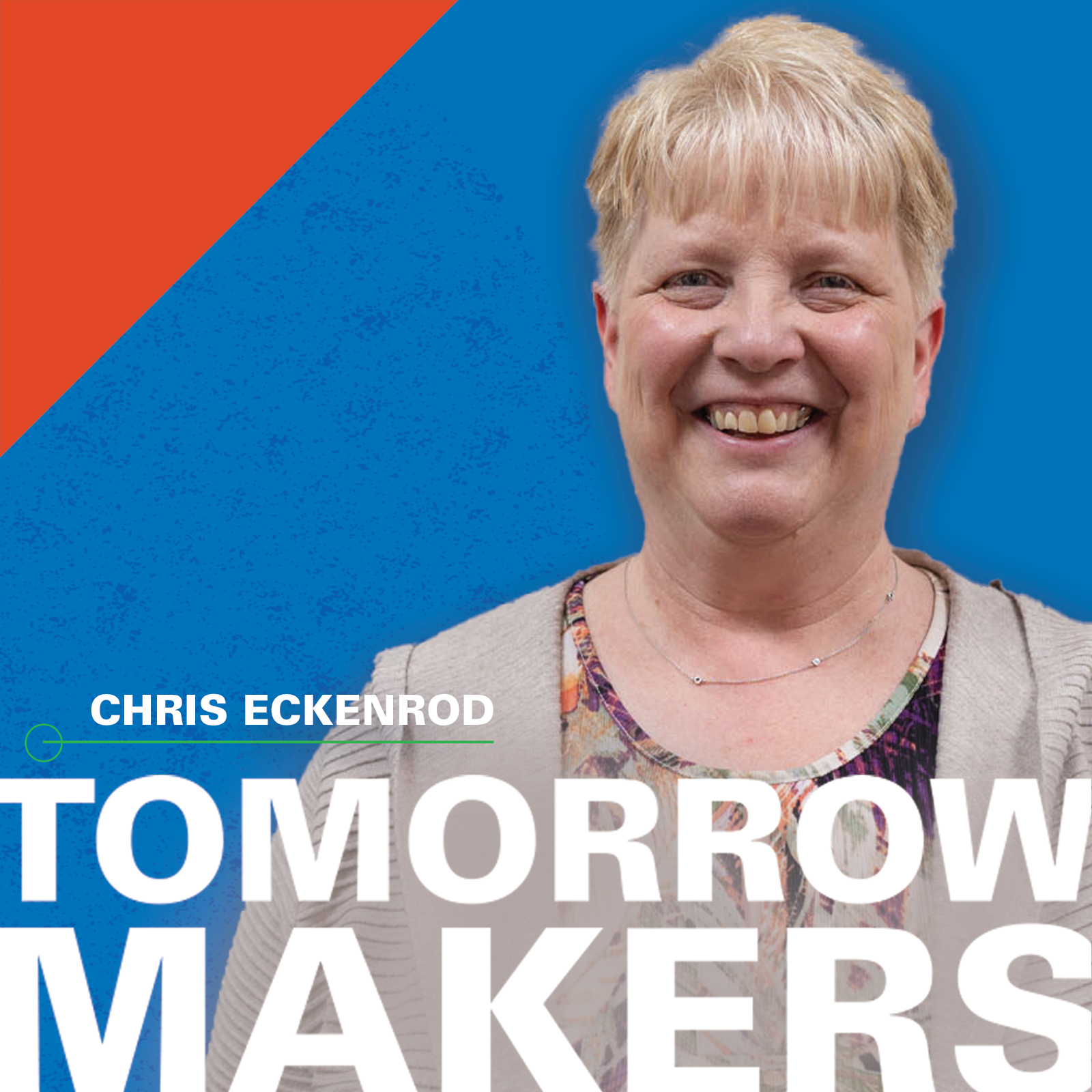
Chris Eckenrod: Careers in Radiography
S5 E3
September 18, 2025
In this episode, we talk with our Director of Radiography, Chris Eckenrod, about the endless opportunities in radiography. She shares her route from the clinical world to higher education, what it takes to be a successful radiographer, and what she loves most about the program at Penn College. We learn about the differences between radiology and radiography, explore the role physics plays in the process, discuss program outcomes, and consider the wide ranging opportunities awaiting graduates of this associate-degree program. Chris isn't all work and no play. She also tells us what she enjoys doing in her free time including a fun conversation about taking her cats camping!
00:00:00 Carlos Ramos: All right. We are back. Back from what? I don't know, but we're back.
00:00:09 Sumer Beatty: Yes. We're here with Chris Eckenrod, Director of Radiography at Penn College.
00:00:14 Carlos Ramos: And what's special about Chris?
00:00:17 Sumer Beatty: Oh, put me on the spot. Well, we just had a great conversation with her and so she has been doing, she's been in the field for 40 years.
00:00:26 Carlos Ramos: Oh my gosh.
00:00:27 Sumer Beatty: Yeah, it's interesting 'cause she was talking to us about her getting into it originally when her son was like six months old or something like that. And now she is, you know, her son's 40 and and she's been doing this for 40 years. I mean, that is passion right there.
00:00:40 Carlos Ramos: Yeah. I'm, I'm trying to imagine doing anything for 40 years.
00:00:43 Sumer Beatty: Yeah, it's remarkable. And when you talk to her, she's just so knowledgeable in the field, and I think this is a wonderful conversation for anyone who's considering this career path. You know, she talks about the critical thinking involved in being in this, this field, and just all the different pathways that you can explore as well.
00:01:01 Carlos Ramos: And in true tomorrow maker fashion, we don't just talk about the careers. We talk a little bit about what what drives Chris outside of the radiography room.
00:01:10 Sumer Beatty: Yeah. It's all about work life balance. So, I mean, there are cats involved, there's glamping involved. It's just you gotta listen. You, there's some good nuggets in there for sure.
00:01:21 Carlos Ramos: All right. A lot of fun coming up.
00:01:22 Sumer Beatty: Yes.
What do you want a banter about? I like your glasses. Are they reading glasses?
00:01:35 Christine Eckenrod: They're just reading glasses.
00:01:38 Sumer Beatty: They're cute.
00:01:39 Christine Eckenrod: Thank you.
00:01:40 Sumer Beatty: Did you pick 'em up at a camp store?
00:01:42 Christine Eckenrod: I...
00:01:44 Sumer Beatty: Carlos is like, what are you talking about?
00:01:47 Christine Eckenrod: No, I actually you got like a pack of six at HomeGoods or something.
00:01:52 Sumer Beatty: Oh, okay. I asked knowing that you enjoy camping and my mother-in-law will always have these really cute glasses on and I'll think she ordered them at some, you know, boutique or something.
And then she'll say, oh, I got 'em at the camp store. And the camp store has some pretty cute things, so.
00:02:07 Christine Eckenrod: They do. Yeah.
00:02:08 Sumer Beatty: Yeah.
00:02:09 Carlos Ramos: Gotta be styling when you're rocking the tent or the camp or whatever.
00:02:11 Sumer Beatty: On your camping.
00:02:12 Carlos Ramos: Yeah.
00:02:13 Christine Eckenrod: We don't camp. We glamp.
00:02:15 Carlos Ramos: Okay. Now that there's nothing wrong with that. I'm I'm kind of down with that these days.
00:02:20 Christine Eckenrod: You used to go in a tent but can't walk now if you sleep in a tent. You know, age.
00:02:25 Sumer Beatty: So, yeah. And you are not just glamping solo, you're glamping with your cats.
00:02:31 Christine Eckenrod: Yes, my cats love to camp.
00:02:35 Carlos Ramos: Okay. I need to hear the origin story of this.
00:02:39 Christine Eckenrod: Well, my husband found these cats, they were only a couple weeks old and we couldn't leave them home alone 'cause we had to bottle feed them.
So they've been camping since they were probably about a month and a half. And but they love going,
00:02:52 Carlos Ramos: I need to take my cat camping.
00:02:54 Christine Eckenrod: I have two, I have the only two cats I think in the world. It's, it, it's weird having these on when I'm looking at you. It's good for them. You're a little distorted now.
00:03:07 Carlos Ramos: That's, that's just how I roll.
00:03:09 Christine Eckenrod: But anyway, so yeah, I have the only two cats in the world. I swear that you bring their, their crates up and you open a door and say, who wants to go camping? And they run in.
00:03:19 Sumer Beatty: Oh!
00:03:20 Carlos Ramos: So cool.
00:03:21 Sumer Beatty: And they have their own tent.
00:03:23 Christine Eckenrod: They do have a little tent outside. It has like some levels that they can climb on and stuff like that, so, yeah.
00:03:30 Carlos Ramos: Well then of course they love camping.
00:03:32 Christine Eckenrod: Yes.
00:03:34 Sumer Beatty: They're spoiled.
00:03:34 Carlos Ramos: Travel house?
00:03:35 Christine Eckenrod: Yeah. They are very spoiled cats.
00:03:37 Sumer Beatty: And their names are?
00:03:39 Christine Eckenrod: My husband named the male Lucky because he found them on, St. Patrick's Day.
00:03:44 Sumer Beatty: Okay.
00:03:45 Christine Eckenrod: And I named the girl Moira, 'cause I'm a Schitt's Creek fan, and...
00:03:49 Sumer Beatty: I wondered when I saw that name.
00:03:53 Christine Eckenrod: So she is and just because she is a hundred percent Moira, like she...
00:03:59 Sumer Beatty: She's got a little attitude.
00:04:01 Christine Eckenrod: She does. Very much so, so, and...
00:04:03 Sumer Beatty: They like pink? She likes pink? The color pink. Is her tent pink?
00:04:09 Christine Eckenrod: They're, well, they do have a, they had a pink tent, but we've upgraded
00:04:12 Sumer Beatty: Oh.
00:04:12 Christine Eckenrod: We got them a bigger one. I'm sorry. Yes.
00:04:15 Sumer Beatty: Oh, that's okay.
00:04:15 Christine Eckenrod: They did have a, a pink tent, but it's not pink anymore.
00:04:17 Sumer Beatty: I had this vision of this beautiful pink tent and there was a... Do you have a stroller for them?
00:04:22 Christine Eckenrod: Yes.
00:04:23 Sumer Beatty: Okay. I wasn't sure what intel I got here and what wa what?
00:04:27 Christine Eckenrod: I was just, that was an eye roll.
00:04:28 Sumer Beatty: I putting the picture together in my head.
00:04:31 Christine Eckenrod: Yes. So they have a, now they don't both fit in a stroller anymore, so you have to take them one at a time. But the kids up at camp, they'll come over and Can we take your cats for a walk? So yeah.
00:04:45 Sumer Beatty: It's important to have a work life balance.
00:04:48 Christine Eckenrod: Yeah.
00:04:48 Sumer Beatty: So I think you said at one point if you could camp for a living, you would.
00:04:53 Christine Eckenrod: Yes.
00:04:53 Sumer Beatty: Yeah. Alright, well, should we get started?
00:04:58 Carlos Ramos: I, we already have.
00:04:59 Sumer Beatty: Okay.
00:05:00 Christine Eckenrod: Oh, geez.
00:05:02 Sumer Beatty: All right. So we're here with Chris Eckenrod, our Director of Radiography, and so we're really excited to have you today. Thank you for joining us.
00:05:10 Christine Eckenrod: Thank you. I'm excited to be here.
00:05:12 Sumer Beatty: Yeah. So 30 years in medical imaging.
00:05:18 Christine Eckenrod: More than that.
00:05:18 Sumer Beatty: Oh, more. Oh, okay. 30 plus. How many are we at? Are we close to 40? No.
00:05:23 Christine Eckenrod: Oh, so we are, so ...
00:05:24 Sumer Beatty: what?
00:05:24 Christine Eckenrod: I started X-ray school, my son was six months old and he just turned 40.
00:05:30 Sumer Beatty: Oh, wow.
00:05:31 Christine Eckenrod: Yeah.
00:05:33 Sumer Beatty: What keeps you going? That's a long time.
00:05:36 Christine Eckenrod: I think just the love for it. I have, have had a passion for radiography since I first started, and I think that's what keeps me going.
So even when I wanted to, you know, leave the clinical practice and, and switch jobs, I didn't want to do something different. It's like, what can I do differently with what I have? And so that's sort of how I got into education.
00:05:59 Sumer Beatty: Growing up, were you always interested in healthcare? Was that something you knew you wanted to do or how did that progress?
00:06:06 Christine Eckenrod: So not really. I, I didn't have any family members who worked in healthcare or anything. I did know that I like to help people. And I, I sort of wanted to do something in the medical field, but I didn't know what the options were and what was out there because like I said, I didn't have a fam any family that worked in that field.
So at our local hospital, they had something called the Medical Explorers Club. It's a division of Boy Scouts and I think it's still around, but it's not as, as prevalent as it used to be. But we used to earn badges by doing things in different departments throughout the hospital. And when I went to radiography to do that badge I sort of fell in love with it 'cause I didn't even know it was a thing.
Like I never knew what it was or what it entailed. And I just remember helping to file films and looking at the x-rays and thinking you can see inside people without looking at the blood and the guts and everything else. And so that's sort of what got me interested in it. So I originally wanted to do radiation therapy, but going through X-ray school, you do the rotations through those areas and I realized that that wasn't for me.
But but I loved the fact that we saw so many different patients throughout the day. Everything's always changing. You're just always having to and no, I have to take these off. No two patients are exactly alike. No two patients can do the exact same thing for you to get the images that you need.
So you just really had to use critical thinking and stuff like that. So and then I liked the science side of it 'cause I always liked science in high school. That was like. Those were my favorite subjects. So I, it, it just, it was a good fit. It was a really good fit for, for me, and it was never boring.
I never, I, when I wanted to leave working in the clinical field, it was just a little bit more of, I've done this for a really long time, and as you get older, it's not so easy to be lifting patients all the time and pushing wheelchairs and pushing stretchers. And I just wanted to do something different at that point.
And that's sort of how I, you know, went down that path.
00:08:12 Sumer Beatty: That's really cool that you were exposed to that Medical Explorers program. What do you hear from students you may meet at Open House or who come into the program? How do they learn about the field of radiography?
00:08:25 Christine Eckenrod: I would say, there's two very common reasons we get from students.
One is I played sports, I had a lot of injuries, so I had a lot of x-rays or MRIs and things like that. And then the other one is I, I know I wanna work in the medical field, but I know I do not wanna be a nurse. And those are like the two most common things that we get from students. So that usually is, their exposure to it is usually through either personal experience or having family members who have had to have procedures done or you know, things like that.
So that's sort of like what's gets them, gets them interested. But we're starting to find more and more, some of our CTCs want to introduce the students to medical imaging through their programs. It's. It's difficult to do just because of, with the radiation and the age thing, it's not something they can get a lot of practice on.
But it's, you know, it's starting to get better and we're getting a lot more involvement with the CTCs, where we go in and teach them a little lesson about our programs and things like that. So we're starting to see a lot more interest and a lot more high school students that are being exposed to or at least learning about what the, that it is a career choice and it's a, a, a good field to get into.
00:09:44 Carlos Ramos: If a student takes some courses in a CTC, are they able to then get credit in your program, or is it that robust in the CTC, like some of our other programs, or is it really a lot different once you get to the college level?
00:10:02 Christine Eckenrod: For us, for our program, it's going to be a lot different. They don't, you know, we are very physics heavy.
They don't get a lot of that through. If they're doing like a healthcare program, they're getting the bio, they're getting medical terminology and things like that, which if they're not Penn College Dual Enrollment courses, then obviously they, they would have to repeat them. But at least it gives them a foundation.
So it helps them to be successful when they do get into the college programs. But if it is a, a local school that offers the Penn College now courses, they can take medical terminology, English comp, in some cases the bio, 'cause we accept BIO103. Some of those schools offer that. What's another common one?
Like psych or soc? Sometimes they can get those out of the way. But that's a, you know, again, it has to be through, well either Penn College now or another college credited course that's equivalent.
00:10:57 Carlos Ramos: This is gonna show how little I know about medical imaging and radiography. But you said physics and I'm, and I'm thinking about all the times that I've had, you know, x-rays.
I'm like, mm. How do physics come into play at the, that practical level?
00:11:12 Christine Eckenrod: Yeah, so physics ev... the whole creation of x-rays is all physics. So it's understanding the atom, the interactions between electrons and the atom to create x-rays, the interactions between the x-ray photons then and the patient's tissue so that we get an image because some of the x-rays have to be absorbed, some have to make it the whole way through to get to the imaging plate.
And there's a lot of a lot of signs behind the angles that we use. Sometimes we have to angle the tube and things like that. Knowing when to do it, what, why you're doing it and what it, what it's going to end up causing to happen on the image. So it's, there's a lot of, there's a lot more than you would think.
00:11:55 Carlos Ramos: Okay. So it's not just put on this lead vest put on, right. It hit a button and the x-ray's done.
00:12:00 Christine Eckenrod: No.
00:12:01 Sumer Beatty: So I am thinking about. an experience I had where if you have an x-ray, the the technician on the fly kind of looks at the result and is like, oh, no, move this way, let's get another one in this angle.
So that allow that information kind of maybe allows them to make adjustments or retake a shot...
00:12:20 Christine Eckenrod: Mm-hmm.
00:12:20 Sumer Beatty: ...on the fly if needed. Understanding how everything behind the scenes is working.
00:12:25 Christine Eckenrod: Correct? Yes.
00:12:26 Sumer Beatty: Okay. Yeah, that makes sense.
00:12:28 Carlos Ramos: Going back to your origin and, and your interest and, and your, your career path. I mean, taking a look at what a someone who comes from a two year program can do and just, it's, it's incredible the number of different paths someone could take.
Could you lay those out?
00:12:46 Christine Eckenrod: So the our program, a two year x-ray program is going to set students up for a career in radiography. So there's, and this is something that sometimes people get confused until you're in the field for a little bit. So radiography is just X-ray, let's just taking x-rays.
And then there's radiology, which is all of it. So that's ct, MRI, radiation therapy, ultrasound, nuclear medicine interventional. It's all of those different aspects. So radiography is considered a primary pathway. So that's sort of your stepping stone to everything else. So from there, you can go on to school and you could do ultrasound, nuclear medicine, radiation therapy.
They all require additional schooling. On the job, you can cross train into areas like interventional radiology CT, MRI mammography, which is breast imaging. So all of those areas are specialties where you have to do some continuing education. You have to do cross training, you have to still get competencies signed off, but then you can take another exam for additional credentials after your name.
So so yeah, there's so many different areas and then some that people don't even think of education like I do. That's what the route I took. But aside from that, working for vendors. So the vendors who make the X-ray equipment, they like to hire technologists. So that they can go out and either work in sales to sell the equipment because who's gonna understand the terminology and everything that equipment can do better than a technologist.
And or even working in applications or, so, you're training people who buy the equipment from the vendor. You go into the clinical setting and train the new, the employees how to use the new equipment. So there's there's that. We have graduates who work for the Pennsylvania Department of Environmental Protection Radiation Safety Board.
And we talked about Brian Cutler. He's a legislator now. He did go, have to go back and get his law degree, but, but he still is an legislator for us in the state, and it's great to have that voice at that level who understands some of the things, the nuances with radiology and, you know, the importance of some of the things that we fight for and things like that.
So so yeah, those are options as well. And even with the, the digital imaging, everything's digitized and AI, now they're hiring technologists to help build that AI component to the equipment. And, also working in informatics and the PAC systems and there's all kinds of opportunities out there like that you wouldn't even think exist.
00:15:27 Sumer Beatty: Yeah. That's awesome. I'd love to go back to something you said earlier because I think a lot of people understand nursing and what that career pathway is. What do you find sets somebody up for success? Or what are those factors people take into consideration when they're choosing? I know I like wanna do something in healthcare and I'm thinking, I don't wanna do nursing, but I do want to maybe consider radiography.
How do those pathways differ? You mentioned the physics and some of the sciences that someone might take, but if I'm just thinking maybe even my day today.
00:16:04 Christine Eckenrod: Mm-hmm.
00:16:04 Sumer Beatty: What might those two fields look like and why might somebody gravitate towards radiography or nursing for that matter?
00:16:12 Christine Eckenrod: So that's a really hard question.
They're very, they are similar in a lot of ways because we're all still taking care of patients. You still have to be able to have empathy and interact with your patients appropriately. Communicate what the patients need to do so that they understand. All those things are important in both fields.
I mentioned that we're a little bit more physics heavy, so you don't find that obviously in nursing. But they might be more chemistry and pharmacology heavy and things like that. As far as like the learning goes, as far as the day-to-day job, I think what, what I hear back from students, and I think probably what I like too, is that you're not with the same patient the entire day. You have a patient for a very short period of time and you care for that patient and then that patient leaves and then you have to reset 'cause you have to start from zero when the next person walks in the door.
And I, I did like that 'cause I found it challenging and I like to be challenged. And, but a lot of students like that too because you, you really get to. You know, make an impact in a lot of different people throughout the day. And you never know. We never know what's walking through the door, you know, and again, you, there's areas of nursing where that's true too.
If you work in an emergency room, for instance those types of things you're gonna run across. But for, for us, that's every day for that's just always, and it doesn't matter which of those fields you get into. CT, MRI, radiography, it doesn't matter. They're, they're all going to be very similar in that respect.
And like I had mentioned before, we have very specific images that we have to take. And when we take those images, we learn in the textbook, oh, you just have the patient bring their arm out like this. And but you get to clinic and you realize that a patient with an injured arm, they can't do that.
And every single one of them's going to be different. So you can't even use the same critical thinking on every single patient. You have to think, this is what I need this picture to look like. This is what I need to do with the equipment to make that happen as close to it as possible. You know? So it can be challenging.
It can be challenging, but but at the end of the day, whenever you get that picture that you need, it's very, it's like, yes, I did it. I figured it out. So, and it's always good when that happens on the first shot, but sometimes you need more than one.
00:18:38 Sumer Beatty: And I think a lot of people think that radiography isn't all that blood and guts or, you know, is that true?
00:18:47 Christine Eckenrod: No,
00:18:47 Sumer Beatty: Because, okay, I wondered because I mean, you would have to see accident victims and you know, which to... I almost think that might appeal to some people who might really want to have that type of impact and be involved at that level. But I've heard from different people just say, you know, well, I don't wanna get, you know, I actually initially went to school for radiography.
00:19:10 Christine Eckenrod: Oh, did you?
00:19:11 Sumer Beatty: Yes. In Mansfield.
00:19:12 Christine Eckenrod: Okay.
00:19:12 Sumer Beatty: And I quickly found out that I was misinformed. I thought that I wouldn't need to get into all of those things, but I also had that calling. Maybe I want to help people. This is very attractive. And then I'm like, whoa, whoa. Okay. Yeah. You know, once you get into it, there is a lot of math, there's a lot of science involved.
I think I'm gonna stick to writing and communications, so I, I think I just wanna throw that out there. Yeah. I that just to confirm that is not true, right? Like, you do get in. To some scenarios where you...
00:19:43 Christine Eckenrod: Yes.
00:19:43 Sumer Beatty: ...you will see blood. And, Okay.
00:19:46 Christine Eckenrod: Once you graduate, if you don't like that, you can definitely not get a job in an area where you would run across that very often.
But but to get through the school you know, you have to do your OR rotation, so you're in the operating room and we, they rotate through trauma center and you know, you're going to see it there, you're gonna see trauma, you're gonna see some pretty bad stuff sometimes, and, you know, all those things.
Yes, like you said, all those things are true. And I just remember my very first day in clinic as a student, they're like, you're in barium enemas. I said, barium whats? Like, 'cause I knew what an enema was.
I was like, I didn't know we had to do this. So yeah, there's you, you do. And it's, you know, like I said, you have to get through the school then if you wanna go work at an outpatient orthopedic office where you don't see very much of that kind of stuff, then that you have that option because there's so many different places we can work and, and you know, that were needed.
00:20:49 Sumer Beatty: Okay. So lots of similarities with nursing and some differences, so.
00:20:52 Christine Eckenrod: Yes.
00:20:53 Sumer Beatty: Okay. We didn't get into much to what you did before coming to Penn College. Do you wanna talk to us a little bit about, I know we, we said, gosh, you've had almost 40 years in medical imaging. What did, what did that path look like?
00:21:09 Christine Eckenrod: So I I started X-ray school at 19 because I had found out I was pregnant right at the end of high school.
And I so I delayed starting for a year. So I started X-ray school. It was two years. Back then we didn't need to have an associate's degree, so it was just a certificate program at the hospital. And did the two years straight through when I graduated got a job at the same hospital that I had worked, that I went to school at.
And I stayed there for a really long time. But you know, I got to the point where I wanted something different and it was really hard there to move up. I've, I moved into CT after seven years. I wanted to learn other modalities. But there, there just was an opportunity because. With seniority and stuff like that.
There was an opportunity to get in these areas and people weren't moving, they weren't leaving. So I found a job doing medical CT because they promised to cross train me an MRI. So I did. And mobile is doing cts and MRIs in the back of a 18 wheeler.
00:22:13 Sumer Beatty: Oh, wow.
00:22:13 Christine Eckenrod: So that was very interesting.
00:22:15 Sumer Beatty: Okay. So where? I have questions.
00:22:18 Christine Eckenrod: So, I did not drive the truck.
00:22:20 Sumer Beatty: Okay. No, that wasn't one of the questions, but that would've been a good one. So what's the application there? Like, where are you wailing into? I mean, that sort of seems like an interesting.
00:22:29 Christine Eckenrod: So the company, it was a national company. They were actually out of Anaheim, California, and they set up contracts with different hospitals and they would, you know, certain days of the week you would go to that hospital and they would have patients for you to, to scan all day long.
And it was really...
00:22:47 Carlos Ramos: I think I've seen something like that over at UPMC here in town. They have a, there's a space where a trailer can pull in.
00:22:53 Sumer Beatty: Yeah, I think I did see that there too. And I, it seemed more of like a sports medicine type situation.
00:22:59 Carlos Ramos: It might been, it may not have been radiography.
00:23:00 Christine Eckenrod: Yeah, there's all kinds of mobile stuff now, so but yeah, I did that for, my goal was I wanted to go back to college and I just couldn't with my work schedule at the hospital either.
So I thought with this I could, because we, we only had to work 32 hours a week in order to be considered full-time. And some weeks, that was only three days, but it still didn't leave enough time. Plus, I was, half the time, I was up here in Danville and I lived in Galitzin at the time, so it's a two hour and 15 minute drive.
I had to do that three days a week for, for quite a while before they hired a second CT tech.
00:23:36 Carlos Ramos: That's a long country drive.
00:23:38 Christine Eckenrod: It is, but when I did the Danville days, I would only work three days. It was nice. But it still didn't leave the opportunity for going to school. I took some classes, but it. It was still going really slow.
I always joke that it took me longer to get my degrees than any, than any other student. It took me so long I had to repeat courses because they expired.
00:23:58 Carlos Ramos: Oh, wow.
00:23:58 Sumer Beatty: That's commitment though.
00:23:59 Christine Eckenrod: I know. So, anyway, or craziness. We'll leave, we'll leave everybody else. Judge that. But, but at the same time, so a job came open in Altoona for outpatient imaging.
'Cause I knew I didn't wanna go back to the, I could have gone back to the hospital. I don't think I would've had any trouble getting in there. I just didn't wanna go back to that. So I went to an outpatient center and they had a job that was like a split shift. It was later in the day. So then I was able to take classes in the morning.
So then I was able to pick up the, you know, the rate at which I was taking the classes and so forth. But yeah, so that so it was like my roundabout way of getting into where I was and eventually took my MRI boards too. So I have that credential as well.
00:24:44 Sumer Beatty: So then you decided, I, you saw this opportunity at Penn College and you're ready to make the move to education.
There were some signs pointing you in that direction, right?
00:24:56 Christine Eckenrod: there was, I wasn't sure if I wanted to get into management or if I wanted to get into education, but yeah, I had, I've actually sidetracked to New Jersey before I came to Williamsport because. Still a lot of college. I wanted to get into education and a lot of colleges really wanted you to have a master's degree and I didn't have that and I wasn't sure if I was going to pursue it at that time.
But there was a hospital based program in New Jersey that you didn't have to have a master's degree and they had a job opening. So I applied there and we sold our house. Sold every, got rid of so much, so much stuff because we downsized. And my husband was miserable the whole time we were in New Jersey.
I loved it, but he, he did not like it.
00:25:38 Sumer Beatty: Are we talking beach, New Jersey or?
00:25:40 Christine Eckenrod: We were about 45 minutes from the beach, but...
00:25:43 Sumer Beatty: More city?
00:25:44 Christine Eckenrod: We were, we were more north. And just a lot of traffic down south. There's not so much traffic, but a lot of traffic. And my husband was out in the traffic every day for work, so he did not, he wasn't happy.
00:25:56 Sumer Beatty: Okay. Yeah. Not like Gallitzin.
00:25:58 Christine Eckenrod: Yeah. And so we, I was like, still had my Indeed account and every once in a while things pop up in your email. And this job at Penn College came up three, it was like three different times that I opened my emails. And it was there. I was like, I think it's a sign. So I said, I'm gonna apply for it.
And I applied and I got it. So we moved back to Pennsylvania and he's been a happy man ever since.
00:26:23 Sumer Beatty: Oh. So end of story. See you later everybody. Oh, that's great. Well, we're glad you're here. And you had an exciting first week of class or of your experience here at Penn College we heard?
00:26:38 Christine Eckenrod: Yes.
00:26:38 Sumer Beatty: You just jumped right in.
00:26:40 Christine Eckenrod: They just threw me right in the fire.
00:26:42 Sumer Beatty: So before we jumped on air, we were talking about how her first week here at Penn College, she was asked to give a tour for legislators.
00:26:52 Christine Eckenrod: Yeah.
00:26:53 Sumer Beatty: And so it was quite the orientation. And it sounds like on all accounts you did fantastic.
00:26:59 Christine Eckenrod: I made it through.
00:27:00 Carlos Ramos: So you started what year?
00:27:02 Christine Eckenrod: I started in 2019. Five months before COVID.
00:27:06 Carlos Ramos: So what was the state of the program in 2019 and what's the state of the program now?
00:27:12 Christine Eckenrod: I think that we've always had a really good program here. At the time there was a lot of changes. So the clinical director was no longer here, so the clinical director was rather new. That person had been here as a, a clinical supervisor, but not in the clinical director role. The program director had left and had been gone for a little bit of time before I actually was able to start.
And I believe our dean was newer and we had a, a brand new full-time faculty who had only been in that role for about a year. So it's always challenging when you have that much change at one time. But I, so I, so I can't say it was a bad program, but I think that I think having a fresh set of eyes on the program was helpful because I saw some, some areas where we could make some improvement for sure.
And, let's see. We were coming off of a, we had a site visit in 2018. That's our accreditation site visit. So they had eight year accreditation, which was great. It was, that was helpful to have that and not have to worry about reaccreditation during that time. But we had, so for instance, we had like a lot of half credit and one credit courses that as our curriculum requirements changed through accreditation these courses maybe were added just to cover certain topics.
And I just saw a place where we could try to combine that a little bit. I thought it made it easier for both for faculty and for students because if you're teaching seven one credit courses, that's a lot more to prepare for for the students and faculty than it is. To have maybe condense them down into three, three credit courses and so forth.
So my first order of business was a curriculum, a full curriculum revision. So we like completely changed all of that around. And now we're getting ready to do a second one here soon. So just because we're, we would like to shorten our program by three months, so students can graduate in May and get out into the workforce earlier.
So but yeah, it's, I think it's just continued on. I had to make some changes to our we have to do programmatic assessment for our accreditors. I saw a need to, to streamline that a little bit and help it make more sense for me so that I could maybe make, you know, make decisions that were helpful to the program.
So but yeah, other than that, I mean, it was a, a, a good program. I think that that a lot of things were done right. But there was a need for some, you know, just some changes and some updates and things like that.
00:29:48 Carlos Ramos: I think curriculum development isn't really anything we've talked about in the, in any of the previous episodes of this podcast.
Can you talk a little bit about what that cycle is for you? If you're gonna do a full program, curriculum redevelopment, when does that start? How long does that take? How does that impact students that are already in program, if it does at all?
00:30:11 Christine Eckenrod: That is that's a million dollar question. So it is a long process and it's, it's hard.
So I came from a hospital based program, just go back up for a second. And it was different there. The, we didn't have like all these curriculum approval steps and stuff like that. Like if I didn't have somebody to teach a course in the fall, it's like, okay, we'll just move it to the spring then. As long as the students had the courses, by the end of the two years, that's what mattered.
So we had a lot more flexibility. So the, the let's, for lack of a better word, we'll call it the red tape of trying, you know, of getting through the curriculum process. But at the end of the day, you have so many eyes on that curriculum that you know that it's going to be well done whenever it's, when it is done. Right?
It's it not only has to, so it starts at our level. I work with faculty to to see what changes we need to make and so forth to make it work. I have to submit that then to my to my dean, my, which is. Assistant Dean, Wendy Miller. She looks over it and then she'll talk to Joanna and Andrea.
00:31:20 Carlos Ramos: That's the provost and?
00:31:22 Christine Eckenrod: And the the oh, assistant dean of curriculum.
Yes, sorry, Andrea. But the but once, you know, they get a look at it and then we start to refine it. So we have to go back and back, just sort of give them an initial plan, and then they tell us okay, go ahead with that. And then we can start to work on it. And it does take some time because you have to then go back and look at every abstract for every course in the program, because you might have to change co-requisites or prerequisites and things like that.
So you're looking at the entire, entire curriculum. And then once you have it. To what you wanna submit. Then again, that gets submitted back to the dean and then to the provost and assistant dean for curriculum. They will review it again and then again send you stuff back if it needs to be re anything needs to be fixed or edited.
And then when you have a final product, you send it off to the curriculum committee. So the curriculum committee looks through everything and they if they have any questions, they'll let you know, you know, and so forth. And then once everything's said, it goes to curriculum committee for a vote.
At the, they have meetings, I think it's the second Tuesday, or third Tuesday of every month. And you need to get it in by a specific time if you wanna implement it. So we would like, this is only going to affect students who are in program this new one, so that we could get in in December. If we get it in by December, then we can have that implemented for fall of 26 for just the students who are in program. If it affected pre-radiography students, we would have, we wouldn't be able to implement it for further out because any student who's already here, you can't change that curriculum for them. So the the radiography students, because it doesn't impact any of the courses they're in this fall and spring, it would only impact after selection into the 2026.
And I do believe that we had to get special permission for that.
00:33:27 Sumer Beatty: I think though the moral of the story is it is a process.
00:33:31 Christine Eckenrod: It is a process.
00:33:32 Sumer Beatty: And we are constantly updating. And what are some of the examples of things you did mention earlier about just ease of putting a couple topics into one course, but what are other reasons that you might want to update a curriculum?
00:33:47 Christine Eckenrod: For a full curriculum there's not always a reason to do it. I think it's easier to, so for instance, you can just do a revision on a course.
00:33:58 Sumer Beatty: Okay.
00:33:59 Christine Eckenrod: Okay. So I think that would've been, what would've been easier in the past is when they put out new curriculum we have to follow, if there's a topic added, find a course that it would fit in, and then revise that course and add an RSO for that.
You know, it's.
00:34:17 Sumer Beatty: An RSO means?
00:34:18 Christine Eckenrod: Of a required student outcome.
00:34:20 Sumer Beatty: Okay.
00:34:21 Christine Eckenrod: Yeah.
00:34:21 Sumer Beatty: Gotcha.
00:34:22 Christine Eckenrod: So so those are very simple. They usually don't require, if it's just an RSO change and it's not changing the definition or explanation of the course, then I think it, it's a little bit easier to get that kind of stuff done and you don't even need to get a new course number. When you make big changes to courses and you need a new course number and all that kind of stuff.
It is a tedious process, so I can see why it probably was easier to add a course than to go back and revise a course which is probably why it's done.
00:34:53 Sumer Beatty: I think though from a student perspective, you are also revising courses perhaps because technology's changing.
00:35:00 Christine Eckenrod: Correct.
00:35:01 Sumer Beatty: Industry's saying we need students to learn more about this particular piece of equipment.
00:35:06 Christine Eckenrod: Correct.
00:35:06 Sumer Beatty: Or like those types of things are also taken into consideration. Okay. You mentioned earlier pre-program. What, how does that work? So somebody applies for radiography, they are in pre-program first, before they're in, or do you, is there a case where you can get, like, get right in? Or like how does that all work?
00:35:27 Christine Eckenrod: So to, to be eligible f Well, where do you want me to start? Well, I'll talk about pre radiography first. So yes. When students apply to Penn College, they are automatically placed in pre-radiography even if they have a lot of transfer courses. And that's where they stay until they're, until we have selections.
And if they're selected into the program, then they move to radiography. So so to answer the other question. Yes. If somebody took through Penn College NOW or maybe to another college, if they have a minimum of the bio bio requirement medical terminology and the appropriate math, if they have those three, they're eligible for selection.
Along with job shadowing, we require eight hours of job shadowing for pretty much the reasons that you explained. We want them to spend eight hours in radiography so they can see what all you will need to do.
00:36:23 Sumer Beatty: And is that something you can do in high school?
00:36:25 Christine Eckenrod: Yes. You, they can do it at any time.
00:36:27 Sumer Beatty: Okay.
00:36:27 Christine Eckenrod: They just have to show documentation that they completed it.
00:36:29 Sumer Beatty: Okay. I mean, that's a worthwhile if, if you're able to in your local health system. I'm not sure how easy that is to do, but yeah, it seems fairly easy.
00:36:38 Carlos Ramos: I'm thinking young Sumer could have benefited from that too.
00:36:40 Sumer Beatty: I was thinking the same. And at that time it might've been easier to just go and look around in a hospital and now I think it's different.
00:36:50 Christine Eckenrod: So so yeah, those, you need those three courses and then the job shadowing to be eligible for selection. So technically somebody could, if they had the right courses in high school, they have to be college equivalent though. So they tech, they could bring those in with them. They probably are not going to have enough points though really for selection, not as competitive as it's been.
There was a, a time that that would've probably been doable but with our selections right now, it's pretty competitive, so it's a little bit more difficult to only have three course courses done and have enough points to get in.
00:37:27 Sumer Beatty: Yeah. So the competitive nature of it, is there a number value you can give us?
Like what percentage of people I'm putting you on the spot, so we can cut this if you want, but just generally speaking, I mean, I think that information could motivate someone to do the proper research and know what they need to do to, to be able to, you know, be a competitive applicant.
00:37:48 Christine Eckenrod: Yes. So we've gotten, we have gotten increasingly competitive each year.
There was a couple years ago we couldn't even fill all 30 seats and that's been since I've gotten here, but but it was ...
00:38:00 Sumer Beatty: So you're saying it's all because of you? No, I'm just kidding.
00:38:04 Christine Eckenrod: I was like, I, we, we've had the perfect storm. We have a, a, a large need for technologists in the workforce.
After COVID, a lot of people quit with technology changes, people are moving to those techno technological jobs. Behind the scenes there's opportunities for work from home working for vendors and companies to be, to work on that type of equipment, things like that. And then we're hitting where the baby boomers are starting to retire and, and, and there's just such a need.
So we have that. And then we have students who are becoming more aware of the field. Our national society has been running ads about the, the field of radiology to try to get kids interested. And we're going out, you know, on a local level, going out and talking to the kids about the, this job.
And so we have that and. It's just creating this perfect storm where we have like so many applicants that it's not funny. So it's, we have a lot.
00:39:12 Sumer Beatty: Okay. She hasn't given us a number, but it sounds like if you're interested, you need to...
00:39:17 Carlos Ramos: 30 seats isn't a lot.
00:39:19 Sumer Beatty: No.
00:39:19 Christine Eckenrod: So we have, I, we have 80, I think it was 85 last I looked pre radiography students and we gave eight seats in early selection.
So there's 22 seats left for 80 some students.
00:39:35 Sumer Beatty: Okay.
00:39:36 Christine Eckenrod: So.
00:39:37 Carlos Ramos: All right. Well what happens to the other 50 then?
00:39:40 Christine Eckenrod: Well, some are going to be probably we'll talk to them about change in majors. You know, if their points are low enough that they're just not gonna be competitive, they repeat, repeat courses.
A lot of times we'll ask them, you know, about changing majors. Try to encourage 'em to do that. Others, they may still be working on prerequisite courses, so they may, they might have to go part-time for the next year. I've had students sit out a year and then reapply to come back. So those types of things happen as well.
But if they have all of their prerequisite courses left and it just doesn't look like they're gonna be competitive, you know, we sort of just have that conversation with them. So we have the Nursing & Health Sciences school has a 24-credit policy. So if students reach 24 credits attempted without getting into the program they have to do a remediation agreement.
And that's only if you have the opportunity to repeat a course and it even repeating it, it's gonna make you eligible. Or not eligible competitive is the word I'm looking for. Then we would have you do that, you know, and continue to work. But it's, there's just not enough prerequisite courses to stay full-time a second year.
00:40:53 Carlos Ramos: I was gonna say, 24 credits doesn't even really get you, if you, if you're a fall start, you're already likely committing to 30 credits by the time you're in the spring semester.
00:41:04 Christine Eckenrod: Yeah. We have 28 prerequisite courses. 28 credits of prerequisite courses. So the most they could get to is 28, unless they've repeated something.
But yes, and we do attempted. So if you get a W or F that's, that's still gonna be an attempted course.
00:41:22 Sumer Beatty: Are there programs that students who maybe don't earn a seat in radiography, often opt into?
00:41:33 Christine Eckenrod: We have, we have a degree it's called, Allied Health Science some students will go to that because the courses fit really well.
And they can graduate from that degree because you can't, you can't graduate from pre-radiography. There's not, there's no such thing. But I mean, it's, it's a thing, but it's not a a degree program. At any rate, the students can get into that Allied Health and. We've had a lot of students do that and graduate from there.
It can get them, they can pick a sort of like a pathway. Dr. Miller will talk to them about what their career goals are and things like that, so they can get jobs as medical office assistants. They can do a six weeks course and learn phlebotomy. They could work as lab assistants res lab researchers and things like that.
So it's a, it's a good way to get into the healthcare field that doesn't have that clinical component to it that's not so competitive. So, and some of them will move on to, you know, maybe do surge tech instead and you know, other health programs that aren't as competitive.
00:42:38 Sumer Beatty: How, in your opinion, it seems like, you know, you've been in some different roles throughout your career.
How does the program here at Penn College do you think stand apart. Any facets of the program that maybe you've heard or just in your travels, like what, what makes Penn College's program stand apart?
00:42:55 Christine Eckenrod: There's a couple things that I'm really super proud of that really I didn't have anything to do with but I liked whenever I came here.
So we have an energized lab, first of all, and that is like so important because not all programs have that. Although our accreditors are trying to make that a requirement that all colleges have an energized lab. I'm glad we already have one, because then that would be a big expense to try to try to come up with later.
But I like that because, and one of the things that I ask the lab instructors do is make mistakes on purpose for them so that they can learn how to fix 'em, learn how to approach that situation better. So we have you know, the opportunity to do that because you don't wanna do that in clinic, right?
You don't wanna make mistakes on your patients just so you can teach a student how. to do it right, because you're exposing them to radiation. So we have full body mannequins, we have a pediatric man, and we have a mannequin. We have a bunch of phantoms. So what they'll do is allow students to, to, you know, to do that on during their lab sessions and things like that.
So I think that's really helpful. It helps to build critical thinking skills. So, you know, that's a great thing. The other thing that we have that, now I had this at my last program, but we were hospital based. It was a little different, but we have clinical instructors, which we, we call them clinical supervisors.
Who are employed by the college, who are with the students every day in clinic at their main clinical sites. So they, so that you always have a teacher with you because now we're required by our accreditors to have a, what we call a clinical preceptor, at least one at every site, but we have multiple ones at each site.
And they're there and they teach the students and they work with the students, however, they're employees of the hospital. So they have other responsibilities and other duties, and that job for the hospital comes first. So while they're, they do a great job, they're great people, everybody that works with the students is great, we know that like I feel comfortable and I feel better knowing that the students have a teacher who doesn't have hospital responsibilities, who is there for them to help them with anything they need help with, and to teach them and, and guide them and things like that.
So I think that that sets us apart because most programs have adjunct faculty in those positions, and the adjunct faculty might, they might stop at like three different hospitals in one day. So they're not ever spending an entire day with a group of students. They, they're there for a couple hours. They move to the next site. They're there for a couple hours. They move to the next site. They're there for a couple hours. And then a couple days later somebody will come back through.
So it's, it's just, it's different. But I think that for us, I think that that's what helps our students to become so confident and so competent, if you wanna use that word in, in clinical as well.
00:45:49 Sumer Beatty: And our success shows in the graduate placement rate that we have, which is, I believe 100% correct.
00:45:57 Christine Eckenrod: Yes. So a hundred percent for almost the last seven years we had one year there was one student.
So we have to, we base that, I'm not sure what the colleges criteria is, but for us that the, it's that they get a job in the field within a year. So, but that student didn't wanna move out of the area, so at that time it was a little bit harder. So so that's, you know, that's gonna happen once in a while, but yeah, so pretty much a hundred percent.
And then we had a hundred percent pass rate on our boards again this year, so, which was a great thing.
00:46:29 Sumer Beatty: Fantastic.
00:46:30 Carlos Ramos: That's awesome.
00:46:30 Christine Eckenrod: Yes. Yeah, that's a great thing.
00:46:33 Carlos Ramos: So you said this one student didn't wanna move out of the area. How many of our students end up moving outta the area and what does that mean outta the area?
Are we talking that they've gotta go outta state or, or is it just that, okay, we're gonna go to Pittsburgh, we're gonna go to Philadelphia, we're gonna go to Harrisburg.
00:46:47 Christine Eckenrod: This this student, they didn't even live around here, but she didn't wanna move away from her where she lived. And there wasn't a lot, a lot of opportunities.
I think there was only one hospital, so the, that was why it took a little bit, she got a job at the hospital, but not in radiography. So but yeah, so that's why that happened. But yeah, we, we get students from all over. So we get students from down by Philadelphia, a lot down in York and Lancaster area.
We get some from like State College towards Altoona that area as well. Dubois, local New York, we get I've had students from Long Island and from upstate New York and just different places. So we get, we do get students from many different areas.
00:47:30 Carlos Ramos: And how's that work with, out-of-state students?
'Cause I know there's, like, in some of the healthcare fields, you know, they, you essentially have to work in PA because of the licensing.
00:47:40 Christine Eckenrod: Mm-hmm.
00:47:41 Carlos Ramos: You know, when you graduate, is that the same case for radiography?
00:47:45 Christine Eckenrod: No. So radiography, we have a national board exam. Some states have state licensure. Pennsylvania does not, but we are surrounded. We're trying.
But Pennsylvania has surrounded every single state has state licensure. So but those states all recognize and almost all, I believe, all states. I don't wanna, I don't wanna be quoted, but I, I believe it's all states recognize the national board exam. So as long as you pass that, you don't have to take a separate test, you would just automatically apply for a license.
You just show your national board certification and then you can get your state license. So there's about seven states in the country that don't have state licensure right now. So Pennsylvania is one of them. So but yes, if the students that lived in New York that all they would have to do is when, if they were moving back to that state or any other state, they would just apply for state licensure, show their board ex certification, and, and they would be able to get their license.
00:48:46 Carlos Ramos: Now graduates that go out, out work in the, in the hospitals, do they tend to just stick to the hospitals or is it like in the nursing field right now where traveling nurses can just, they can make a killing.
00:48:58 Christine Eckenrod: Mm-hmm.
00:48:58 Carlos Ramos: And, and if they love to travel, it's a really sweet gig. Is that the, the case here for your area?
00:49:04 Christine Eckenrod: Yeah, so they, we do have that for radiography as well. Most of the companies I'm familiar with want you to have a year or two experience before after graduation before you get out there and start traveling. So it depends. You know, I have some students that just, that say they're interested in doing that, but till that time passes, they probably are pretty set in their job and maybe don't wanna travel, but you, that's the time to do it though.
If you don't have any, any children, you don't have a, a mortgage or house to worry about, that's the time to travel for sure.
00:49:38 Sumer Beatty: Definitely. So what characteristics do you think make a great radiographer.
00:49:45 Christine Eckenrod: I think that it has to be, it has to be somebody first. You have to have empathy, any healthcare field. You have to be able to work well with patients and be empathetic towards them and and have that professional attitude that exhibit those professional behaviors that we like to see where you're, you know, you're not violating any ethics, like that type of stuff.
00:50:08 Sumer Beatty: You mentioned, I don't wanna put words in your mouth.
00:50:10 Christine Eckenrod: That's okay.
00:50:10 Sumer Beatty: But you mentioned earlier critical thinking, I think at least three times.
00:50:14 Christine Eckenrod: Yes, yes. That is a big one. Definitely. You have to be able to think outside the box. You have to be able to adapt, you have to be adaptable. You can't just say, oh, I can't do this because it's not working out the way it does in the textbook.
You have to be able to adapt to that. And you have to always be willing to learn. 'Cause our field changes so much from just, from year to year. Always willing to, to learn and to continue to grow and develop yourself as a professional I believe is is very important as well. And, yeah, a good team player.
I mean, you just don't realize how much you depend on your coworkers. And I, again, that's probably a lot of different fields. But you really have to you know, you have to be a good team player and that means give and take. It means coming to work on time so that the person who was on third shift doesn't have to stay late because they might have kids they need to get on a bus. You know? So that's, that's what I mean by, you know, teamwork and team playing.
00:51:17 Sumer Beatty: Is there anything our listeners might not know about the field of radiography? Is there anything that, and I'm hoping it's a good thing. Is there any really cool thing that radiographers are doing that we might not know?
00:51:29 Carlos Ramos: I, I think they're doing art. They're doing radiography art. They're taking those, those x-rays back home and making these awesome installations. I actually, I think that would be really cool.
00:51:39 Christine Eckenrod: You read my mind.
00:51:40 Carlos Ramos: Yeah?
00:51:41 Christine Eckenrod: Did you know about that?
00:51:43 Carlos Ramos: I don't. Now see? Now you gotta tell me,
00:51:45 Sumer Beatty: Hey, we did go into the lab one time and there was a, a student sketching.
She was very good at sketching, like anatomically correct, like skeletons and stuff.
00:51:56 Christine Eckenrod: We have had a couple students that can do that. It's, they amaze me. I draw stick figures, so I can't do that. No, I, we've, so we've toured Cleveland Clinic last November, and they had an area where they had x-ray art. And, or they called it fo photo to photon to photo. That's what they called it.
So what they did is they took some x-rays of some unique things and then had it printed out and then painted on top of it. So like maybe they took an x-ray of a sunflower and then they painted on top of that. So I, I had Jen over to the department 'cause I said, how can, I couldn't figure out how to get, 'cause it's not our.
Our equipment isn't attached to anything that we can network. Right? from, from where we take our, our images in labs. So I, I wanted to see if there was a way that with her high powered camera, she could take a picture that doesn't show all the computer lines. And here we found a flash drive and we figured out how to download them onto a flash drive.
So I haven't gotten around to it, but that's one of the things I wanted. I was trying to get the club to do it, to have an activity where they bring stuff in and take x-rays of it and then we can get them printed and then at the next meeting they could have paint and, and paint pictures and it'd be so cool to hang them up and have them displayed.
So I, that's on my list of, to do things.
00:53:23 Sumer Beatty: It's a luxury that you have access to the equipment to do so.
00:53:27 Christine Eckenrod: That sounds like a good professional development for staff.
00:53:30 Sumer Beatty: Yes.
00:53:30 Carlos Ramos: Yeah.
00:53:30 Sumer Beatty: There you go.
00:53:31 Carlos Ramos: I think that, I'm also thinking maybe there's a partnership between you and, and graphic design on something here.
00:53:37 Christine Eckenrod: Yeah.
00:53:38 Carlos Ramos: And we need to connect you with Nick and Brian and crew.
00:53:41 Christine Eckenrod: Yeah, because I thought it would be so cool to hang them like in our classroom or in the, the hall I know of you, you've been over to talk about like things to do in the hall.
00:53:48 Carlos Ramos: Yeah, we definitely wanna do something with the space there, and that would, I think having some student created art would be a really cool addition over there.
00:53:56 Christine Eckenrod: I think so.
00:53:57 Carlos Ramos: All right. We'll make that happen this fall.
00:53:59 Christine Eckenrod: Okay.
00:54:00 Sumer Beatty: I love it. Mix art with science and
00:54:02 Christine Eckenrod: yeah, that'd be fun.
00:54:05 Sumer Beatty: Okay, so add that to our to-do list.
00:54:07 Christine Eckenrod: Yes.
00:54:08 Sumer Beatty: Do you have any advice, any parting advice for our listeners that you'd like to leave them with?
00:54:14 Christine Eckenrod: My best advice is always to have a passion for what you do, because if you have a passion for what you do, it never feels like work and it's, you're going to be, you know, more successful at it.
You're going to be driven by it, you know, to make change to, to, to continue to grow, to continue to better yourself and things like that. So no matter what anybody's career choices or what they're doing, I think that that's always good advice. I know that talking to potential students, I always tell them too, to make sure this is what you wanna do and for a good reason, not just because you are gonna make money at it, although everybody wants to make money, but that's not always the best reason to take a job.
Because you can make a lot of money and be miserable what you're doing. So I gave my kids the same advice when they wanted, you know, they were talking about college or what to do and things like that. And I said, just figure out what you wanna do first and then figure out what you need to do to get there, because you might not need to go to college to, you know, for your job.
But but you always wanna have that, you know, that idea in the back of your head first. Do you wanna do? What do you wanna be when you grow up? And I still dunno. So.
00:55:29 Sumer Beatty: You're doing pretty well for not knowing.
00:55:32 Christine Eckenrod: So, no, I'm not, I'm joking, but I just like, I feel like I'm always chasing something. It's like one of those people that you know, I don't know.
00:55:40 Sumer Beatty: What are you chasing right now?
00:55:41 Christine Eckenrod: I don't now.
00:55:42 Sumer Beatty: Today, what are you chasing?
00:55:44 Christine Eckenrod: I don't know. The, so one of my clinical direct clinical supervisors just finished her master's degree this past weekend. And she's like, should I do my doctorate? And I was like, I don't know if you do it, I'll do it.
00:55:55 Carlos Ramos: Oh!
00:55:58 Christine Eckenrod: I'm like, but at the same time I'm saying I wanna retire in three years. So.
00:56:03 Sumer Beatty: So does it make sense at this point?
00:56:05 Christine Eckenrod: Yeah, that's the thing. But at the end of the day, it's like something, another feather I could stick in my cap.
00:56:11 Speaker 4: All right. Here's to more feathers in our caps.
00:56:15 Carlos Ramos: Thanks for joining us, Chris.
00:56:16 Sumer Beatty: Thank you.
00:56:17 Christine Eckenrod: No problem. Thank you for having me.
00:56:21 Sumer Beatty: Thanks for hanging out with us today.
00:56:23 Carlos Ramos: Don't forget to rate, review, and subscribe wherever you listen to your podcasts.
00:56:28 Sumer Beatty: Check out our show notes for bookmarks to your favorite sections and links to resources that we mention in today's episode.
00:56:34 Carlos Ramos: You can also find past episodes and see what's on deck for upcoming ones at pct.edu/podcast.
00:56:41 Sumer Beatty: And of course, we are open to your thoughts, ideas, and suggestions. So send those over at podcast@pct.edu.
00:56:49 Carlos Ramos: It's been real.
00:56:50 Sumer Beatty: Catch you next time. I'm very distracted by this storm. Initially I was like, is my eye okay?
00:56:59 Carlos Ramos: Yeah, poor Chris doesn't get to see it at all.
00:57:01 Sumer Beatty: No, there's been lightning.
00:57:02 Christine Eckenrod: I thought I saw something.
00:57:04 Carlos Ramos: A darkness fell.
00:57:06 Sumer Beatty: It's, yeah, it continues to get darker. We can barely see our notes.