The enduring legacy of Penn College's community connections
Penn College Magazine Fall 2025, Volume 34, Number 2
by Nicole Warner, PhD
Assistant Professor, Librarian, Archives and Special Collections
AT THE DEDICATION of Pennsylvania College of Technology’s new architecture suite in the fall of 2024, one word resonated throughout the event: connection. President Michael J. Reed highlighted that “industry connections are the cornerstone of a Pennsylvania College of Technology education,” while the student speaker, James McCollum, emphasized “a very valuable aspect of Penn College’s architecture program is the connection with the outside firms in the region.” As I listened to these reflections on the power of connections, I was reminded of my role as Penn College’s archivist and the rich history I have the privilege to access. Over time, I’ve come to realize that connections – both with industry and the community – have played a pivotal role in the college’s success, stretching back to the days of Williamsport Technical Institute, a Penn College forerunner.
As I considered this, I couldn’t help but think of a specific piece of our history where community connections and hands-on learning – foundational aspects of our institution – were at the forefront. Soon after the dedication, I learned of the collaboration between Penn College and Greater Lycoming Habitat for Humanity to build a house. This provided a perfect moment to reflect on how this current project mirrors that piece of history from decades ago. Many people are unaware that several homes in the area were designed and built almost entirely by students from WTI and, later, Williamsport Area Community College (another Penn College forerunner). This practice, which spanned more than a decade, laid the groundwork for a rich legacy of learning by doing – and deepened the college’s ties to the local community.
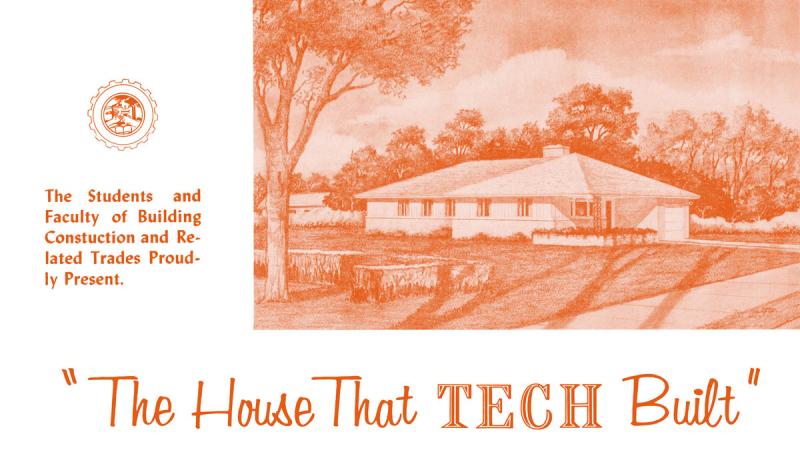
The brochure for the first house proudly stated: “The idea of building a modern home as a training project for students at Williamsport Technical Institute engaged in learning these various skills was a ‘natural’ for Tech.” That sentiment rings just as true today for Penn College students working on the Habitat house as it did for WTI students more than 60 years ago. These projects, both then and now, have only been possible through the collaboration and dedication of numerous departments, hundreds of students and several experienced faculty members.
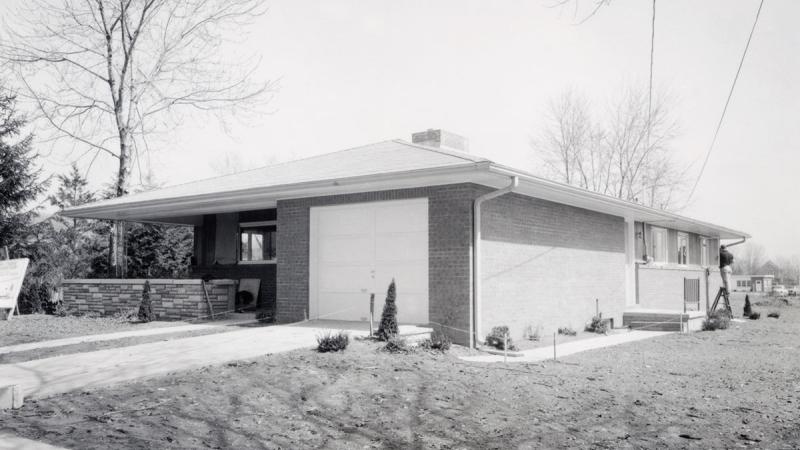
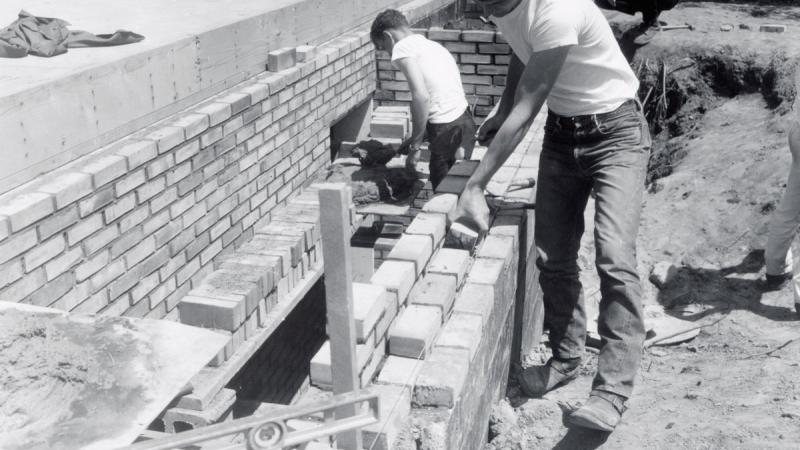
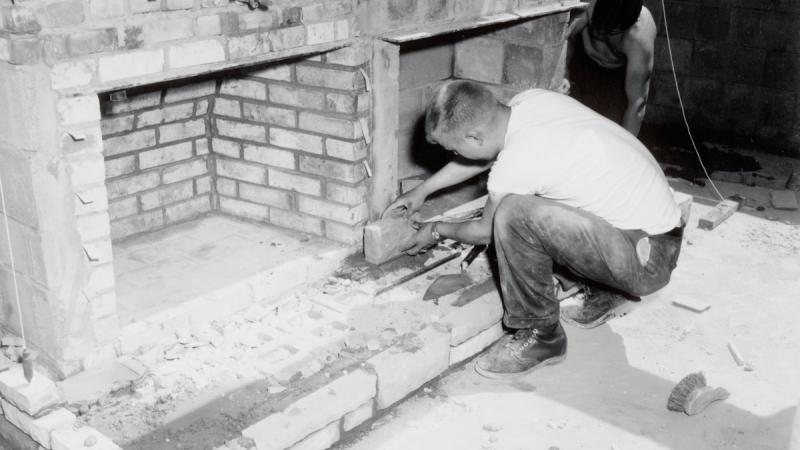
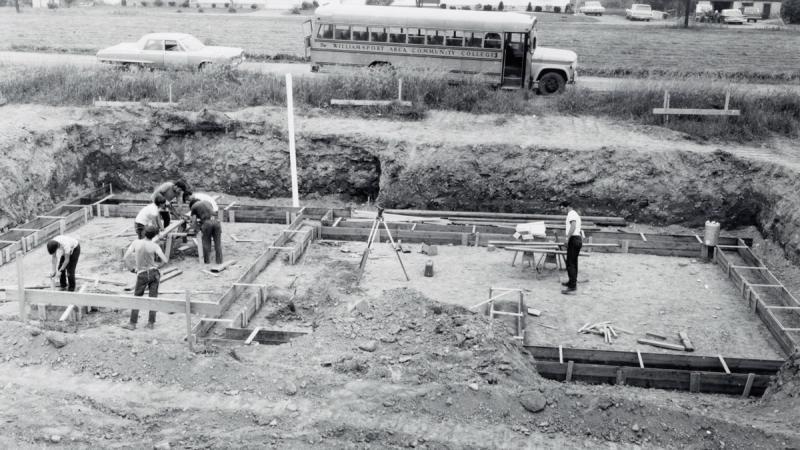
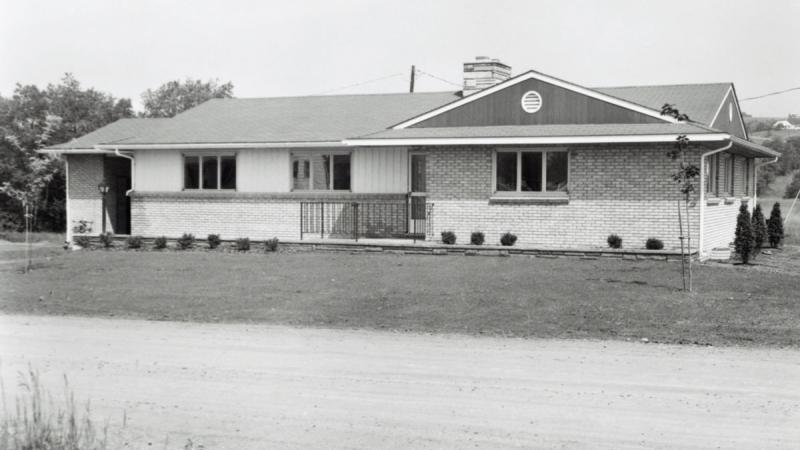
The first house, aptly named “The House That Tech Built,” was approved by the Williamsport School Board (WTI was part of the school district) and constructed on a district-owned property at 1534 Sherman St. Much like today’s Habitat house, this project – from concept to completion – required the collaboration of many WTI departments. Students in architectural drafting, under the guidance of instructor Robert Christensen, were tasked with developing and revising the plans, which were ultimately submitted to and approved by the Williamsport School Board. Masonry students carried out the surveying and staking, poured concrete floors, built the fireplace and decorative masonry planters, and installed the brick veneer, among other things. Heavy equipment students handled site excavation, while plumbing students ensured proper drainage and installed sewer pipes, rough plumbing and the heating plant.
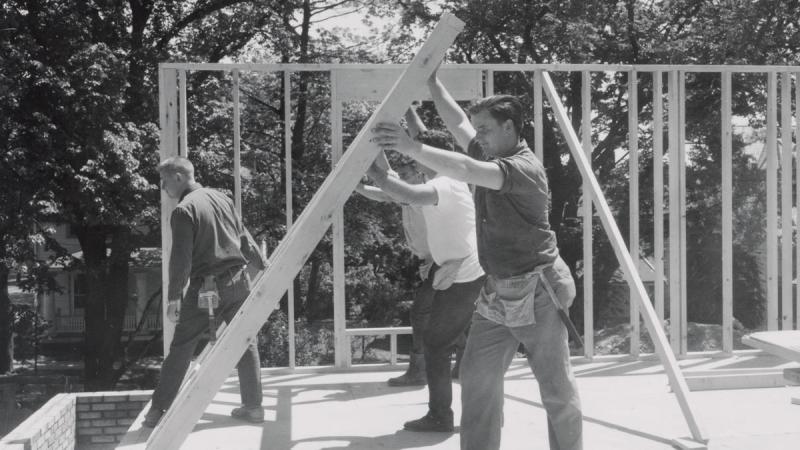
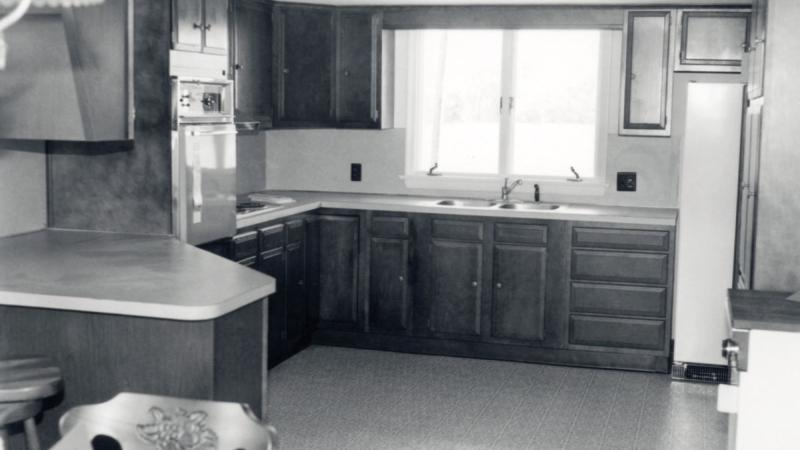
Building construction and carpentry students played a significant role throughout the build. Notable responsibilities included the installation of floor joists, sill plates, framing and sub-flooring. Lastly, electrical students were responsible for ensuring safe wiring throughout the house. Of all the tasks required to complete the house, only the plastering was outsourced, as it was the only skill not taught at WTI. Even Williamsport High School students had the opportunity to gain real-world experience, as Doris Eames’ home economics classes worked on interior design aspects such as color schemes and the selection of wallpaper, linoleum and kitchen countertops.
Because the property was already owned by the school district, and labor costs were minimal, the first house cost the institution a mere $12,926.46. After completion in 1963, the house was sold at auction, and the proceeds funded the acquisition of property and supplies for construction of the next house.
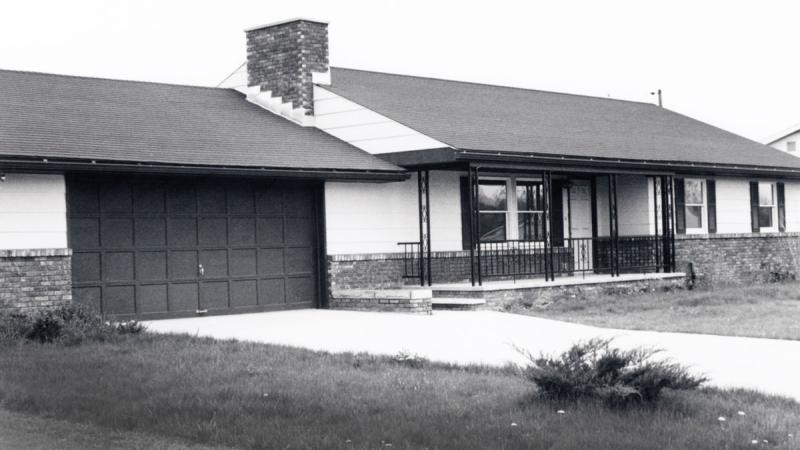
We know the second house was a ranch style built at West Royal Avenue and Valley Street in Newberry, and it was likely completed in 1964. Other details on that home are scarce, but a 1973 Spotlight student newspaper article mentions that the plans for this house were later revised and reused for the fifth house.
Tech Home No. 3, on Memorial Avenue, was also designed and built by WTI students; however, by the time it was completed in 1965, Williamsport Technical Institute had become Williamsport Area Community College, and the newly formed WACC sold this contemporary style home for $17,000.
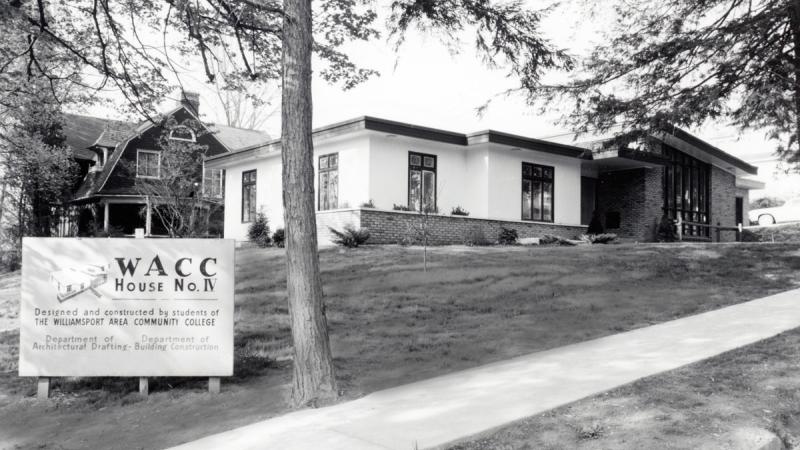
WACC IV, the most elaborate house according to a Spotlight article, was completed in 1968 on Rural Avenue and sold for $48,000.
The fifth house, completed in 1976 on Hillview Avenue in Old Lycoming Township, was constructed for a total of $39,736.
The final house, WACC VI, built across the street from WACC V and completed in 1977, was described in the Spotlight as an “ultra-modern home with a unique design.”
These subsequent homes required the continued collaboration of the heavy equipment, architecture, electrical and construction programs. They also saw the involvement of additional departments like technical illustration for brochure design and the printing department for printing and distribution of the brochures to the general public.
Each home was required to meet city building codes and pass inspections for electrical and plumbing work. Many of the homes were spacious, with added rooms such as family rooms, recreation rooms, workshops and garages. Some even had additional unfinished spaces that could be tailored to the new owners’ preferences. The homes also featured modern amenities, including concrete patios, picture windows, modern appliances, custom cabinets, and mountain stone or brick fireplaces. Elements such as hardwood floors, ceramic tile and dimmable lighting provided the interior of the homes with both form and function.
The reasons why the home-building project ended with WACC VI remain unclear, but several factors shed light on the challenges faced. In 1977, correspondence between Edmond Watters, dean of postsecondary instructional service, and William Feddersen, WACC president, revealed plans for a conference facility in Morgan Valley. While one memo mentioned the desire to construct “one more facility of the WACC VI variety before relocating to the Morgan Valley property,” WACC VII never came to fruition.
Logistical challenges were prevalent throughout the planning, coordination and scheduling of the construction process. Tight course schedules prevented some students from participating in the finish grading and landscaping and planting phases. Additionally, WACC V experienced further delays due to the lack of summer courses in finish carpentry. Other complications arose, including the need for transportation and security for the student workers. These challenges, among other reasons, likely influenced the decision to shift focus from home-building projects to the development of the Morgan Valley property.
While unfortunate, it’s not surprising that there were logistical challenges with these projects, when you consider how many people were involved with each one. Throughout the building of the six houses, a number of faculty and administrators were part of the process, including Joseph Sick, Roger Apple and Michael Sedlak for excavation and landscaping; Paul McQuay, John Yahner, William Ealer and Robert Christensen with design and blueprints; Donald Young and Anthony Guravage in electrical technology and circuits; and William Bradshaw, Harold Winner, Robert Hutchinson, James Adams, George Krause, Frank Beatty, Fred Dochter, Frank Grenoble, Paul Heim, Joseph Martin, William Rummings and William Young Sr. in general construction, including woodwork, masonry, tile setting, plumbing and heating. In addition to faculty, George Krause, director of the building technologies division, and Watters were highly involved. Because of significant hurdles faced with WACC V, Watters assigned Krause sole responsibility for the scheduling and planning of WACC VI.
Despite setbacks faced by the students and faculty at that time, the houses built through WTI and WACC served as invaluable learning opportunities. More than six decades later, many of these homes still stand as a testament to the hard work and dedication of the alumni of our predecessor institutions.
While history repeating itself often carries a negative connotation, I am pleased to see it manifest in a positive way today. Penn College students are once again engaged in designing and constructing a house – a project remarkably similar to the houses built by WTI and WACC students. This continuity reinforces our enduring legacy of community connections and commitment to hands-on learning. The bond between Penn College and its community remains as strong today as ever, fueled by the same spirit of collaboration and practical education that has defined this institution for over a century.
Brochures share details for homes built by the college’s building trades students. Left: A pamphlet for the third home, completed in 1965 on Memorial Avenue, touts colonial-white brick on the first story and vertical aluminum siding on the second level. Right: A handout highlights the floor plans and details of WACC V, a one-story ranch “designed for comfort and convenience.”
Penn College News
Habitat for Humanity build
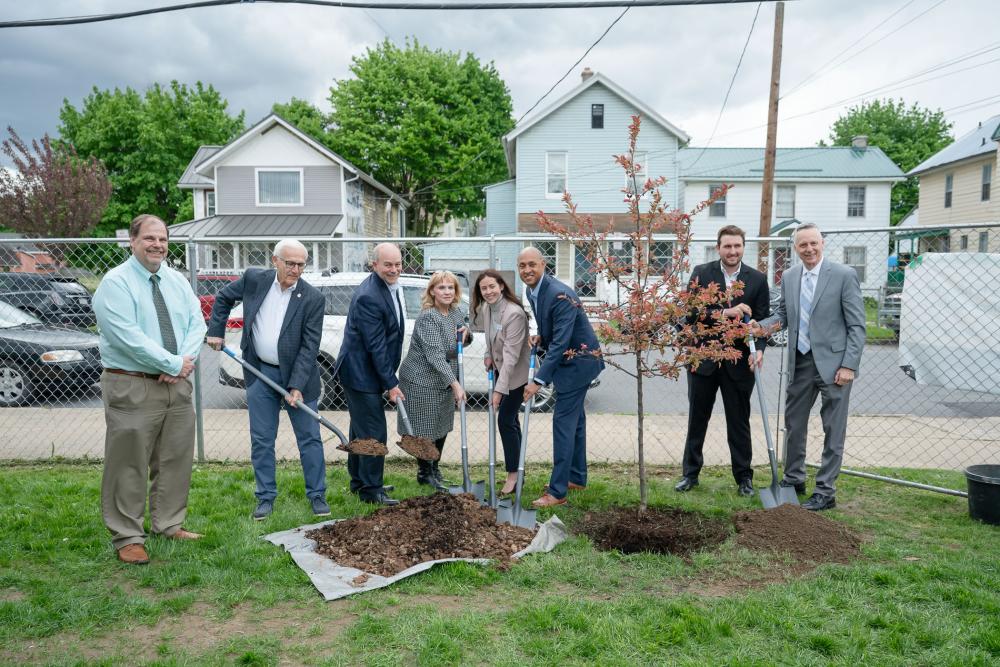
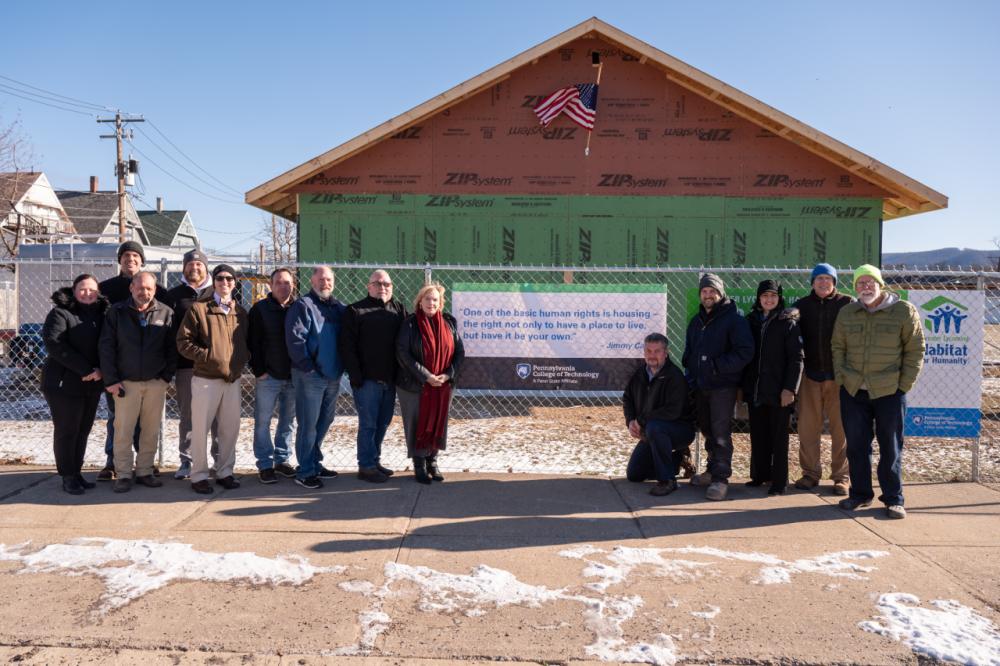
The community connection continues: Ground was broken in Fall 2024 for a Greater Lycoming Habitat for Humanity home to be built largely by Penn College students. The home, set to be completed in Spring 2026, is just north of campus, at 508 Fifth Ave., on property donated to Habitat for Humanity by the college. Students in architecture; building construction; concrete science; electrical; heavy equipment; and heating, ventilation & air conditioning majors, among other student volunteers, are gaining invaluable hands-on experience at the site.
Share your comments
Penn College Magazine welcomes comments that are on topic and civil. Read our full disclaimer.
We love hearing from you