Penn College NOW
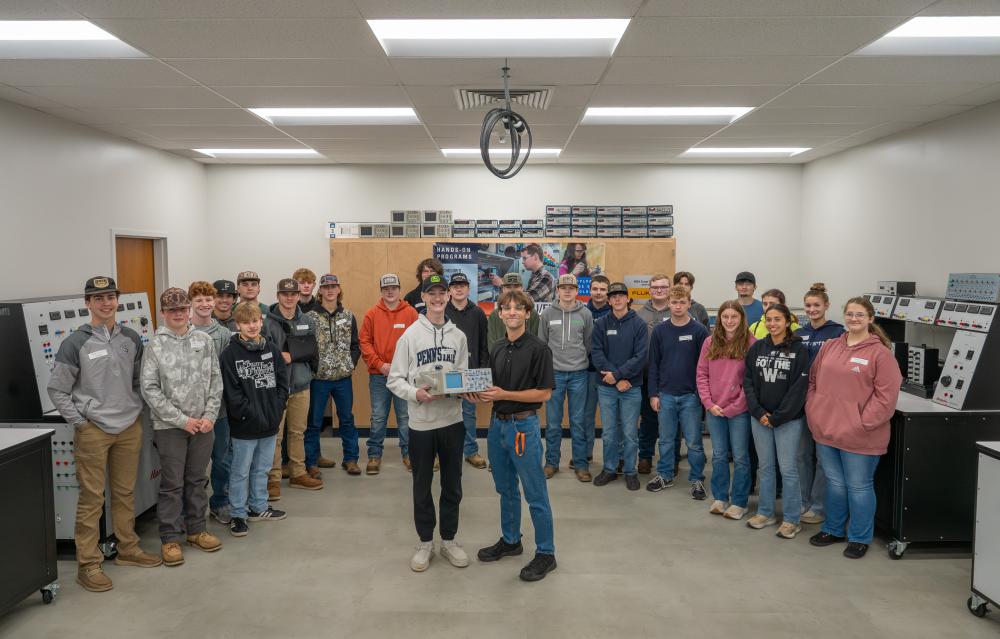
Penn College NOW is a program that allows high school students to earn Penn College credits through dual enrollment.
Penn College NOW classes are taught by approved high school teachers at the student's home high school or career and technology center.
The current tuition rate for Penn College NOW courses is $40 per credit.
Resources and Downloads
- 2012-2013 Course Guide
- Frequently Asked Questions
- Student Handbook
- Sample Math Placement Test
- Administrators/Teachers
National Alliance of Concurrent Enrollment Partnerships
Continue Your Success
Continue your success, attend Penn College after High School. Visit our Admissions website for more information.
Contact Us
For questions about dual enrollment and/or Penn College NOW contact:
Outreach For K-12
570-320-8003 or CareerEd@pct.edu
Partner Schools
The following secondary schools are partners in Penn College NOW. For more information about the offerings available at any given school, please click on the link for your school.
- Biglerville High School
- Central Pennsylvania Institute of Science and Technology
- Clearfield County Career & Technology Center
- Columbia-Montour Area Vocational-Technical School
- Cowanesque Valley High School
- Hughesville High School
- Indiana County Technology Center
- Jersey Shore Area High School
- Keystone Central Career & Technology Center
- Loyalsock Township High School
- Lycoming Career & Technology Center
- Millville High School
- Milton High School
- Monroe Career & Technical Institute
- Montgomery Area High School
- Montoursville Area High School
- Northern Tier Career Center
- Seneca Highlands Career & Technology Center
- South Williamsport Area High School
- State College Area High School
- Sullivan County High School
- SUN Area Technical Institute
- Warren County Career Center
- Williamsport Area High School
Penn College NOW is partially funded by the Carl D. Perkins Career and Technical Education Improvement Act of 2006 (Public Law 109-270) through the Pennsylvania Department of Education and by Pennsylvania College of Technology. Partial support for this work was provided by the National Science Foundation's Advanced Technological Education (ATE) program under Award No. 1003435. Any opinions, findings, and conclusions or recommendations expressed in this material are those of the author(s) and do not necessarily reflect the views of the National Science Foundation.